
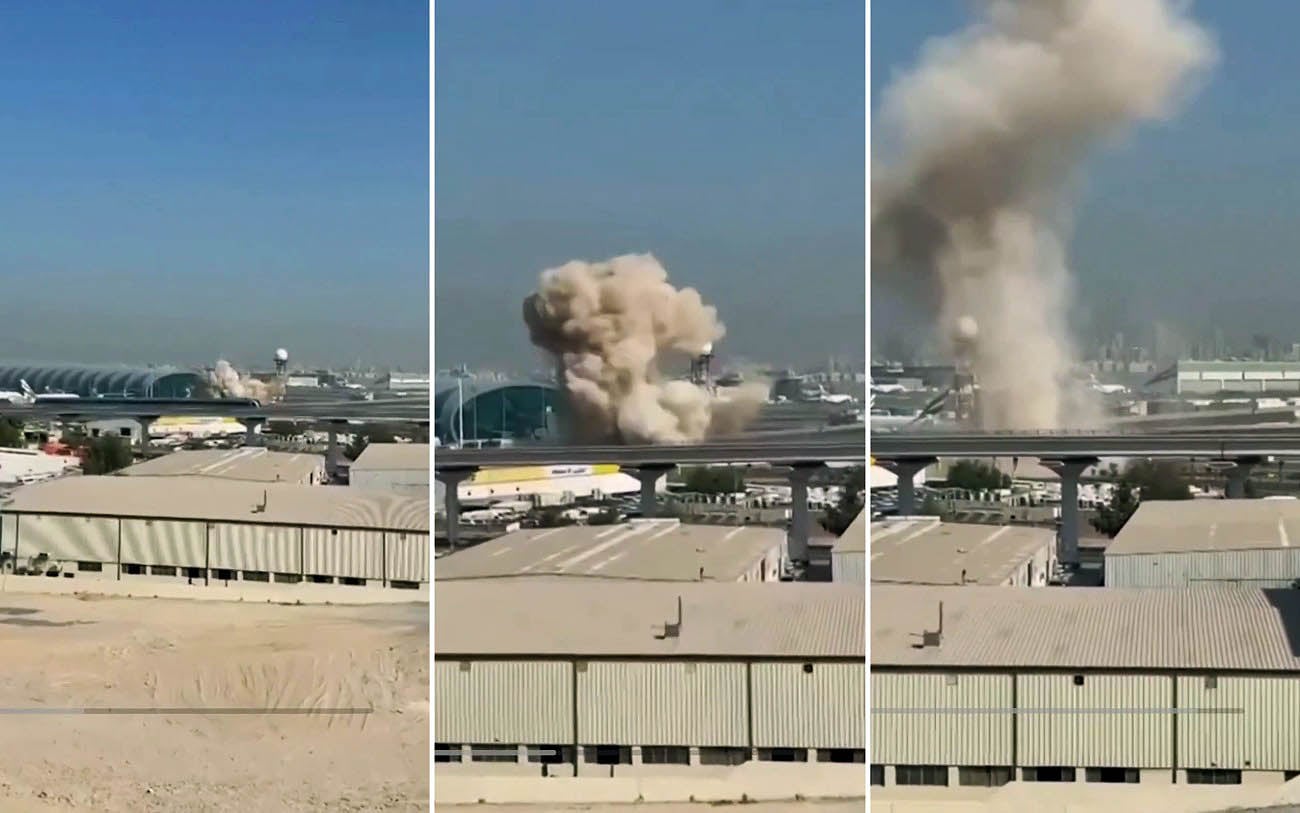
Israel was on Saturday forced to pause an effort to repatriate some 4,000 citizens still stranded in the United Arab Emirates amid the war with Iran after the Dubai airport was hit in an Iranian strike, Channel 13 reported.
According to the report, Israel had arranged for a commercial air train to operate to and from Ben Gurion Airport with UAE carrier flydubai and Etihad Airlines. However, the operation was suspended after Dubai’s airport was briefly closed amid the attack.
Israel had on Friday began bringing home people. Israeli carrier Israir on Friday said it repatriated 310 Israeli customers who were stranded in Dubai.
In an operation that “took much effort,” Israir said it succeeded in operating two special flights that took off from Sharjah International Airport, located about 50 minutes from Dubai, and landed at the Aqaba airport in Jordan.
Upon landing at the airport in Aqaba, Israir organized passengers with food and drink, as well as transportation to the land border crossing in Jordan, including all necessary visa requirements.
Get The Times of Israel’s Daily Edition
by email and never miss our top stories
By signing up, you agree to the terms
After crossing the border on the Israeli side, shuttle buses provided by the Israel Airports Authority and the Transportation Ministry transported the passengers to several central points throughout the country.
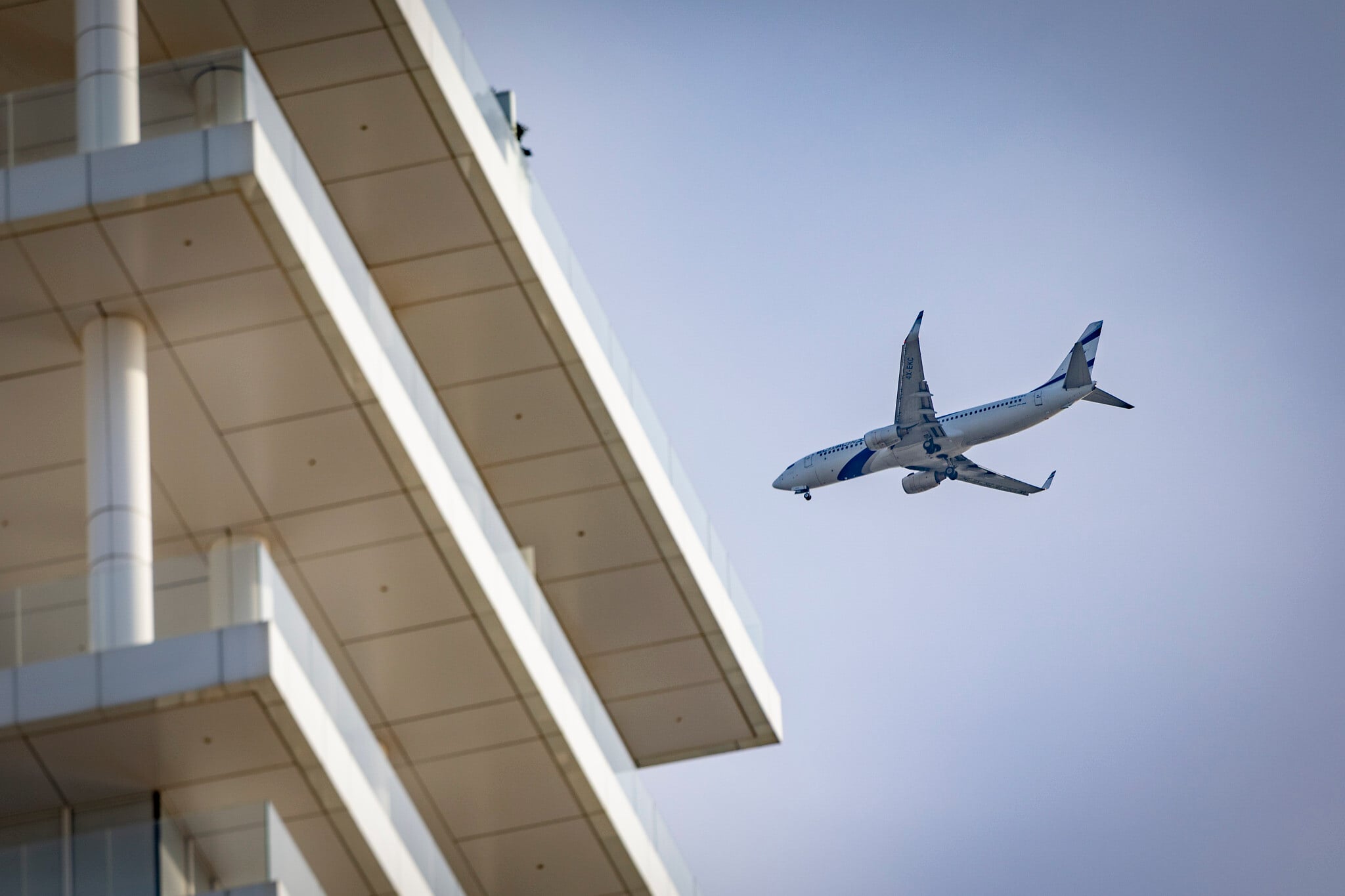
An El Al airplane is seen in the sky above Tel Aviv, March 6, 2026. (Chaim Goldberg/Flash90)
But these efforts were halted Saturday after Dubai’s main airport, a key global transport hub, was forced to briefly close as Iran launched missiles and drones at targets across the Gulf.
According to Channel 13, Israel is now considering a “military solution or a special operation” to return the thousands of Israelis still in the UAE. The report noted that no plan has yet been formulated.
The report said some 1,600 Israelis have returned to Israel from the UAE since the war began last week.
It comes amid an Israeli effort to repatriate more than 100,000 Israelis stranded abroad.
The barrage on the UAE came despite Iran’s president apologizing to neighboring countries for its attacks, saying they would no longer be targeted unless strikes were launched from their territory.
Attacks were reported on Saturday in the UAE, Saudi Arabia, Qatar and Kuwait, where the national oil company announced a “precautionary” cut to production.
The Emirates said it was targeted with 16 ballistic missiles and more than 120 drones. One unidentified object was intercepted near Dubai airport, the world’s busiest for international traffic, forcing it to briefly suspend operations.
A witness told AFP of a loud explosion in the area followed by a cloud of smoke, while footage authenticated by AFP recorded the sound of a drone followed by a loud explosion and plumes of smoke close to an airport concourse.
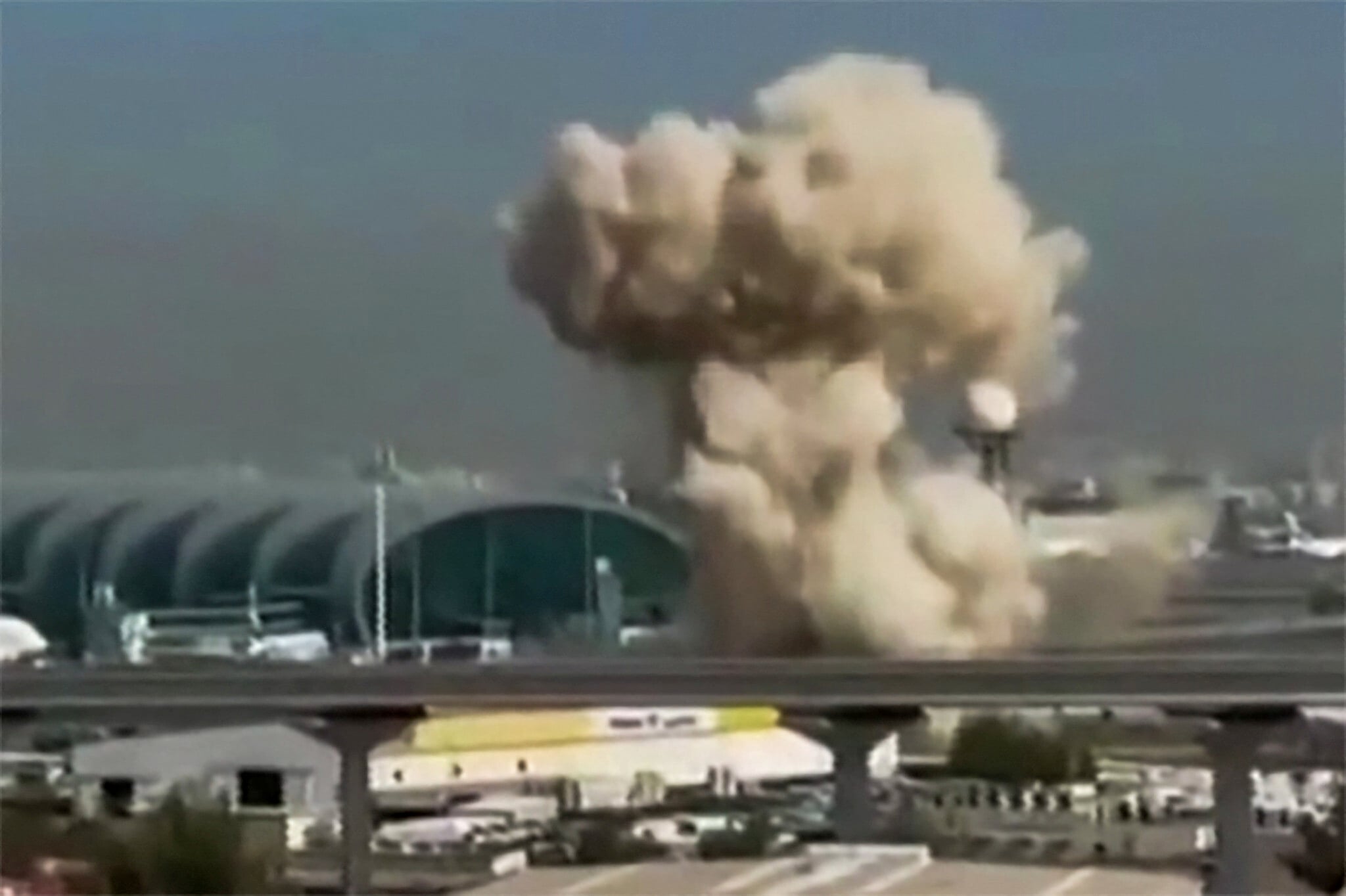
This video grab taken from UGC images posted on social media on March 7, 2026 shows smoke rising from the Dubai International Airport. (Photo by various sources / AFP)
The government said there had been “a minor incident resulting from the fall of debris after an interception,” without directly mentioning the airport. It said there were no injuries.
The Flightradar24 tracking website earlier showed planes circling above the airport in an apparent holding pattern.
In a statement since deleted from X, Emirates, the largest airline in the Middle East, had announced it was suspending all flights to and from Dubai until further notice, but later said it had resumed operations.
The UAE, a US ally and home to American military installations, has been the most heavily targeted nation in the Gulf during the war.
The Ministry of Defense said that of the 16 ballistic missiles fired at the country on Saturday, all but one had been intercepted, with that missile falling into the sea.
Of the 121 drones detected, 119 were brought down, while two fell within Emirati territory.
The barrage brings the number of ballistic missiles detected by the UAE since the start of the war last Saturday to 221, the defense ministry said, with the number of drones surpassing 1,300.
Flights from Dubai’s main airport had partially resumed on Monday despite daily drone attacks targeting sites in the UAE.
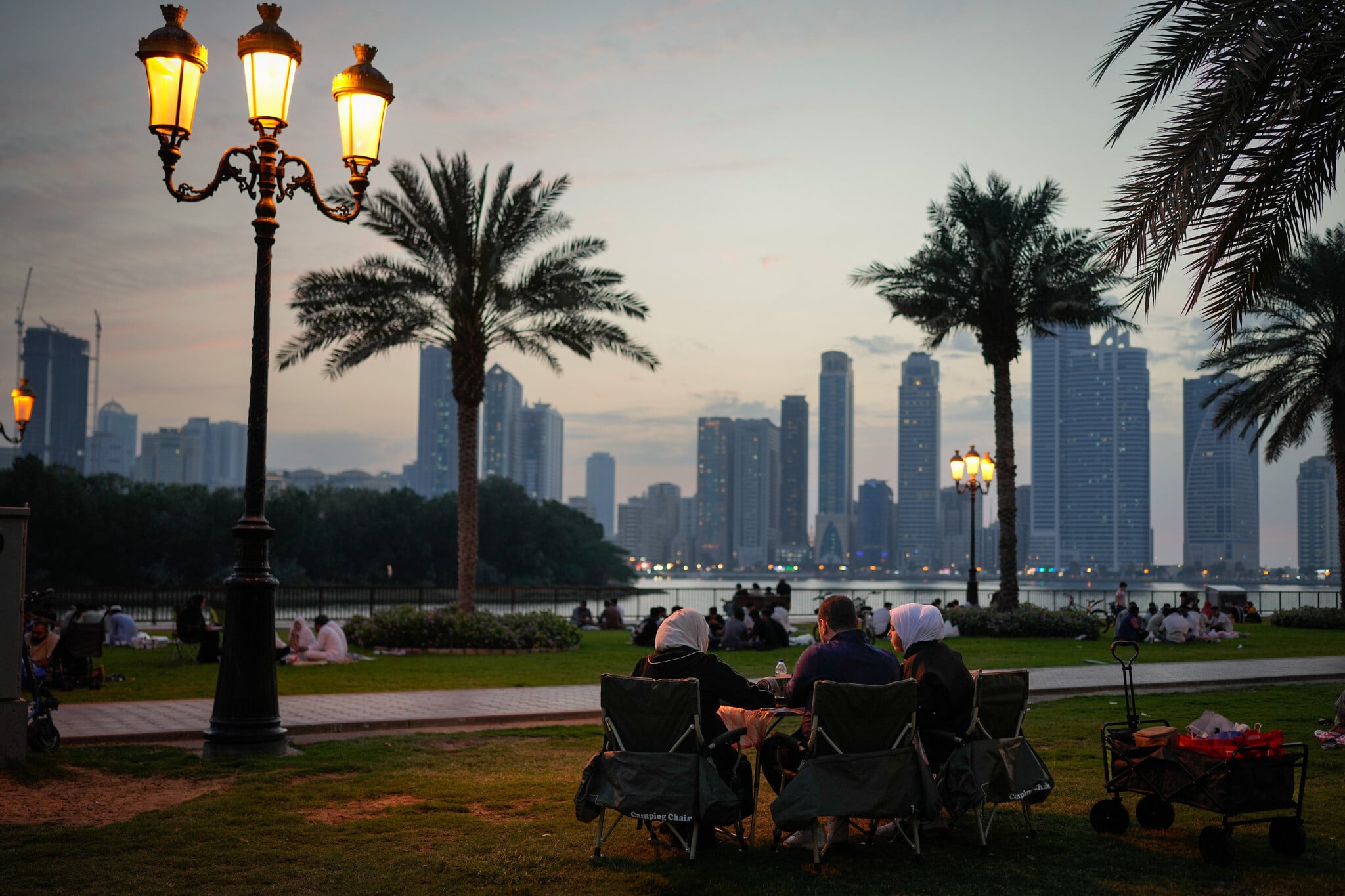
A Muslim family breaks their fast during the holy month of Ramadan at a public park in Sharjah, United Arab Emirates, Friday, March 6, 2026. (AP Photo/Altaf Qadri)
Last Saturday, four employees were injured and an airport terminal was damaged as the war broke out following US-Israeli strikes on Iran.
Operator Dubai Airports said at the time that the incident had been “quickly brought under control,” without providing details.
Iranian attacks have also hit Abu Dhabi airport, the upmarket Palm Jumeirah development, and the Burj Al Arab luxury hotel over the past week, while drone debris caused a fire at the US consulate in Dubai on Tuesday.
You appreciate our wartime journalism

You clearly find our careful reporting of the Iran war valuable, at a time when facts are often distorted and news coverage often lacks context.
Your support is essential to continue our work. We want to continue delivering the professional journalism you value, even as the demands on our newsroom have grown dramatically during this ongoing conflict.
So today, please consider joining our reader support group, The Times of Israel Community. For as little as $6 a month you’ll become our partners while enjoying The Times of Israel AD-FREE, as well as accessing exclusive content available only to Times of Israel Community members.
Thank you,
David Horovitz, Founding Editor of The Times of Israel