
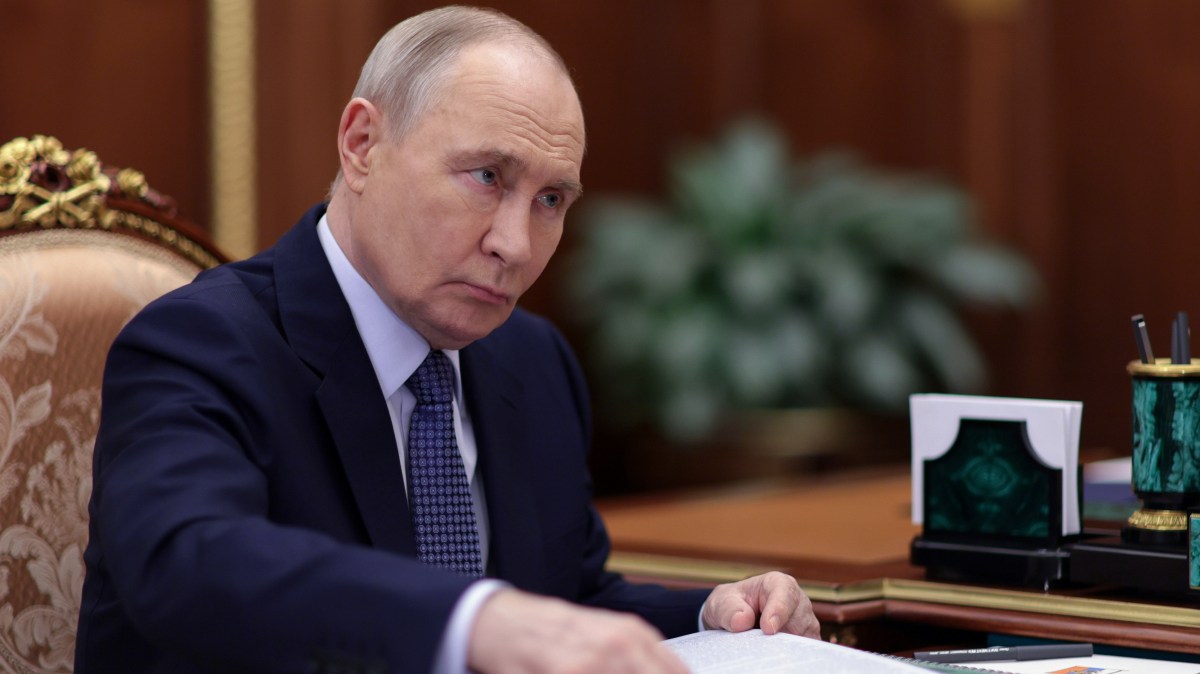
The kamikaze drone that struck a British airbase in Cyprus was equipped with Russian military hardware.
The drone hit RAF Akrotiri on Sunday March 1. It contained a Russian-made Kometa-B navigation system, a piece of hardware first seen in drones intercepted by Ukrainian air defences in December.
British military intelligence has now sent the recovered components to a laboratory in the UK for further investigation. It is believed the attack was launched by Hezbollah militants in Lebanon.
• Iran-US war live: follow for the latest updates
The discovery, which provides the first evidence that Russian military equipment is being used in the Iran conflict, raises concerns about Moscow’s growing footprint in the Middle East war. It follows reports that Russia is passing intelligence to Iran to help it attack American forces in the region, including the locations of US warships and aircraft.
Speaking on Air Force One on Saturday, President Trump sought to downplay the significance of the reports, telling reporters: “If you take a look at what’s happened to Iran in the last week, if they’re getting information, it’s not helping them much.”
On Saturday Andrei Kelin, Russia’s ambassador to the UK, said his country was “not neutral” in the war, adding that Moscow’s position was “supportive to Iran”.
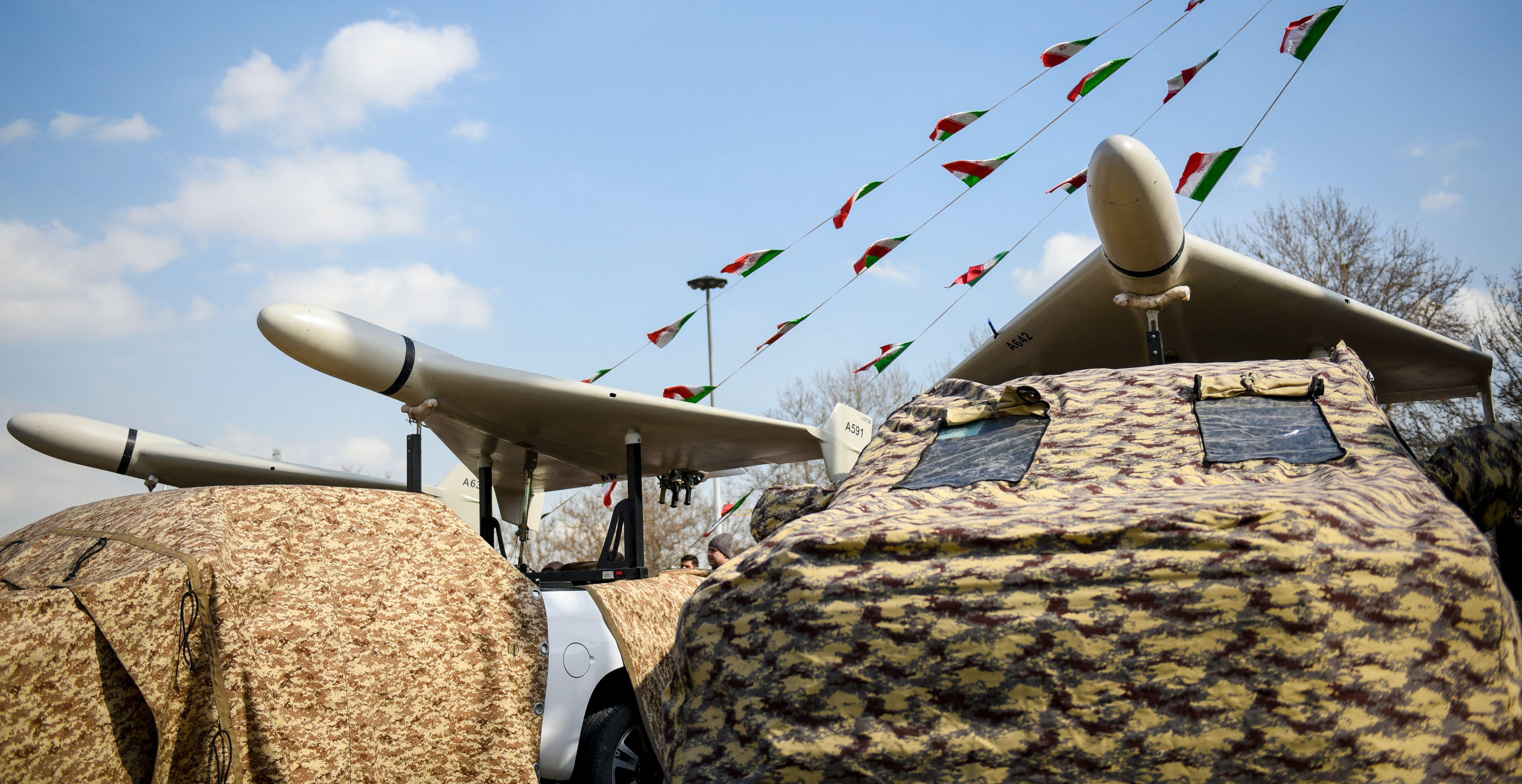
Domestically built Iranian Shahed drones
PACIFIC PRESS MEDIA PRODUCTION CORP./ALAMY LIVE NEWS
There are now concerns that British military assets, including two Wildcat helicopters that arrived in Cyprus on Friday, could be targeted by Iran and its proxies in Lebanon and Yemen using Russian targeting intelligence.
Sir Richard Knighton, the chief of the defence staff, said he had “no doubt” that Russia had been passing intelligence to Iran. “This is an axis that we need to call out. The co-operation between Iran and Russia makes their forces more capable and more dangerous, and that’s why we need to be ready,” he said.
Knighton, the head of the British armed forces, confirmed on Saturday that the attack on RAF Akrotiri was launched from Lebanon by an “Iranian-aligned group”. It is believed the assault was carried out by Hezbollah militants.
Britain said on Saturday that it was expanding its ability to deploy military assets to the Middle East. HMS Prince of Wales, the second of Britain’s two Queen Elizabeth-class aircraft carriers, could set sail for the Gulf within five days, reduced from its present minimum period of ten days, after it was ordered to increase its state of readiness.
It is understood that no formal decision has yet been made about whether to deploy the carrier, but defence sources said the announcement could be an indication that the UK was preparing to send additional military assets to the region.
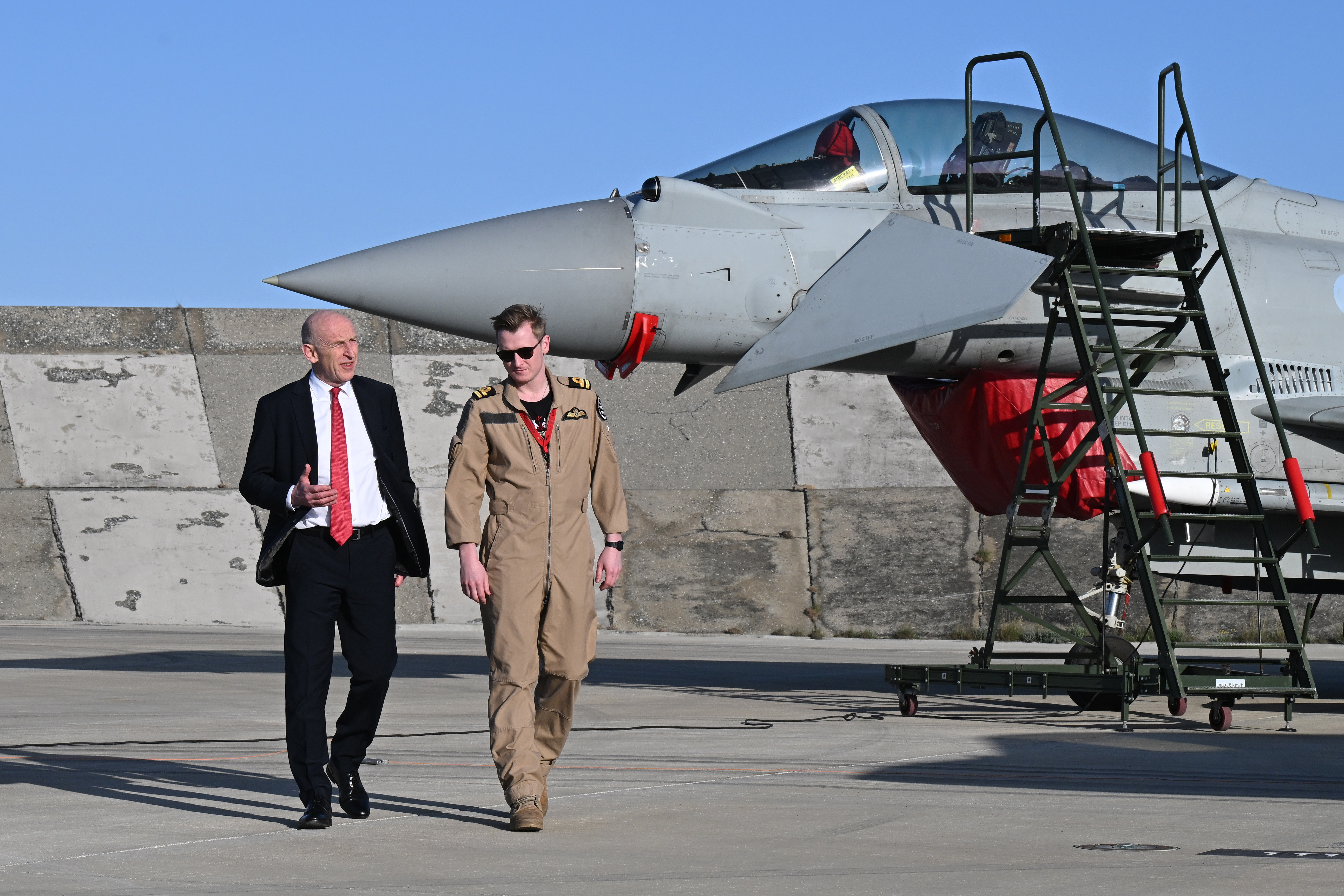
John Healey, the defence secretary, at RAF Akrotiri on Thursday with a pilot who shot down a drone
LEON NEAL/GETTY IMAGES
The Ministry of Defence said the UK had been “bolstering” its presence in the Middle East since January. “We have already deployed capabilities to protect British people and our allies in the region, including Typhoons, F-35 jets, air defence systems and an extra 400 personnel into Cyprus,” a spokesman said.
On Saturday three American B-1 Lancer bombers landed at RAF Fairford in Gloucestershire. Knighton said he would expect the US to launch missions from the base “within the next few days”.
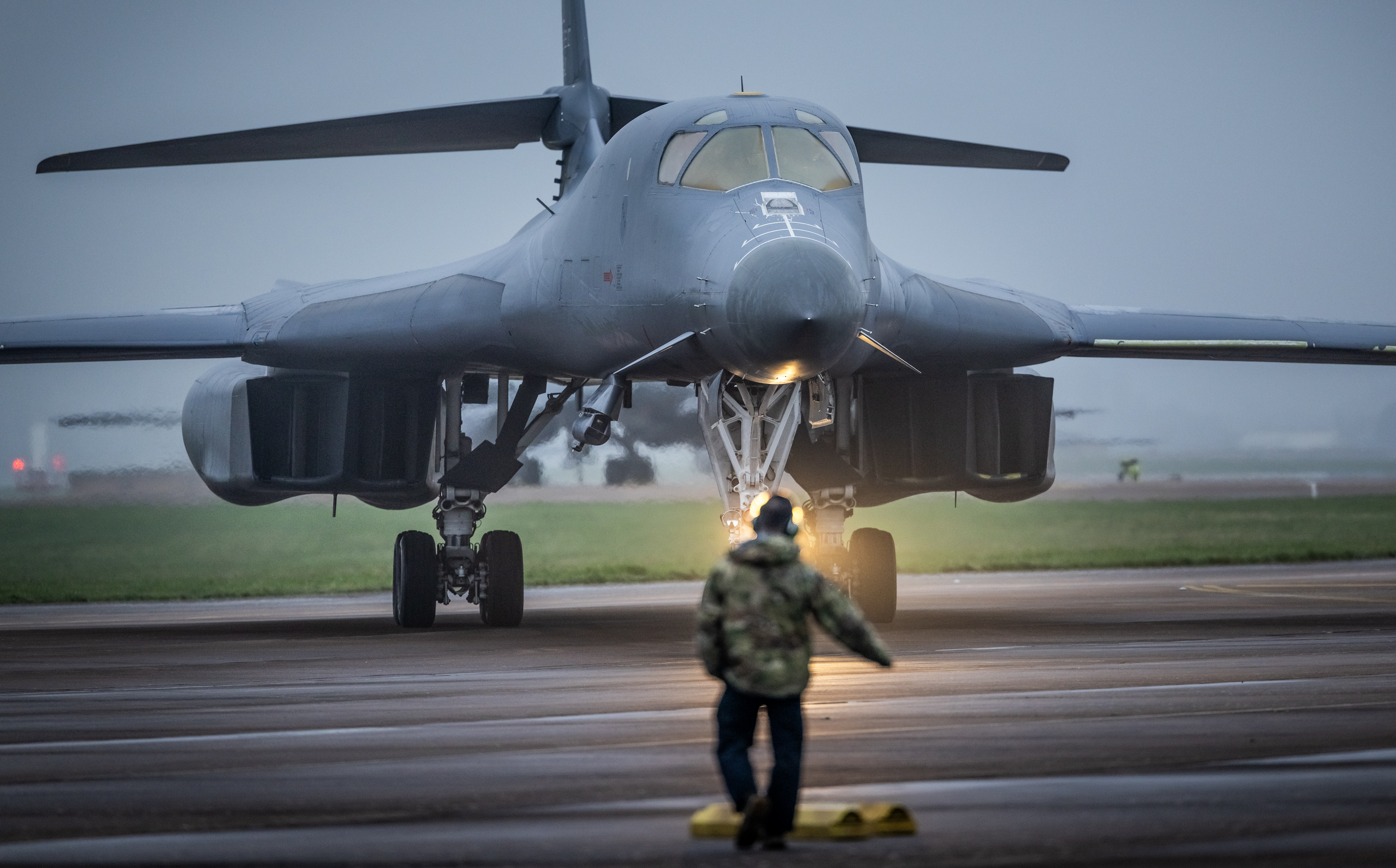
A US air force B1-B Lancer bomber arrives at RAF Fairford in Gloucestershire on Saturday
PETER MACDIARMID FOR THE SUNDAY TIMES
On Thursday, President Zelensky of Ukraine said he was “certain” Russia was supplying Iran with arms.
“We understand that they may be providing electronics for Shaheds,” he said. “I think all of this is found in the fragments of the Shaheds striking the Middle East today. Iranian Shaheds contain Russian-made components. This is something we know for certain.”
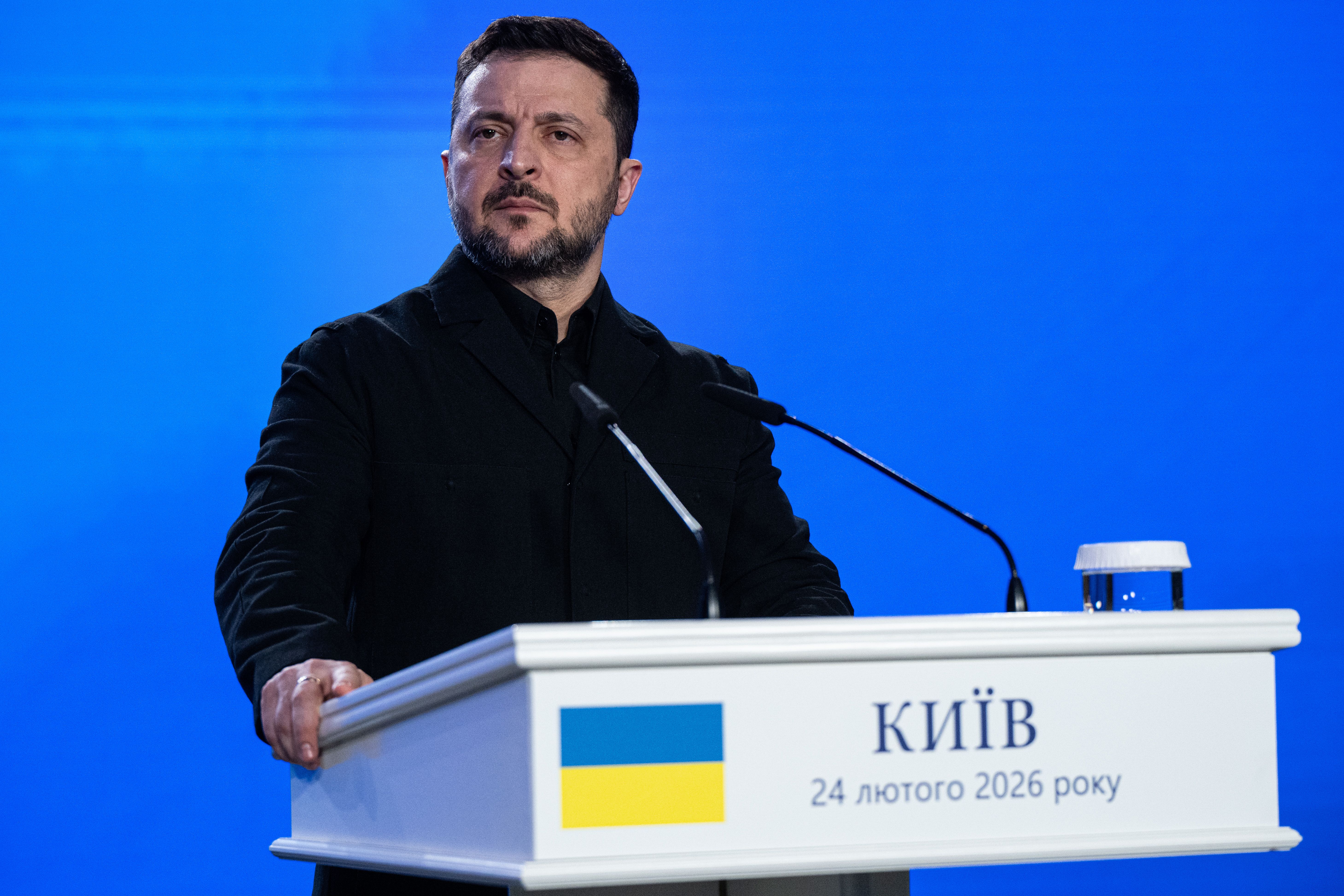
President Zelensky
SHUTTERSTOCK EDITORIAL
Iran began supplying Russia with Shahed drones in 2022. Russia now manufactures its own version under licence. They have been used extensively in the daily assaults on Ukrainian cities.
British defence intelligence believes Russia sent 55,000 one-way attack drones into Ukraine last year, a fivefold increase on 2024. Almost 600 civilians are believed to have been killed by drones in Ukraine last year.