
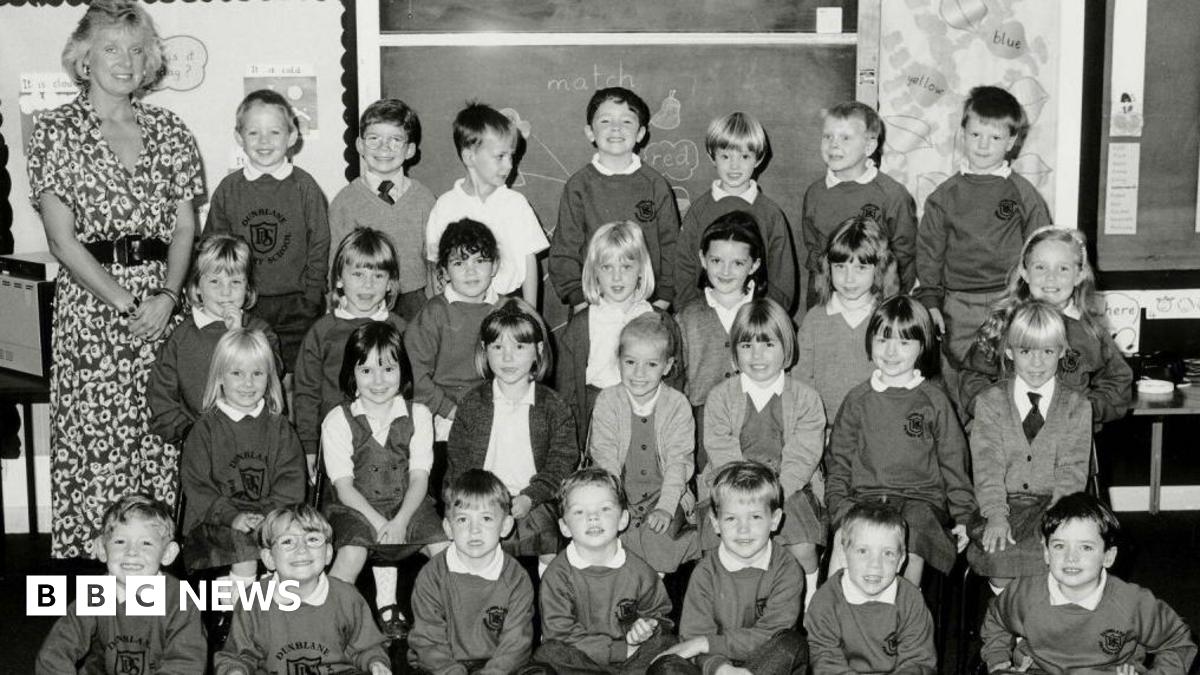
Three decades on the people of Dunblane, the community that was torn apart by the tragedy, will mark the anniversary privately.
For those who fought for the handgun ban, there is some small consolation in what happened next.
“People make demands on the government the whole time,” says Blair.
“You can’t meet all those demands but this demand in this way was something, it wasn’t about money, it wasn’t about priorities, it was just about a terrible, terrible event that the country was determined should lead to a change.”
For George Robertson, what the parents lost is “always going to be greater than anything that came out of it”.
“When there is another school shooting in America, I do take a degree of satisfaction from the fact that we stopped that from happening in our country,” he says.
“Because there is no doubt at all in my mind. If the law had remained the way it was, it would have happened again.”
Michael Forsyth still finds what happened on 13 March 1996 difficult to talk about.
“It was a miserable experience for me, but nothing like what it was for those parents who lost their children. I just wish I’d never had to deal with it.”
“Our children paid the ultimate price,” says Joanna Ross’s father, Kenny.
“And what I miss most is I can’t remember what she sounds like. It was before the time of videos, mobile phones.
“I’ve forgotten her voice.”