
Dutch architect Rem Koolhaas is less enthusiastic.
Singapore is managed in a way that “excludes accident and randomness”, he wrote in Singapore Songlines, his seminal essay on the city’s rapid makeover.
“It is pure intention: if there is chaos, it is authored chaos: if it is ugly, it is designed ugliness; if it is absurd, it is willed absurdity.”
The Singapore government has embraced such organised chaos.
They have launched a Lively Places Fund that gives residents up to S$20,000 ($15,800; £11,600) to “activate and create more interesting and fun public spaces in [their] neighbourhood”.
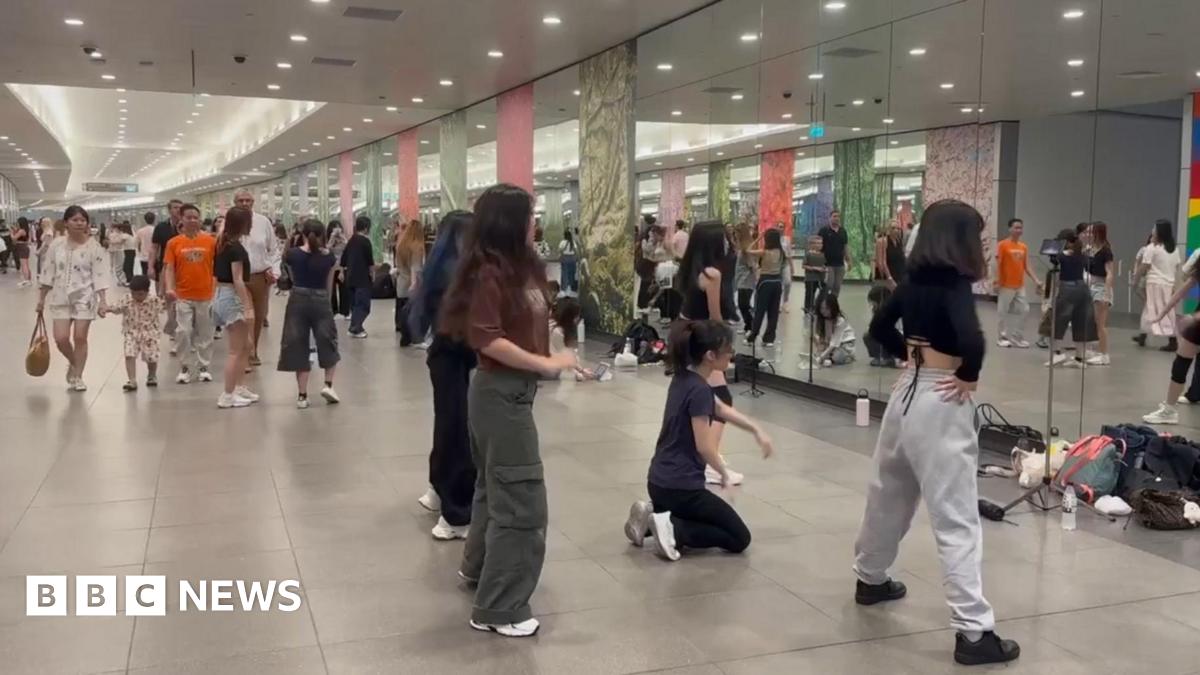
The national transport operator has also set aside specific spots in some train stations for dancers to practise.
But some Singaporeans wish authorities would leave more room for spontaneity.
“We shouldn’t let the small size limit our thinking of what our city can be,” Singaporean writer Justin Zhuang says. “If we want Singapore to be a diverse city, we should also accept that there would be diverse activities.”
Authorities acknowledge this. “As Singapore becomes denser, shared public spaces will increasingly need to accommodate diverse users and activities,” the urban planning authority told the BBC.
But they added that “this requires both thoughtful design and shared stewardship”, and while “property owners play a role in managing shared spaces”, so do users “by being mindful of how their activities may affect others”.
Zhuang believes “there must be a way to compromise” without one group prevailing at “the expense of the other”. But who will broker that compromise?
In most other cities, where some amount of chaos is normal, local officials are likely to be less involved in every fight over public space. So residents manage conflicts by themselves. In Singapore, people often look to the state to intervene.