
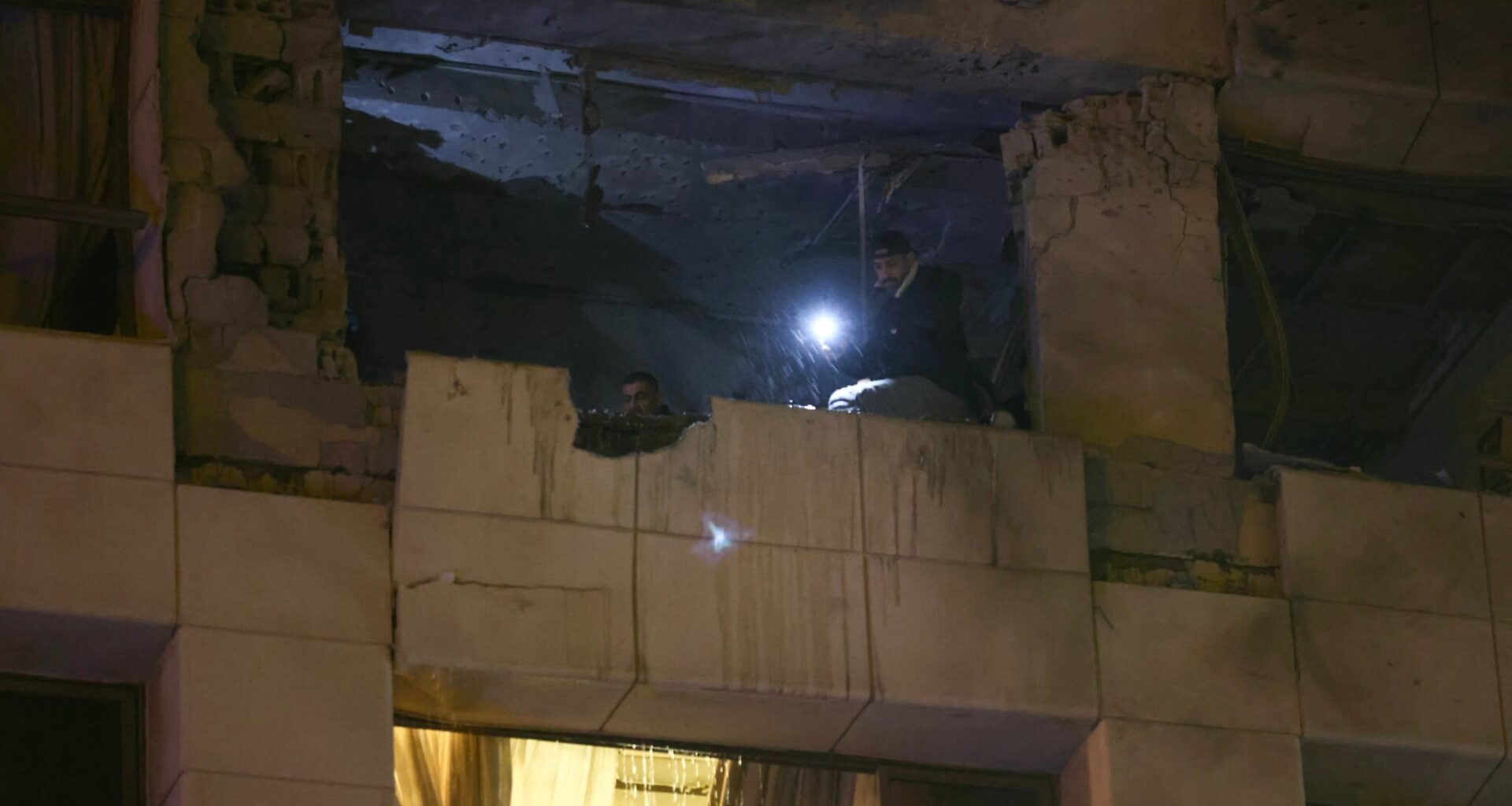
The Israel Defense Forces said Sunday it carried out a targeted attack on key commanders of Iran’s Islamic Revolutionary Guard Corps in the Lebanese capital, amid reports that an Israeli strike hit a swanky Beirut hotel, killing four.
The IDF, in a statement, said the targets early Sunday were members of the Lebanon Corps of the Quds Force, the IRGC’s extraterritorial arm, who “acted to advance terror plans against the State of Israel and its citizens from Lebanese territory while operating simultaneously for the IRGC in Iran.”
The army added: “The Iranian terror regime systematically operates among civilian populations in both Iran and Lebanon, cynically exploiting residents and using them as human shields to further terrorist objectives.”
It said it took various steps to minimize the risk to civilians, including the use of precision weaponry and aerial surveillance.
Lebanese officials said the strike killed at least four people at a Ramada hotel. An AFP photographer at the bombed seafront hotel saw shattered windows and heavy damage to one room while security forces sealed off the area.
Get The Times of Israel’s Daily Edition
by email and never miss our top stories
By signing up, you agree to the terms
The IDF said that the results of the strike were still under review.
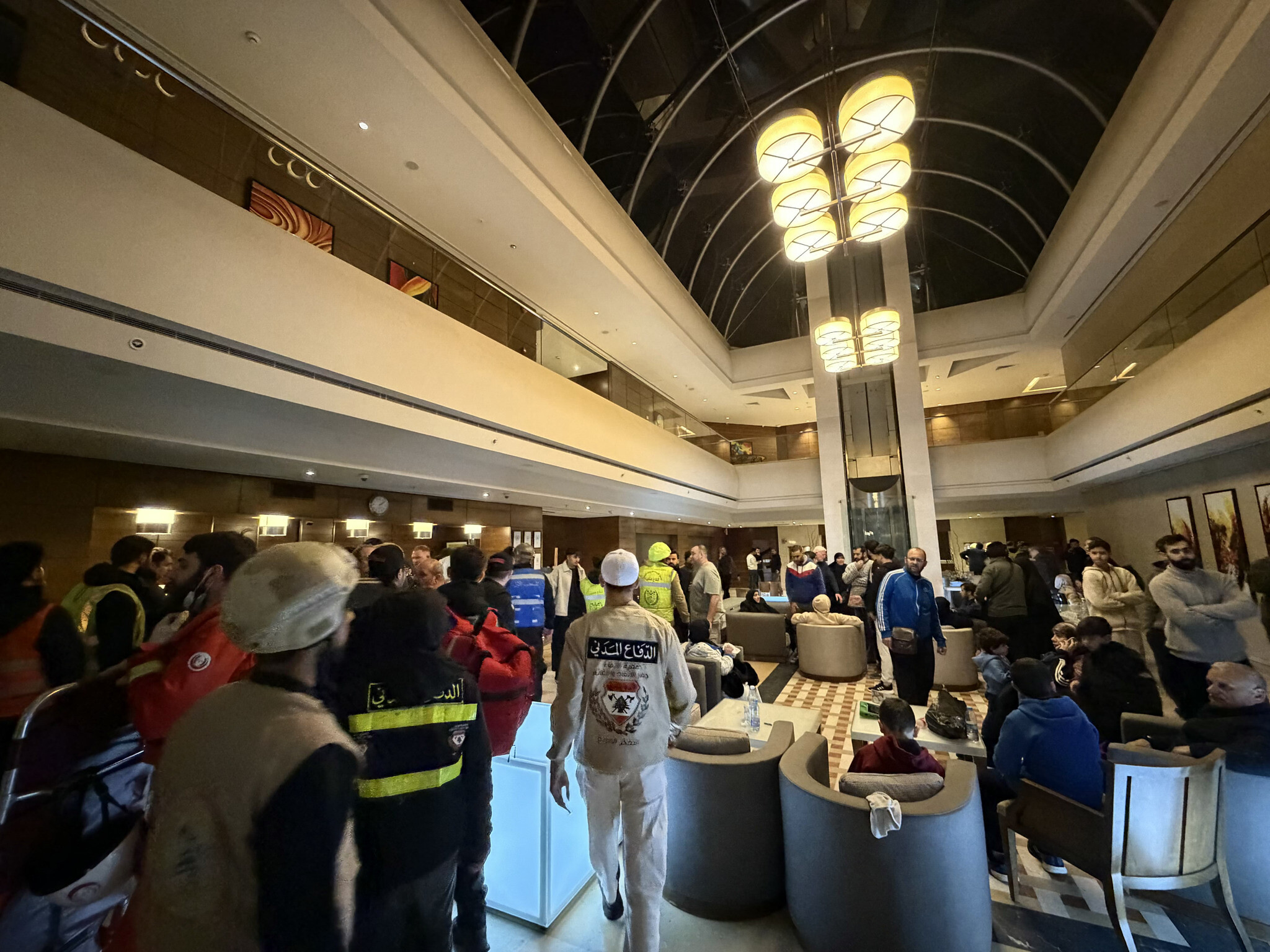
First aid responders are seen inside the lobby of the Ramada hotel in which a room was targeted by an Israeli strike, in Beirut’s seaside Rawche area, on March 8, 2026. (Ibrahim AMRO / AFP)
Last week, the Israeli military issued an unusual threat against Iranian regime officials in Lebanon, warning that they will be targeted if they do not leave the country.
Reuters reported on Saturday that following those threats, more than 150 Iranian nationals, including diplomats and their families, had left Lebanon.
Days after the US and Israel launched strikes on the Iranian regime on February 28, Iran-backed Lebanese terror group Hezbollah began firing missiles and drones at Israel, pulling Lebanon into the war.
In response, Israel launched an offensive aimed at pushing Hezbollah away from the border and eliminating its threat, and has expanded its presence in southern Lebanon. Last week, the Israeli military issued an unusual threat against Iranian regime officials in Lebanon, warning that they will be targeted if they do not leave the country within 24 hours.
The hotel was housing displaced people fleeing the war in southern Lebanon and Beirut’s southern suburbs, and some were seen leaving the building for fear of further airstrikes.
Ten people were also injured in the attack, the Lebanese health ministry said in a statement.
Last week, Israel said it had killed Daoud Alizadeh, the acting commander of the Lebanon Corps, in a strike in Tehran. Another strike in Beirut last week killed the chief of staff at the Lebanon Corps, Reza Khazaei.
On Saturday, Hezbollah launched many dozens of rockets and drones from Lebanon at northern Israel, with no reports of injuries. Meanwhile, the IDF launched a wave of airstrikes on Beirut’s southern Dahiyeh district, a Hezbollah stronghold.
The military also reiterated an evacuation warning it had issued on Thursday for the district’s four major neighborhoods.
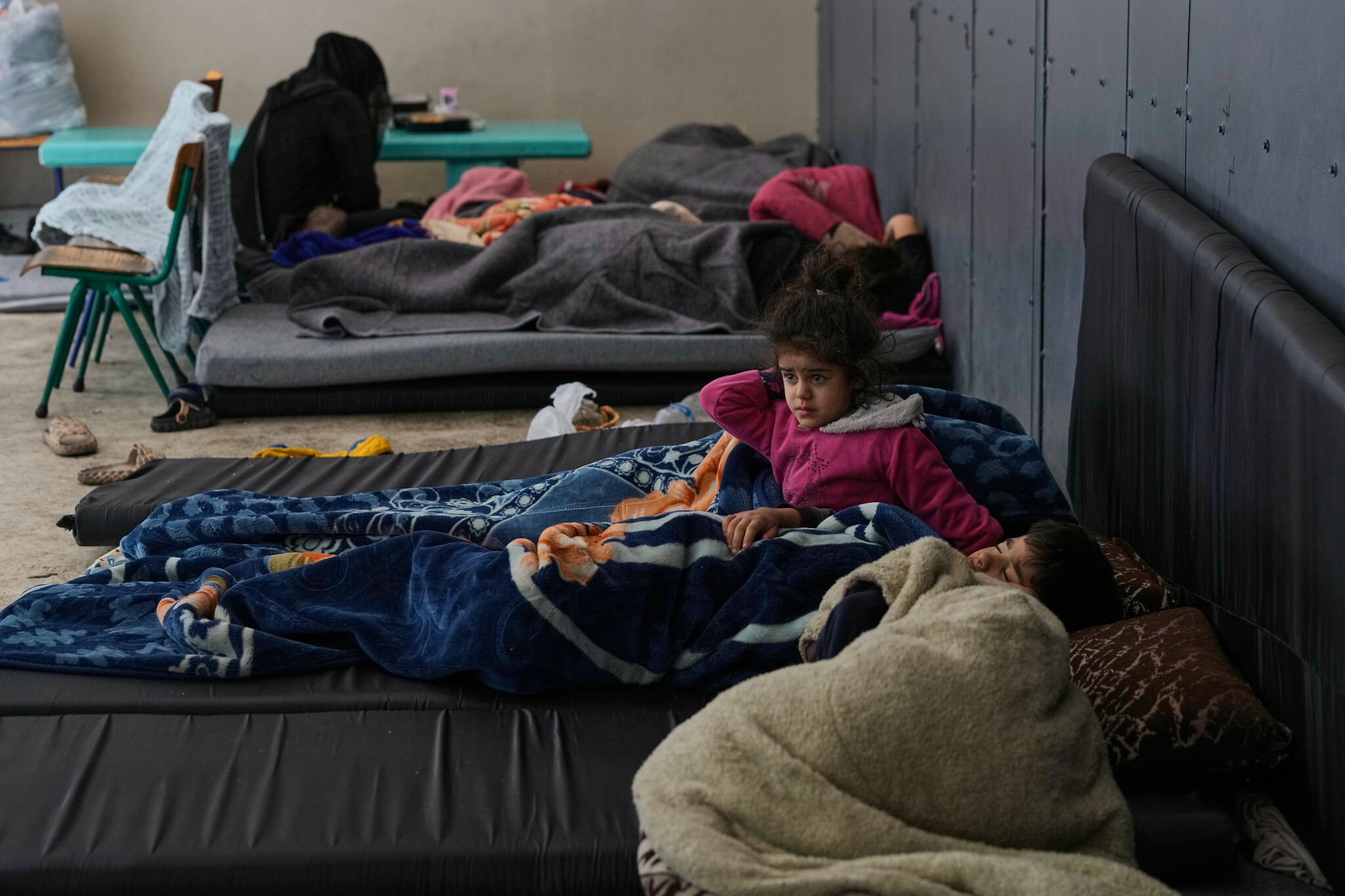
Displaced people fleeing Israeli airstrikes sleep at a school turned into a shelter in Beirut, Lebanon, March 7, 2026. (AP Photo/Bilal Hussein)
The Lebanese government, which has claimed it is working to disarm Hezbollah, has slammed the terror group’s renewed attacks on Israel, accusing it of dragging Lebanon into a regional war.
Lebanon’s health ministry said at least 294 people have died in Israeli airstrikes over the past week, prompting Prime Minister Nawaf Salam to warn of a looming “humanitarian disaster.”
Israel regularly struck Hezbollah targets in Lebanon following a 2024 agreement, accusing the terror group of ceasefire violations, and continued to hold on to five border posts inside Lebanon, citing security needs. It has now expanded beyond those points.
The November 2024 ceasefire ended a year of hostilities between Hezbollah and Israel, which started when the terror group began firing missiles and drones into northern Israel one day after its ally Hamas launched a devastating attack on southern Israel that set off the war in Gaza.
You appreciate our wartime journalism

You clearly find our careful reporting of the Iran war valuable, at a time when facts are often distorted and news coverage often lacks context.
Your support is essential to continue our work. We want to continue delivering the professional journalism you value, even as the demands on our newsroom have grown dramatically during this ongoing conflict.
So today, please consider joining our reader support group, The Times of Israel Community. For as little as $6 a month you’ll become our partners while enjoying The Times of Israel AD-FREE, as well as accessing exclusive content available only to Times of Israel Community members.
Thank you,
David Horovitz, Founding Editor of The Times of Israel