
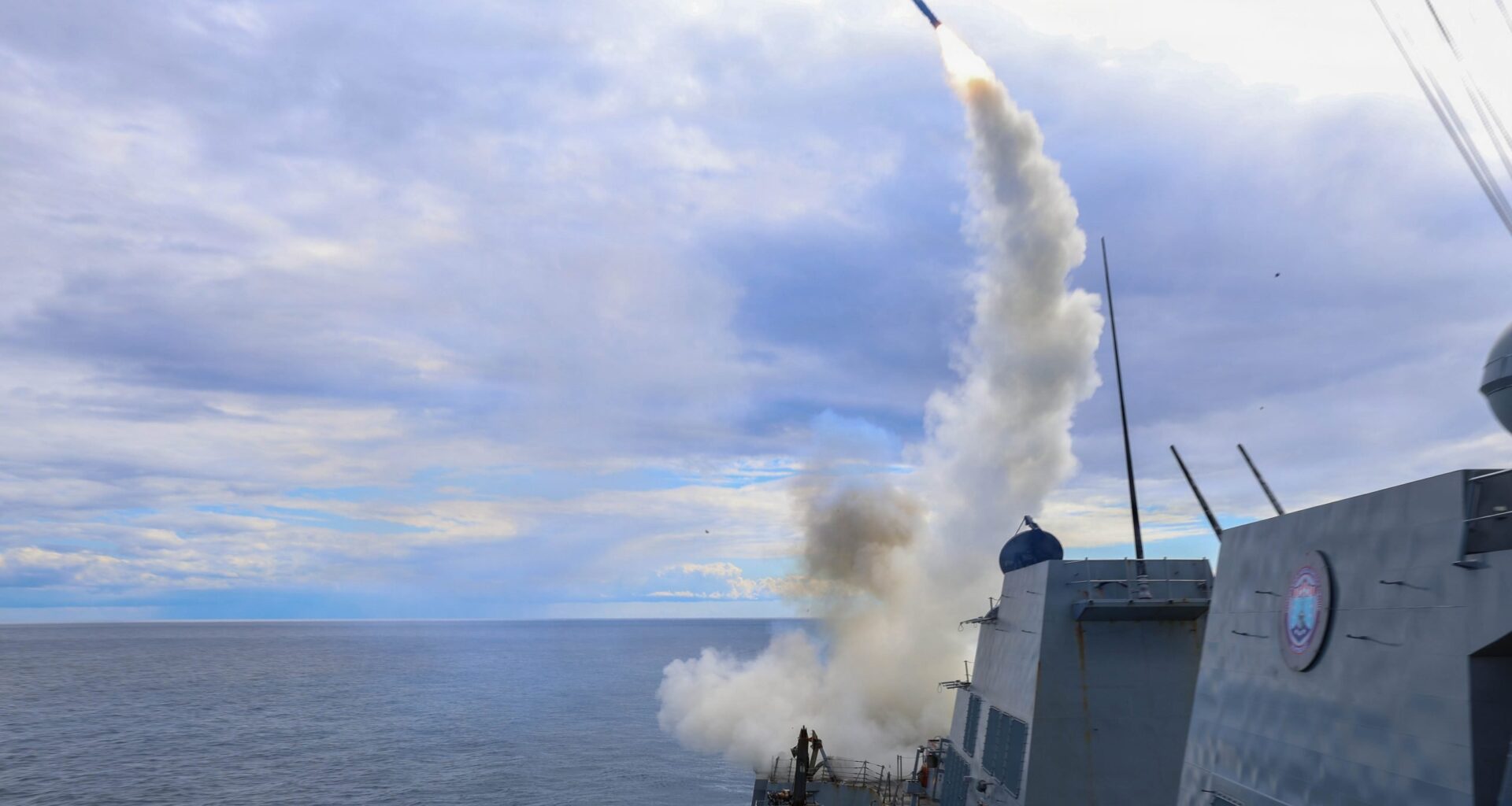
On February 28, 2026, a joint U.S.-Israeli military operation against Iran ignited a full-scale regional war. The opening strikes resulted in the deaths of Iran’s Supreme Leader and several senior officials, prompting immediate Iranian retaliation against U.S. military assets, civilian infrastructure in the Gulf, and Israel. The conflict has since expanded, drawing in the Gulf Cooperation Council (GCC) states, Turkiye, Cyprus, Jordan, Lebanon, and Azerbaijan, accompanied by a disruption of the strategic Strait of Hormuz.
The three main actors enter the conflict with different capabilities, objectives, and constraints. The United States possesses overwhelming military power but faces domestic political risks in a prolonged conflict. Israel seeks to eliminate what it views as an existential threat from Iran while reshaping the regional balance of power to its advantage. The Islamic Republic, weakened by leadership losses and significant military damage, is fighting primarily for regime survival while attempting to impose devastating costs on its adversaries. With the conflict escalating daily, the trajectory of the war is now dependent on competing calculations, objectives, and endgames in the United States, Israel, and Iran.
Washington’s Calculus
Washington entered the conflict in close coordination with Israel, transforming what may have remained a contained confrontation into a major crisis. Now embroiled in war, the main American objective is a swift and lasting resolution that aligns with its long-term interests. Publicly, the Trump administration has declared several reasons for attacking Iran, including the ambitious goal of “regime change.” However, this goal is fraught with contradictions and challenges.
The notion that an aerial campaign alone can induce the collapse of a deeply entrenched government has been tested and often disproven in military history. The American approach appears to mirror the Israeli plan to cripple the Iranian regime through a relentless air campaign targeting leadership and military infrastructure, coupled with efforts to fuel internal dissent.
The hope in Washington is that this pressure will produce one of three outcomes: the collapse of the regime, a military coup from within, or a popular uprising leading to a new government willing to negotiate on U.S. terms. This calculus underestimates the resilience of Iran’s theocratic deep state, which has weathered severe sanctions and large-scale protests over the past two decades through brutal repression. The killing of the Supreme Leader may paradoxically lead to the consolidation of power under a more hardline faction, complicating any path to a stable, pro-Western succession.
Tel Aviv’s Strategic Objectives
Israel, on the other hand, is viewed as the principal architect of the current military operation against Iran. Its policy of preventing Iran from obtaining a nuclear weapon, coupled with a desire to neutralize its regional proxies and missile arsenal, has driven a more aggressive strategy than that of its American ally. However, the current campaign appears to extend beyond these objectives and can be seen as a broader effort to impose Israeli hegemony over the region.
Israel’s calculations are twofold. First, if the costs remain limited due to U.S. involvement, Israel may have an incentive to prolong the war while continuing to weaken Iran. Its primary mission is to overthrow the Iranian regime by eliminating current and potential leaders, even if this necessitates mass assassinations. Israel hopes this will result in a friendly regime that can align with it regionally, join the Abraham Accords, and participate in Netanyahu’s emerging anti-Sunni Hexagon Alliance.
However, there are signs that Israel is increasingly interested in a different outcome: a weakened and internally destabilized Iran rather than a cooperative successor regime. This option could drag the Gulf states deeper into the war while fostering instability inside Tehran, especially if the current levels of applied pressure do not yield regime change. Such chaos would serve Israel’s plans, as a fractured and destabilized Iran would be too consumed by its own problems to project power abroad. A descent into chaos in a nation of 90 million would unleash instability across the region, including mass migration and a potential spillover of ethnic and sectarian conflict into neighboring states.
Such a scenario would disrupt the rising alignment between Turkiye, Saudi Arabia, and Egypt, undermine the chances of Syria’s resurgence, complicate the situation in Iraq, and ensure Israel’s dominance over the West Bank and Gaza. Most devastating implications will target Turkiye and Saudi Arabia, keeping them occupied with challenges and encircling them with failed states, ensuring Israeli hegemony for decades to come.
Tehran’s Survival Strategy
For the Islamic Republic, the 2026 war represents an existential crisis. Reeling from the loss of its top leadership and military assets, the regime finds itself in a precarious position. Its primitive thinking and lost opportunities have resulted in a confrontation that could have been avoided. Defenseless and at the mercy of the United States and Israel, the regime’s only objective is survival.
While seeking a swift end to the conflict, the regime cannot accept terms that amount to complete surrender, as this would lead to its ultimate demise. Lacking the conventional military strength to confront Washington and Tel Aviv directly, Tehran has resorted to asymmetric warfare designed to raise the costs of the conflict. This strategy is evident in two key arenas. First, Iran has escalated its attacks on critical economic infrastructure in the Gulf, targeting oil and gas facilities in Saudi Arabia and Qatar, as well as civilian centers across the GCC states. Second, it has attempted to disrupt the Strait of Hormuz, a chokepoint for the world’s oil supply. By attacking energy infrastructure, oil tankers, and declaring the strait a war zone, Tehran aims to impose economic pressure on the Gulf states and the broader international community in the hope of pushing Washington toward de-escalation.
In parallel, Iran appears to be pursuing a war of attrition, conserving its advanced ballistic missiles for later stages of the conflict. The calculus is that the United States, Israel, and regional countries possess only finite stockpiles of air defense interceptors. By launching waves of less sophisticated drones and missiles, Iran can force them to expend these valuable assets. Once these defensive systems are depleted, the region’s cities and infrastructure would become extremely vulnerable to Iran’s more capable missiles. Iran may also increase pressure on Gulf countries to influence the U.S. administration and might attempt to physically close the Strait of Hormuz if conflict escalates further. This strategy hinges on the belief that time is on Iran’s side and that the political will in Washington will wane as the costs mount.
However, this strategy is fraught with significant risks. It could isolate Iran and turn neighboring countries that have invested significant effort in avoiding direct conflict against Tehran. In doing so, Iran risks playing into Israel’s hands by widening the war and drawing additional regional actors into a prolonged conflict.
Another risk is that prolonging the conflict or resorting to radical measures against Washington might provoke a massive, unrestrained American response—an attack that could shatter what remains of the Islamic Republic. The regime is therefore walking a strategic tightrope, trying to inflict enough pain to compel negotiation without provoking a catastrophic escalation from which it could not recover.
This delicate balance is unlikely to hold for long. Strategies built on pressure, killing of leaders, or attrition can spiral beyond the original intent of the plan. This risk increases when multiple regional actors with differing and competing objectives are involved. If the war does not end quickly, we will likely witness unprecedented escalation with far-reaching consequences.
Issue: Geopolitics, U.S. – Gulf Policy
Country: Iran