
A reflection on Peace Corps service, cultural exchange, and the communities that shape who we become.
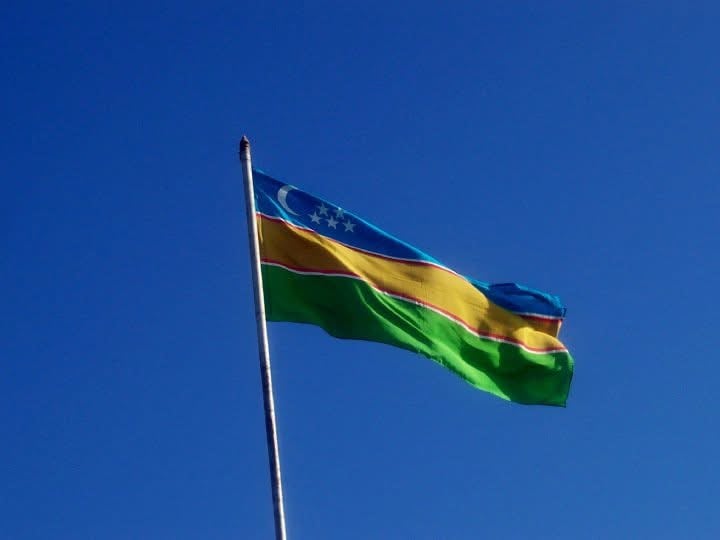
As Peace Corps Week comes to a close, I find myself pausing to reflect on how those years of service shaped the course of my life. For me, that reflection begins in a place many people have never heard of, Kungrad, Uzbekistan, in the autonomous region of Karakalpakstan. From 2003 to 2005, I served there as an Education Volunteer, specifically focusing on modernizing Uzbekistan’s English as a Foreign Language (EFL) program. I arrived fresh out of the University of North Texas with a BA in International Relations, but without any formal training as an educator and little working knowledge of Uzbekistan. What I found in Karakalpakstan, and what the people there taught me, set the course for much of my life that followed.
My assignment involved working with several schools in the region. Much of my time was spent with students who were eager to practice their English with an American, or just figure out what the lyrics to their favorite American pop songs meant. The rest of my time was spent collaborating with Uzbek and Karakalpak EFL teachers. Together we worked on modern EFL pedagogy, lesson design, and early introductions to technology in the classroom. In many ways, my role was less about bringing answers and more about sharing ideas and learning alongside the teachers who were already deeply committed to their students.
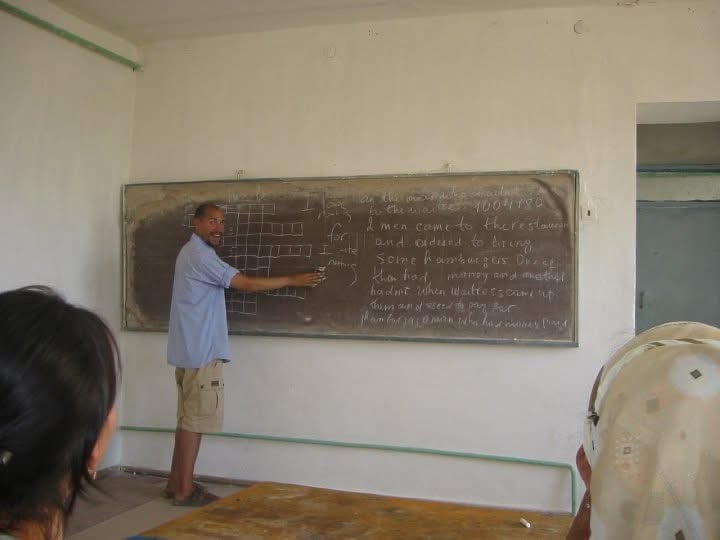
Photo of the author, taken in Moynaq, Karakalpakstan, an autonomous republic in Uzbekistan.
Some of the work that remains most meaningful to me happened outside my daily classroom visits and lesson planning. One highlight was organizing a teacher training conference for educators in the area around Moynaq. Moynaq, once a thriving fishing community on the shores of the Aral Sea, had been devastated by the environmental and economic collapse that followed the sea’s disappearance. The rusting fishing boats, stranded to this day in the desert sand, are a surreal reminder of how quickly a community’s economy can disappear. Schools in that region were particularly underserved, and bringing teachers together for professional development felt like a small but meaningful way to support them.
Another project I remain proud of was establishing an EFL library and resource center using donated materials sent from abroad. Access to teaching resources was limited, and the idea was simply to create a shared space where teachers could borrow books, lesson materials, and language resources. It was not a large project by global development standards, but it was something that teachers and students could use every day.
What mattered most about my service, however, were the relationships. I remain deeply grateful to the host-country national staff and colleagues I worked with. The friendships we built and the lessons they shared with me went far beyond language teaching. They taught me patience, humility, and what community support truly looks like in practice. Peace Corps Volunteers often talk about the impact they hope to make, but I left realizing how much I was shaped by the people who welcomed me.
Before joining the Peace Corps, I had not in any way imagined that education would become a central part of my professional life. Yet the experience of working with teachers and students in Karakalpakstan fundamentally changed my direction. After my service ended, I continued working in cross-cultural education in the United States, and today I live and work in Israel as an education specialist focused on supporting and improving educational practice. I also serve as the Assistant Director of a nonprofit that works to connect Indigenous communities around the world.
Looking back, it is clear to me that the mission of the Peace Corps is still playing out in my life. The experience did not end when my service ended. The values of resilience, community service, and cross-cultural understanding continue to shape the work I do and the choices I make.
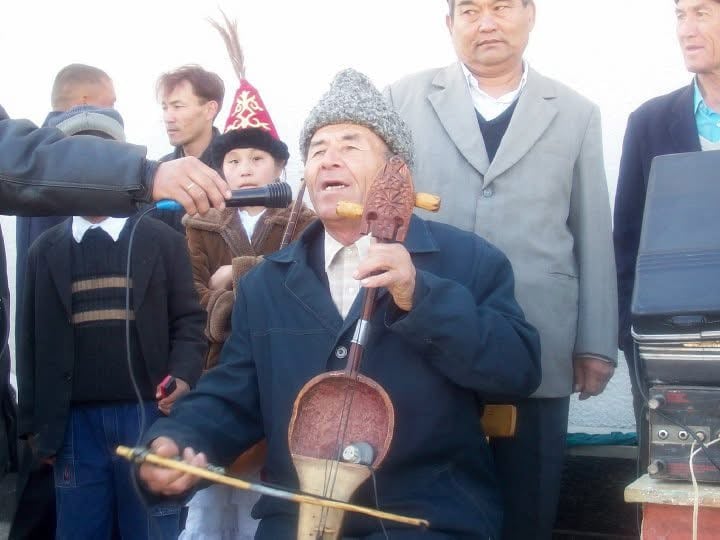
Photo taken by the author in Kungrad, Karakalpakstan, an autonomous republic in Uzbekistan.
As a Returned Peace Corps Volunteer (RPCV), I often think about the Peace Corps’ Third Goal: promote a better understanding of other peoples on the part of Americans. The idea is to bring our new global perspectives home, and encourage cultural understanding, volunteerism, and public service. For many RPCVs, I think that goal continues long after we come home. We point at the screen whenever our host country makes the news, we tell nostalgic stories about the food or our host families, and sometimes we write articles and books…and just hope someone reads them! We carry the lessons of our host communities into the rest of our lives, into our professions, and into the ways we engage with the world.
For me, that commitment to cultural understanding and service is also connected to another part of my identity. As a citizen of the Chickasaw Nation, I grew up with a strong sense of culture and responsibility to community. That spirit is what I brought with me when I joined the Peace Corps. I shared my culture with students and teachers, and in return they shared their own stories with me, stories I later carried back to my home community in the United States. Those exchanges were also part of something larger, the idea that sharing cultures and learning from one another is itself a form of public service. In that sense, serving abroad felt like a patriotic form of federal service, and it remains one of the experiences I am most proud of.
Today, as a citizen of Israel as well, I try to bring that same spirit forward. My family and I were welcomed here with open arms, and I see my work in education and community engagement as one way to contribute to the society that has become our home. The lessons I learned in Uzbekistan, about resilience, cooperation, and the power of local communities, continue to guide how I approach that work.
Peace Corps service does not end when Volunteers leave their countries of assignment. In many ways, it becomes a foundation for everything that follows. For me, the path from Karakalpakstan to Israel has been shaped by the same core belief that first brought me to Uzbekistan. Communities are strongest when people show up for each other, share knowledge, and work together to build something better.
Jason Watson is an American-Israeli and citizen of the Chickasaw Nation. He is Assistant Director of Indigenous Bridges, a nonprofit organization dedicated to the advancement of Indigenous communities around the world. He also works as a Pedagogical Leader and Fellow with TALMA, an education nonprofit that works to strengthen English language proficiency in under-resourced communities across Israel.