
Summary and Key Points: Steve Balestrieri, a former U.S. Army Special Forces NCO and National Security Columnist, evaluates the “existential crisis” of the Iranian regime following the decapitation of its senior leadership.
-As of March 8, 2026, the deaths of Ayatollah Ali Khamenei and over 40 top officials in the February 28 “House of Leadership” strike have left Tehran rudderless.
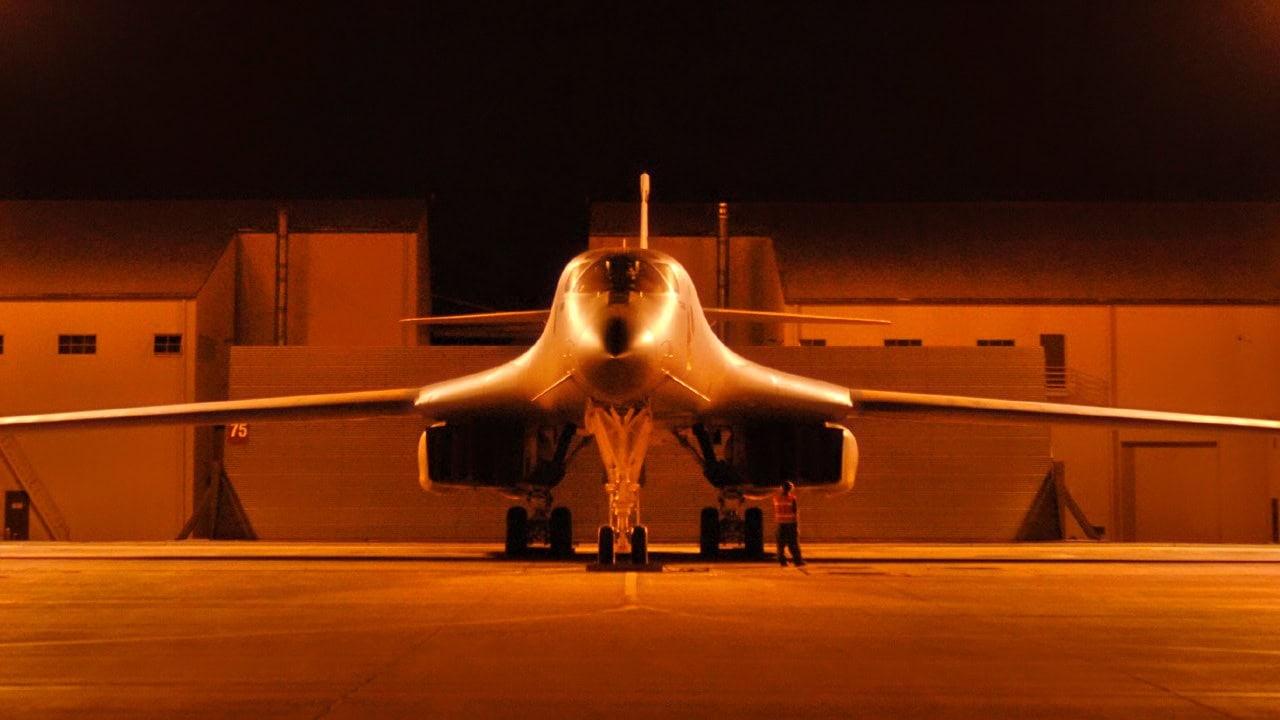
A 28th Bomb Wing B-1 Lancer sits on a ramp waiting to taxi in the early morning at Ellsworth Air Force Base, South Dakota, August 30, 2006.The B-1 Lancer will be taking off to conduct its first Joint Air-to-Surface Standoff Missile (JASSM) operational fire from a B-1 Lancer. (US Air Force Photo By: Airman Angela Ruiz) (Released)
-This report analyzes the collapse of the IRGC’s cohesive command, the ongoing “Rising Lion” air campaign, and the regime’s failure to secure meaningful rearmament from Russia or China.
-Balestrieri concludes that while the IRGC attempts to retain internal control through repression, the regime is teetering on a definitive precipice.
Why the Death of Ayatollah Khamenei Has Left Iran Rudderless
The current regime in Iran is facing an existential crisis of its own making. An insistence on sponsoring a global network of proxy terror groups, on building and possessing nuclear weapons, and building a huge arsenal of ballistic missiles, has put them at a possible breaking point.
A massive air campaign by Israel and the United States has decapitated its senior leadership, with more than 40 of its military, political, and religious leaders dead. The 86-year-old Ayatollah Ali Khamenei and his closest leaders were all killed in a massive airstrike by the Israelis on Saturday morning, February 28, when they met in the complex, known as “Beit-e Rahbari” (“House of Leadership”) in Tehran.
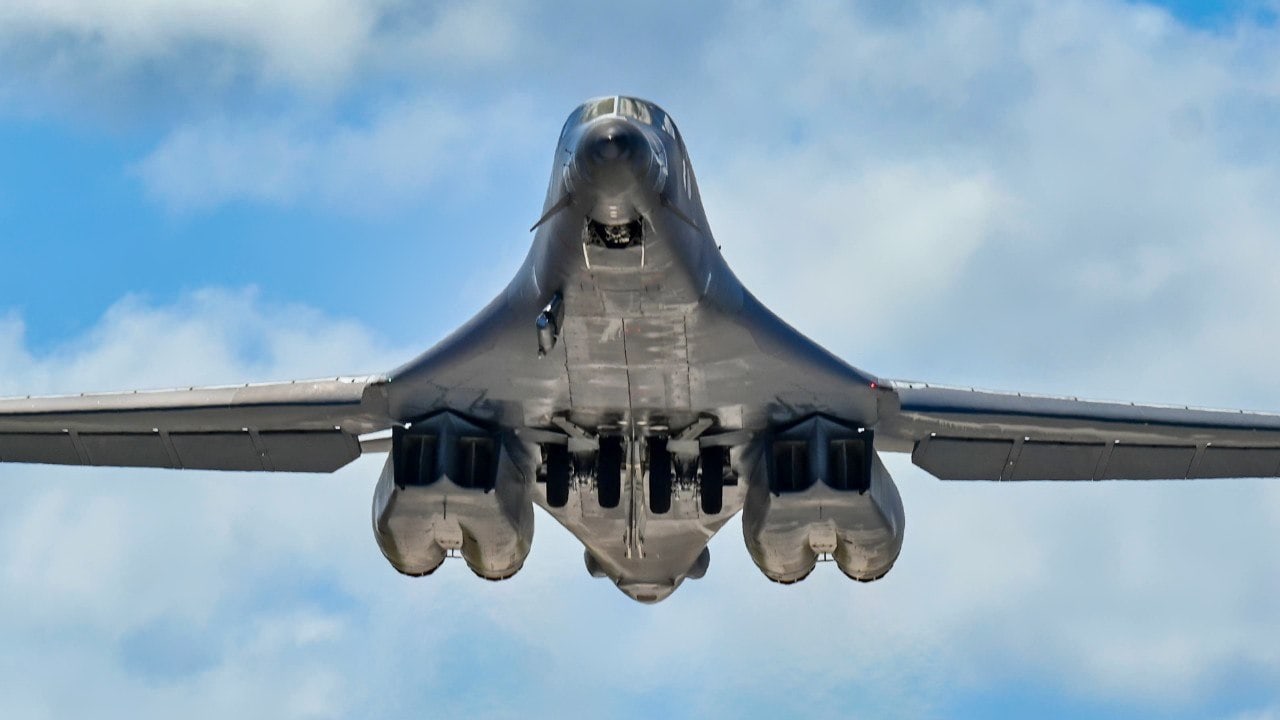
B-1B Lancer Bomber. Image Credit: Creative Commons.
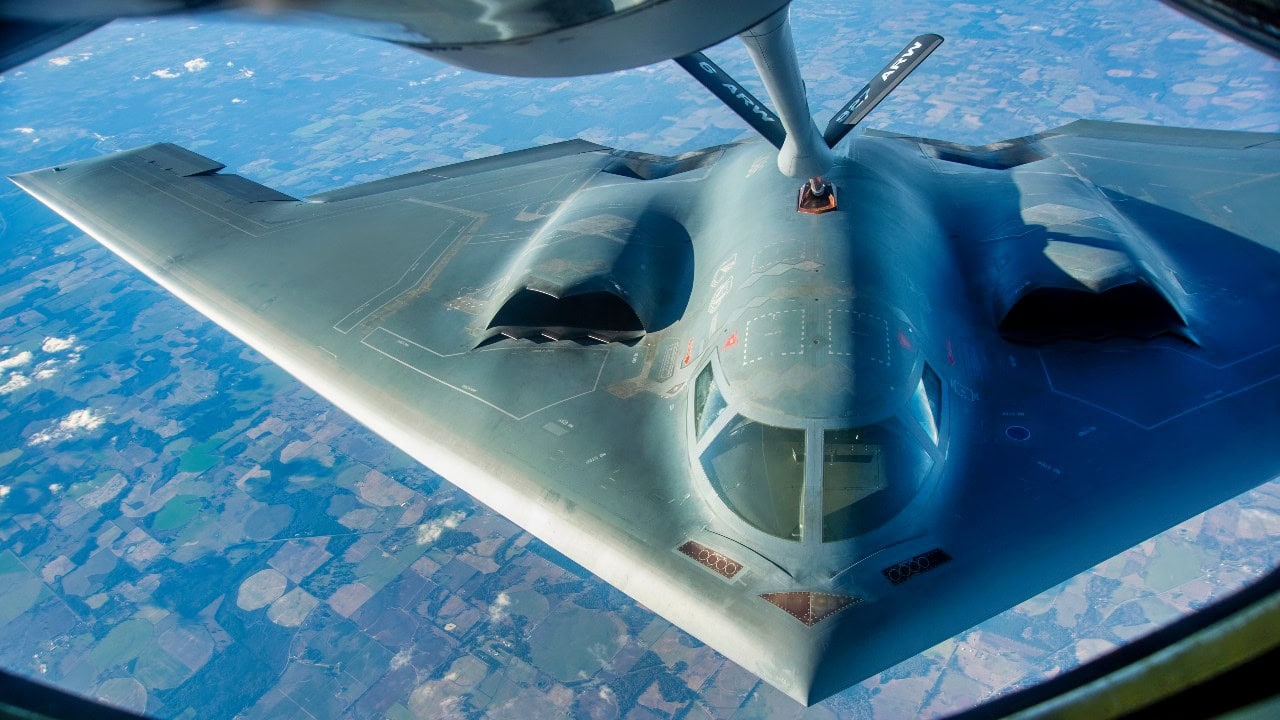
A B-2 Spirit assigned to Whiteman Air Force Base, Mo., receives fuel from a KC-135 Stratotanker, Feb 7, 2021. A B-2 Spirit performed alongside a B-1B Lancer and a B-52 Stratofortress for the Super Bowl LV flyover on Feb. 7, 2021. (U.S. Air Force photo by Airman 1st Class David D. McLoney)
The Iranians then met shortly afterward to vote on a succession plan, but that leadership meeting was also bombed, and the leaders were killed. And while individual IRGC units continue to conduct missile and drone attacks against Israel and all of Iran’s neighbors with the exception of Lebanon, the regime is rudderless without anyone being able to step up and put together a cohesive plan on where to go from here.
US/Israel Calling For Iranians To Oust The Regime:
President Trump has been calling for Iranian citizens to rise up against the regime, but they have no organization, no weapons, and no leaders to follow, as the regime has spent decades repressing the citizens in its paranoid zeal to maintain power.
Meanwhile, the US and Israel continue to pound IRGC bases, Basij infrastructure, and police facilities in an effort to erode the state’s repression capacity. Despite this relentless pounding, the regime, at least thus far, has been able to retain some of its intelligence and internal security apparatus.
However, the air campaign, as devastating as it’s been, is less than a week old; it will take far longer for the system to collapse entirely.
War Of Necessity or Choice?
Critics of the president have been quick to point out that this was a war of choice. They state that there was no imminent threat of Iran acquiring nuclear weapons or launching attacks on the United States and its allies and partners in the Middle East.
The administration has stated that Iran has never stopped trying to build nuclear weapons. The Iranian claims that they were only trying to build nuclear power plants were debunked by enriching uranium to 60 percent, which isn’t necessary for power plants. Washington even claimed that its offer to Tehran to furnish power plant uranium (at 5 percent enrichment) for free was rejected.
And, Washington says that the Iranian ballistic missile program, which had been hammered last June, was back in full swing, producing more than 200 a month. The object being if they built up an arsenal large enough, no one could threaten them while they pursued the building of nuclear weapons, unless they wished to withstand thousands of missiles, overwhelming any air defenses.
In this scenario, Iran is waging a war of choice.
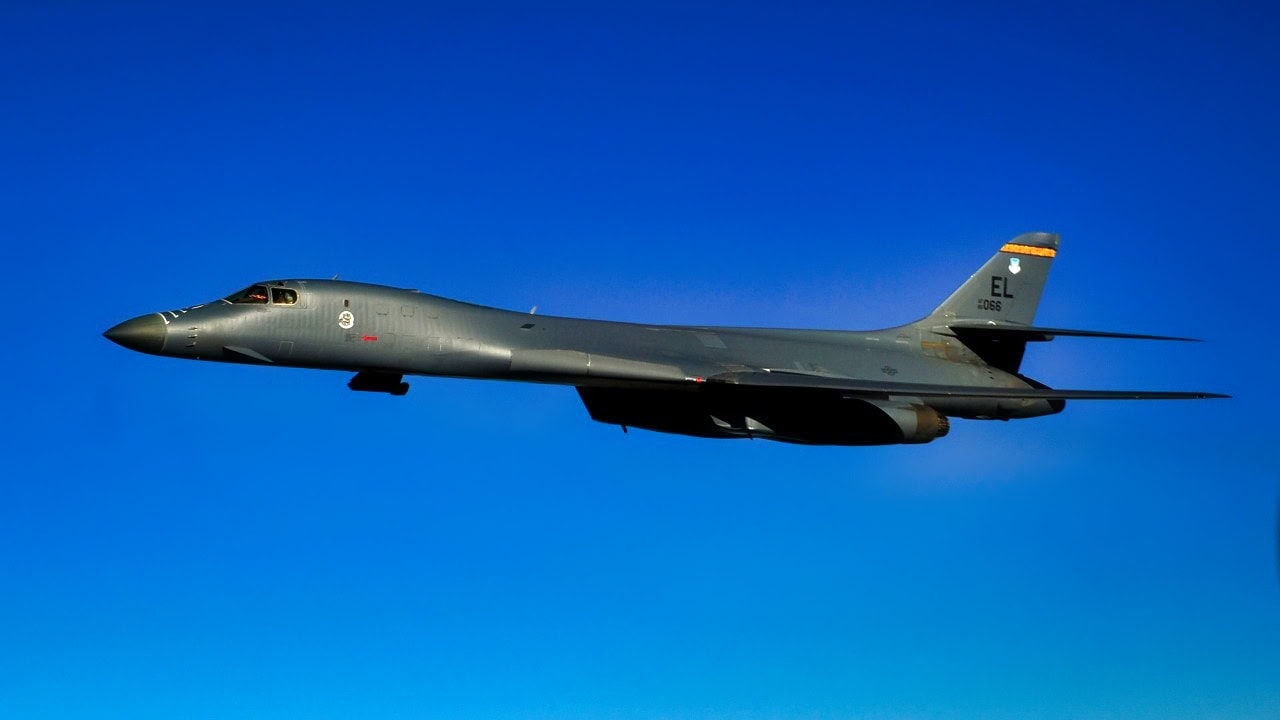
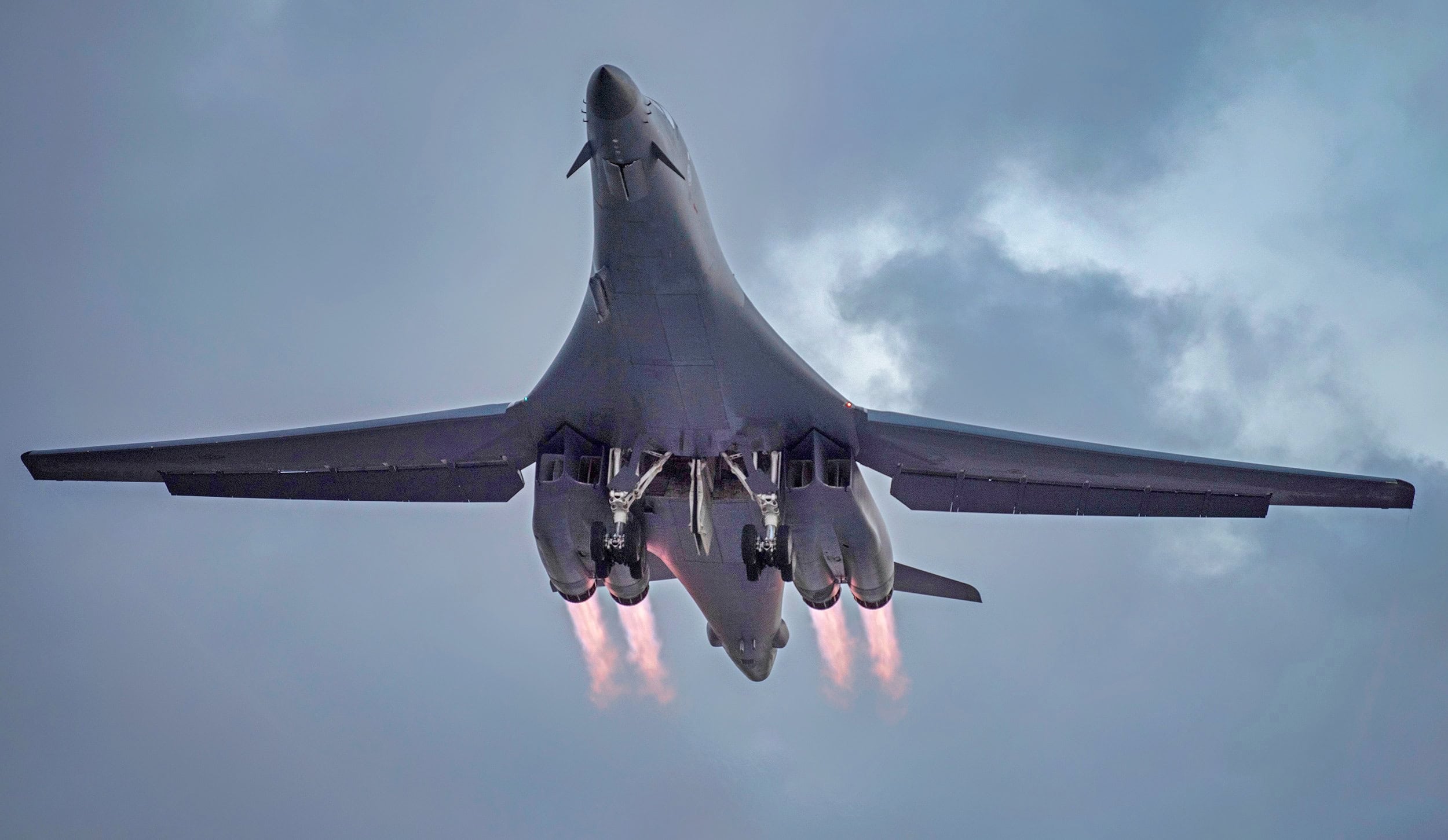
B-1B Lancer Bomber. Image Credit: Creative Commons.
October 7 Was A Turning Point In Iran’s Possible Demise:
Iran also played a key role in supporting Hamas’ October 7, 2023, massacre and abduction of Israelis — the deadliest day for Jews since the Holocaust.
This was followed by direct Iranian missile and drone attacks on Israel in April and October 2024. And it set in motion the direct confrontation between the Islamic Republic, Israel, and the United States.
This was an epic blunder by the Ayatollah. The attack on Israel backfired and resulted in Iranian proxies Hezbollah and Hamas being decimated by relentless Israeli attacks.
Khameinei then rejected nuclear talks as Iran enriched uranium to 60 percent, one step below weapons grade, and restricted inspections by the International Atomic Energy Agency (IAEA). An IAEA report then indicated Iran was much closer to a nuclear weapon than previously believed.
The Israelis weren’t waiting until they were in “imminent danger” and acted swiftly. Operation Rising Lion was then launched by Tel Aviv in June of last year. A few days later, the United States finally decided to actively confront Iran after five decades of appeasement, negotiations, and sanctions. The two countries bombed Iran’s nuclear enrichment facilities at Fordow, Natanz, and Isfahan, and its ballistic missile production facilities.
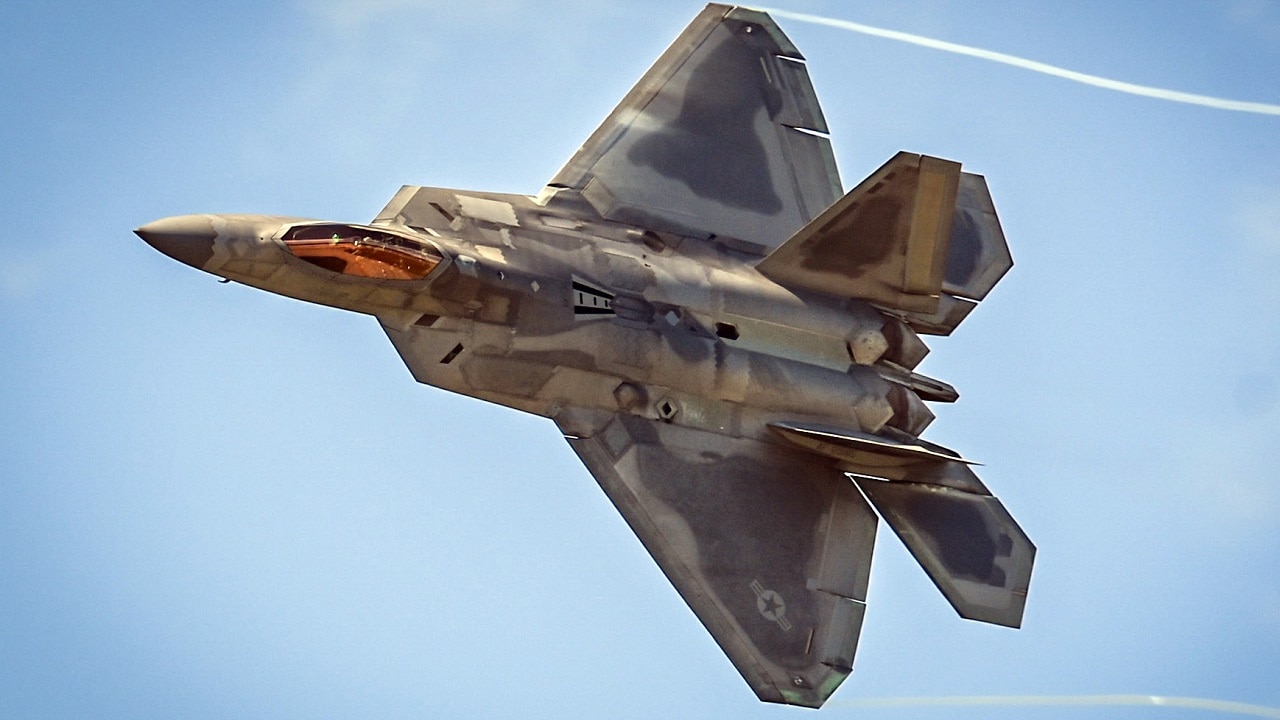
Maj. Joshua “Cabo” Gunderson, F-22 Raptor Demonstration Team commander, performs at the Thunder Over New Hampshire Air Show at Pease Air National Guard Base in Portsmouth, N.H., Sept. 11, 2021. The mission of the F-22 Demonstration Team is to showcase the unmatched maneuverability of the Air Force’s 5th generation air dominance stealth fighter, highlight the history of the Air Force’s service though heritage formation flights, and interact with local communities through outreach events. (U.S. Air National Guard photo by Tech. Sgt. Steven Tucker)
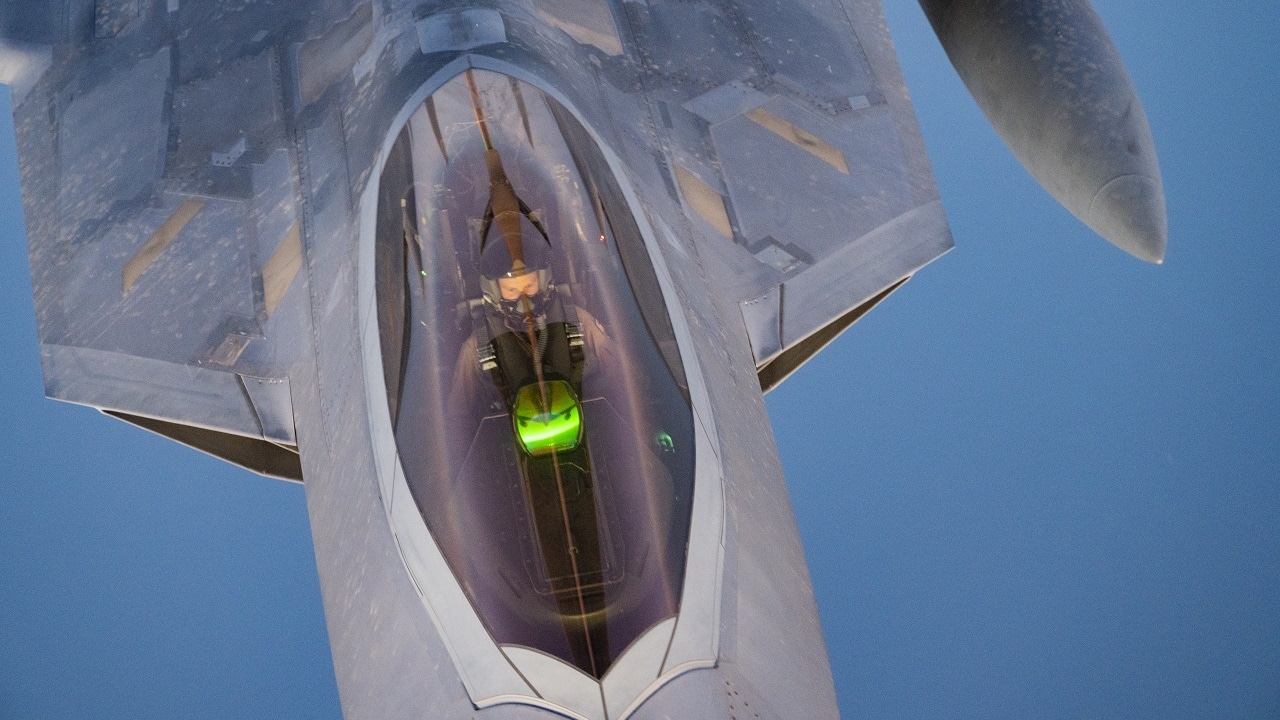
A U.S. Air Force F-22 Raptor receives fuel from a U.S. Air Force KC-135 Stratotanker assigned to the 340th Expeditionary Air Refueling Squadron, above the U.S. Central Command area of responsibility, March 14, 2022. The F-22 Raptor is a fifth-generation aircraft that combines stealth, supercruise, maneuverability, integrated avionics, and is designed to project air dominance, rapidly and at great distances, and deter regional aggressors while deployed in the USCENTCOM AOR. (U.S. Air Force photo by Staff Sgt. Frank Rohrig)
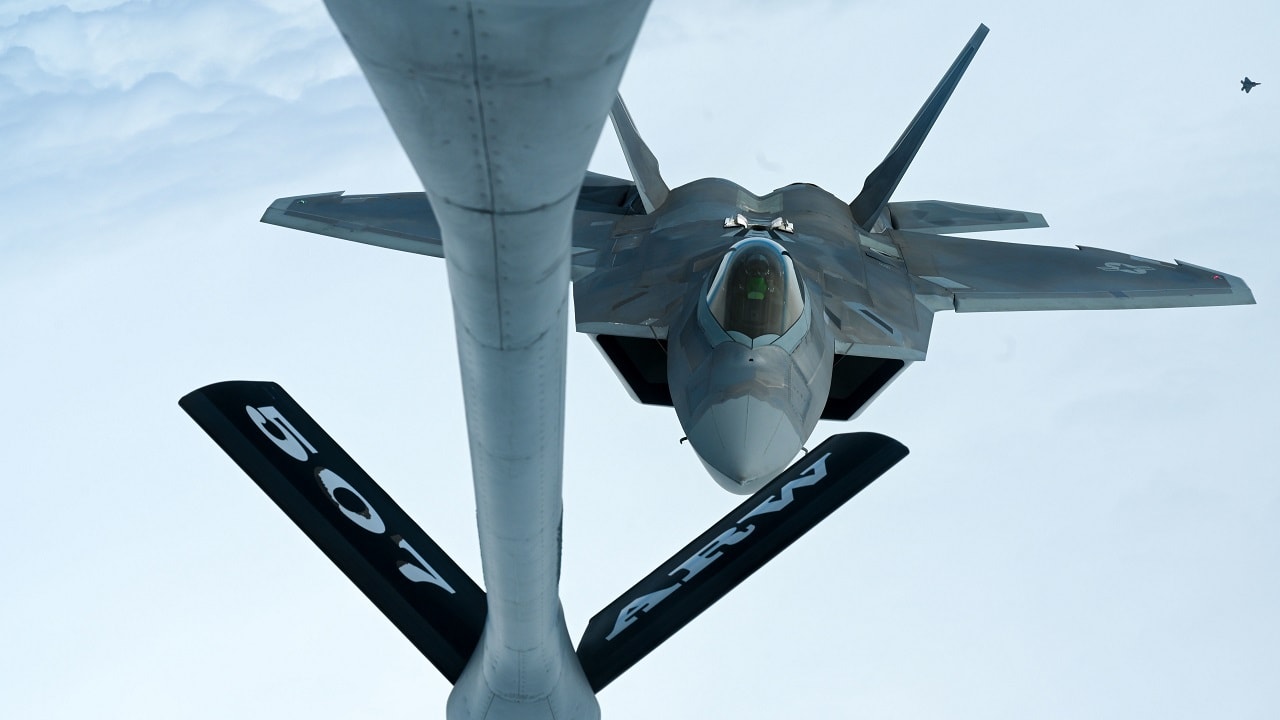
Eight F-22 Raptors with the 325th Fighter Wing at Tyndall Air Force Base, Florida, receive fuel from a KC-135 Stratotanker from the 507th Air Refueling Wing from Tinker Air Force Base, Oklahoma, Feb. 7, 2022, while the Okies flew to the U.S. Virgin Islands for training. (U.S. Air Force photo by Lauren Kelly)
Tehran faced a growing internal crisis with internal protests across all 31 provinces amid economic collapse and a plunging currency. Human rights groups this January reported that security forces killed as many as 32,000 demonstrators and arrested tens of thousands in a sweeping crackdown.
October 7, foolishly placed Iran on a trajectory that ended up exactly where it is today, with the regime teetering on the precipice of collapse.
Will The Regime Collapse?
The events of February 28 showed what seemed unthinkable even a few months ago. With Khameinei and most of his senior leaders killed in a single airstrike, once the news was released, spontaneous celebrations erupted.
Videos showed pockets of celebration in major Iranian cities. The Iranian diaspora abroad celebrated even harder. For many of the repressed citizens, both at home and abroad, the elimination of the supreme leader appeared to represent a seismic shift in events.
Will this snowball into a full-fledged revolt, or will the regime reassert total control and continue oppressing its citizens? That is still unclear. However, with each retaliation the IRGC unleashes on Israel, US military bases, or Gulf states, the counter-attack by US and Israeli air forces grows more deadly.
Tehran hoped that by attacking the Gulf states, that they’d pressure Washington to stop the bombing, but in another miscalculation, that too has backfired. For now, the IRGC, the regime’s sole best hope to retain power, has been holding fast despite the daily hammering of airstrikes.
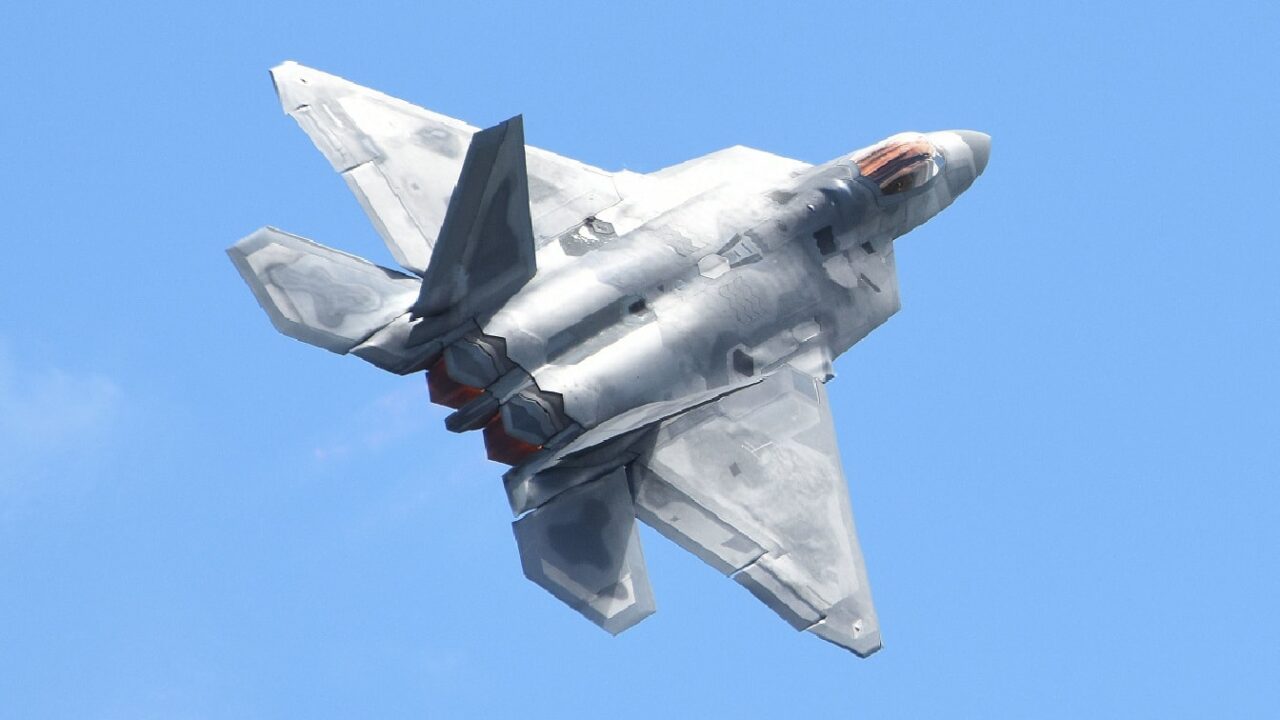
U.S. Air Force Maj. Paul Lopez, F-22 Demo Team commander, performers aerial maneuvers July 14, 2019, at the “Mission Over Malmstrom” open house event on Malmstrom Air Force Base, Mont. The team flies at airshows around the globe, performing maneuvers that demonstrate the capabilities of the fifth-generation fighter aircraft. The two-day event, featured performances by aerial demonstration teams, flyovers, and static displays. (U.S. Air Force photo by Airman 1st Class Jacob M. Thompson)
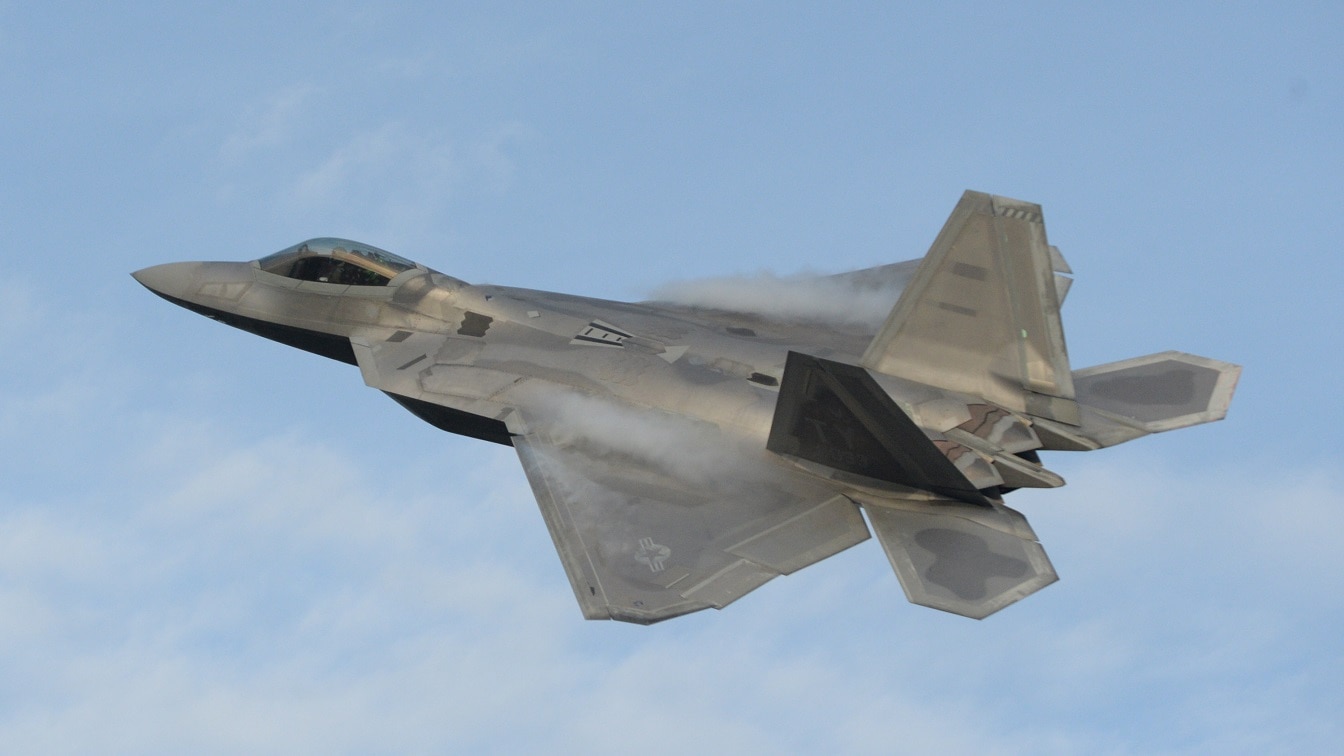
An F-22 Raptor from Tyndall Air Force Base prepares to land at MacDill AFB for AirFest 2016, March 18, 2016. The F-22 was set up as a static display for visitors to get an up-close look at the world’s best air dominance fighter. (U.S. Air Force photo by Airman 1st Class Cody R. Miller/Released)
But this much is true: even if the regime survives, it will be much, much weaker than it has ever been. Its missile defenses and production will be wiped out. And any further attempts to put together a nuclear weapons program will be swiftly dealt with.
The entire regime is compromised by Israeli intelligence. The Mossad has the Iranians looking for spies under every blade of grass.
Will China And Russia Help It Rearm?
China and Russia are actively supporting Iran’s defense capabilities through military, technological, and diplomatic means, focusing heavily on supplying dual-use components for drone and missile programs.
While they provide essential economic and strategic backing, the direct, large-scale supply of major weapons systems remains less certain compared to ongoing, clandestine support.
Beijing is a crucial economic partner, purchasing around 90 percent of Iranian oil. Reports indicate Chinese companies supply dual-use components for drone and missile programs, and there are discussions of finalizing deals for advanced anti-ship cruise missiles.
Moscow has troubles enough in continuing its strategic blunder in invading Ukraine, where it can’t supply their own military with enough weapons and equipment. They can’t offer Iran much other than voicing their outrage over the US and Israel’s bombing campaign. Russia’s military is a hollowed-out force, and it is in danger of losing another ally in the Middle East after Syria’s civil war.
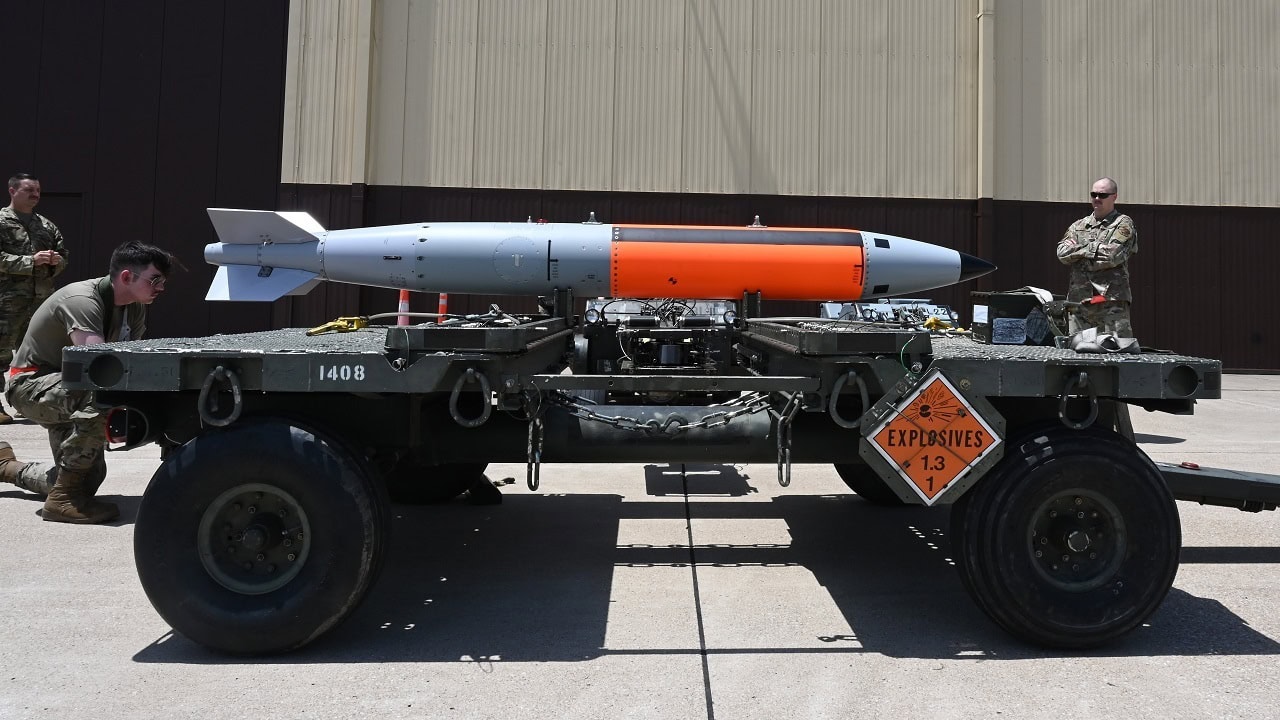
The 72nd Test and Evaluation Squadron test loads a new nuclear-capable weapons delivery system for the B-2 Spirit bomber on June 13, 2022 at Whiteman Air Force Base, Missouri. The 72nd TES conducts testing and evaluation of new equipment, software and weapons systems for the B-2 Spirit Stealth Bomber. (U.S. Air Force photo by Airman 1st Class Devan Halstead)
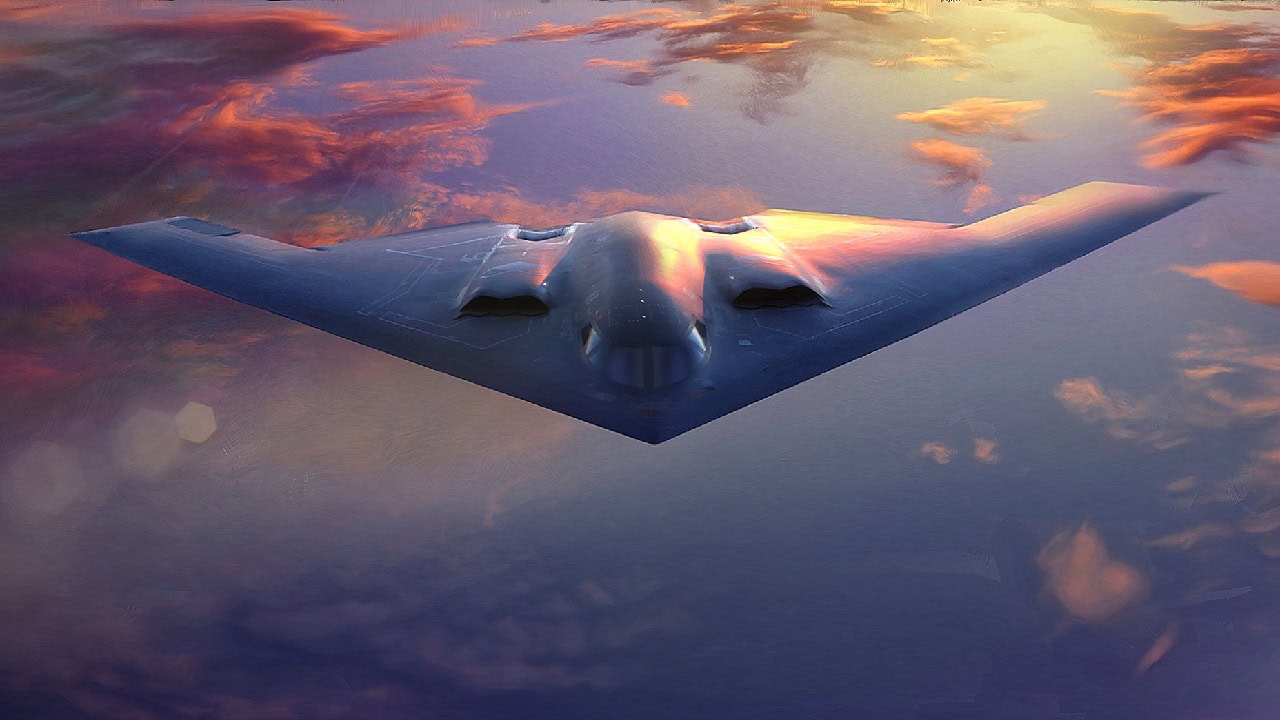
B-2 Spirit. Image Credit: Creative Commons.
“Niutanqin, a social media account with links to Chinese state media widely seen as a mouthpiece for Beijing, wrote Monday that “Iran has no real ally,” adding that even closer nations will prioritize their own national interests over lifting Tehran out of the crisis.”
Regime change may be a distant possibility. During times of chaos and uncertainty, factions like Iran’s security forces, which already have a predisposition for violence against their own people, will normally prevail.
While Iran is poised for a democratic revolution, it will probably revert to another authoritarian regime. Nothing is written in stone; it will ultimately be up to the people to choose their own path.
About the Author: Steve Balestrieri
Steve Balestrieri is a National Security Columnist. He served as a US Army Special Forces NCO and Warrant Officer. In addition to writing on defense, he covers the NFL for PatsFans.com and is a member of the Pro Football Writers of America (PFWA). His work was regularly featured in many military publications.