
British holidaymakers planning trips to popular destinations such as Cyprus, Turkey, and the Maldives are being urged to review their plans as the Foreign, Commonwealth & Development Office (FCDO) updates its travel advice in light of the ongoing Middle East war.
The conflict, now in its ninth day, has prompted airspace closures, flight cancellations, and warnings of heightened risks for travellers. UK nationals have already been evacuated from Oman, the United Arab Emirates, and other affected areas, with the government arranging charter flights to bring citizens home safely.
“Even countries not directly involved in the conflict are experiencing travel disruptions,” the FCDO said, advising Britons to monitor airline updates, check insurance coverage, and register with the FCDO before travelling.
Countries where all travel is advised against
The FCDO has warned against all travel to several countries due to active conflict, terrorism, or instability:
Afghanistan: Complete avoidance of travel is advised.Iran: British nationals are urged to reconsider their presence in Iran due to serious risks.Iraq: All travel to Federal Iraq and the Kurdistan Region is considered unsafe.Israel and Palestine: Travel is fully restricted.Syria: Travel to Syria is strongly discouraged.Yemen: All travel is advised against.Countries with partial travel restrictions
Some destinations are only considered safe for essential travel, often due to border tensions, conflict zones, or other security risks:
Middle EastBahrain: Travel only for essential reasons.Kuwait: Travel only for essential reasons.Qatar: Travel only for essential reasons.Oman: British nationals in Duqm are advised to shelter in place; visitors in Salalah and surrounding areas should leave if possible.Saudi Arabia: Avoid areas near the Yemen border; exercise caution in Riyadh and the Eastern Province.Jordan: Avoid areas near the Syria border; other areas only for essential travel.United Arab Emirates including Dubai: Travel only for essential reasons.North AfricaEgypt: Avoid North Sinai and the Egypt-Libya border. Northern South Sinai and parts of Ismailiyah and Western Desert are restricted to essential travel only.South and Central AsiaPakistan: Avoid areas near Afghanistan, the Line of Control in Pakistan-administered Kashmir, and districts in Balochistan and Khyber Pakhtunkhwa. Northern Sindh and parts of Punjab are only for essential travel.CaucasusArmenia: Avoid areas along the Armenia-Azerbaijan border and the M16/H26 road between Ijevan and Noyemberyan.Azerbaijan: Travel near the Armenia border is restricted; southwestern regions affected by recent conflict are for essential travel only.Georgia: Avoid Russian-occupied regions of South Ossetia and Abkhazia; areas immediately next to these boundaries are only for essential travel.Lebanon: Certain areas of Beirut and southern suburbs are off-limits.Popular holiday destinations: exercise caution
Even destinations often seen as safe for holidaymakers are affected by global travel disruption linked to the Middle East conflict:
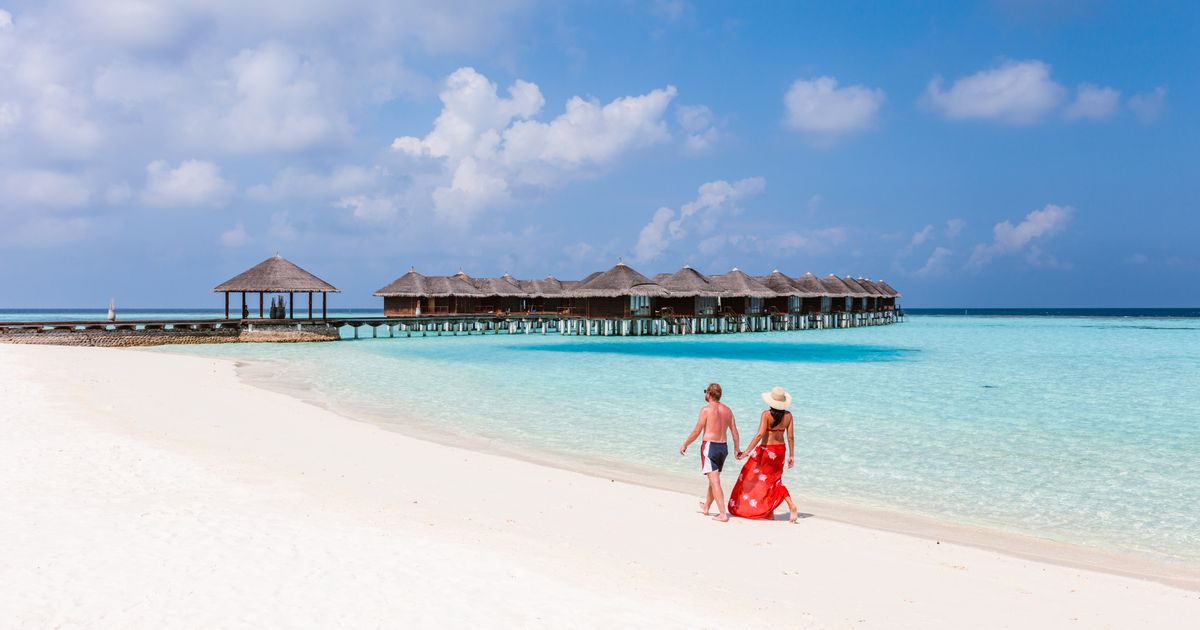
Cyprus: Travel is still possible, but the FCDO warns that terrorist attacks cannot be ruled out, including in areas frequented by foreign nationals.Turkey: Travel near the Syria border is strongly discouraged; other areas are for essential travel only.Maldives: Travel disruption is widespread due to airspace closures; visitors are advised to check with airlines, monitor news, and review insurance coverage.Sri Lanka: While not directly involved, flights are disrupted due to Middle East escalation; travellers should verify schedules and insurance.
It comes as The Middle East war has entered its ninth day as an American bomber landed in Britain amid US warnings of a “surge” in strikes on Iran.
A second Government charter flight carrying British citizens from Oman landed at Gatwick Airport at 12.30am on Saturday as efforts to help people trapped in the war zone continue. The Titan Airways flight departed from Muscat International Airport at 5.30pm before a short layover in Cairo, Egypt.
The latest arrivals join around 6,500 Britons who have returned from the United Arab Emirates since widespread conflict began in the region.
On Saturday morning, Emirates announced it was suspending all flights to and from Dubai after blasts were reportedly heard in the city.
About 30 minutes later, the airline said flights would resume, with passengers who have confirmed bookings for flights that afternoon told they may go to the airport.
Dubai International Airport said in a post on X that operations had partially resumed after the suspension, but urged people not to travel to the airport unless they had been contacted by their airline confirming the flight.
Questions linger over the UK’s future role in the conflict, with Foreign Secretary David Lammy suggesting RAF jets could legally strike Iranian missile sites being used to attack British interests in the Middle East.
Sir Keir Starmer will seek to reassure the public at home as the Middle East conflict continues into its tenth day. The Prime Minister will discuss the impact on people in the UK as he visits a London community centre on Monday.
Ahead of the visit he said the UK is “working round the clock to keep British citizens safe” and acknowledged that Britons at home are “worried sick” for friends and family.
“Staff are on the ground to support those in need, government-provided flights are helping people get home, and our tireless armed forces are flying across the region to defend our allies and our interests,” he said.
It comes amid speculation over the impact of the war on the global economy.
After Iran’s supreme leader was killed in an Israeli strike at the start of the war, his son Mojtaba Khamenei was named as his successor on Sunday, in a move likely to draw the ire of US President Donald Trump, who has previously said he would be an “unacceptable” pick.
Earlier, Sir Keir spoke to Mr Trump on the phone about the countries’ military co-operation in the region, in what appeared to be a positive signal a day after the US president lashed out at him in a social media post and suggested the UK’s help was too late.
Mr Trump has repeatedly hit out at Sir Keir’s decision not to grant permission for the first wave of military action against Iran.
The Prime Minister later granted permission for “defensive” US action against Iranian missile sites from UK bases, and four American bombers landed at RAF Fairford in Gloucestershire and the US started using British bases for “specific defensive operations”.
After reports the UK was preparing the HMS Prince of Wales aircraft carrier to go to the Middle East, Mr Trump said “we don’t need them any longer” and that “we don’t need people that join Wars after we’ve already won!”.
No decisions have yet been taken to deploy the warship.
Foreign Secretary Yvette Cooper had earlier defended Sir Keir, saying he is “right to stand up for Britain and Britain’s interests” and that the UK needs to “take decisions ourselves” and should not be “outsourcing our policy to foreign countries”.
She also dismissed criticism from Sir Tony Blair, who had told a private event that the UK “should have backed America from the beginning”.
“Having been a minister in the last Labour government, I also think it is important to learn lessons from what went wrong in Iraq,” she said.
Sir Keir has sought to play down the rift with the US, saying earlier this week that the special relationship is “in operation right now” as the two countries share intelligence and work together amid the Middle East conflict.
Lib Dem leader Sir Ed Davey has urged the Prime Minister to call off the King’s state visit to the US over Mr Trump’s “illegal war” and as the US leader “repeatedly insults and damages our country”.
Meanwhile, UK forces engaged an attack drone fired from Iran to Iraq as RAF Typhoons and F-35 jets conduct defensive sorties across the region.
And a Merlin helicopter that can fly up to a mile in height and give advance warning of incoming drones or missiles is due to join.
A third Government charter flight to bring Britons home from the region was due to leave Muscat, Oman, on Sunday just before 7pm UK time and there are plans to charter a commercial flight from Dubai early this week.
More than 32,000 British nationals have now left the region, which includes the Gulf countries as well as Israel and Lebanon, by air since March 1.
Looking for more from MyLondon? Subscribe to our daily newsletters here for the latest and greatest updates from across London.