
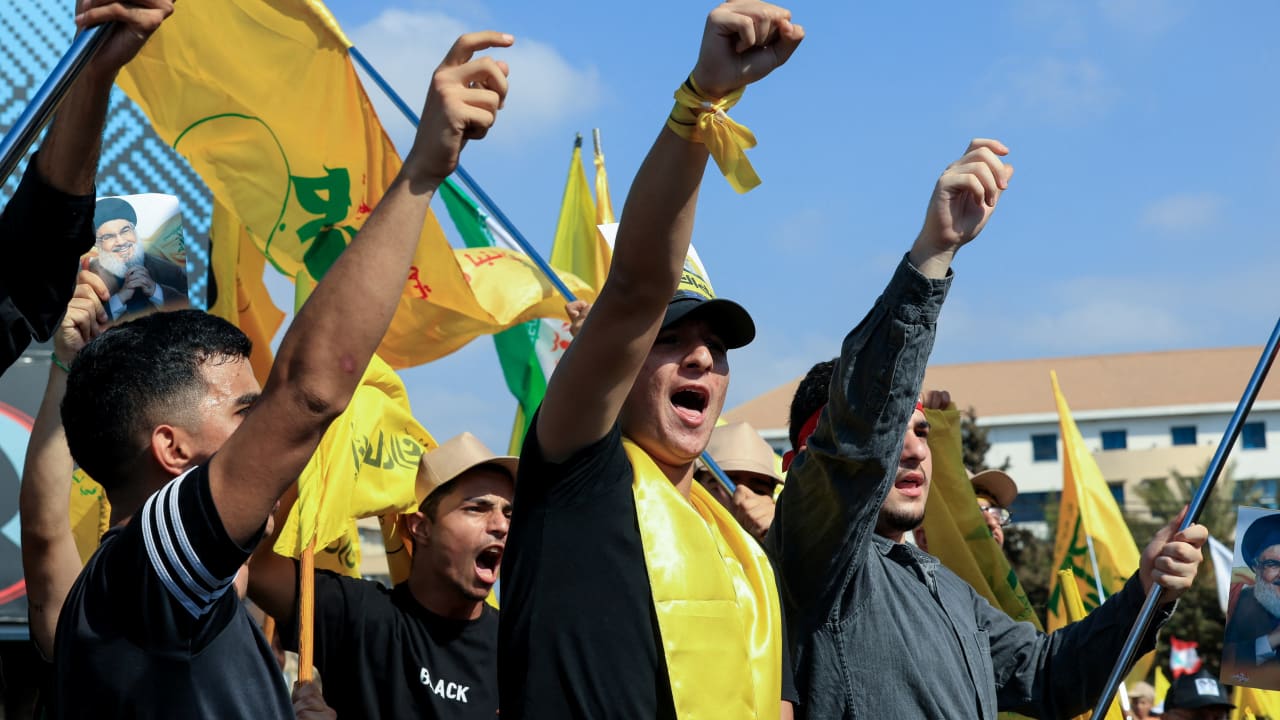
As Israel expands its ground operation in Lebanon following renewed Hezbollah missile attacks, retired British Army Col. Richard Kemp argues that the campaign is no longer just a border fight. In his view, it is part of a broader war aimed at breaking Hezbollah’s remaining capacity to threaten Israel during the wider confrontation with Iran.
For more stories from The Media Line go to themedialine.org
Speaking to The Media Line, Kemp said Hezbollah was built for exactly this kind of conflict. “Hezbollah, of course, exists for this very moment,” he said, arguing that the group’s missile arsenal was always intended for use in a war connected to Israeli or US operations against Iran. As long as Hezbollah retains meaningful capabilities, he said, Israel must assume it will use them. “One has to assume that while they have any capability, they will use it,” he said, warning that Israeli civilians remain at risk as long as the group can still fire.
For Kemp, Israel’s objective in Lebanon is likely twofold: to eliminate the leadership of Hezbollah and other armed groups operating there, and to destroy the military infrastructure that allows them to keep attacking. “The goal is probably twofold. First of all, to eliminate the leadership of Hezbollah, Hamas, and Islamic Jihad, if necessary,” he said. Yet he argued that decapitating leadership alone is not enough. “When you eliminate the leadership, inevitably someone else steps up to take over,” he said. That, in his view, is why Israel must also keep targeting missile launchers, stockpiles, and lower-level operatives. “You need to get rid of both the weapons of war and the people who are using them.”
A retired British Army officer who commanded forces in Afghanistan and later led the international terrorism team at Britain’s Joint Intelligence Committee, Kemp said the Lebanon front cannot be separated from the wider campaign against Iran.
According to Kemp, Tehran has been trying to widen the war across the region, including by threatening or attacking Arab states, in hopes of pressuring Saudi Arabia, the United Arab Emirates, and others to push Washington to halt the offensive. “I do believe that their objective in that is to apply sufficient pressure on Arab countries like Saudi Arabia and the UAE in order to get them, in turn, to pressure the US to call off the operation,” he said.

In Kemp’s view, that strategy is backfiring. “I think it’s going to have the reverse effect,” he said, arguing that countries once reluctant to confront Iran are now moving closer to what he called “an ad hoc coalition against Iran led by the United States.” He added that Tehran’s retaliation reflects not just strategy but humiliation. Iran, he said, is trying to restore its appearance of strength through force, driven by what he called “the sense of honor that prevails across the Middle East.” Even so, he said that instinct has worked against the regime. Despite volleys of missiles and drones, “it’s had relatively limited effect compared to the volume of missiles that they’ve fired,” he said, crediting Israeli, American, British, and Arab interception efforts.
Will Iran succeed in dragging othercountries into the conflict?
When asked whether strikes involving Azerbaijan and Turkey could pull more regional powers into the conflict, Kemp said Iran may be trying to widen the confrontation but is running up against its own weakening capabilities. He pointed to what he described as a drop in Iranian missile fire toward Israel, from large salvos to “single shots,” which he said suggests Iran’s offensive capacity is being “badly degraded.”
He also dismissed the idea that attacks affecting Turkey or the British sovereign base area in Cyprus would trigger formal North Atlantic Treaty Organization involvement. “That’s not going to happen,” he said, arguing that the alliance’s main fighting power in this theater is already engaged through the United States and that other NATO countries are unlikely to enter the war directly.
Far more scathing was Kemp’s view of Britain’s response to the attack on its base in Cyprus. He said London had failed even to defend its own territory. “The United Kingdom, which has, shamefully, in my view, stood on the sidelines wringing its hands,” he said. “That’s British Sovereign Territory, let’s not forget. It’s the first time that British Sovereign Territory has been attacked since 1982, the Falklands War.” Britain’s response, he said, has been “absolutely zero so far.”
On Iran’s military condition after nearly a week of US-Israeli strikes, Kemp’s assessment was blunt: “They were hit very, very badly on day one.” He said the opening wave exceeded even the 2003 “shock and awe” campaign against Iraq and that the damage has continued to build. In his account, the campaign has targeted the regime’s leadership, the machinery of internal repression, and the full range of Iran’s offensive capabilities, especially ballistic missiles and drones. Launch sites, storage facilities, and production centers are all under attack, he said.
Beyond that, Kemp argued that Iran’s conventional forces have been devastated. “Don’t forget also that the US has sunk almost the entirety, if not the entirety of the Iranian Navy,” he said, adding that Washington has also destroyed nearly all of the Iranian Air Force. His bottom line: “I think this campaign proceeds really, until Iran’s military capability, offensive capability is reduced to pretty much zero.”