
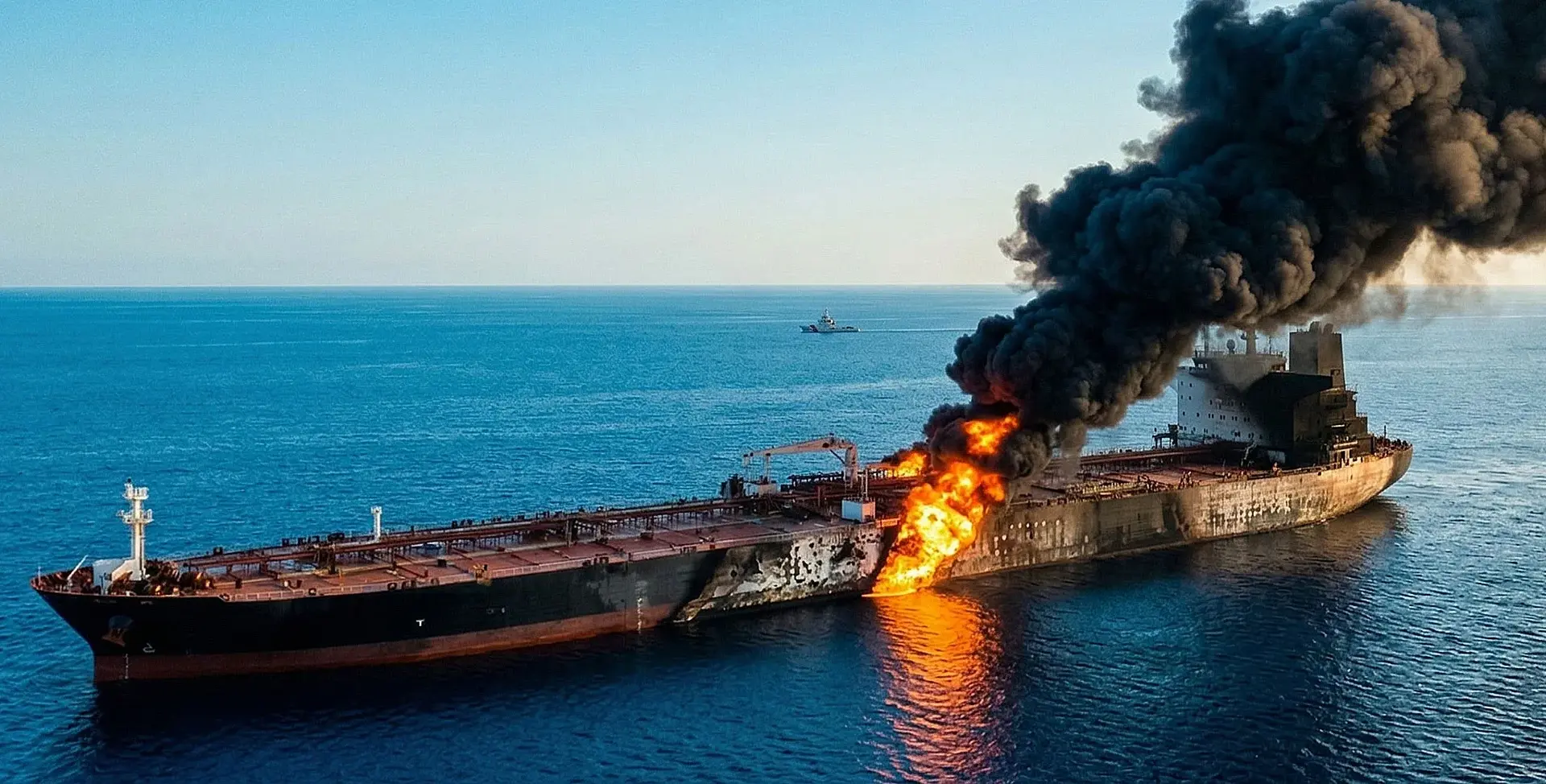
The Strait of Hormuz is the most critical maritime chokepoint in the global energy system. The Middle East has seen Iran implement its long-feared plan to disrupt shipping through the Strait and the Gulf beyond, triggering effects that will cascade across international energy markets and even food supply.
Pressure point
The Strait of Hormuz links the Persian Gulf with the Gulf of Oman and the wider Indian Ocean. At its narrowest point, the passage is only around 21 miles wide, with two shipping lanes each about two miles across, separated by a buffer zone.
Approximately 20 million barrels of crude oil and petroleum products transit the waterway each day, representing roughly one-fifth of global oil consumption. In addition, around 20% of global liquefied natural gas (LNG) exports pass through the strait, along with about 45% of internationally traded urea, a key component in fertiliser production and essential to global food supply.
Gulf exporters, including Saudi Arabia, Iraq, Kuwait and the UAE, depend heavily on this route to reach global markets. Much of the spare oil production capacity that stabilises international supply also sits inside the Gulf. Any disruption removes both current output and the ability to compensate for shocks elsewhere.
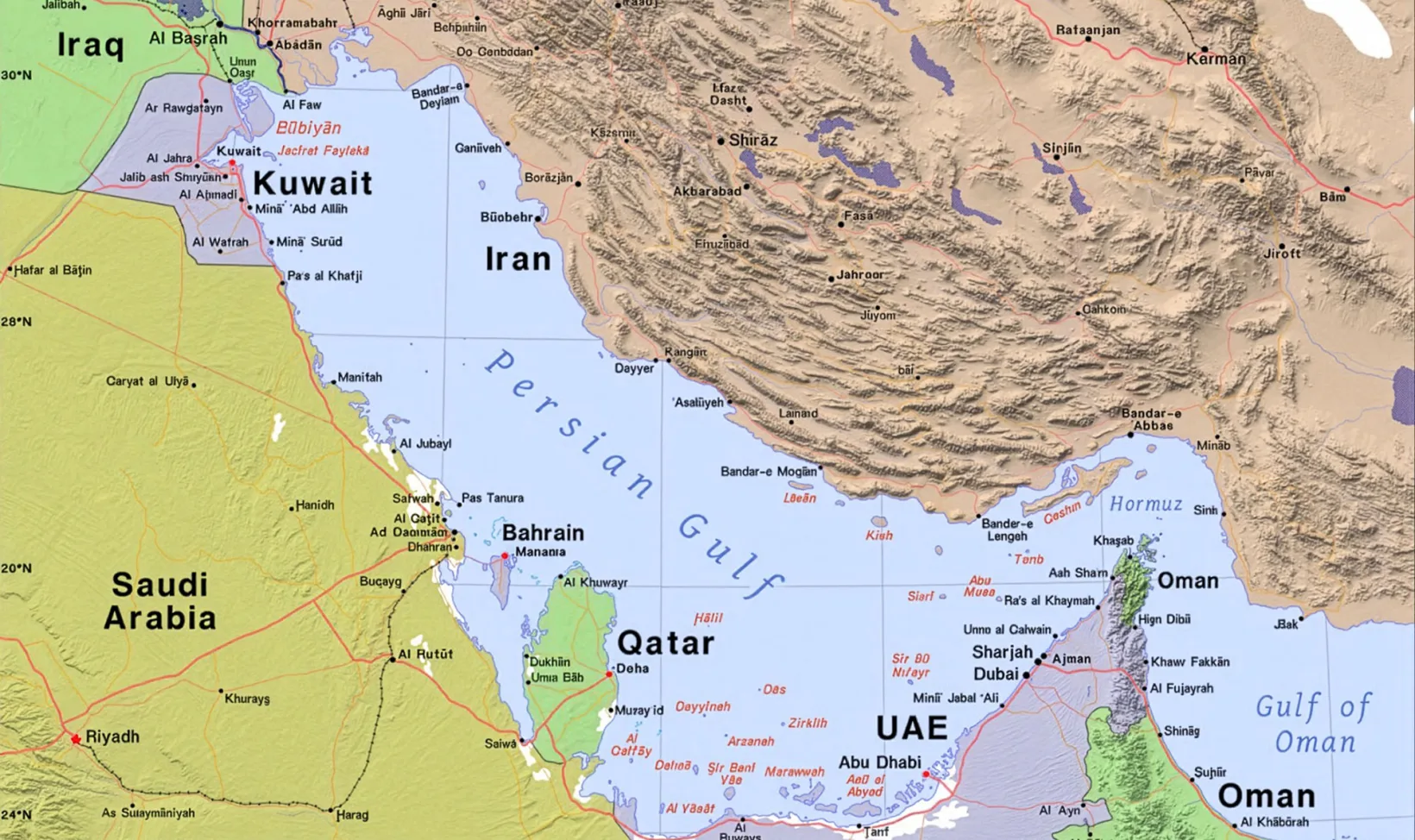 The Persian/Arabian Gulf is a ‘dead end’ and there are no alternative sea routes for shipping to use.
Iran has long warned that if attacked by the United States, it would attempt to close the Strait. This threat was not carried out during the more limited conflict in 2025, but the much larger operation launched on 28th February has triggered a different response. Tehran has now warned shipowners to stay clear of the waterway, having attacked at least 15 commercial vessels in the Gulf region so far.
Although not truly ‘closed’, Iranian warnings to shipping combined with attacks on vessels and infrastructure caused tanker traffic in the Strait to collapse by 90%. Only a handful of Iranian tankers and a few Greek-owned vessels have dared make the transit. Many ships are now anchored outside awaiting instructions while charterers and insurers reassess the risks.
The swarm
Iran does not require a conventional fleet blockade to disrupt traffic through Hormuz. Instead, its strategy relies on exploiting geography and asymmetric tactics to offset Western military superiority. The conventional Iranian Navy has already suffered heavy losses, with at least 8 major vessels confirmed destroyed so far. The Islamic Revolutionary Guard Corps Navy (IRGCN) is a separate force that has developed a doctrine that prioritises numbers, mobility and dispersion over large warships. Its approach relies on swarms of small craft supported by missiles, drones and mines to threaten shipping in confined waters.
Iran is believed to possess around 3,000 Boghammar-type small craft capable of swarm attacks. These include fast attack craft armed with short-range anti-ship missiles or torpedoes, heavy machine guns and rocket launchers. This is supplemented with semi-submersible boats designed for covert explosive strikes.
Large commercial vessels or even naval escorts struggle to track and engage dozens of small high-speed targets simultaneously, particularly in confined waters crowded with merchant traffic. The goal is not necessarily to sink ships but to make transit so dangerous and unpredictable but to halt traffic.
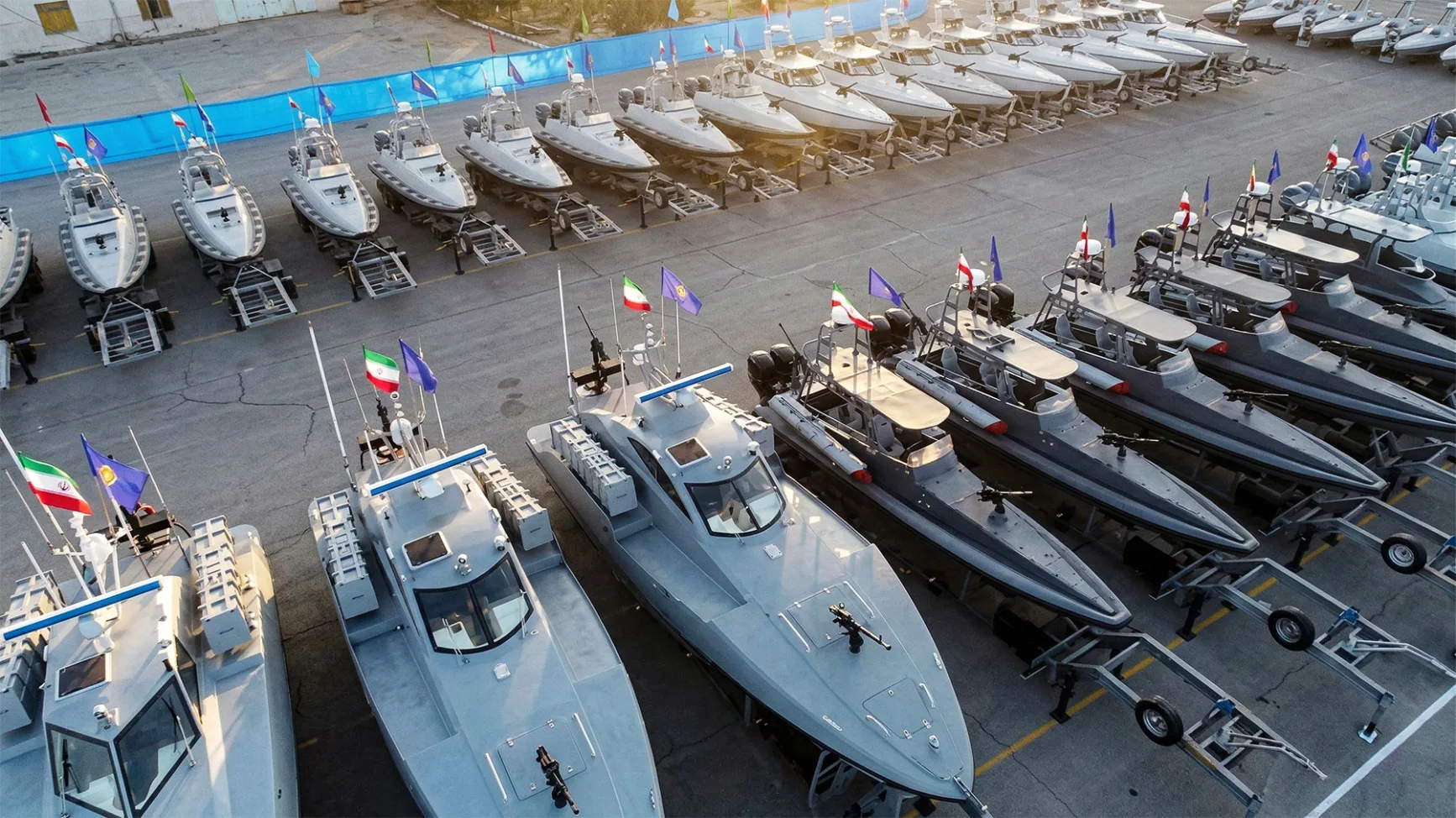 A fleet of IRGC attack craft lined up for a ceremony at Bandar Abbas Naval Base in 2021, including craft armed with lightweight torpedoes, missiles and heavy machine guns. (Islamic Republic of Iran Broadcasting image).
This force is heavily supplemented with multiple one-way attack UAVs and USVs. Conventional anti-ship missiles can also be fired from mobile launchers often disguised as civilian trucks, positioned along the mountainous coastline overlooking the Strait. The proximity of Iranian territory to the shipping lanes drastically reduces warning times for defensive systems aboard warships or merchant vessels.
Even the most capable warships equipped with sophisticated sensors, missile and gunnery systems would face difficulties when confronted with simultaneous drone swarms and missile launches. The cumulative effect is to create a weapons engagement zone covering most of the Strait and its approaches.
Air superiority paradox
US and Israeli forces have already achieved localised air superiority over parts of western Iran and the southern coastline. US Central Command reports that Iranian ballistic missile launches have fallen by about 90% and drone attacks by around 83% since the start of Operation Epic Fury.
However, air superiority does not translate into complete control of the maritime environment. Iran’s mobile missile launchers are well hidden and small boats can disperse across numerous coastal inlets and ports. Even extensive surveillance cannot guarantee every threat will be detected before it strikes and proximity to the Iranian coast affords minimal warning. Western air power may be able to suppress large-scale Iranian operations, but cannot eliminate the persistent low-level threats that make commercial shipping unwilling to enter the strait.
Financial blockade
The effective closure of the waterway has been driven as much by financial markets as by military action because commercial shipping cannot operate without war-risk insurance. This is largely provided through the City of London, which normally underwrites about £55 billion worth of insurance policies a year. This financial backstop determines whether shipowners and charterers are willing to enter a conflict zone. It is not just the cost of the ship that must be insured against incidents, but potential loss of life and impact on the environment that can amount to billions of dollars.
Premiums surged dramatically after 28 February. Daily charter rates for very large crude carriers (VLCCs) jumped from around $50,000 to more than $400,000 per day in some cases, reflecting soaring insurance costs and reduced vessel availability. Insurers rapidly expanded high-risk zones across the Gulf and in many cases, withdrew cover entirely for voyages through the strait. Many operators suspended operations even before the waterway was physically blocked, creating a form of economic blockade.
Trump has suggested the US could underwrite insurance for Gulf shipping as it did during the Tanker wars of the 1980s. There has been no detail provided so far, and it’s unclear if this extends beyond US-owned vessels.
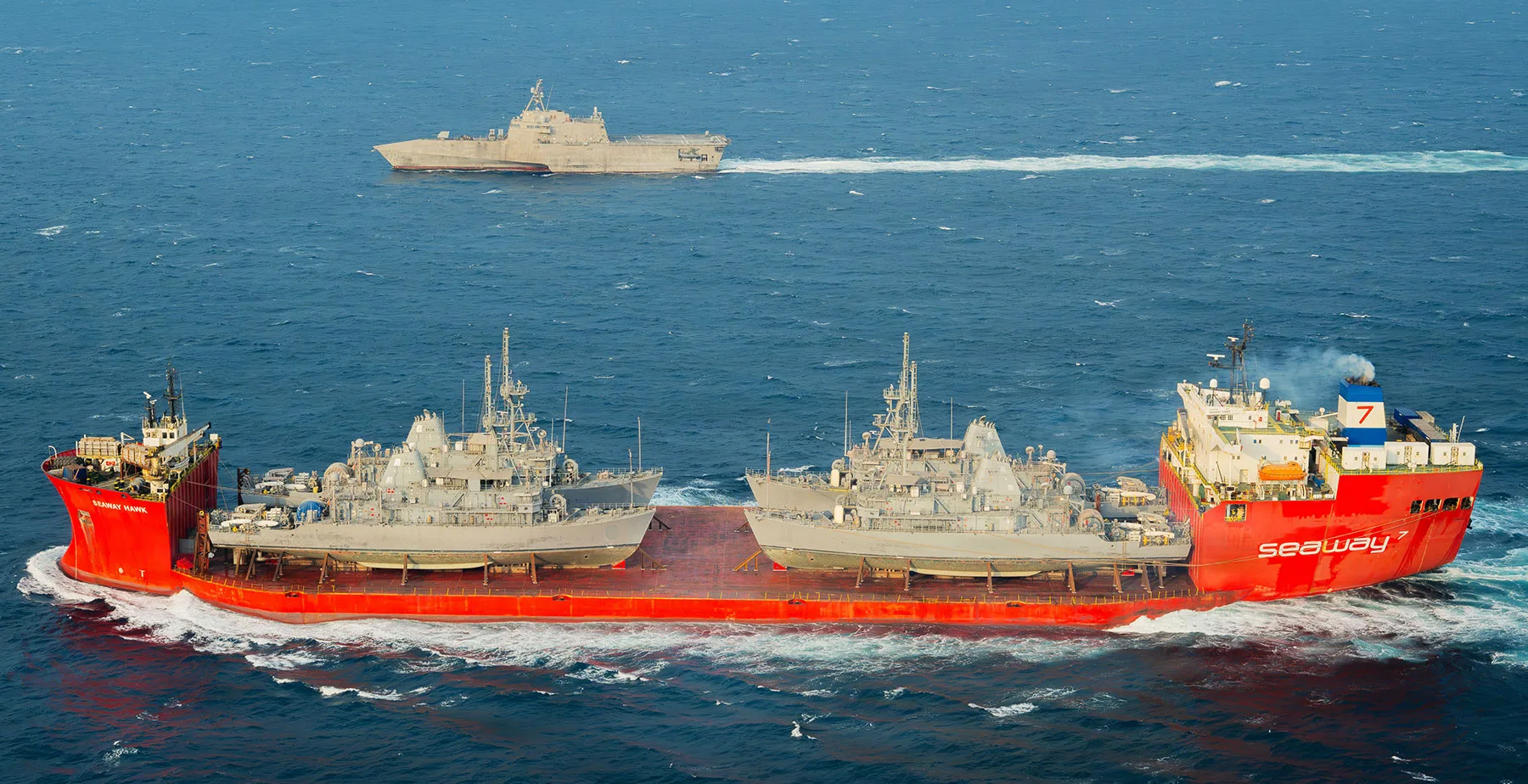 Decommissioned USN Avenger-class Mine Countermeasures Ships, USS Devastator, Dextrous, Gladiator and Sentry were transported out of the Gulf by heavy lift vessel, escorted by LCS, USS Canberra, January 2026 (Photo: US Navy).The mine problem
Although old-fashioned, naval mines in the Gulf remain the most awkward problem, should Iran decide to deploy them. Iran is believed to possess a stockpile of roughly 5,000 mines ranging from simple contact devices to sophisticated influence mines triggered by magnetic or acoustic signatures. These weapons can be sewn rapidly by small boats, disguised civilian vessels or even submarines. Once a single mine is discovered, the entire waterway effectively becomes a hazardous zone until systematic clearance operations are completed.
Mine countermeasure operations in the Gulf are particularly difficult. The water is relatively shallow, currents are strong and seabed conditions complicate sonar detection. Drifting mines add further uncertainty as they can move unpredictably through the shipping lanes.
Even with modern autonomous minehunting systems, clearing a dense minefield could take weeks or months and could probably only be done after a ceasefire. During that time, insurers would almost certainly refuse to cover shipping, meaning the economic effects of mining could persist long after deployment. Both the USN and RN recently removed their mine countermeasures vessels from Bahrain. The USN has several Littoral Combat Ships with MCM modules in the region, although they are outside the Gulf. The RN has some air-deployable nascent autonomous minehunting capability, but this is not yet fully mature and deployment to the Gulf would be a very steep learning curve.
So far, there have been no reports of mines laid by Iran. Analysts believe this restraint reflects a strategic calculation. Iran also depends on Hormuz for its own exports, particularly oil and fertiliser products. A full physical blockade would risk collapsing its own economy. At the same time, US forces have avoided striking the Kharg Island oil export terminals that handle around 90% of Iranian crude shipments. Both sides appear to recognise an implicit economic red line. Preventing Iranian exports risks pushing the global oil price even higher.
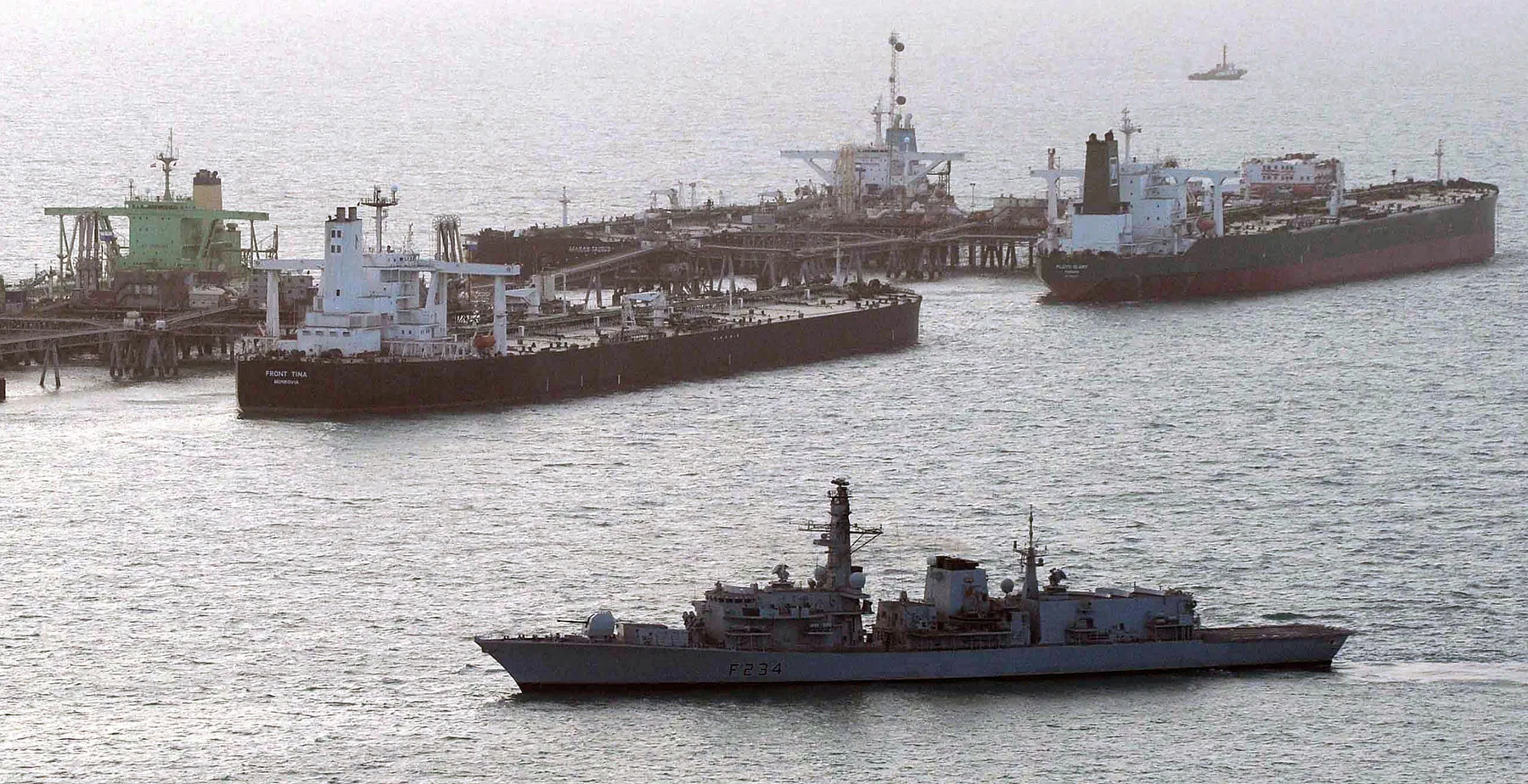 HMS Iron Duke conducting maritime security operations around the Iraqi Al Basra Oil Terminal (ABOT) in the Northern Arabian Gulf, April 2011. Even the US Navy will not send ships into the Gulf right now as it is considered too high-risk.Price shocks
Energy markets react immediately to disruption in the Strait because of the scale of trade passing through the waterway. Even partial restrictions can trigger sharp price movements. Taders anticipate supply shortages, with analysts warning a prolonged shutdown could push oil prices up 40-45% above prices in early February. Alternative export routes offer only limited relief. Saudi Arabia can divert some crude via the East-West pipeline to the Red Sea and the UAE through the Habshan–Fujairah pipeline, but together they can bypass only several million barrels per day, far short of the volumes normally transiting the strait. Even short disruptions force producers to curtail output, some Iraqi oil fields had already begun reducing production as storage facilities filled and tankers are unable to load cargo.
Gas markets may ultimately feel an even greater impact. Qatar, one of the world’s largest LNG exporters, relies almost entirely on the Strait of Hormuz, meaning any interruption could remove around one-fifth of global LNG supply. European and Asian buyers would then compete for alternative cargoes, pushing prices higher worldwide. Natural gas prices surged sharply, rising around 40% in a single trading session following drone strikes on Qatari production infrastructure.
There is limited strategic gas storage in the UK compared with many European states. At the time of writing, the UK has only around 2 days‘ stock left, following a cold winter, although gas can be continually delivered from Norway by pipeline. Only around 6.5% of UK LNG imports come directly from Qatar, the country remains highly sensitive to global price shifts. LNG provides the largest part of UK power generation, up to about 40%, although this may be exceeded by renewables if the sun shines and the wind blows.
The Gulf region hosts some of the world’s largest ammonia and urea plants, which convert natural gas into nitrogen fertilisers. Around 45% of globally traded urea exports pass through the Strait of Hormuz, along with significant volumes of ammonia and sulphur used in phosphate fertilisers. Exports of more than 20 million tonnes of urea annually and synthetic nitrogen fertilisers underpin modern agriculture, supporting roughly half of global crop production. As disruption spreads, fertiliser markets reacted quickly, with urea prices rising fast amid fears of shortages during the Northern Hemisphere planting season. If supply remains constrained, farmers may reduce fertiliser use, leading to lower yields and higher food prices later in the year.
Only about 40% of the nitrogen fertiliser required by UK farmers is produced domestically and prices have already risen 14–25% during the early stages of the crisis, potentially pushing up the cost of staple foods such as bread, pasta and potatoes. Food inflation typically follows fertiliser shocks with a delay of several months, meaning the economic effects could persist long after the immediate crisis subsides.
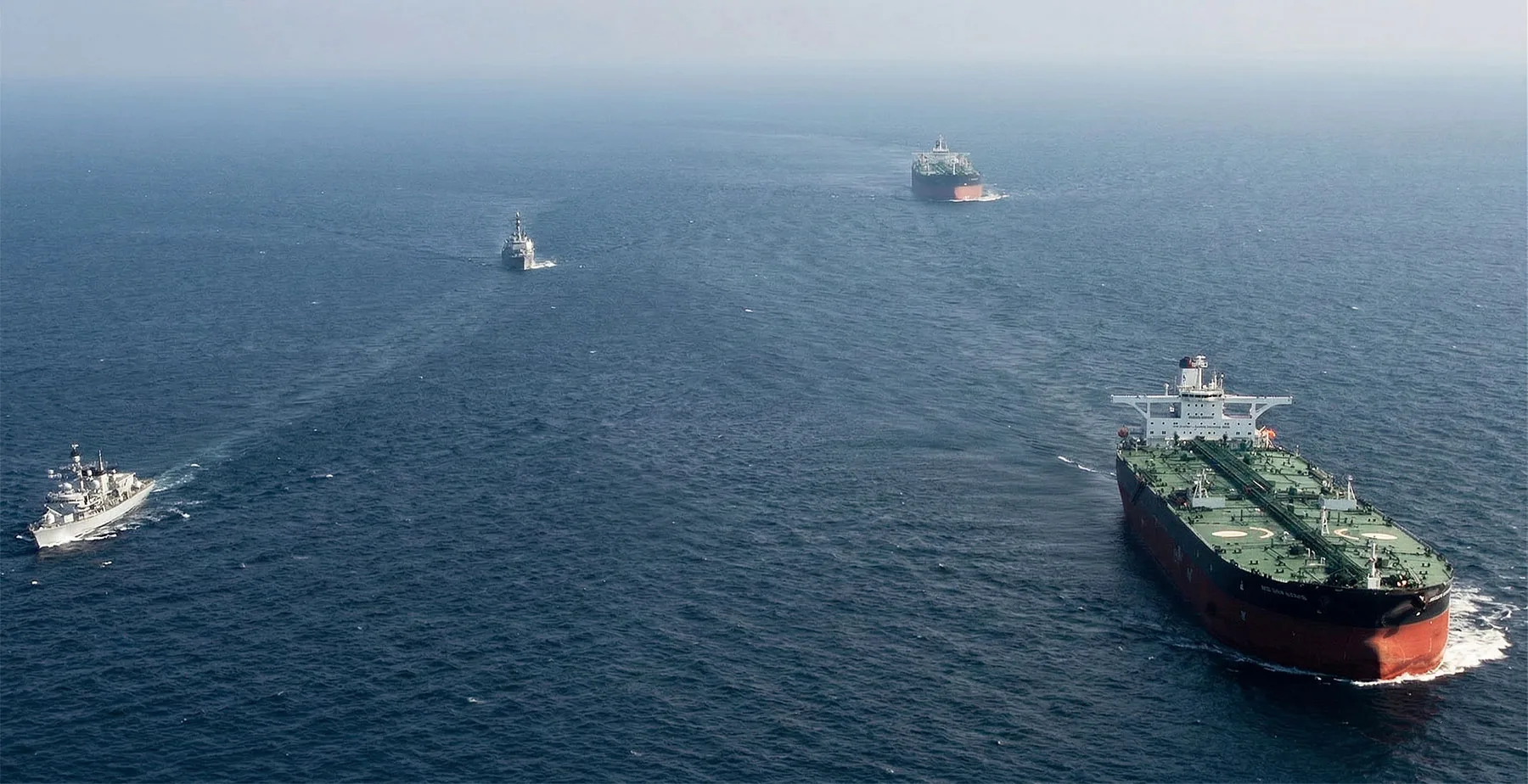 USS Winston S. Churchill and HMS Monmouth rehearse escorting merchant shipping during exercise Lucky Mariner in the Middle East, December 2012 (Photo: US Navy).The escort option
Proposals in Washington to restore shipping flow by escorting merchant vessels with US Navy warships face serious practical constraints. Around 400 tankers are currently waiting in the Gulf, but the number of escorts available is limited. There are roughly eight Arleigh Burke-class destroyers assigned to US Central Command and seven in the Mediterranean, but if two destroyers remain tied to each carrier strike group, perhaps ten ships at most might be available for convoy duties. That might be enough to escort some shipping depending on the threat level, but it would involve extremely high risk.
Even if escorts were available, the scale of the task is formidable. The Gulf stretches around 500 miles from the Strait of Hormuz to its northern end, meaning warships would spend days escorting slow tankers through waters within range of Iranian missiles, drones and fast attack craft. At best, one convoy in each direction every 14 days or so might be feasible, and sustaining such an operation would require many more escorts rotating in and out of theatre. By comparison, during the tanker escort operations of the late 1980s, the USN and RN could muster around 30 escort vessels, and the threat environment, while dangerous, was far less complex than today.
Some analysts have proposed seizing Iran’s fleet of oil tankers as a better strategy to force an agreement to reopen the Strait. Iran exports roughly 1.7 million barrels of oil per day via Hormuz, and impounding these shipments would remove the primary source of hard currency for the regime. Such a strategy could impose significant economic pressure on Tehran, but is a high-stakes gamble as Iran could respond by mining the Gulf. For now, the Iranians appear to favour a strategy of keeping the strait legally open while making it operationally unusable.
This crisis demonstrates how a narrow stretch of water can exert disproportionate influence over the global economy. Iran does not need to defeat Western navies outright to achieve its objectives, only to raise the risks of transit high enough that insurers, shipowners and traders halt the flow of energy and commodities themselves. For maritime trading nations such as the UK, these events, once again, underline the importance of ensuring freedom of navigation around the globe.