
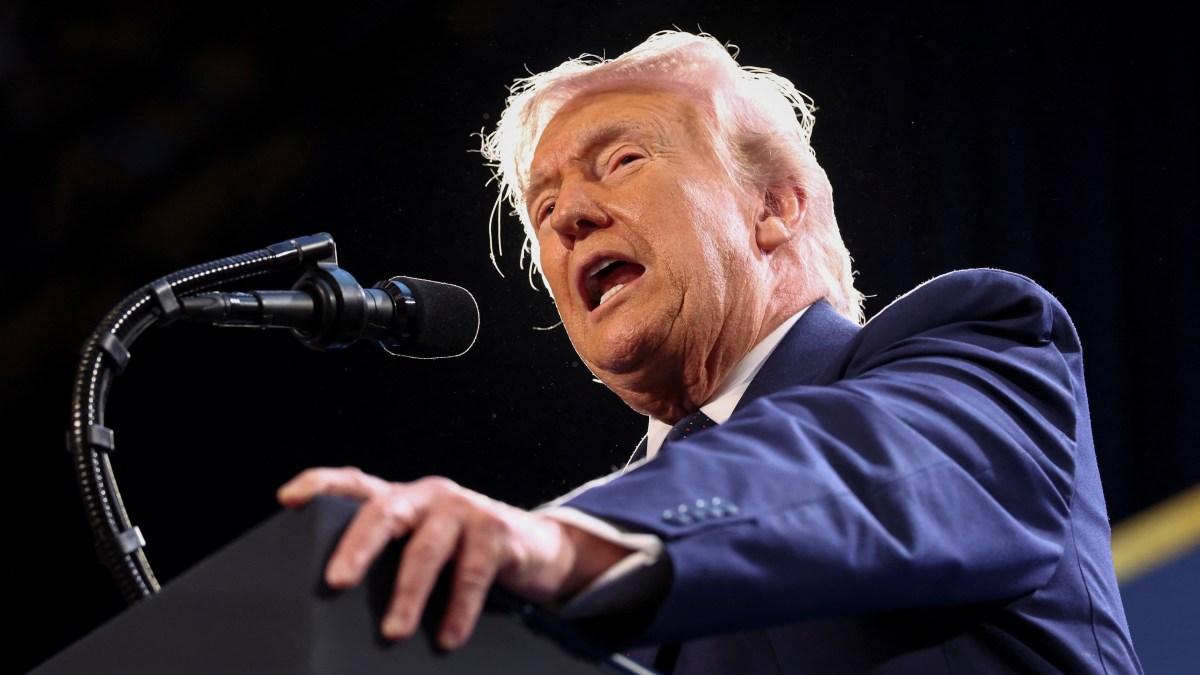
Donald Trump has said the war in Iran is “very complete” and that the regime has been left with “no navy, no communications, no air force”, raising hopes of a swift conclusion.
The US president said that the war was “very far” ahead of schedule and that Iran had “nothing left, with its missiles “down to scatter”, suggesting he was close to completing his war aims.
However, Trump gave conflicting signals of the endgame in Iran, telling Republicans later in Florida that “we have won in many ways, but not enough” and threatening Iran with further devastation if it continued to block the Strait of Hormuz.
Asked at a press conference if the war would end this week, Trump said: “No, but soon. I think soon. Very soon.” He put a timeline last week for the US-Israeli attack on Iran of four to five weeks.
In a separate speech to Republican members of Congress at his Doral resort in Florida, he said: “We took a little excursion because we felt we had to do that to get rid of some people, and I think you’ll see it’s going to be a short-term excursion. How good is our military?”
Trump spoke at his press conference after holding an hour-long call with President Putin which sparked reports he would waive sanctions on Russian oil to ease a surge in global prices threatening to raise inflation.
At one point on Monday oil prices rose to $119 a barrel, the highest level since 2022, before falling back to under $90 after Trump’s comments.
“He wants to be helpful,” Trump said of Putin. “I said that you could be more helpful by getting the Ukraine-Russia war over with. That would be more helpful. But we had a very good talk and he wants to be very constructive.”
Yuri Ushakov, Putin’s foreign affairs adviser, said that Putin “voiced a few ideas aimed at a quick political and diplomatic settlement” of the conflict.
A surge in oil prices is threatening to damage the global economy and raise inflation. At one point on Monday oil prices rose to $119 a barrel, the highest level since 2022, before falling back to under $90 following Trump’s comments.
Sir Keir Starmer said that every household in Britain would be hit if the conflict was prolonged amid warnings that it would lead to a spike in the cost of petrol, energy and food bills.
Experts warned that prices at the pump could hit a record high of £2 a litre within weeks if the conflict continues, having already risen by 5p on average since the conflict began.
Gas and electricity bills are also expected to increase by as much as £344 in the summer if the conflict continues.
The price of home heating oil for more than 1.5 million rural homes has doubled in a week, prompting calls for emergency assistance from the government.
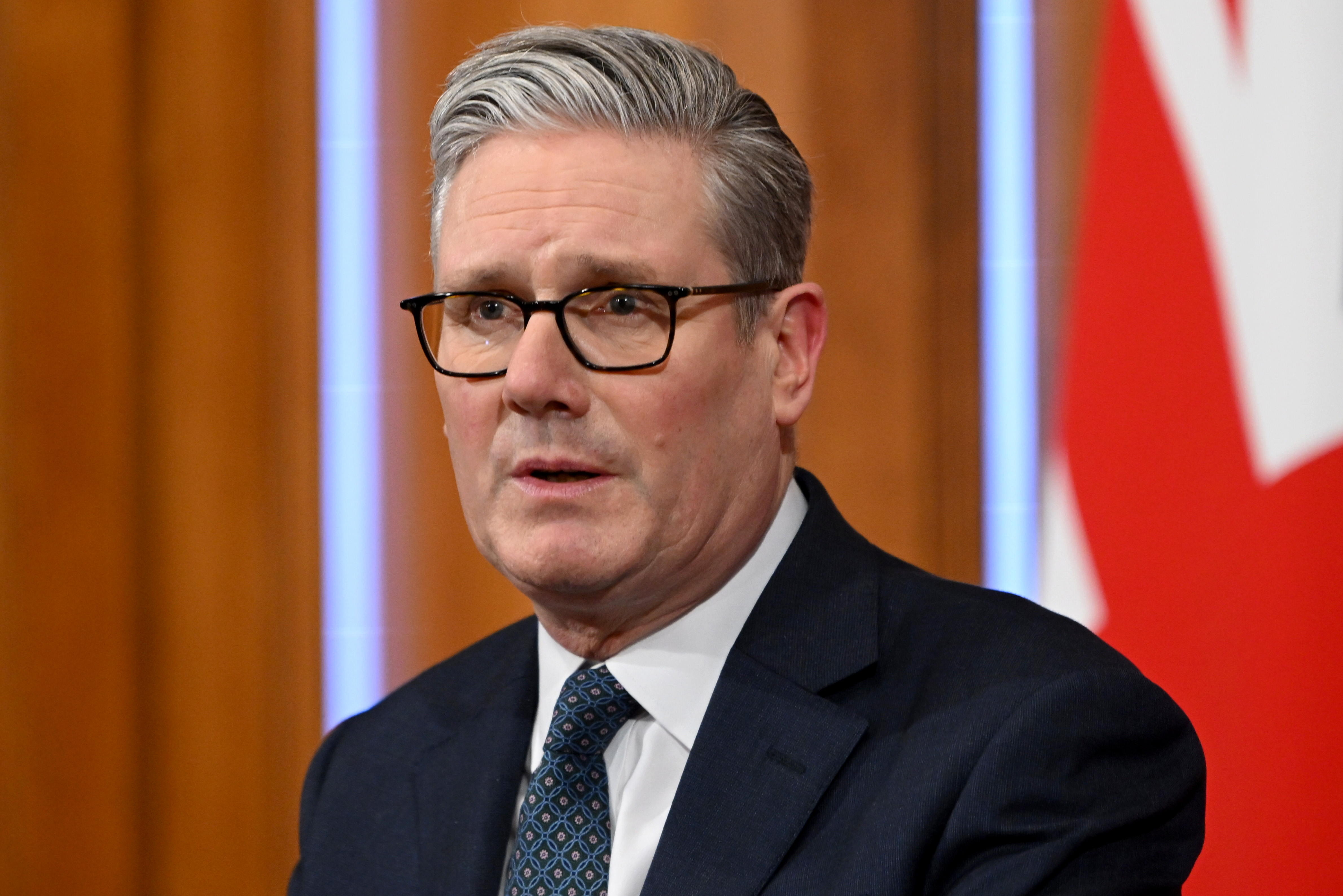
Sir Keir Starmer warned of the affects of a prolonged conflict
JAIMI JOY/GETTY IMAGES
Interest rates are now expected to rise rather than fall as the Bank of England attempts to deal with the wave of inflation.
Trump said that the war was “very complete, pretty much”. He told CBS: “They have no navy, no communications, they’ve got no air force. Their missiles are down to a scatter. Their drones are being blown up all over the place, including their manufacturing of drones. If you look, they have nothing left.”
He added: “They’ve shot everything they have to shoot, and they better not try anything cute or it’s going to be the end of that country.”
Trump made the comments after an hour-long call with President Putin. The Kremlin said Putin presented Trump with several proposals to end the conflict quickly.
• What the Iran war means for petrol prices, savings and mortgages
A poll by YouGov found that 60 per cent of Britons are opposed to the US military action in Iran, up from 50 per cent since last Monday. Meanwhile, 75 per cent of voters said that they expected the conflict to harm their household finances.
Rachel Reeves, the chancellor, said that the government would “take the necessary decisions to help families with the cost of living and protect the public finances” as she warned that inflation would rise.
Starmer, who has put cutting the cost of living at the heart of his attempts to turn around his premiership, said: “The longer this goes on, the more likely the potential for an impact on our economy, impact on the lives and households of everybody and every business. And our job is to get ahead of that, to look around the corner, assess the risk, monitor the risks, and work with others in relation to that.”
On the tenth day of the war:President Macron ordered an “unprecedented” naval deployment in the Middle East to reopen the Strait of Hormuz, including the country’s flagship Charles de Gaulle aircraft carrier and eight frigates.The UK has yet to deploy any naval assets to the region. HMS Dragon, a Type 45 frigate, is not expected to depart until Wednesday, while an aircraft carrier is being sent on Nato exercises in the high north instead of to the Middle East.John Healey, the defence secretary, said RAF jets had shot down two further drones on Sunday night, one over Jordan and another heading for Bahrain.
In an attempt to stabilise prices, the countries in the G7 are preparing one of the largest releases of strategic oil reserves in history that could be announced as soon as Tuesday.
Under plans being co-ordinated by the International Energy Agency (IEA), 300-400 million barrels of oil would be released on to the market, matching the amount made available after Russia’s invasion of Ukraine.
Fatih Birol, head of the IEA, said there were “significant and growing risks for the market”, adding that conditions had “deteriorated in recent days”.
• Gulf has just days before oil storage runs out — so what next?
In the Commons, Reeves said she understood the “anxiety felt by families and businesses during these incredibly uncertain times”.
She said the economic impact of conflict would depend on its “severity and its duration” and called on the United States to “de-escalate”.
Reeves statement on economic impact of Iran war
She admitted, however, that high petrol and energy prices that had “already [been] seen” were “likely to put upward pressure on inflation in the coming months”.
“I am clear-eyed about my response to the current situation,” she said. “My economic approach will both be responsive to a changing world and responsible in the national interest.”
Government sources said the ministers were “looking at options” to stabilise household energy bills when the most recently announced price cap comes to an end in July. They said any package would need to be agreed by April, the date at which the next price cap is announced.
The more pressing concern is petrol prices, which are up by 5p on average since the US began attacks on Iran on February 28, reaching 137.8p a litre on Monday. Diesel is up 9p to 151.2p a litre.
There is particular concern about diesel as it is the main fuel used by the haulage industry. Increased transport costs can quickly push up the price of groceries.
Simon Williams, the RAC’s head of policy, said: “Average petrol and diesel prices have rocketed in the last week and are, unfortunately, likely to keep on rising. So the situation for UK drivers is looking increasingly bleak.”
The effect of the latest spike in oil prices won’t be fully reflected in pump prices for about ten days, because of the mechanism retailers use to buy oil. Analysts calculate that every $2 increase in barrel price equates to a penny on a litre of fuel.
The AA, meanwhile, advised drivers that they could reduce the amount of fuel they use by cutting non-essential journeys. The RAC said they should “avoid harsh accelerating and braking” in an effort to “eke out every last mile and save money”.
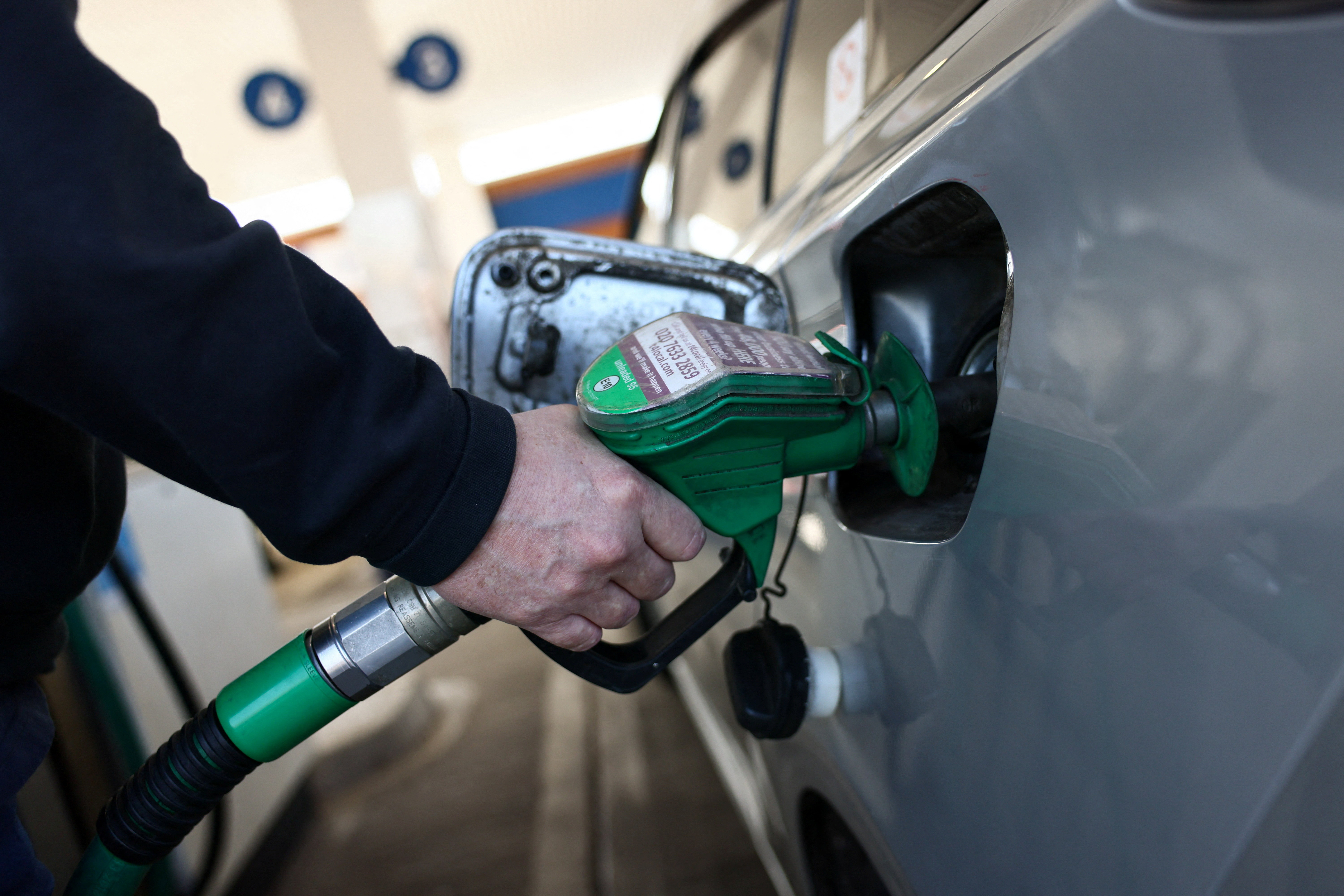
Petrol prices are up by 5p on average since the conflict began
JACK TAYLOR/REUTERS
Homeowners also face the prospect of higher mortgage payments, as experts warned the average rate could hit 5 per cent this week for the first time since November.
It will hit the 1.2 million borrowers whose fixed-rate deals are due to end between now and September. Barclays and Halifax announced rate rises on Monday, which come into effect on Tuesday, following NatWest, Nationwide and Virgin Money.
The cost of government borrowing increased at the fastest rate of the G7.