
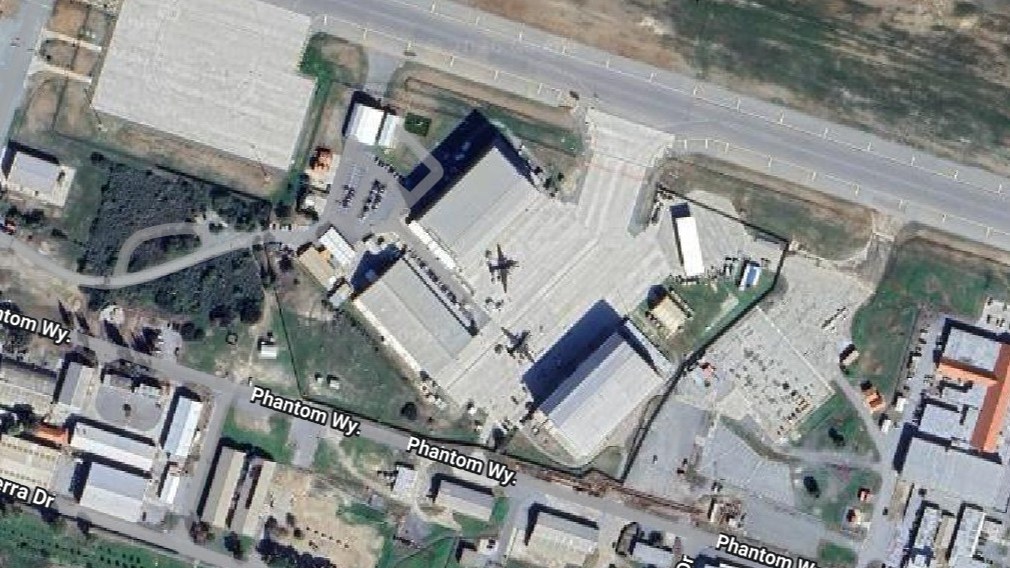
Iranian proxies were able to use Google Maps images of a British airbase in Cyprus to plan a kamikaze drone attack.
Hezbollah militants in Lebanon are believed to have launched the small suicide drone, which contained Russian military hardware, at RAF Akrotiri earlier this month.
Publicly available satellite imagery shows a pair of American U2 spy planes parked directly outside the hangar that was struck in the attack.
A military source said the attack was concerning “because they were hitting what they were aiming at”, but added it was unlikely to have been the result of a sophisticated intelligence gathering operation.
Rather, “it suggests that they’ve got Google Maps and a GPS”, the source said.
At the request of governments, Google can blur, obscure or remove details of sensitive sites so they cannot be viewed publicly.
Some Israeli and American airbases in the region are featured on the website but at lower resolutions, or have aircraft blurred out completely, for security reasons.
Even civilian infrastructure, like Heathrow airport, has aircraft edited out on the website, though this is for map clarity rather than site security.
• Iran latest: Keir Starmer warns of growing UK impact of conflict
Defence analysts have questioned why similar precautions have not been taken at RAF Akrotiri, Britain’s largest airbase in the region.
The Times approached the Ministry of Defence (MoD) about the satellite imagery on Saturday and asked if efforts were being made to obscure parts of the base on Google Maps.
As of Monday morning, the aircraft were still visible on the website, and the MoD refused to comment on whether it was working to remove them from public view.
The fact that U2s, a high-altitude reconnaissance aircraft, are hosted at the base is “the worst-kept secret in the Mediterranean”, according to Justin Crump, the chief executive of the intelligence firm Sibylline.
Crump, a former British Army officer, said the availability of the images on Google Maps “made it rather more easy than it perhaps should have been” to accurately strike the base.
He added that enemy use of the website for targeting was far from a new phenomenon. “Insurgents shelling me in Iraq in 2004 had Google Maps images of our camp and were aiming based on the radio mast location in order to hit areas within the perimeter.”
On Sunday, it emerged that the drone contained a Russian-made Kometa-B navigation system, a piece of hardware first seen in similar devices intercepted by Ukrainian air defences in December.
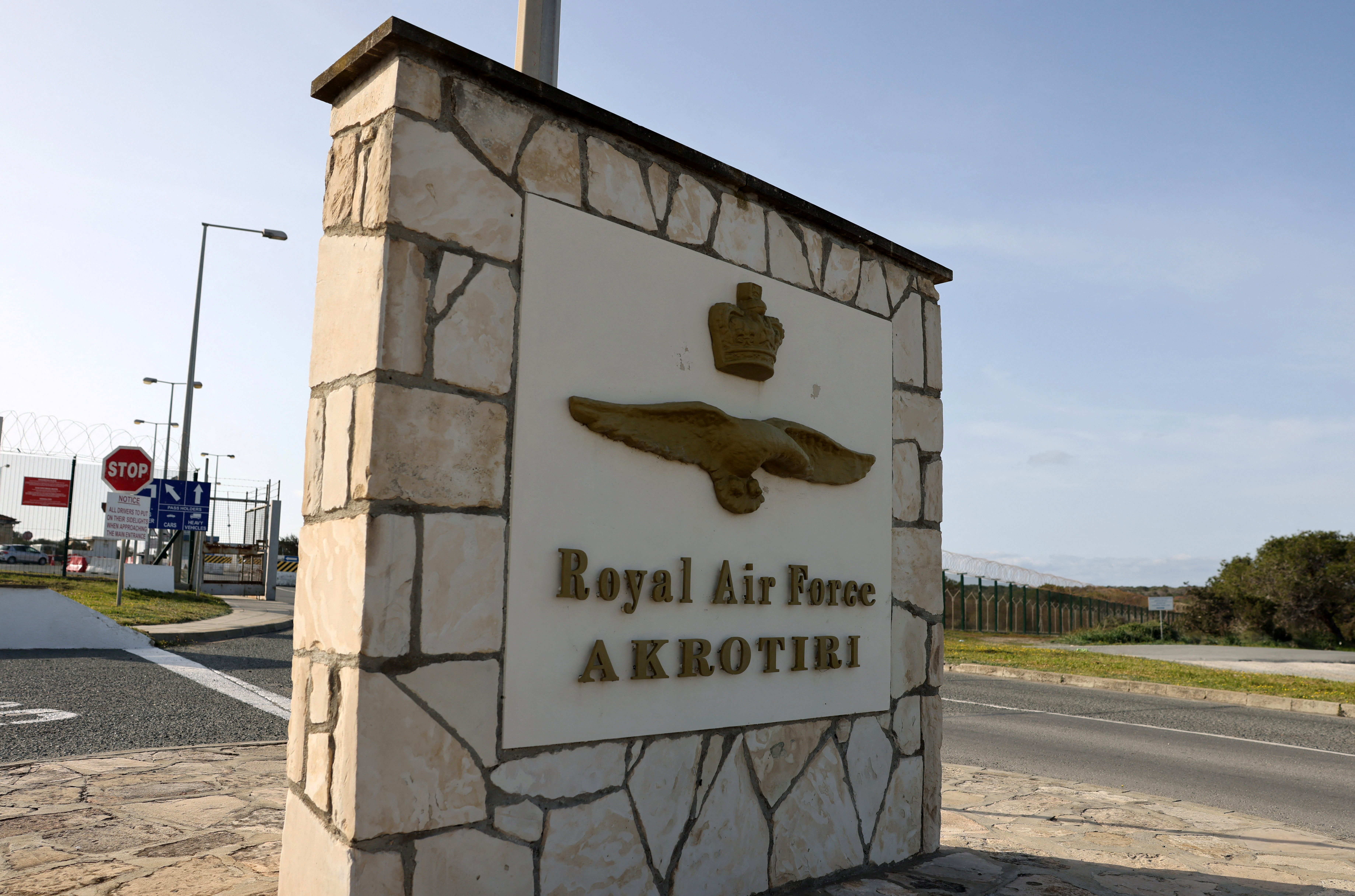
RAF Akrotiri has a range of radar and surveillance systems
YIANNIS KOURTOGLOU/REUTERS
British military intelligence has now sent the recovered components to a laboratory in the UK for further investigation, The Sunday Times reported.
The discovery provides the first evidence that Russian military equipment is being used in the Iran conflict. It raises concerns about Moscow’s growing footprint in the Middle East war.
Russia is also believed to be passing intelligence to Iran to help it attack American forces in the region, including the locations of US warships and aircraft.
Sir Richard Knighton, the head of the British armed forces, confirmed on Saturday that the attack on RAF Akrotiri was launched from Lebanon by an “Iranian-aligned group”. It is thought the strike was carried out by Hezbollah.
“The co-operation between Iran and Russia makes their forces more capable and more dangerous and that’s why we need to be ready,” he added.
RAF Akrotiri uses a range of radar and surveillance systems to detect incoming aerial threats. Also operational at the base is the Orcus Counter-Uncrewed Air System, an advanced electronic warfare weapon that neutralises drones by jamming their communications links or interfering with their internal control systems.
• ‘Kamikaze’ drones reshaped war. Now Britain is making its own
Eight Typhoons, six F-35 aircraft, drones and spy planes have been repeatedly scrambled to defend Cyprus and neighbouring Gulf allies from Iranian salvos in the last week.
However, the single drone that slipped past these defences was able to do so due to its small size, and because it was flying low and close to the water at night amid electronic interference, a military source said.
Two Wildcat helicopters that arrived in Cyprus on Friday to bolster air defences with advanced onboard sensors that allow them to better detect small threats, before destroying them with Martlet missiles.
A Merlin helicopter is also on the way to the region, which will provide additional airborne surveillance with a high-powered radar for long-range air, maritime and land tracking.
The MoD said: “Security of our people, bases and interests is of utmost importance and the UK are working round the clock to protect them.
“We have been bolstering our UK military presence in the Middle East since January and we have already deployed capabilities to protect British people and our allies in the region, including Typhoons, F-35 jets, helicopters, air defence systems and an extra 400 personnel into Cyprus.”