
With news coverage from Israel on the war against Iran focusing primarily on the Iranian missile attacks against Israel and other Middle Eastern countries, the far more dramatic and deleterious impact of Hezbollah’s rocket and drone strikes on northern Israel has largely been overlooked.
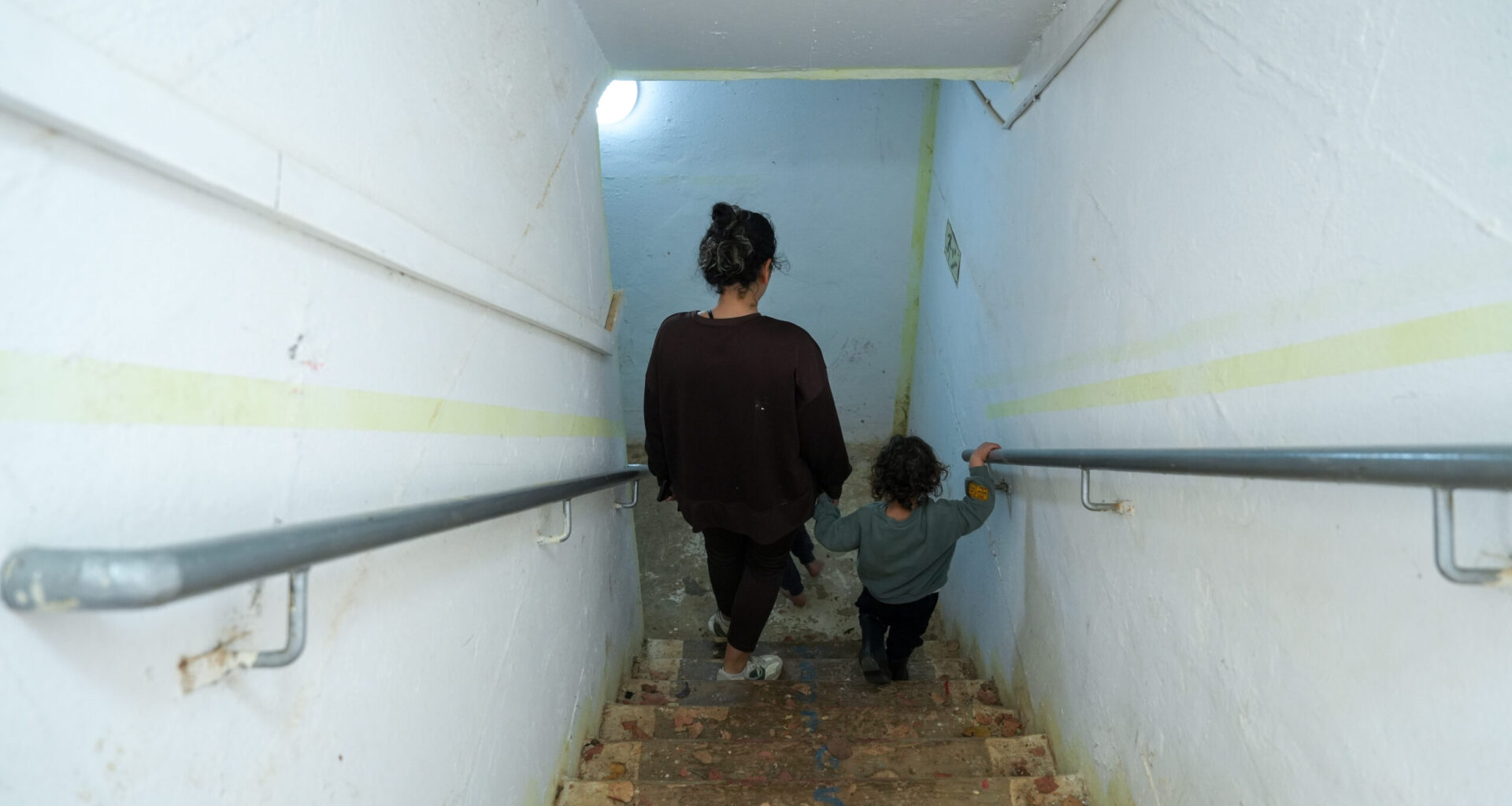
Since Hezbollah joined the fray last Monday, the kibbutzim, moshavim and towns along the Lebanese border have been pounded by rocket and drone attacks, with communities like Margaliot experiencing 48 air-raid sirens over the past week.
These renewed attacks came just as northern Israeli communities were beginning to lay the foundations for economic and social recovery after the region was evacuated in late 2023, when Hezbollah began pummeling the area with mortar shells, short-range rockets and drones — the latter of which the Israeli military continues to struggle to defend against.
When Israel and Lebanon signed a ceasefire agreement in November 2024, the leaders of northern Israeli communities hoped that they could begin what they knew would be a difficult process of bringing back the residents that fled the area a year prior. Last month, the northern Galilee city of Kiryat Shmona launched a new hub for local businesses, offering financial advice and training. And in January, Tel Hai College received its final approvals to become a full-fledged university, with the hope that it would serve as an economic engine for the region, bringing in well-educated faculty and staff and driving innovation.
“All of our educational institutions had reopened after the buildings were repaired, renovated and upgraded — with funding from the government… but, of course, the upgrades we made were funded by philanthropy,” Beni Ben Muvchar, the mayor of the Mevo’ot HaHermon Region in the Galilee Panhandle, told eJewishPhilanthropy last night. “All of this was to show residents that they should return home, that their educators are very good, that their homes were much better than how they left them.”
In Mevo’ot HaHermon, Ben Muvchar said that some 90% of residents have since returned to their homes after the ceasefire went into effect. (The numbers are significantly lower in other municipalities; in Kiryat Shemona, some 10,000 people, representing roughly 40% of the city’s residents, haven’t returned.)
The renewed fighting doesn’t just send those repopulation efforts back to zero. “We’re now in minus,” said Ben Muvchar, who also serves as chair of the Eastern Galilee Regional Cluster, which represents 18 regional councils.
“We didn’t think that the next round would come so quickly,” he said. “It’s so disappointing, so disappointing.”
While Israeli military officials have said that this time, there will be no forced evacuations of the region, individual residents could decide to leave the area on their own.
“We’ve dispatched our Communal Emergency Teams” — local task forces of trained specialists — ”and social workers and community organizers trying to encourage and convince [residents] to stay home and not leave, that this is Hezbollah’s goal,” Ben Muvchar said. “Whatever we can do to prevent this [emigration].”
With schools and businesses closed because of the fighting, the families that are staying behind are facing greater challenges, Ben Muvchar said.
Before the fighting began, the welfare services in his region had 441 open files. Over the past eight days, that has grown to more than 700, he noted. As the fighting persists, these numbers are likely to rise, particularly as Jewish Israelis prepare for the often costly holiday of Passover.
Ben Muvchar stressed that his region does not have many businesses or industrial parks, which pay higher local tax rates, meaning the local government is regularly cash-strapped and must rely on philanthropy for its social programs.
“Let’s say I can get NIS 100,000 ($32,400) [from the government] for an informal educational program, but the program costs NIS 250,000 ($81,000) — if I don’t have philanthropy, I can’t do the program. I just can’t do it,” he said. “Today, for example, the welfare department came to me with a NIS 254,000 ($82,300) program [to keep a help line open 24 hours a day], but they only received from the government NIS 150,000 ($48,600) for it. I was in a serious dilemma… Do I add another NIS 100,000 ($32,400) from our pocket, yes or no? I didn’t have a choice — I approved it. But when I approve it, that eats [up] my budget.”
Ben Muvchar said that receiving philanthropic assistance has been much more difficult during this round of fighting compared to the previous one, which he credited to general burnout.
“It’s totally different from the last time. People in philanthropy are tired. Maybe it’s harder for them,” he said. “It’s not even close to what it was the last time.” Ben Muvchar added that some philanthropists and foundations were still assisting, offering, as an example, Jewish Federations of Canada-UIA, which he said were helping raise money for entertainment programs for residents.
“There’s less money, and more families in need of help,” he said. “But we’re a strong community, and we won’t leave our homes this time. There’s no chance that we’ll leave our houses, even if we have to spend hours in the shelters.”