
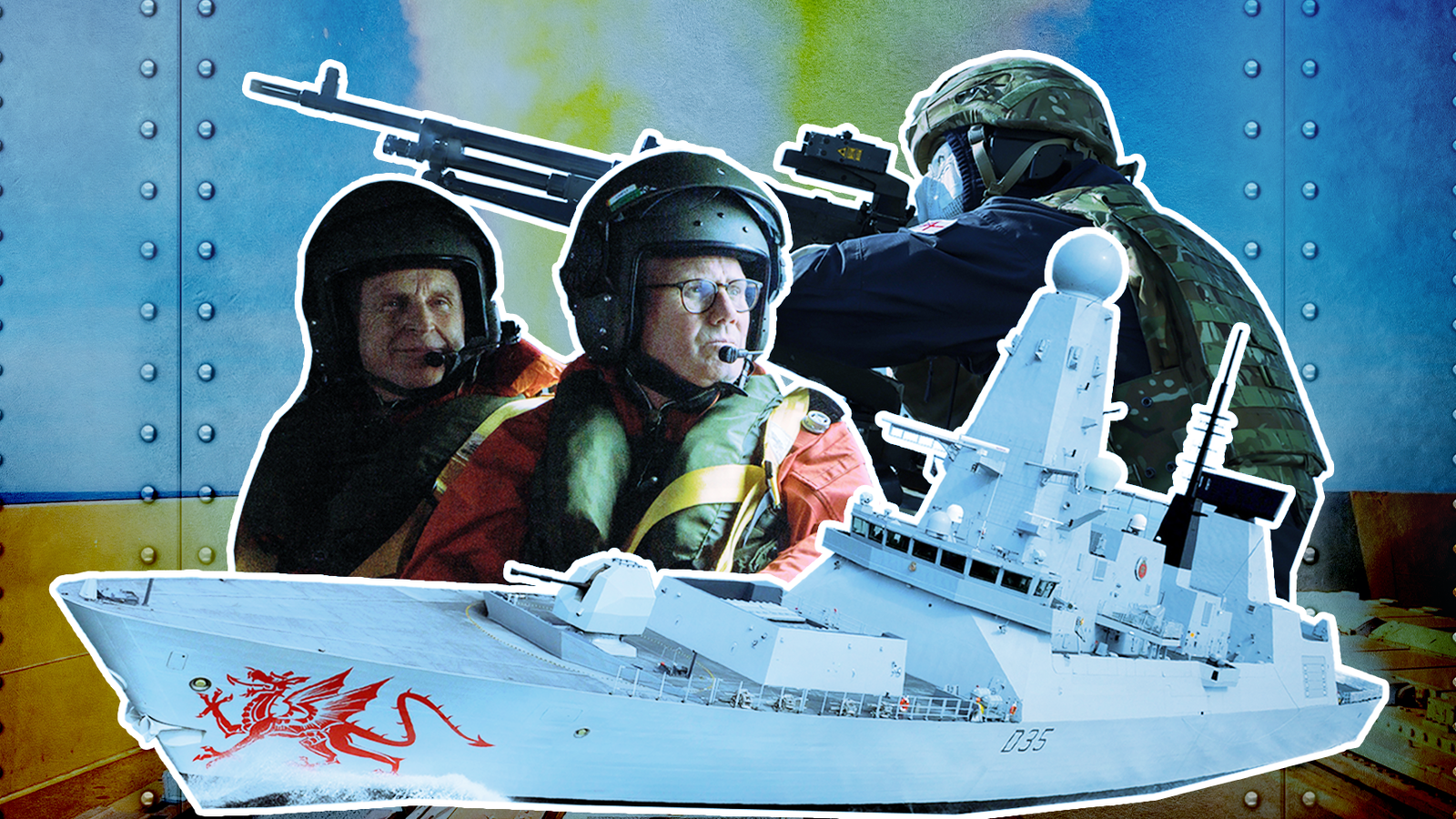
While Sea Viper missiles are effective, HMS Dragon can only carry so many at a time.
The nearest place to restock? Gibraltar. More than 2,000 miles away.
It’s possible this could be eased by the deployment of the RFA Lyme Bay support ship, which can carry stocks of ammunition among other tasks.
In a pinch the missiles might be able to be flown in, but it’s not a sure thing, Prof Clarke says.
He added: “It’s concerning that we never have enough ammunition for anything.
“We are very low on war stocks in general.”
There’s also the matter of how long it took HMS Dragon to leave port.
Supplies are loaded onto HMS Dragon
“It’s a 30-year problem,” Mr Sharpe says.
“It feels increasingly to me through our carrier operations, particularly when the Houthis were active last year, that we as a political class have forgotten how navies work.
“The system has sort of bogged down to a point where we end up where we are. The requirement to get a Type 45 ready for sea and out of the door was blatantly obvious.”
Prime Minister Sir Keir Starmer and Defence Secretary John Healey on one of the UK’s aircraft carriers
Prime Minister Sir Keir Starmer and Defence Secretary John Healey on one of the UK’s aircraft carriers
In an interview with UK defence secretary John Healey, Sky’s Alistair Bunkall asked him when the option to deploy a Royal Navy destroyer first hit his desk.
He suggested he had had options for weeks and did not disagree when asked if it was his decision to delay.
But afterwards, defence sources said the Royal Navy only gave him the option on 3 March.
After HMS Dragon departed Portsmouth on Tuesday, Mr Healey said the work to prepare her would normally have taken six weeks and was “completed in just six days”.
Meanwhile, last week there were reports that efforts to make HMS Dragon ready for sail took longer than necessary because a new MoD contract with private firm Serco ditched round-the-clock staffing in favour of a 9-5 workday.
The missile silo towards the prow of the ship
The missile silo towards the prow of the ship
“This is a microcosm of the whole of the whole problem,” Prof Clarke said.
“We’re not ready for real operations most of the time, because our numbers are very, very low.
“You have the barely minimum numbers, there’s no redundancy built in, there is no allowance for spares or attrition or anything like that.”