
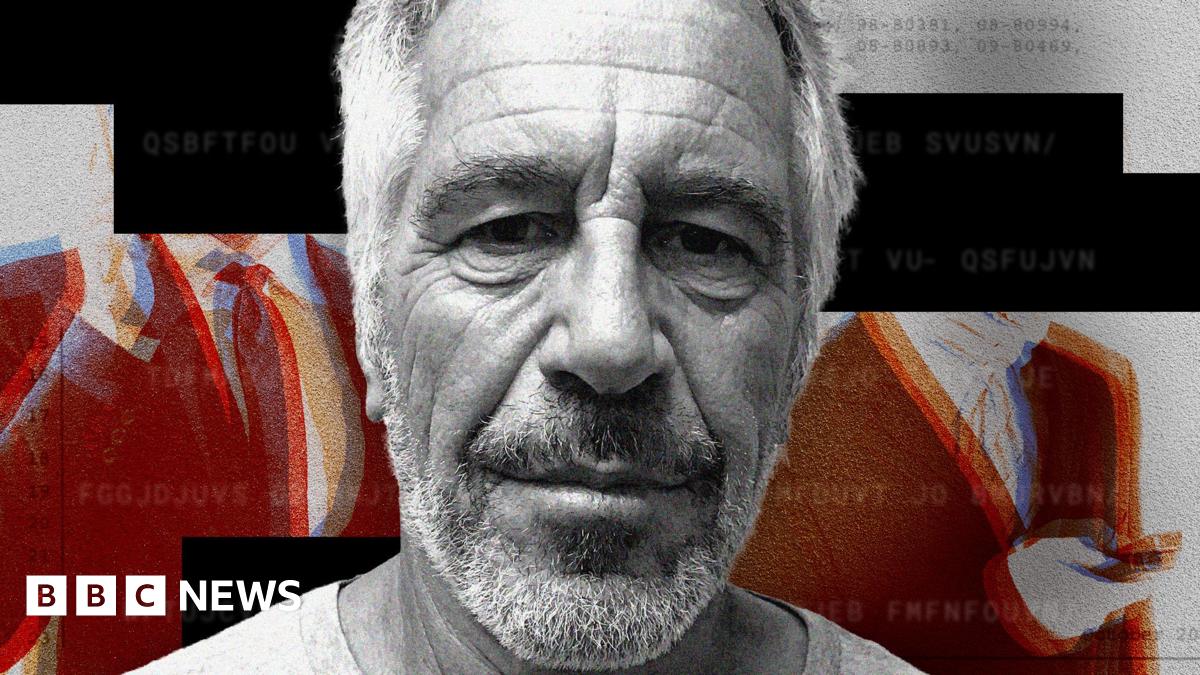
Kahn, and Epstein’s long-serving lawyer Darren Indyke, are the sole executors of Epstein’s estate, controlling all his wealth and possessions.
Although hardly household names, the pair now hold control over compensation owed to survivors and the secrets contained in the documents still held by the Epstein estate – which, upon request, have been released to the House Oversight Committee.
As part of its investigation into Epstein’s network, the congressional committee has subpoenaed – summoned – the pair to testify. Kahn is appearing on Wednesday, while Indyke is due to testify on Thursday 19 March.
We have spoken to people associated with investigations linked to disgraced Epstein, looked through papers from multiple court cases, and analysed the most recent material released in the Epstein files by the US Department of Justice – to try to uncover more about the role the two men are alleged to have played in Epstein’s life and continue to play after his death.
Epstein appointed Indyke and Kahn as co-executors in August 2019, just two days before he died in jail awaiting trial for sex-trafficking minors. He revised his will to transfer all his wealth into a trust named after the year of his birth, which the lawyer and accountant would administer.
In their role as executors, Indyke and Kahn have agreed compensation packages paid to survivors and included conditions that prevented survivors who accepted funds from taking further legal action against them personally. Other claims are still outstanding.
As beneficiaries of the trust, the men could also be paid tens of millions of dollars each from whatever remains when the claims are settled.
The value of Epstein’s estate remains unclear. But it was estimated at roughly $635m (£475m) at the time of his death, according to Edwards Henderson, a law firm that represents many of the survivors.
One of the women Epstein abused, who asked to remain anonymous, told the BBC that Indyke and Kahn had questions to answer about what they knew about his “enterprise”.
“Jeffrey was just one human. There’s no way that he would have been able to keep up with all this on his own,” she said. “We always say, follow the money, right? If you follow the money, you can understand a lot about how this operation ran.”
Court filings claim that, either Indyke and Kahn – but often both of them – “had signatory authority over virtually all of the accounts held by Epstein”, which meant they were authorised to make transactions.
They also helped to run multiple Epstein corporations – some of which, it is alleged in court filings, existed solely for the purpose of his sex-trafficking operation. Kahn’s lawyer told us “there is no basis for such claims” and that Epstein’s businesses didn’t operate to shield his activities; “virtually all of them were tax-filing entities whose ownership was never hidden”.