
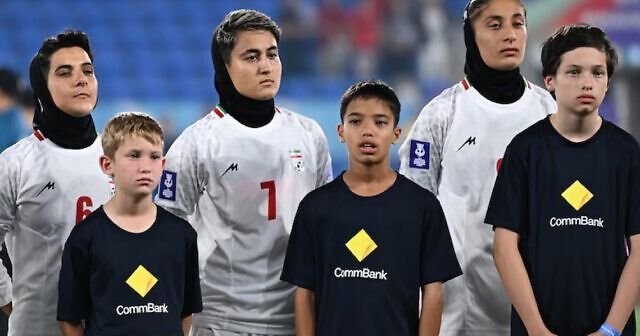
The players – Fatemeh Pasandideh, Zahra Ghanbari, Zahra Sarbali, Atefeh Ramezani-Zadeh and Mona Hamoudi –left the team’s hotel in the city of Gold Coast and are currently in a safe location. The development comes after days of tension surrounding the team during an Asian tournament in Australia.
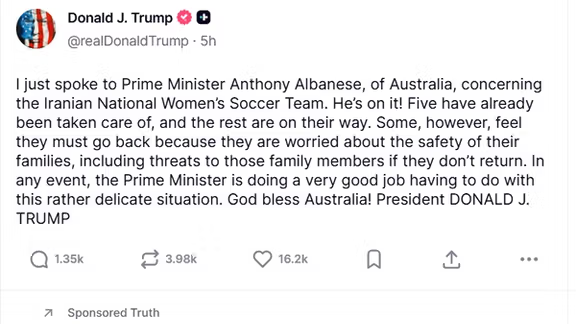
The issue caught the attention of President Donald Trump who posted twice on Truth Social on Monday — first after learning that the players were seeking asylum following threats from senior Iranian officials, who warned them of harsh punishment for refusing to sing the Islamic Republic’s anthem.
Later, Trump confirmed he had spoken with Australia’s Prime Minister.
“I just spoke to Prime Minister Anthony Albanese of Australia concerning the Iranian National Women’s Soccer Team,” Trump wrote. “He’s on it! Five have already been taken care of, and the rest are on their way.”
In a heartfelt post, Australia’s Minister for Home Affairs, Tony Burke, shared photos with the football players on X and wrote that they are “welcome to stay in Australia to be safe and have a home here.”
The players were required to wear compulsory hijab during all public appearances while representing the national team.
Anthem protest triggered pressure and threats
The controversy surrounding the team began earlier in the tournament when members of the squad refused to sing the national anthem of the Islamic Republic before their first match against South Korea.
Images of the players and coaching staff standing silently during the anthem quickly spread on social media, with many interpreting the gesture as a protest against the government.
In their second match against Australia, however, the players were seen giving a military salute and singing the anthem after what reports described as threats and warnings from security officials accompanying the delegation.
An Iranian state television host later threatened the team on air, saying both the public and officials should treat them as “war-time traitors.”
Bus incident and support from Iranians abroad
Tensions escalated further after the team’s final match, when videos circulated online showing Iranians living in Australia attempting to stop the team bus as it left the stadium.
A witness told the Australian broadcaster SBS that several players had also remained seated on the field after the team’s final match against the Philippines and appeared reluctant to leave, raising concerns they were under pressure and did not want to return to Iran.
SBS earlier reported, citing two sources who visited the team’s hotel, that the players were under “very tight security measures” imposed by Iranian officials. The sources said authorities appeared concerned that some players might attempt to seek asylum.
Appeals for protection and uncertainty over return
The situation prompted appeals from activists and opposition figures who warned the players could face serious consequences if they return to Iran.
Exiled Prince Reza Pahlavi wrote on X that members of Iran’s women’s national football team were under significant pressure and ongoing threats from the Islamic Republic because of their refusal to sing the anthem, urging the Australian government to ensure their safety and provide support.
Journalist and activist Masih Alinejad also called on Australia to protect the players, saying they faced potential danger if returned to Iran.
Australian Foreign Minister Penny Wong said the Iranian authorities had a record of harsh repression.
“We know this regime has brutally murdered many of its own people. We know this regime has brutally oppressed many Iranian women, and we stand in solidarity with the men and women of Iran, particularly Iranian women and girls,” she added.
Meanwhile, Iranian football officials say the team’s return has been complicated after flights back to Iran were canceled following recent regional tensions. Farideh Shojaei, head of the women’s team delegation, said officials are exploring alternative routes for the team’s return.
According to Shojaei, Iranian football authorities have been in talks with airlines and other officials to arrange a new travel route. Some federation officials have reportedly traveled to Turkey to coordinate possible transit arrangements, raising the possibility that the team could be flown to Turkey and then transported overland by bus to Iran.
Iran’s women’s national football team, which had traveled to Australia to compete in the tournament, was eventually eliminated from the competition. It remains unclear when the remaining members of the team will leave Australia.