
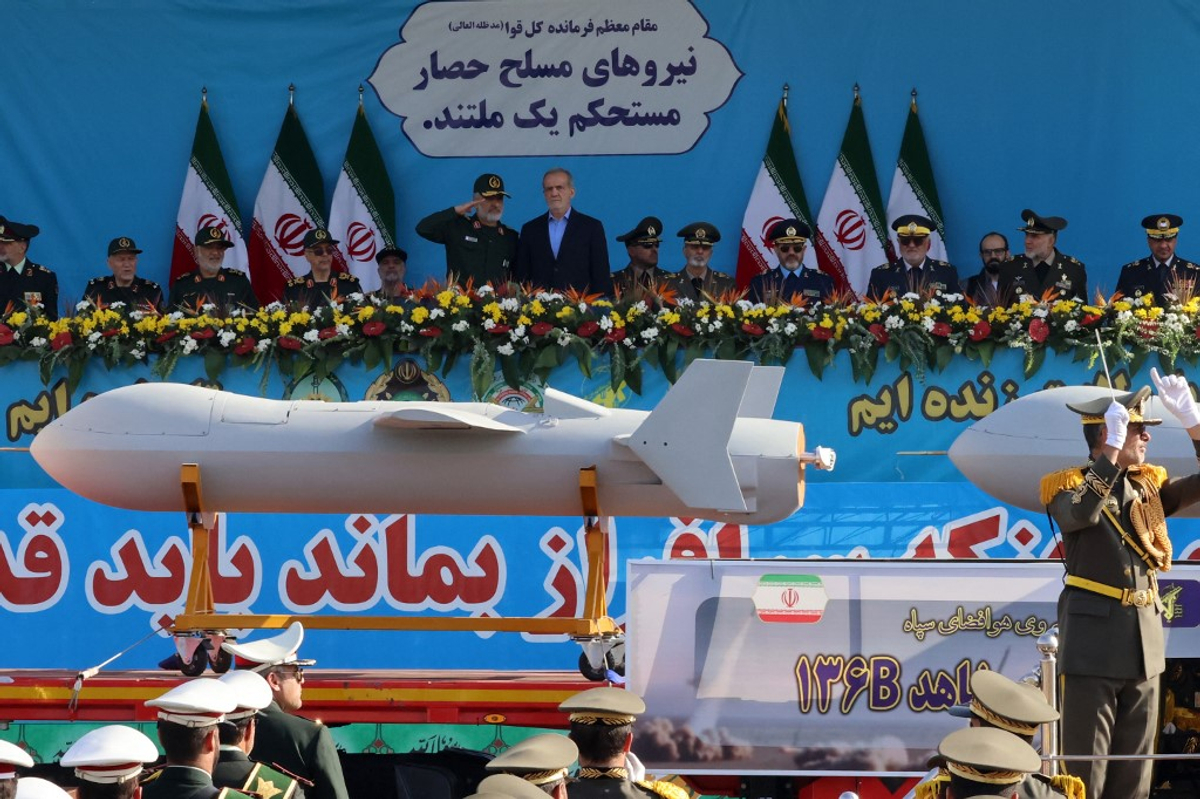
The United States last year declined a Ukrainian proposal to use Kyiv’s battlefield-tested drone interception technologies against Iranian-made Shahed drones, but later asked for assistance after attacks in the Middle East intensified, according to reporting by Axios.
A Ukrainian delegation reportedly presented the administration of Donald Trump in August with a detailed system designed to intercept Iranian drones and protect US troops and allied bases in the region.
JOIN US ON TELEGRAM
Follow our coverage of the war on the @Kyivpost_official.
Ukrainian officials demonstrated low-cost interceptor drones and broader air defense solutions, warning that Iran was upgrading its drone capabilities and proposing what they described as “drone walls” alongside integrated air defense systems.
Two US officials quoted by Axios said rejecting the proposal is now considered one of the administration’s biggest tactical mistakes since bombing against Iran began on Feb. 28. The report said Ukraine’s technologies had already proven effective in combat conditions and could have reduced losses earlier.
Ukraine’s president, Volodymyr Zelensky, personally proposed deploying counter-drone hubs in Turkey, Jordan, and the Gulf states, presenting regional maps and warning of future threats to US military facilities.
The initiative was initially rejected, with some officials later attributing that decision to skepticism about both the proposal and its presentation. However, The New York Times reported last week that Washington has now turned to Kyiv for help in countering Iranian drones.
Other Topics of Interest
Signals and Consequences: How US Policy Shaped Russian Strategy in Ukraine
Whenever the United States makes a geopolitical move, Moscow takes note and adjusts its tactics accordingly. Washington needs to be more aware of this dynamic.
White House spokesperson Anna Kelly said the intensity of attacks dropped by 90% after that cooperation began, while US military casualties were significantly lower than initially feared.
Ukraine’s interceptor systems are estimated to cost less than the $20,000 to $50,000 price of a Shahed drone, making them a cheaper option as the Pentagon expands its own counter-drone programs, including the Merops system and helicopter-based interception methods.
The US and Qatar are in discussions with Kyiv about acquiring Ukrainian interceptor drones as a cheap alternative to down Iranian Shahed UAVs amid the war in the Gulf, a source familiar with the matter has told Reuters.
The early-stage talks are taking place between government officials, not companies, and the technology being discussed includes systems to listen out for incoming enemy drones and disrupt their communication signals, the source said.
Zelensky said earlier that Ukraine had also received similar requests from Middle Eastern countries and that he would only go ahead with deals if they did not weaken Ukraine’s own defenses against Russia’s invasion.
He has also said he would be open to exchanging drones for air defense missiles.
Tehran has fired hundreds of missiles and drones at Gulf countries after the US and Israel launched a massive campaign of air strikes at Iran on Saturday and killed much of the Islamic Republic’s senior leadership.
Zelensky said Ukraine will send drone specialists to the Middle East as Kyiv seeks to trade its expertise in countering Iranian-designed drones for additional US-made air defense missiles.
Speaking Sunday, Zelensky said Ukrainian experts would travel to the region to assess how Ukraine’s experience fighting drone attacks could help partners there, as Kyiv grapples with shortages of advanced air defense ammunition.
“I think that next week, when the experts are on site, they will look at the situation and help,” Zelensky said after a meeting with Dutch Prime Minister Rob Jetten.