

Israel and the US appeared Wednesday to be increasingly at odds over the time frame for the war with Iran, with US President Donald Trump saying the conflict would end “soon” as there was “practically nothing left to target” and Israel’s defense minister meanwhile insisting there was no time limit to the US-Israeli operation against Iran.
The conflicting views came as missiles continued to rain down on Israel, with at least four salvos of Iranian missiles targeting the country throughout Wednesday morning and early afternoon, sending millions to seek shelter. No direct impacts or serious injuries were reported, aside from those lightly injured running for shelter or suffering from severe anxiety.
Government ministers reportedly said following a briefing that toppling Iran’s regime could take up to a year, as Prime Minister Benjamin Netanyahu reiterated his call for Iranians to seize the opportunity to bring down their government. A New York Times report on Tuesday said Iran was adapting its military methods as the war drags on, targeting American vulnerabilities in the region and aiming to wait out the campaign.
Trump told the Axios news site that there was “practically nothing left to target” in Iran and that the war there will end “soon.”
“Little this and that… Any time I want it to end, it will end,” Trump said. Recent days have seen Trump convey mixed messages on whether or not he expects an imminent end to the war.
Get The Times of Israel’s Daily Edition
by email and never miss our top stories
By signing up, you agree to the terms
Trump also indicated the initial campaign was designed as a six-week fight. “The war is going great,” he said. “We are way ahead of the timetable. We have done more damage than we thought possible, even in the original six-week period.”

People take cover in an underground bomb shelter as air raid sirens warn of incoming Iranian missile strike, in Ramat Gan, Israel, Wednesday, March 11, 2026. (AP Photo/Oded Balilty)
Trump also insisted that Iran was not only threatening Israel and the US, but “were after the rest of the Middle East.”
“They are paying for 47 years of death and destruction they caused. This is payback. They will not get off that easy,” he said.
In Israel, Defense Minister Israel Katz offered a different view of the future of the war.
“The operation will continue without any time limit, as long as required, until we accomplish all objectives and achieve victory in the campaign,” Katz said Wednesday during a situational assessment with IDF Chief of Staff Lt. Gen. Eyal Zamir and members of the IDF General Staff, in a video released by Katz’s office.
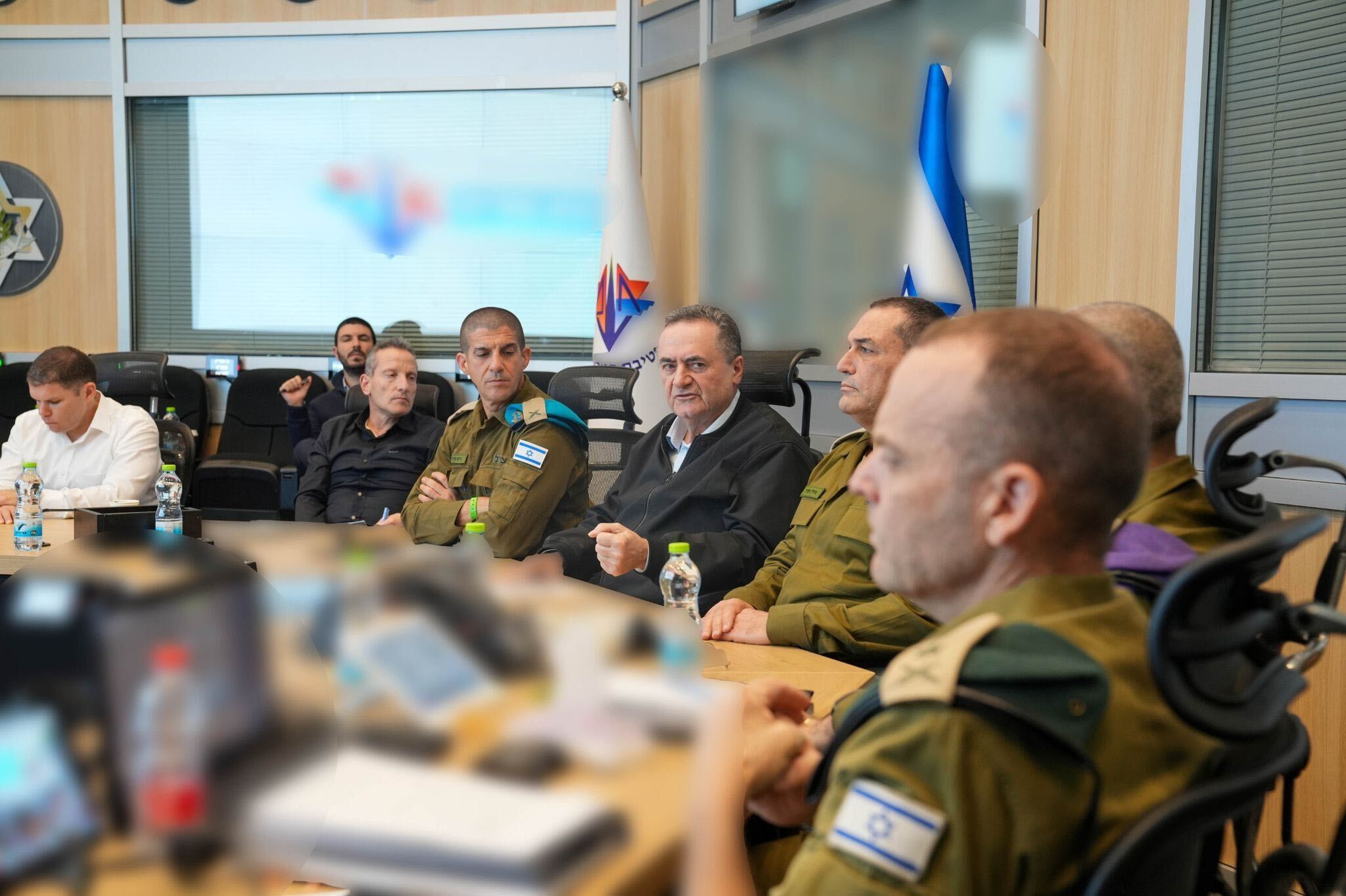
Defense Minister Israel Katz holds a situational assessment on March 11, 2026. (Ariel Hermoni/Defense Ministry)
According to some reports, there is a measure of concern in Israel that Trump could decide to end the war earlier than Jerusalem would like, leaving Israel’s key goals unaccomplished.
Katz reiterated the Israeli message that one of the aims of the IDF strikes is “to allow the Iranian people to rise, act, and overthrow this regime. Ultimately, this depends on them.”
He said the US and Israel are “carrying out impressive and systematic operations targeting the regime personnel themselves, the Islamic Revolutionary Guard Corps, and the Basij,” the latter referring to the state militia that has been a key player in Iran’s brutal repression of domestic protests.
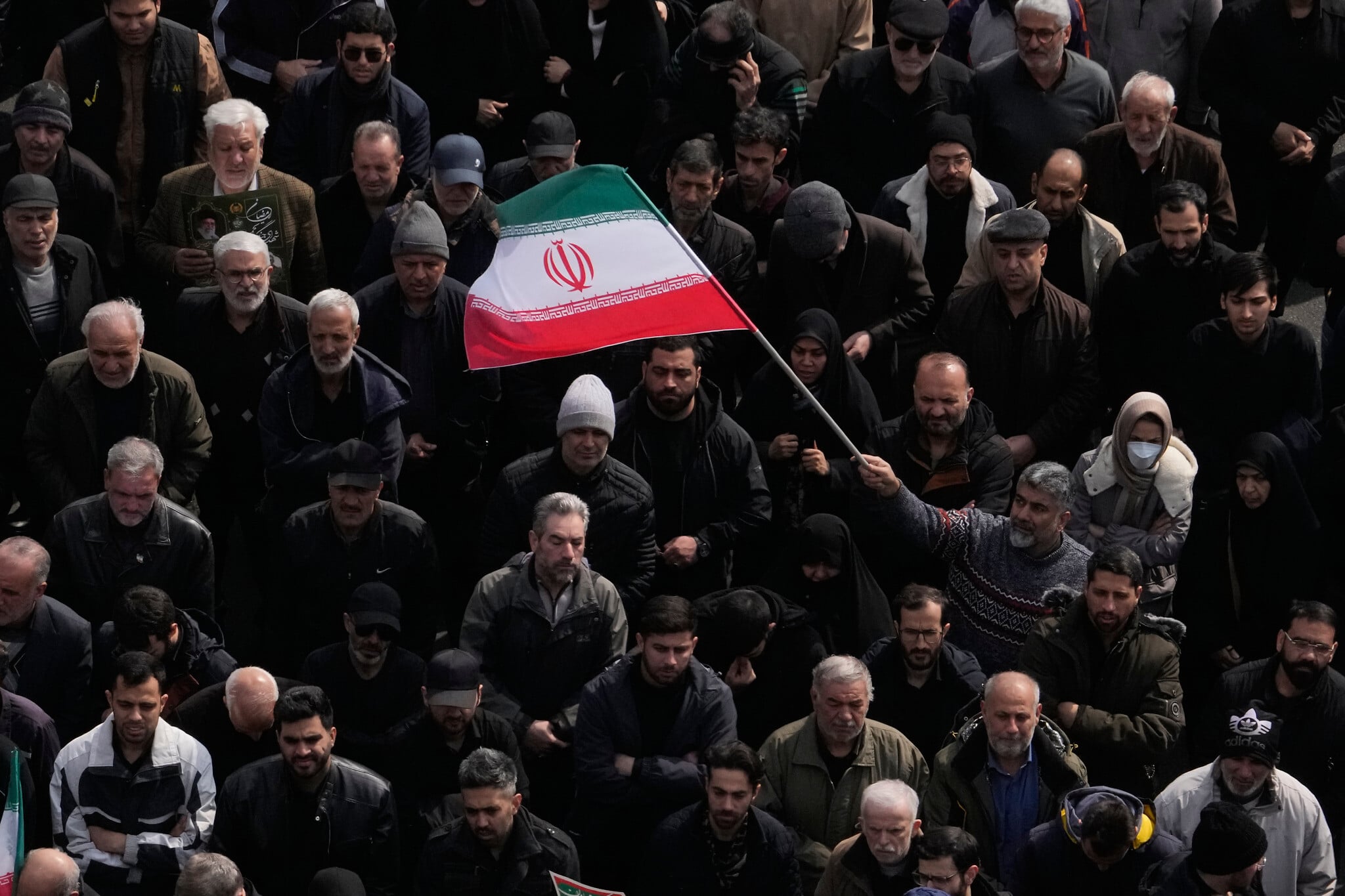
A man waves an Iranian flag as a crowd attends the funeral procession for senior Iranian military officials and civilians killed during the US-Israel campaign in Tehran, Iran, March 11, 2026. (AP/Vahid Salemi)
The defense minister called the Iranian leaders who have survived the strikes “a bunch of cowards who attack women, children, and the elderly in the streets, specialize in massacres and killing civilians.”
“They are already threatening to murder and slaughter anyone who protests,” he claimed.
Zamir, in comments to pilots Tuesday night that were released by the IDF on Wednesday, said “many thousands” of Iranian soldiers and commanders have been killed in Israeli strikes in Iran and warned that “no one is immune.”
“We are in a campaign that is deepening the damage to the Iranian regime and its foundations and pushing the threat further away over time. So far, we have eliminated many thousands of the regime’s soldiers and its commanders,” Zamir said to pilots during a visit to the Tel Nof Airbase.
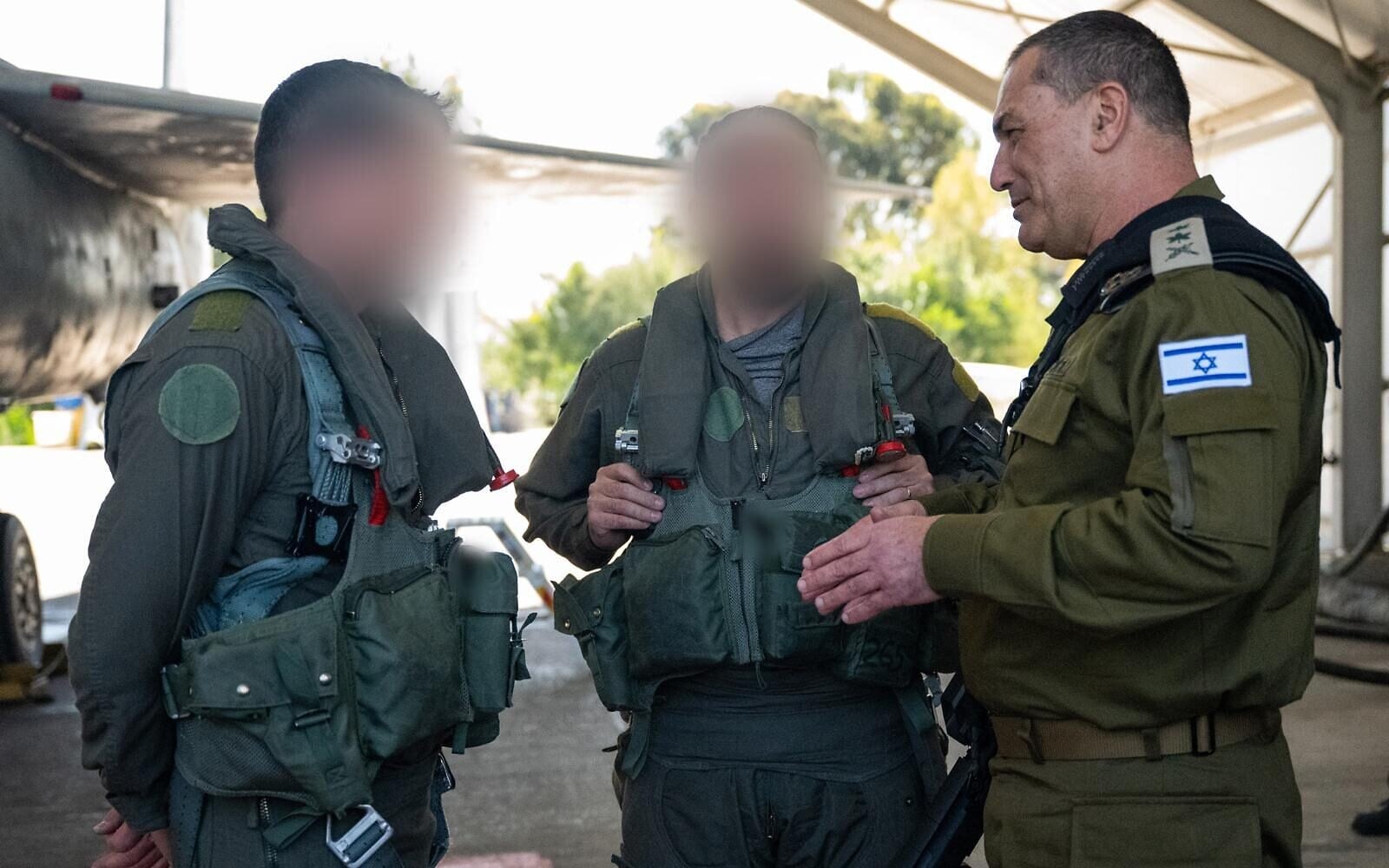
IDF Chief of Staff Lt. Gen. Eyal Zamir (unblurred) speaks to Israeli Air Force pilots at the Tel Nof Airbase, March 10, 2026. (Israel Defense Forces)
“I say from here as well to all our enemies: No one is immune. We will know how to reach anyone who tries to harm the citizens of the State of Israel,” he said. Zamir said the IDF will continue to “weaken the axis of terror, from the head in Tehran to its central arm in Beirut,” a reference to the Hezbollah terror group.
“It is paying the price for standing alongside Iran. We will not give up on disarming it; this campaign will help us accelerate this,” he said, referring to Hezbollah.
Amid contradicting comments from US and Israeli officials over the potential timeline for the ongoing war against Iran, the Kan public broadcaster reported Tuesday night that government ministers said, following a security briefing, that the fall of Iran’s regime could take up to a year, even as the ongoing military campaign Iran is expected to end sooner.
“After [the campaign ends], the work will be up to the Iranian people,” ministers told the network, while Israeli security officials add that “there is real fog regarding the duration of the attack in Iran,” since it is “difficult to decipher” Trump’s intentions.
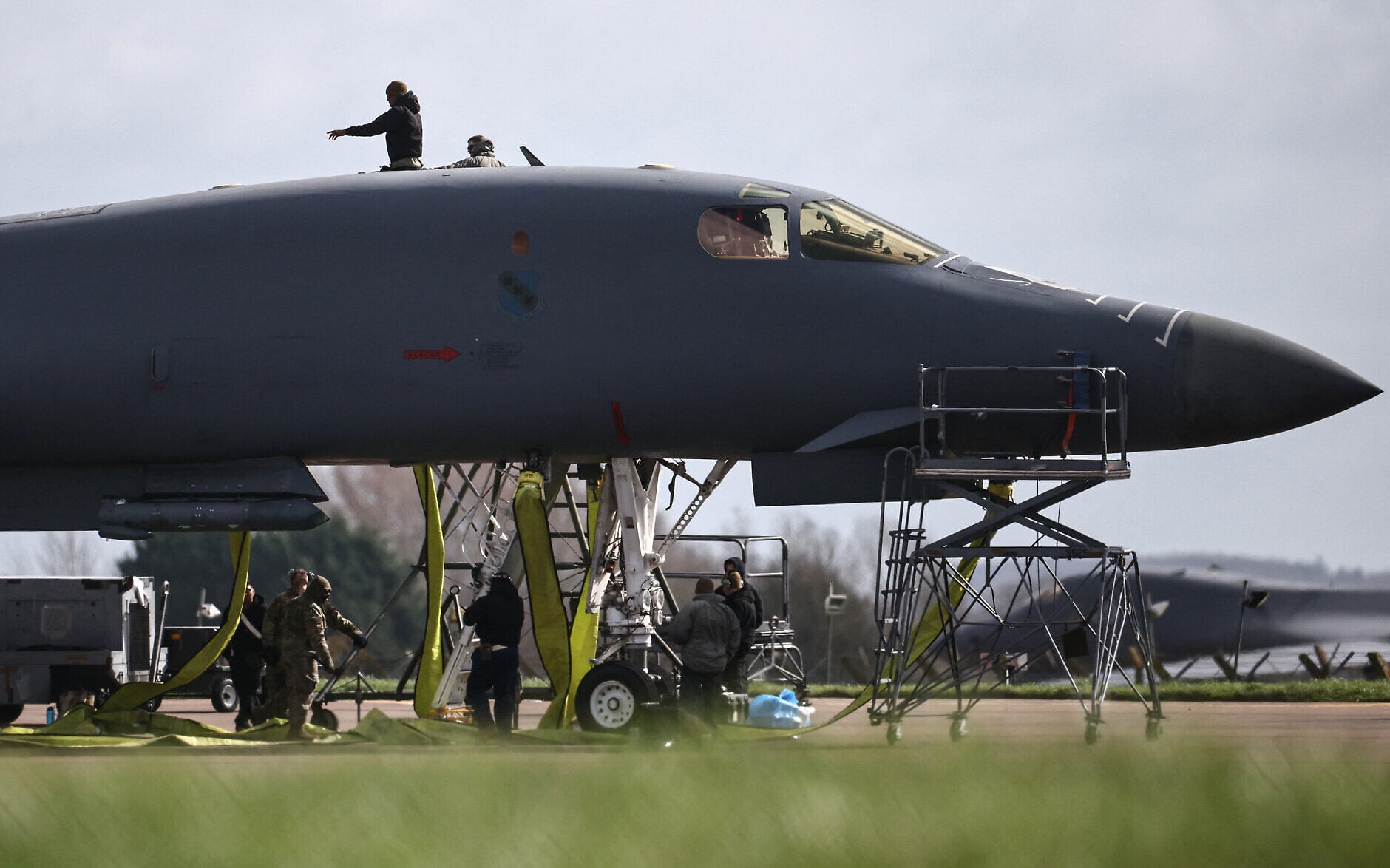
Military ground personnel work on a US Air Force B-1 Lancer bomber on the tarmac at RAF Fairford in southwest England on March 11, 2026. (Henry NICHOLLS / AFP)
The officials added that conditions are not yet ripe for the Iranian public to take to the streets, and that Israeli and US airstrikes are expected to continue in the coming week.
Israeli officials also acknowledged to Channel 13 News — apparently referring to the same briefing — that there is no certainty Iran’s regime will fall, and that no signal has been received from Trump indicating when the fighting will end.
The officials said that for now, Israel’s strategy is to maintain sustained military pressure until the Iranian people can overthrow their rulers.
“Our role is to continue striking the oppressors,” one official told Channel 13, “until the public rises up.”
In comments Tuesday evening, Netanyahu repeated his promise to the Iranian people that Israel will soon “create the conditions” for them to “grasp your destiny.”
“People of Iran,” he wrote in English on the Prime Minister of Israel X account. “We are waging a historic war for liberty. This is a once in a lifetime opportunity for you to remove the ayatollah regime and gain your freedom.”
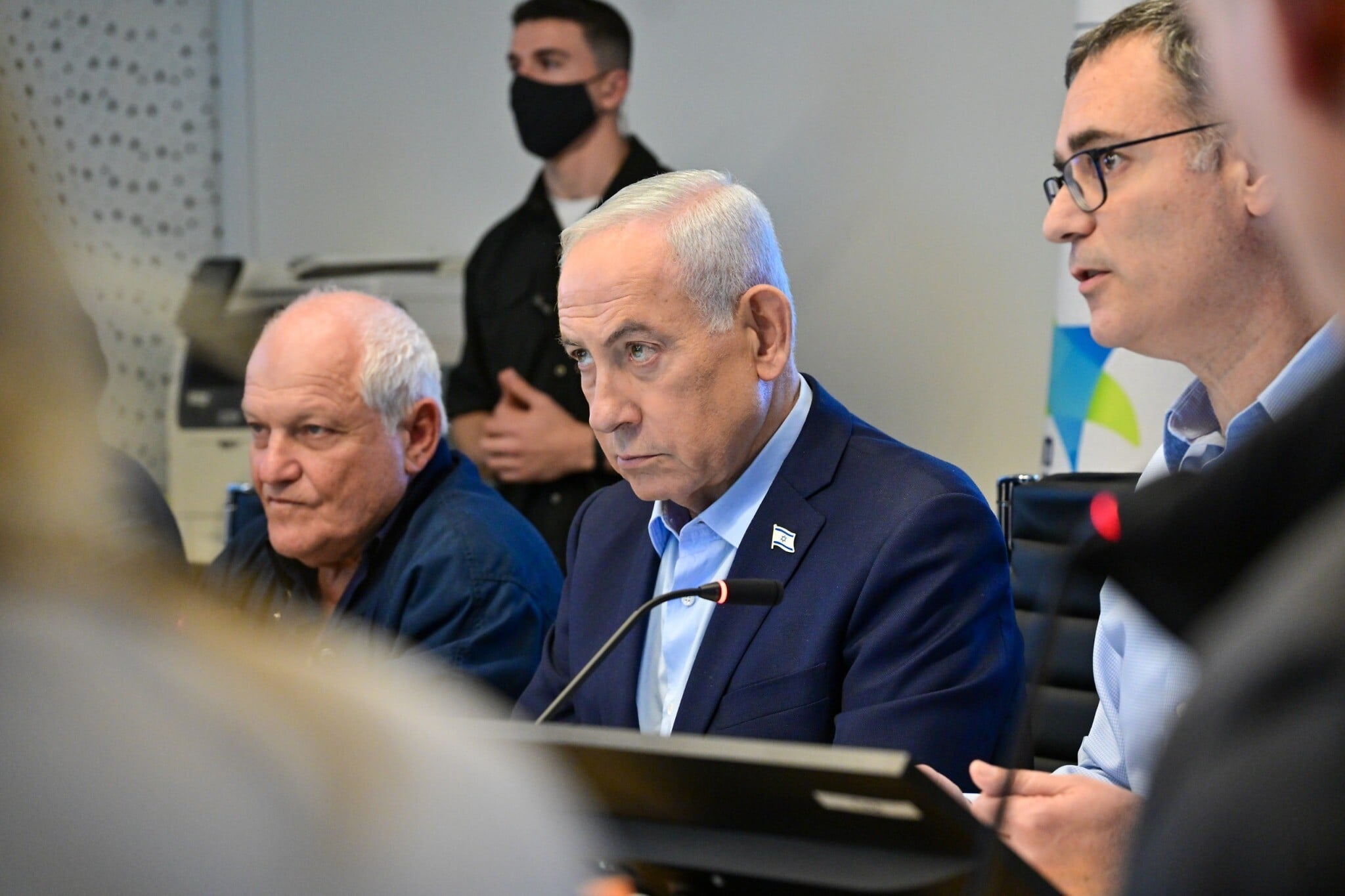
Prime Minister Benjamin Netanyahu visits the National Health Command Center, March 9, 2026. (Kobi Gideon/GPO)
Netanyahu said that “together with the United States, we are hitting the Tyrants of Teheran harder than ever,” promising that “we will continue to hit with growing force the tyrants who terrorized you for decades.”
Netanyahu said that “in the coming days we will create the conditions for you to grasp your destiny.”
“When the time is right, and that time is fast approaching, we will pass the torch to you,” he added. “Be ready to seize the moment!”
And in an interview with the German Bild newspaper on Tuesday, President Isaac Herzog also did not offer a clear timetable on when the war with Iran could end: “We need to take a deep breath and get to the end result.”

President Isaac Herzog, left, visits an air defense battery along Israel’s border with Lebanon, March 10, 2026. (Haim Zach/GPO)
Herzog said the US and Israeli attacks on Iran are changing the whole configuration of the Middle East. He defended controversial strikes on Iranian oil sites as a way of taking away money from Tehran’s “war machine.”
“The Iranians are the ones spreading chaos and terror throughout the region and the world. So I think if we measure everything by a speedometer, we won’t get anywhere. We need to take a deep breath and get to the end result,” Herzog told Bild.
Eliminating the Iranian threat would “enable the entire system in the region to suddenly breathe again and develop further. That’s fantastic.”
Times of Israel staff contributed to this report.