
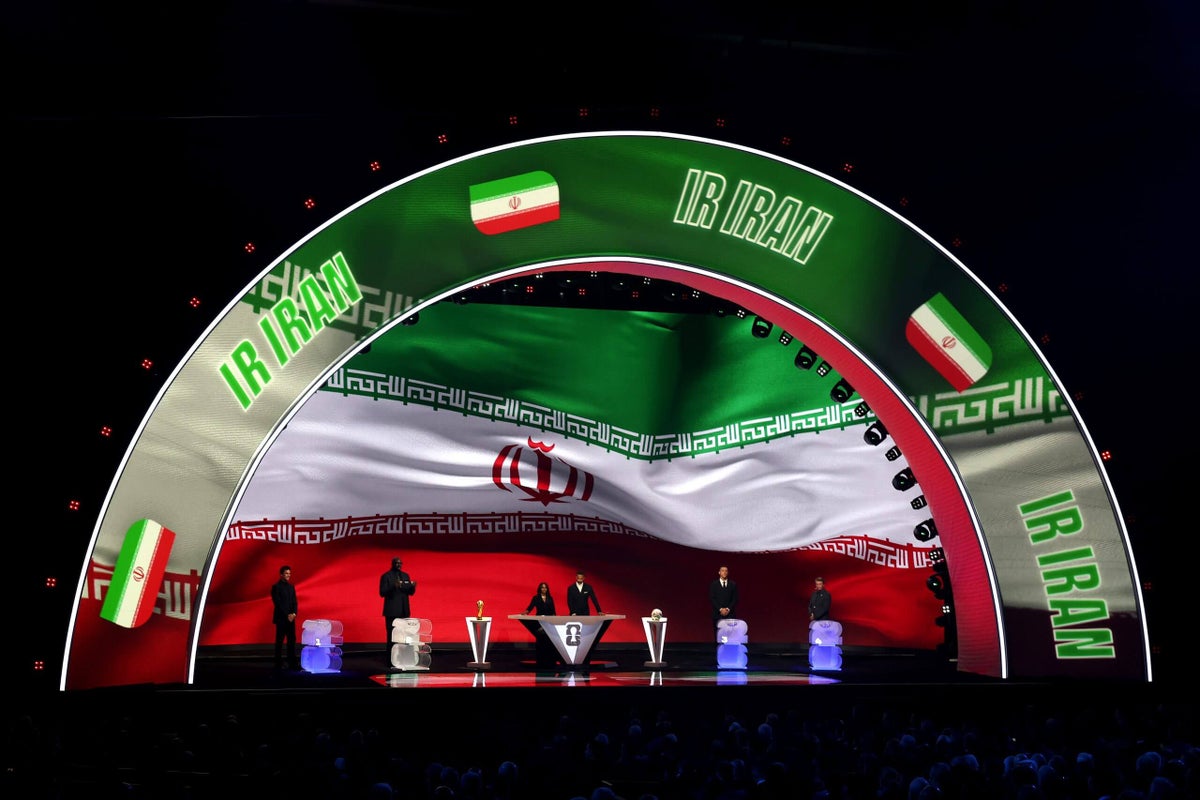
A version of this article was first published on March 2. It has been updated after Iran’s sports minister suggested the country might boycott the tournament. The Athletic has live coverage of the latest news for the 2026 World Cup.
If Iran withdraws from the U.S.-hosted 2026 World Cup, as its sports minister indicated it might, FIFA regulations give the global soccer governing body broad discretion to call in a replacement team or adjust the tournament accordingly.
Questions surrounding Iran’s participation have arisen amid U.S. and Israeli military strikes on the Persian country. The ongoing assault, which began Feb. 28, has killed Iran’s supreme leader, Ayatollah Ali Khamenei, plus more than 1,000 civilians, according to local authorities.
The attacks have triggered a widening conflict in the Middle East, which, in the immediate term, has disrupted Iraq’s preparations for a World Cup qualifying playoff scheduled for March 31 in Mexico. But the broader questions concern Iran and the full World Cup, which is slated for June and July in 16 cities across Mexico, Canada and the United States.
The Iranian men’s national team qualified comfortably last year, and is scheduled to play all three of its Group G games in the U.S. — against New Zealand (June 15 at SoFi Stadium near Los Angeles), Belgium (June 21 at SoFi) and Egypt (June 26 at Lumen Field in Seattle).
But Iran’s sports minister, Ahmad Donyamali, told state TV on Wednesday that the team “certainly” cannot participate, “given that this corrupt [U.S.] regime has assassinated our leader.”
So, what happens if they don’t?
What happens if Iran pulls out?
If Iran were unable or unwilling to participate, FIFA regulations give the global soccer governing body broad discretion to call in a replacement team or adjust the tournament accordingly.
Article 6 of FIFA’s 2026 World Cup regulations, published last year, addresses cases of non-participation — but with little specificity.
Regulation 6.5 addresses “force majeure,” an irresistible force or unforeseen event: “If a Participating Member Association withdraws or a match cannot be played or is abandoned as a result of force majeure, the authorised FIFA organising body (including the Tournament Operation Centre) shall decide on the matter at its sole discretion and take whatever action is deemed necessary.”
Regulation 6.7 then states: “If any Participating Member Association withdraws and/or is excluded from the FIFA World Cup 26, FIFA shall decide on the matter at its sole discretion and take whatever action is deemed necessary. FIFA may decide to replace the Participating Member Association in question with another association.”
FIFA, therefore, would essentially have two broad options if Iran withdrew, either by choice or force. FIFA could cancel Iran’s games and tweak rules to treat Group G as a three-team group, or it could replace Iran with another nation’s team.
Finding a replacement, however, would be complicated by timing. The war could last weeks or months — nobody knows. Iran, as a country and a team, might not have clarity on World Cup participation any time soon. Any withdrawal would therefore be relatively last-minute.
Which teams could replace Iran?
The multi-stage format of Asian World Cup qualifying makes choosing a replacement on merit tricky.
Iran qualified comfortably by winning Group A in Asia’s third qualifying round. Uzbekistan, the second-placed team, also earned an automatic berth. The third- and fourth-placed teams, UAE and Qatar, went to a fourth round — where Qatar ultimately secured World Cup qualification. UAE, on the other hand, lost a playoff to Iraq who, with that win, earned a spot in another playoff — the intercontinental playoff in Mexico later this month.
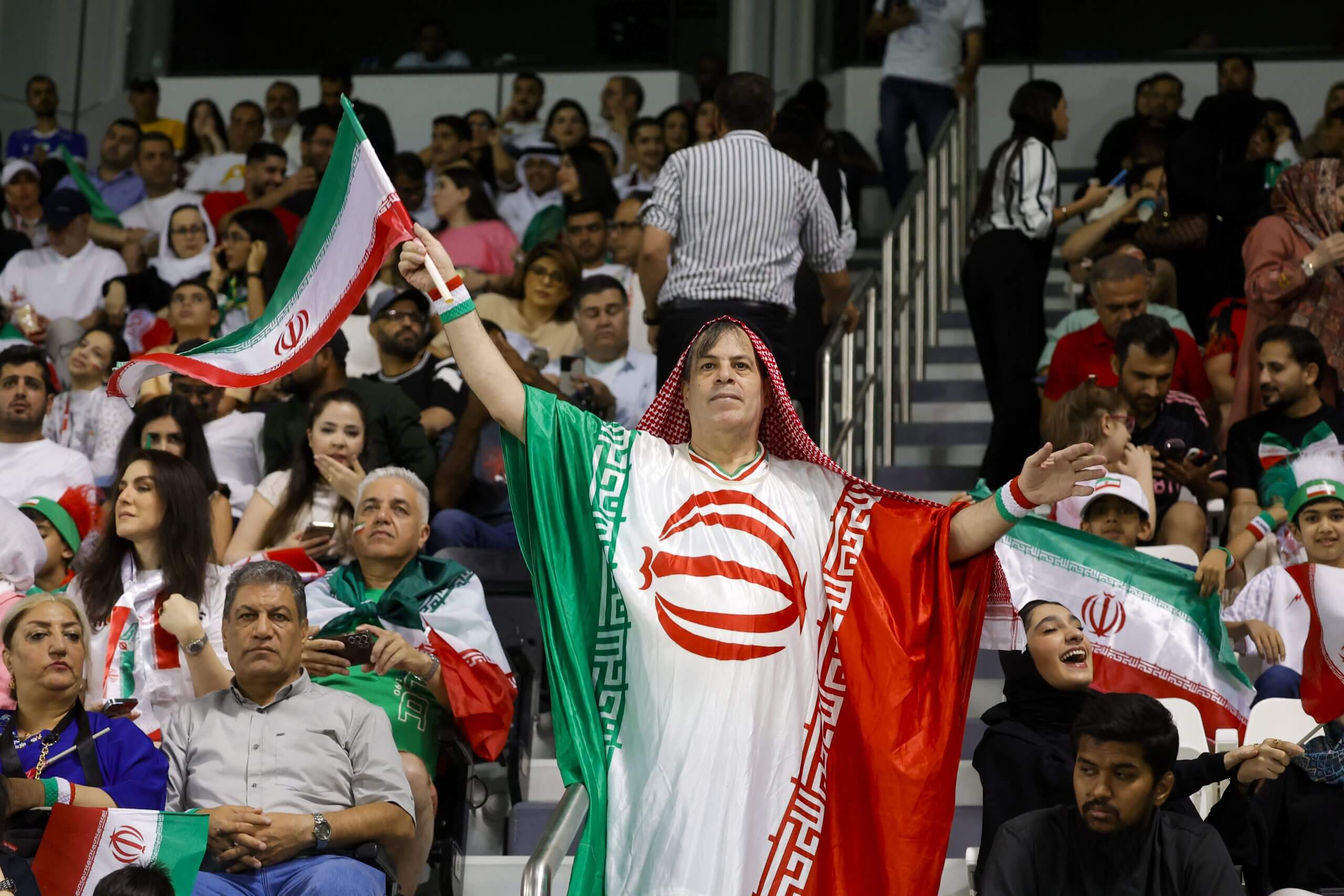
Iran fans celebrated World Cup qualification last year. (Karim Jaafar / AFP via Getty Images)
Iraq will face either Bolivia or Suriname on March 31 near Monterrey, with a World Cup berth at stake. If Iraq wins that playoff, UAE would presumably be next in line as a potential replacement for Iran. If Iraq loses the playoff, either Iraq or UAE could be chosen.
Or, FIFA would look outside Asia. It could choose the intercontinental playoff loser (Bolivia or Suriname). It could pick the top-ranked team that didn’t qualify, potentially Italy. Under FIFA’s own rules, it could do whatever it wants.
Given the murkiness, and with Iraqi players stuck in their country due to airspace closures, Iraq coach Graham Arnold has proposed that FIFA postpone the March 31 playoff to allow for key decisions and further developments. Iraq could play the playoff at a later date this spring, or, “if Iran withdraws, we go into the World Cup and it gives the UAE, who we beat in qualifying, the chance to prepare for either Bolivia or Suriname,” Arnold told the Australian Associated Press.
FIFA has not said if it is considering a playoff postponement, and has not responded to Donyamali’s comments.
Is there precedent for replacement teams at World Cups?
There is no modern-era World Cup precedent. The last time countries withdrew from a World Cup after qualifying was 1950. That year, Scotland and Turkey pulled out before the draw, India and France pulled out after the draw, and the first post-World War II tournament was contested by only 13 teams — sorted into two groups of four, one group of three and one of two.
The most relevant modern precedent is the 2025 FIFA Club World Cup. Last March, less than three months before the novel tournament began, FIFA booted out Mexican qualifier León, citing multi-club ownership rules. Appeals stretched into early May.
When the Court of Arbitration for Sport rejected those appeals, on May 6, FIFA — after discussing alternatives for months — announced that Club América (as the top-ranked Mexican team) and LAFC (as the team that lost to León two years earlier in the Concacaf final that originally earned León its place) would compete in a one-game playoff on May 31 for the last spot at the tournament. LAFC won the playoff and replaced León in Group D.
FIFA, in theory, could stage a similar playoff to replace Iran if necessary. The World Cup, though, requires significantly more logistical planning than the Club World Cup. Naming a replacement team with a few weeks of lead time would come with challenges.
Why wouldn’t Iran participate?
Initially, there seemed to be several potential reasons for non-participation:
Iran could essentially boycott the World Cup in response to the U.S. attacks.
Several entities could decide that, for different reasons, the team’s participation isn’t safe.
The U.S. government could also restrict their participation.
Donyamali, the sports minister, spoke to the first two reasons. He cited the “malicious actions carried out against Iran.” He also said: “Our players do not have security, and fundamentally the conditions for participation do not exist.”
The third possibility has seemingly faded. FIFA president Gianni Infantino met with U.S. President Donald Trump on Tuesday, March 10. They “spoke about the current situation in Iran, and the fact that the Iranian team has qualified to participate in the FIFA World Cup 2026,” Infantino said in a statement posted on Instagram. “During the discussions, President Trump reiterated that the Iranian team is, of course, welcome to compete in the tournament in the United States.”
A White House official confirmed to The Athletic that this was Trump’s message. Outside of an interview with Politico one week earlier, in which Trump said he “really [didn’t] care” if Iran participates, the “everyone is welcome” message has been his administration’s public stance all along.
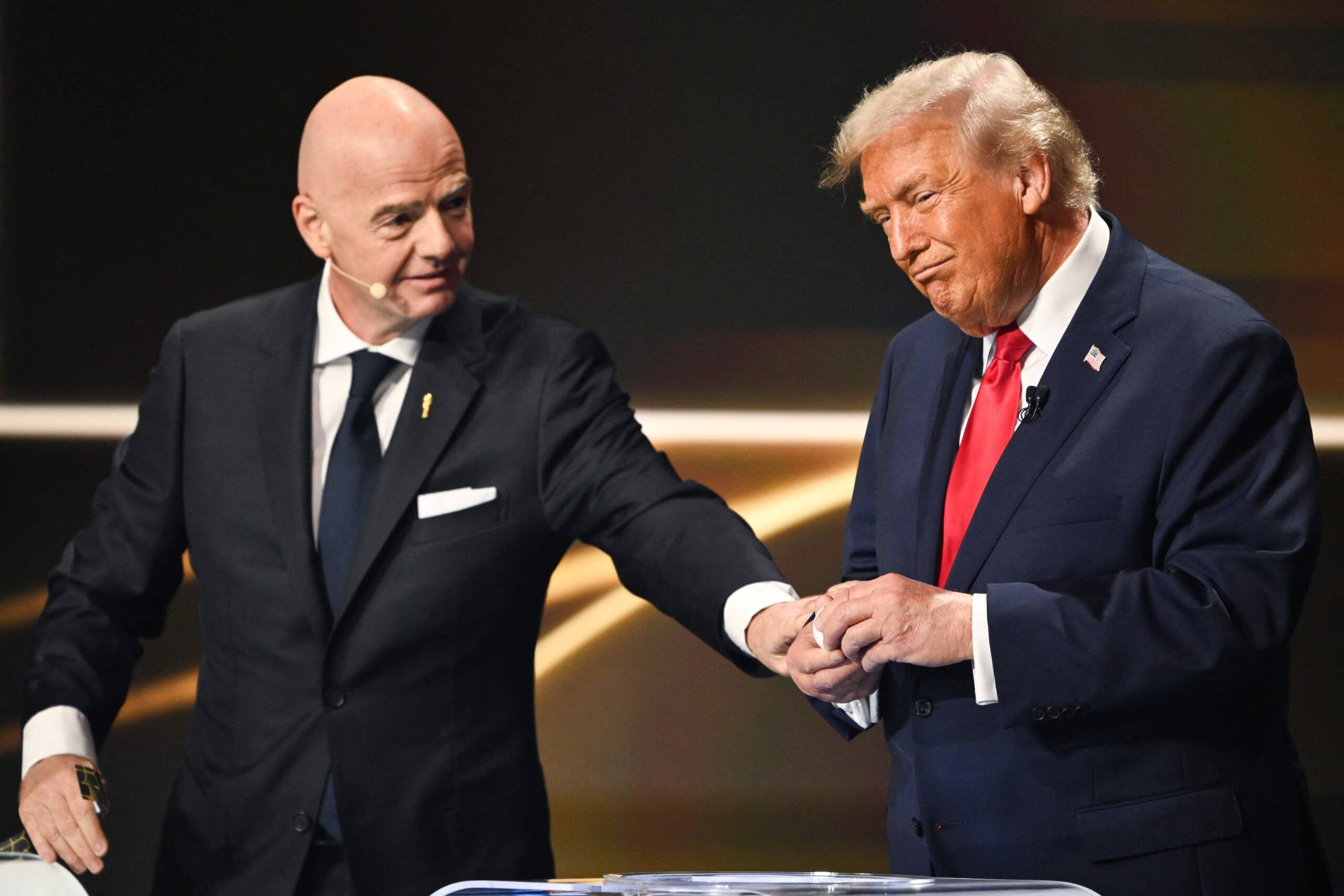
FIFA president Gianni Infantino said U.S. President Donald Trump is open to Iran participating. (Mandel Ngan / AFP via Getty Images)
But they have also barred travelers from Iran and three other World Cup-participating countries, with only limited exceptions for “any athlete or member of an athletic team, including coaches, persons performing a necessary support role, and immediate relatives, traveling for the World Cup, Olympics, or other major sporting event.” And in the fall, multiple Iranian delegates had visas denied before December’s World Cup draw.
When asked why, Andrew Giuliani, head of the White House World Cup task force, said at the time that “every visa decision is a national security decision.” If FIFA wasn’t able to intervene and overturn those decisions, it likely couldn’t prevent the Trump administration from barring individuals or even an entire team before the tournament itself.
Could the U.S. attack imperil the country’s hosting of the World Cup?
That’s unlikely.
Of course, there is no precedent for a World Cup host bombing a participating nation less than four months before the tournament. But there do not appear to be security concerns in the mainland U.S. stemming from the conflict.
And there have been no suggestions from anyone at FIFA that the governing body would consider relocating games as a penalty for the military assault. And there is no known regulation that would force FIFA to act.
Other countries could boycott, but international reaction to the attack has been mixed — far from the type of unanimous condemnation that would lead to meaningful calls for a widespread boycott.