
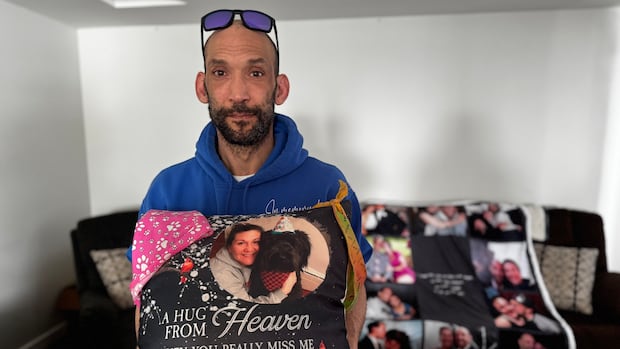
The day of Oct. 21, 2023, started out well for Adam Gabriel and his family.
Gabriel, then a resident of Springhill, N.S., had driven to the Annapolis Valley for the day with his wife, Amanda, to see their son play in an Acadia Axemen university football game.
By the time the pair returned home that rainy Sunday night, they needed to pick up other family members.
Feeling tired, Gabriel stayed behind while his wife went to get their grandson, Ace Gabriel-Killen, daughter Sara and her partner, Travis Killen, in nearby Fort Lawrence, N.S., which is about 30 kilometres away.
But as the four drove in their Mitsubishi SUV along a secondary road with a speed limit of 70 km/h, they were T-boned by a rented Volkswagen Golf that passed them on a solid line as Amanda Gabriel’s vehicle made a left-hand turn to get to the nearby Trans-Canada Highway.
The Golf was doing an estimated 149 km/h and had been travelling as fast as 168 km/h.
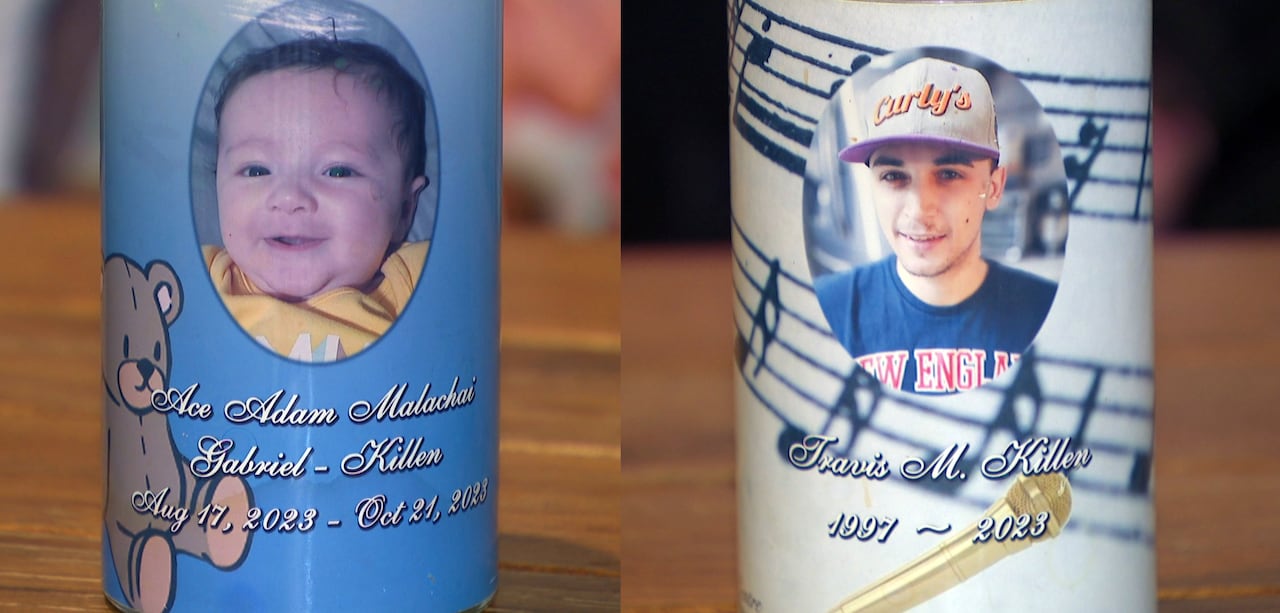 Ace Gabriel-Killen, two months old, and Travis Killen, 26, were two of three people who died in the crash. (Brian MacKay/CBC)
The crash killed three of the Mitsubishi’s occupants, with only Sara Gabriel surviving it.
After being alerted that his family might have been involved in a crash, Adam Gabriel drove to the scene. There, he said he saw the driver of the other vehicle, Tyler Strong, get out of an ambulance. It’s an image that’s still with him to this day.
“All I see when I close my eyes is buddy getting out of the ambulance, jump down, big stretch and smile and he looked me right in the face, but he didn’t know it was me,” said Gabriel.
“But that’s all I see. I don’t sleep very well.”
Strong was sentenced last December to 54 months in prison after pleading guilty to three counts of dangerous driving causing death and two counts of dangerous driving causing bodily harm.
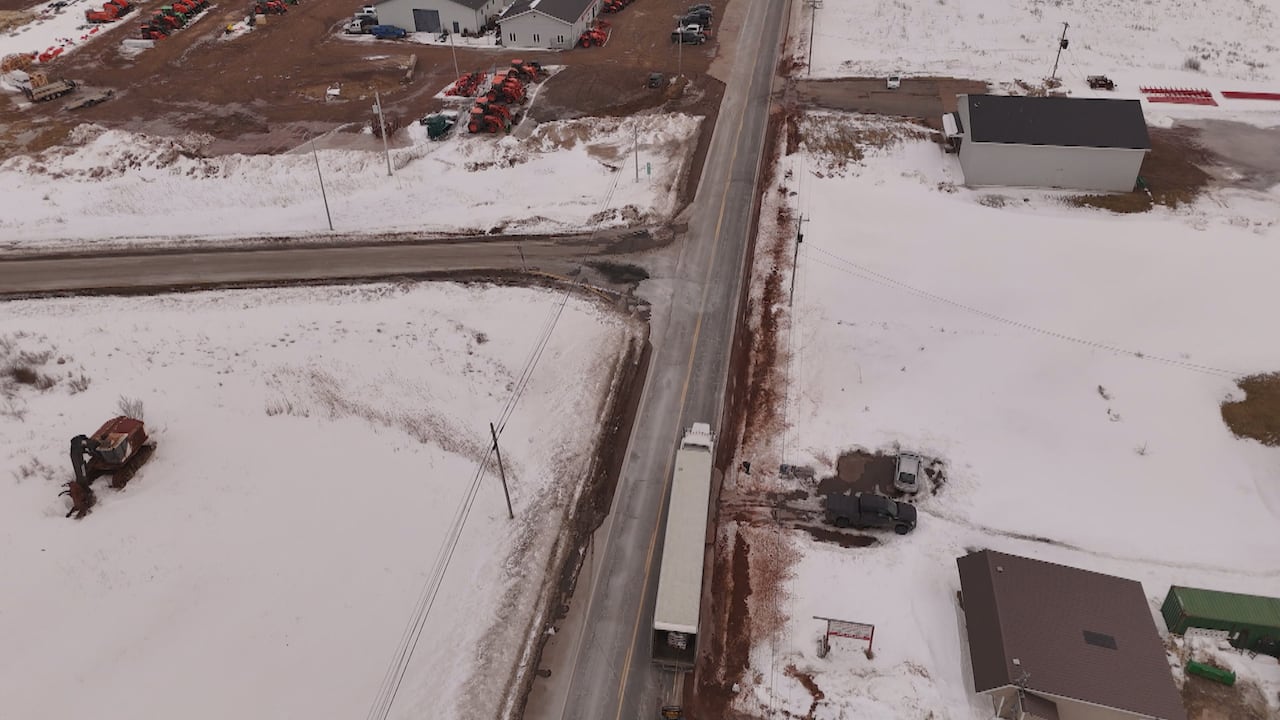 This is the stretch of Highway 2 where the crash occurred. As Amanda Gabriel attempted to make a left-hand turn, she was T-boned by Tyler Strong, who was travelling an estimated 149 km/h, more than twice the speed limit. (Brian MacKay/CBC)
It’s been almost 2½ years since the crash, but Gabriel said his life hasn’t resumed.
“I’m trying, but everybody gives you advice, all ‘You got to do this, you got to do that,'” he said. “Shut up. You don’t know. There’s no book for this and everybody that says it has not been through something like this.
“It don’t get better. You just gotta learn to live with it, really.”
Gabriel often goes days without sleeping and has to take medication to deal with anxiety, depression and post-traumatic stress disorder.
Crash victims
While his daughter Sara survived the crash, she hasn’t fully recovered and has not resumed working.
“Emotionally I am confused, mad, lost and empty,” she said in a victim impact statement. “Nothing can bring them back. I will never be okay with the fact that my sweet curly-headed baby boy isn’t here with me today. I will forever have an emptiness in my heart, soul and mind.”
 Sara Gabriel lost her mother, son and partner in the crash. (Submitted by Adam Gabriel)
Her son, Ace Gabriel-Killen, was two months old at the time of the crash.
“We called him Little Squishy Face,” said Gabriel. “He just brought smiles [to] everybody. And now he’s gone.”
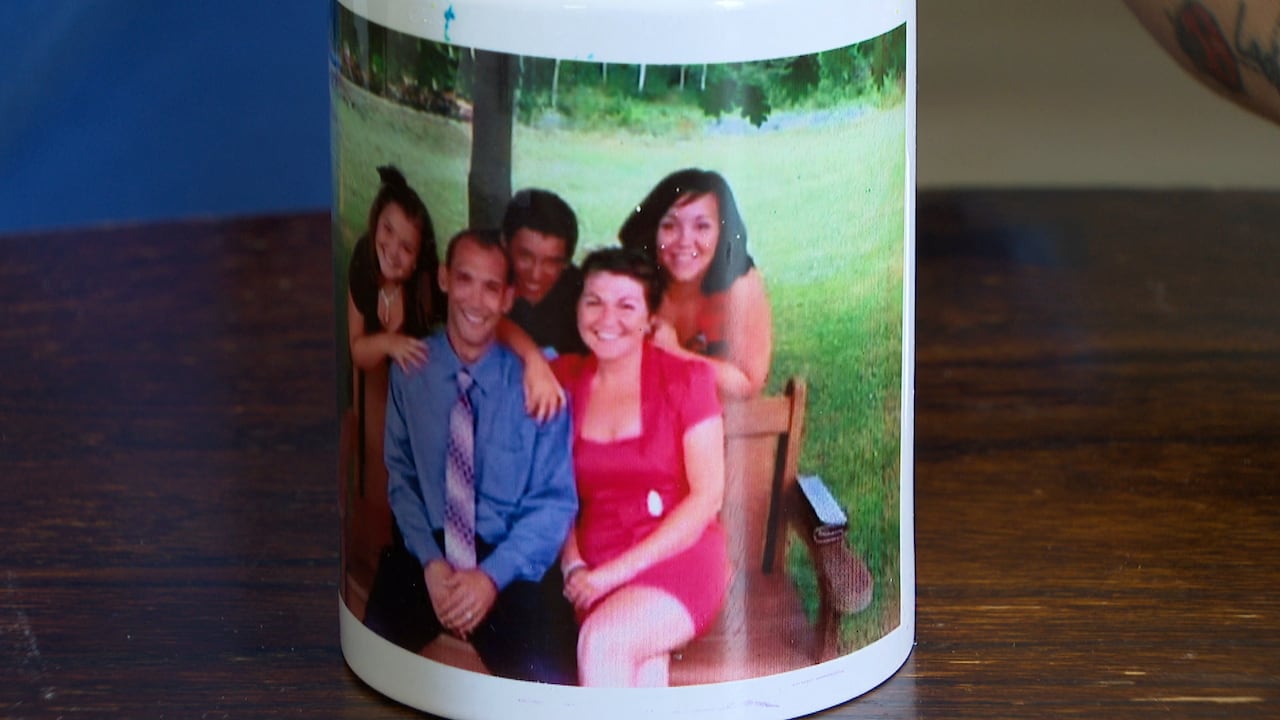 Members of the Gabriel family are shown in an undated photo that’s printed on a coffee mug. (Brian MacKay/CBC)
Amanda Gabriel was 43 when she died in the crash. She and Adam first met in junior high and were together for almost three decades.
Adam Gabriel, who describes himself as a “hellion” when he was younger, later became a sheriff, while his wife, who he says always saw the good in everyone, became a nurse.
“She fixed me,” he said. “I would have been dead or in jail long ago, but she did a good job, I guess, with me … You never hear nobody in the world say nothing bad about her.”
For Gabriel, the 54-month sentence is woefully short.
Sad life principle
In accepting the joint sentencing recommendation from the Crown and defence, Justice Joshua M. Arnold said he agreed with counsel that Strong’s “troubling background, combined with his overcoming significant life challenges, cries out for some restraint in imposing sentence.”
A pre-sentence report said Strong’s parents separated when he was in preschool and they had substance abuse problems. Strong also reported being verbally and emotionally abused by them.
Arnold noted that while counsel did not specifically raise something known as the “sad life principle,” it was peripherally referenced.
“The sad life principle as historically applied, works to restrain the sentence if the offender has demonstrated a genuine interest in rehabilitation. Mr. Strong worked hard to make something of himself and leave his challenging upbringing behind,” wrote Arnold.
Gabriel doesn’t accept the reasons given for a lighter sentence.
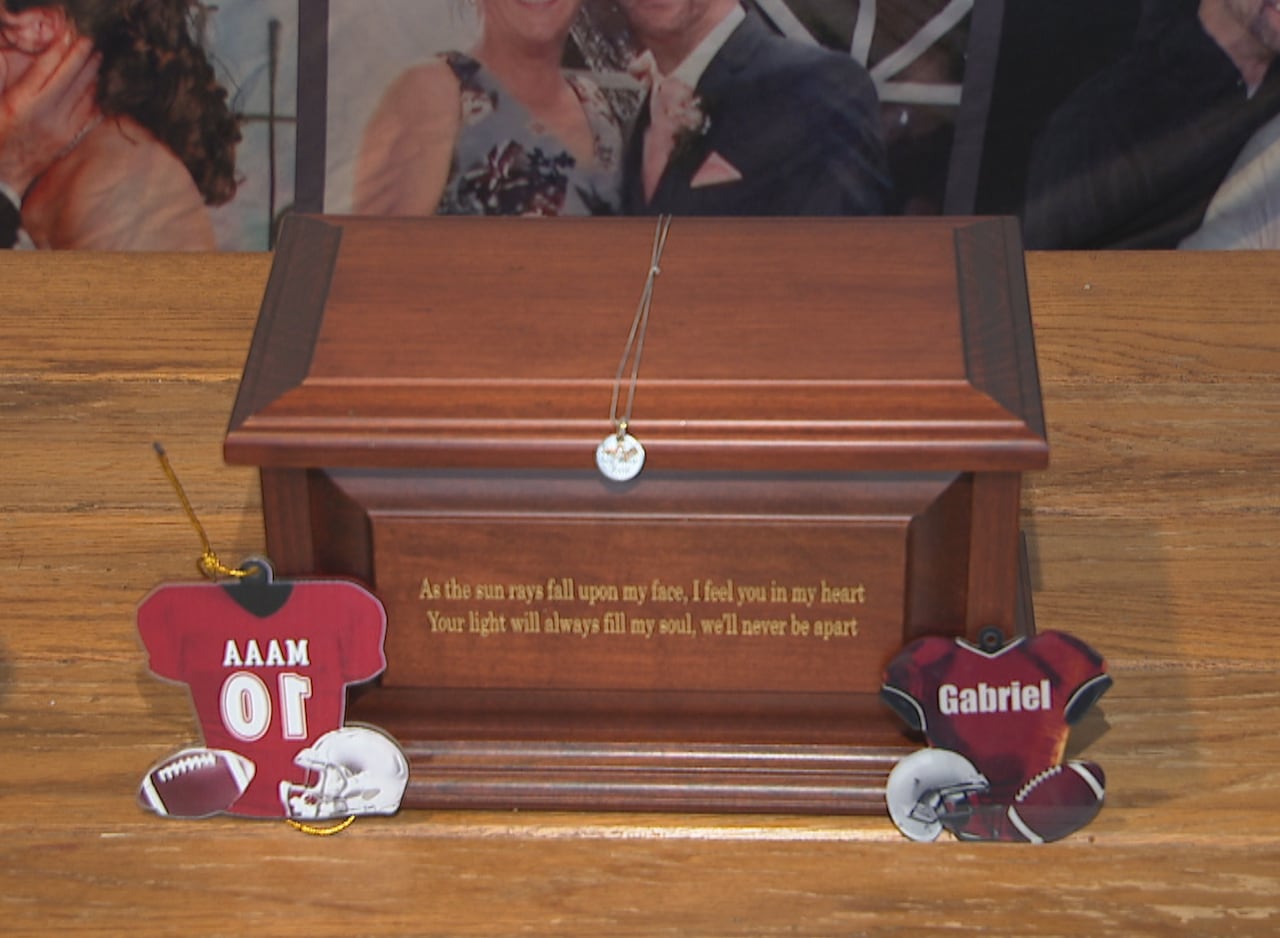 Adam Gabriel built this box to house his late wife’s ashes. (Brian MacKay/CBC)
“We all got hard lives,” he said. “That gives him no right to do what he did. He neglected the law fully.”
Riley Gabriel agrees with his father.
“You have a choice every day to learn and grow up and not be a result of your upbringing,” he said.
The judge’s decision said that Strong’s decision to plead guilty saved the survivors, family members and witnesses from the trauma of attending a weeks-long trial.
“The admission of responsibility by Mr. Strong provides some measure of closure to the families and saves a lot of institutional resources,” said the written court decision.
Adam Gabriel disagrees, noting that Strong’s guilty plea came more than two years after the crash.
“He put it off and put it off … And that’s putting us through suffering, so they’re not saving nothing. We’re still a mess,” said Gabriel.
Lawsuits
And while Strong is serving time, there are around a half-dozen lawsuits before the courts related to the case.
Gabriel believes that because they are ongoing, he hasn’t been able to grieve yet.
He no longer lives in Springhill, but lives in nearby Oxford, N.S. Between the memories of his family’s life there and seeing Strong in town before the guilty plea, he felt he had no choice but to sell the family home and move somewhere else.
Riley Gabriel said the day of the crash marked his final football game at Acadia. He remembers his mom being there and bringing a cake for the players and coach into the locker-room after the game.
It was her first time being in the locker-room and he remembers the smile on her face and the pride she had in her son and the other players.
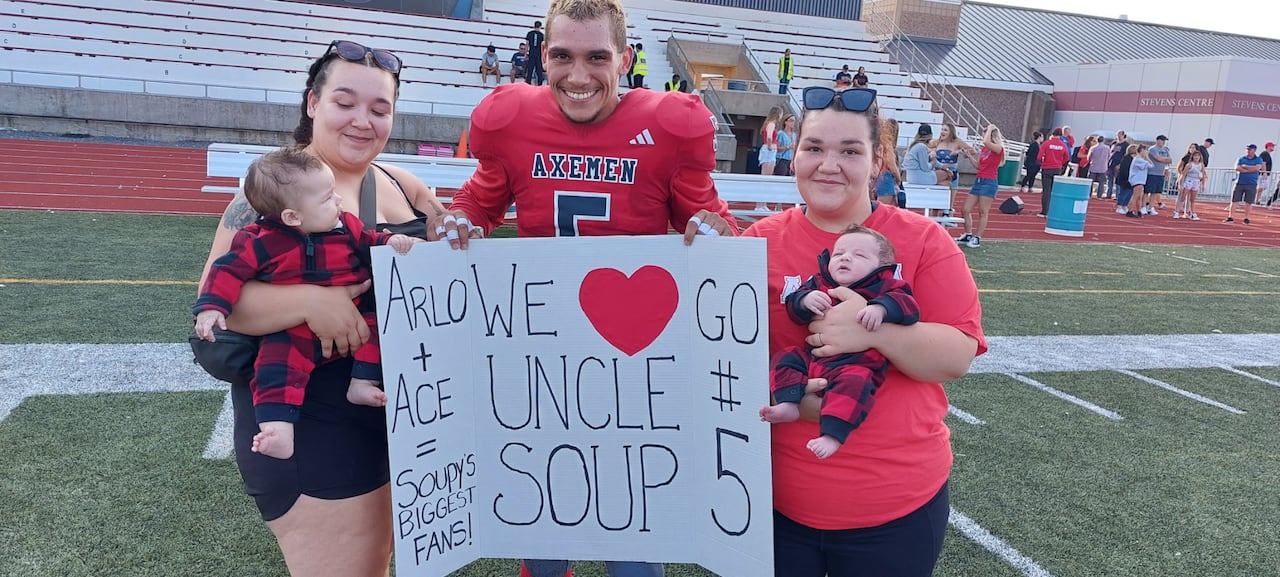 Riley Gabriel was a student at Acadia University and played on the football team at the time of the crash. (Submitted by Adam Gabriel)
While he finished out the semester, he dropped out and remains a few credits short of a community development degree.
He said his mom’s death has left a huge hole in the family.
“My mother was the glue of our family. She was everyone’s rock. A lot of what has gone on kind of feels like, you know, some people have to try to forget that things existed so they can forget that things happened.”
Adam Gabriel said he spoke with CBC News because he doesn’t want another family to go through what his family has gone through.
He said people ask him how he’s still standing — and he has a simple response.
“It’s because of my kids and then taking strength from [Sara],” he said. “If she can get through this, I gotta be able to get through this.”
MORE TOP STORIES