
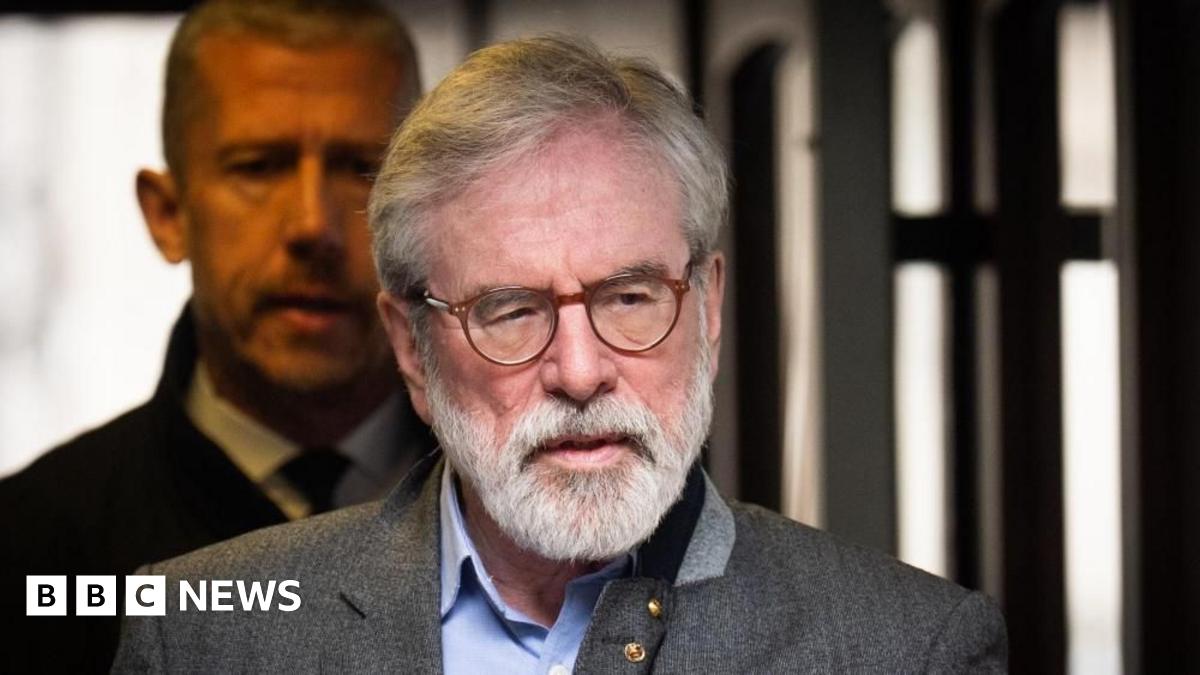
Asked why he was not arrested, he replied: “He wouldn’t answer any questions so what would have been the purpose of arresting him?”
Witness B described him as “a very formidable opponent” and a “strategic thinker”.
He said the London Docklands bomb in February 1996, which ended the first IRA ceasefire, “was a great shock”.
Although the RUC felt the ceasefire would break, the bombing “took us all by surprise”.
In his witness statement, he stated: “Much of the intelligence I had access to led me to conclude that the defendant (Adams) was undoubtedly a member of the army council for the period encompassing the 1980s and 1990s.
“All the intelligence l saw pointed to his membership and leadership within the IRA.”
It went on: “It is my certain knowledge, based on the materials I had access to at the time… that the bomb at Canary Wharf on 9 February 1996 was not simply sanctioned by the army council but was ordered by the army council.
“It is inconceivable that such an action would be carried out without its explicit orders.
“The defendant was at that time very much the first among equals on the army council of the IRA.”
Witness B’s statement added that if Adams was not the most important member of the IRA, “he pulled off a remarkable coup”, as the British, Irish and United States governments believed otherwise.
“Had (Adams) not been the senior figure in the IRA that he was, there would have been absolutely no point in the governments dealing with him the way they did on the road to the Good Friday Agreement in 1998.”