
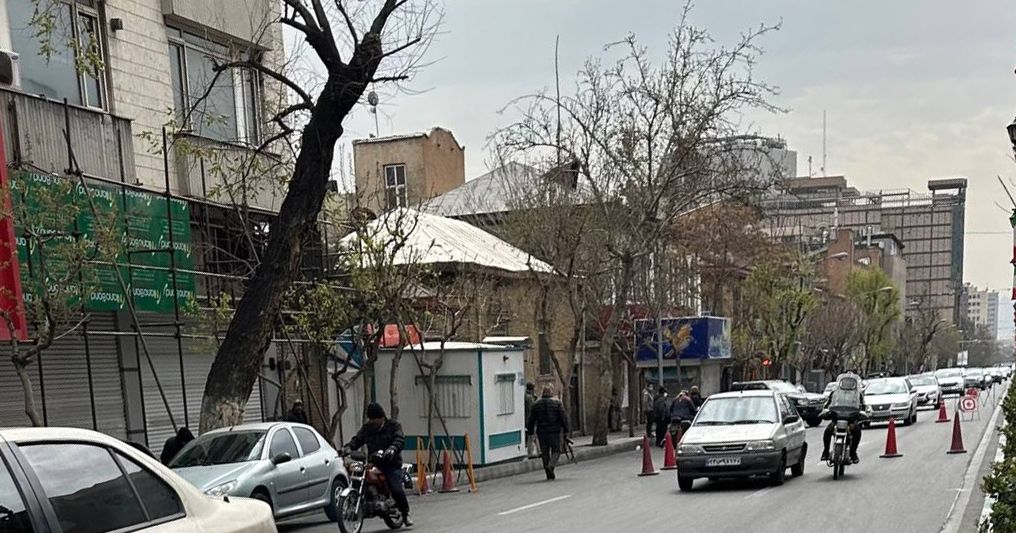
For days the conflict had focused largely on military bases, missile sites and command facilities, particularly in southern Iran, as part of the wider US-Israeli campaign that has struck thousands of targets across the country since the war began on February 28.
But since Wednesday evening, reported drone strikes on checkpoints in Tehran have pointed to a parallel line of pressure: the local security posts, patrol units and temporary deployments used to enforce control on the streets.
Iranian state-linked media said several checkpoints in Tehran were hit, killing members of the security forces and Basij militia. The reported locations included positions in multiple districts across the capital.
The development suggests the conflict is increasingly intersecting with the structures the state relies on to control neighborhoods rather than only its larger military infrastructure.
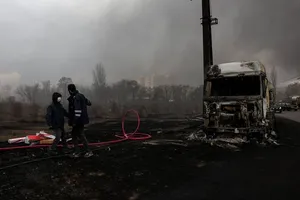 Tehran checkpoints hit in reported drone attacks
 Desertions, shortages and army-IRGC rift strain Iran’s military
From fixed bases to moving checkpoints
Since the start of the war, residents across Iran say checkpoints and patrols have multiplied in major cities as authorities attempt to prevent unrest and maintain control.
At the same time, Iran International has received a steady stream of messages from viewers describing the locations of checkpoints, security deployments and temporary bases.
Some reports describe armed units inspecting vehicles at major highway entrances or intersections. Others mention security forces using schools, sports halls and religious institutions as temporary accommodation or staging points.
Messages received in recent days pointed to deployments in locations ranging from major Tehran highways to entrances to cities such as Karaj, Shiraz, Mashhad and Qazvin. Residents also described units stationed beneath highway bridges, near parks or inside parking areas where buses and motorcycles were parked overnight.
In several cases, viewers reported that checkpoints they had previously seen disappeared within hours or days, while others appeared to move to nearby streets or disperse into smaller patrol groups.
Some messages described security forces sleeping inside buses or personal vehicles and conducting mobile patrols rather than remaining in fixed positions.
Others said checkpoints that had been inspecting vehicles were suddenly dismantled, leaving only a few officers nearby.
Such reports cannot be independently verified in each case. But taken together they suggest that many deployments are becoming more fluid, with positions shifting frequently rather than remaining in one place.
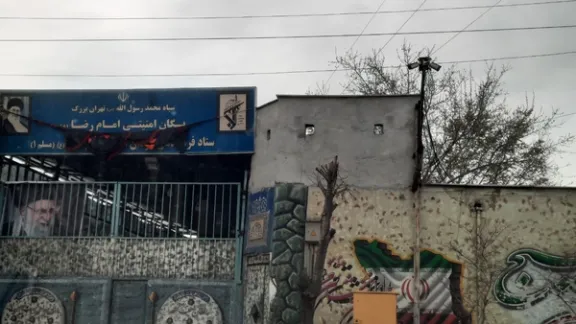 The Imam Reza security unit after sustaining damage, part of the IRGC’s Mohammad Rasulullah Corps in Greater Tehran.
A war over control of the neighborhood
The shift reflects a deeper pressure on the state’s local enforcement network.
For years the Islamic Republic has relied on a dense web of Basij, police and Revolutionary Guards positions to control neighborhoods and quickly suppress unrest.
During the recent nationwide protests earlier this year, these same networks formed the backbone of the crackdown that sealed off districts and quashed the demonstrations.
In wartime, those local security units appear to be playing an even more central role.
As larger bases and installations come under pressure from airstrikes, authorities appear to be relying more heavily on mobile checkpoints and temporary deployments to maintain control on the ground.
Now those fallback positions are also being drawn into the conflict.
The result is a battlefield that increasingly overlaps with everyday urban space. Instead of remaining confined to distant military facilities, the war is beginning to touch the street corners, highway entrances and neighborhood patrol routes where the state exerts day-to-day authority.