
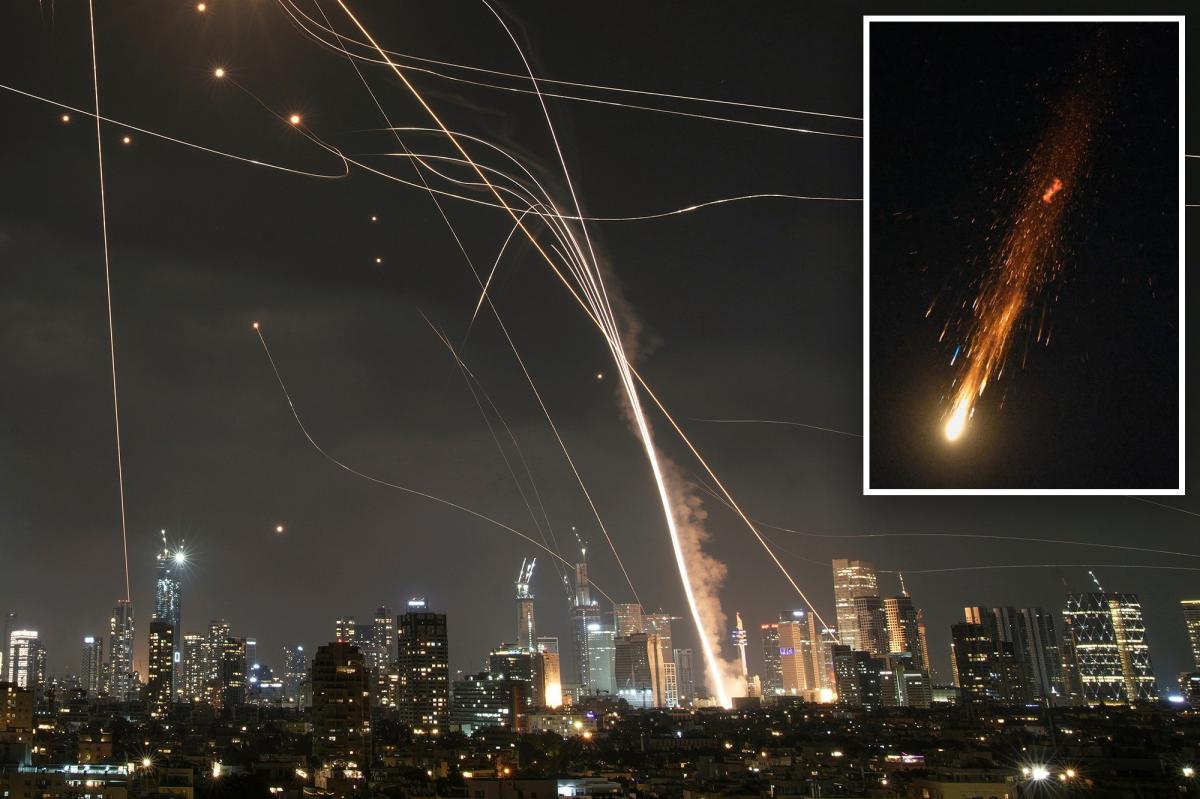
TEL AVIV — Hezbollah’s decision to step up attacks on Israel from Lebanon reflects just how badly the Jewish state and the US have battered Iran’s regime, weapons stockpiles and military infrastructure, the Israel Defense Forces claimed Thursday.
The Tehran-backed terror group lobbed 200 rockets at Israel Wednesday night after being pushed into the fight by the “heavy blows” suffered by the Islamic Republic since the war began Feb. 28, IDF spokesman Nadav Shoshani told reporters.
“Hezbollah, before Operation Roaring Lion, put out statements saying, ‘If the situation is really dire and the Iranian regime is in danger, we’ll jump in,’” said Shoshani, using the Israeli name for what the Trump administration has dubbed Operation Epic Fury. “They did not jump in in June — and they did jump now.”
Hezbollah launched 200 rockets at Israel Wednesday night.
“The Iranian regime pushed them heavily to the fighting against Israel,” he added. “That tells you about the situation the Iranian regime was in the first days of this operation.”
US-Israeli strikes have hammered military and political targets across Iran during the campaign, which entered its 13th day on Thursday.
According to US Central Command, more than 5,500 targets had been hit inside Iran as of early Wednesday, including more than 60 ships damaged or destroyed.
Israeli officials say the campaign has already neutralized roughly 80% of Iran’s air defense systems and two-thirds of its ballistic missile launchers, sharply limiting Tehran’s ability to fire large salvos at Israel and other countries in the region.
“The numbers [of projectiles fired] toward the entire region went from hundreds a day to very few dozens a day,” Shoshani said, describing a “real bottleneck” limiting Iran’s missile capabilities.
The IDF also estimateed that more than 1,900 Iranian soldiers and commanders have been killed during Operation Epic Fury/Roaring Lion.
A missile interception seen from Ashkelon, Israel, Wednesday. REUTERS
Since entering the fight alongside Iran, Hezbollah has launched more than 1,000 ballistic drones, missiles and rockets toward Israel, the military said.
Following Wednesday night’s rocket attack on northern Israel, the IDF said its surveillance aircraft quickly identified the launch sites and struck many of them.
“We were able, the moment they started firing, to find them and strike successfully more than half of these launchers,” said Soshani, crediting the rapid response with preventing a much larger attack.
Hezbollah-fired projectiles from Lebanon are intercepted over Tel Aviv, Israel, Monday. REUTERS
“They fired approximately a third of what we estimate they were planning on firing toward Israel,” he said.
Israeli troops are positioned along their northern border to block Hezbollah fighters from attempting cross-frontier attacks, while readying themselves for a possible ground invasion.
“We’ve seen hundreds of Hezbollah forces attempt to move south again,” Shoshani said. “That’s why it’s essential that our troops are in the border area — preventing any type of attack toward Israeli civilians.”
Israel has also struck Hezbollah infrastructure across southern Lebanon, as well as the terror group’s stronghold in Beirut’s southern suburbs.
At the same time, the IDF said it has targeted members of Iran’s elite Islamic Revolutionary Guard Corps Quds Force who coordinate between Tehran and its regional proxies.
Israel has already eliminated the commander overseeing the Lebanon section of the Quds Force and Shoshani warned that any Iranian official directing attacks against Israel from Lebanon would be targeted as well.
“Most of those Iranian group leaders that have been in Lebanon have either left or been eliminated,” he said, adding that while Hezbollah has been “heavily diminished,” it remains “still a dangerous force” in the Middle East.