
Stay informed with free updates
Simply sign up to the US financial regulation myFT Digest — delivered directly to your inbox.
A top Federal Reserve official has said the central bank will soon cut capital requirements for big banks as it eases protections that were designed to avoid a repeat of the 2008 financial crisis.
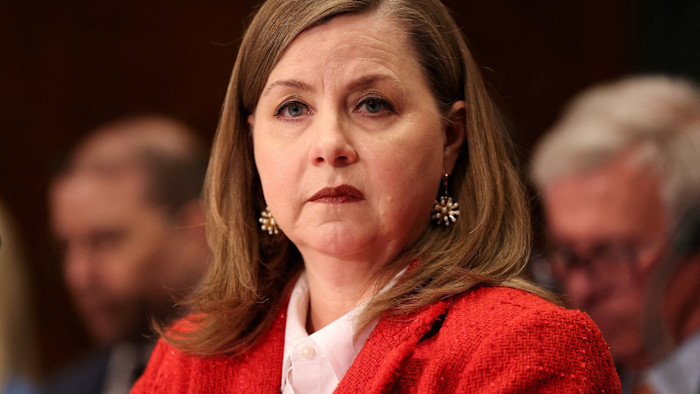
The moves, announced on Thursday in a speech by Fed vice-chair for supervision Michelle Bowman, intensify the push by US regulators to loosen restrictions on Wall Street banks to encourage them to boost lending and regain market share lost to private credit groups.
Bowman, who President Donald Trump appointed last year as the central bank’s top banking regulator, said its plans to adopt the Basel III Endgame rules agreed by global regulators would lead to a “small increase” in capital requirements for US banks but would be more than offset by other reforms.
She outlined plans to change the way an extra capital buffer is calculated for the biggest banks, which would lead to a “modest decrease in the surcharges” and more than offset the impact of the Basel reforms.
Overall, Bowman said the measures would “decrease the requirements by a small amount” for the biggest American banks, including JPMorgan Chase, Bank of America, Citigroup, Goldman Sachs and Morgan Stanley.
The Fed’s plans, which were welcomed by US lenders, are likely to intensify calls from banks in Europe and other countries to ease their rules in response. The Bank of England and EU have delayed part of their Basel reforms to see how Washington would apply them.
Three of the main US banking trade bodies said Bowman’s plans were “a thoughtful, bottom-up approach” that represented “a welcome focus on risk-sensitivity and a comprehensive view, taking into account the cumulative effects of all capital requirements”.
The Fed’s proposals represent a victory for Wall Street lobbying. In 2023, the Fed announced plans to implement the so-called Basel Endgame reforms in a way that would have resulted in a 19 per cent rise in minimum capital requirements of big US banks.
But the central bank agreed to dilute the proposals in 2024 following an aggressive campaign by bank lobbyists, including TV advertisements during half-time of the Super Bowl warning earlier that year that the rules would hurt American consumers by cutting lending and raising credit costs.
Bowman said reforms introduced after the 2008 meltdown had “substantially increased bank capital and strengthened financial system resilience”. But she added there was a risk of “unintended consequences” from excessively calibrating low-risk activities.
“Continuously increasing capital levels without a specific purpose imposes real economic cost,” she said, adding it “constrains credit availability, pushes activity into the less-regulated nonbank sector and layers on complexity and costs without meaningfully enhancing safety and soundness”.
As part of the changes outlined on Thursday, Bowman said the extra capital buffer required for the eight most systemically important US banks would be reduced by lowering the component that accounts for risk from short-term funding. The buffer will also be adjusted for inflation and growth to prevent it rising as bank balance sheets grow.
Recommended

“These changes to the capital framework eliminate overlapping requirements, right-size calibrations to match actual risk and comprehensively address longstanding gaps in our prudential framework,” she added.
The Fed and other Washington regulators plan to present the details of the reforms next week. Bowman said smaller and less complex US banks would benefit from “slightly larger reductions in capital requirements” than those of their larger Wall Street rivals.
“Crafting these reforms is no easy task,” said Bowman, who last year announced other moves to loosen restrictions on banks, such as making the Fed’s annual stress test more transparent and easing leverage ratio rules.