
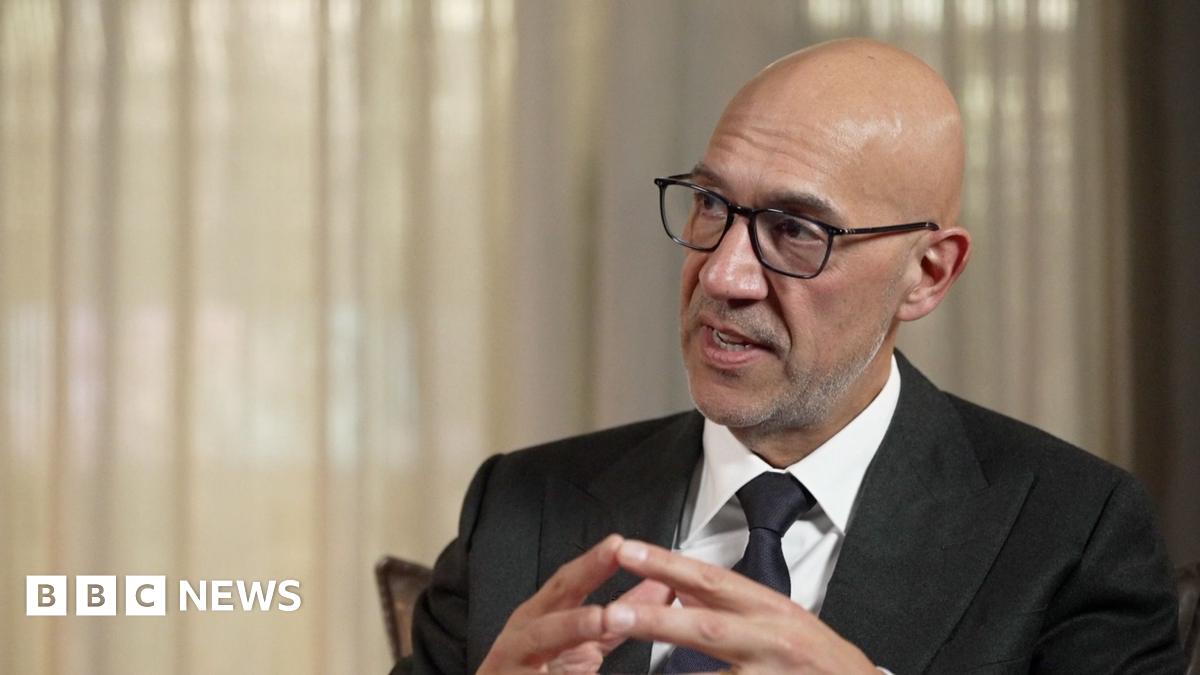
Amitrano, who heads PwC’s 23,000 strong workforce in the UK, as well as operations in the Middle East, made the comments in a wide-ranging BBC Big Boss Interview podcast.
He said the US-Israeli war with Iran had sent “a particularly big shock through the system” just at a time when business confidence had been improving.
The government had hit business too hard when it raised employers’ National Insurance contributions in autumn 2024, followed by bigger than expected rises to minimum wage rates, and new employment rights, which had deterred businesses from hiring, investing and growing, he said.
But in the last 12 months there had been a “rebuild of a dialog between government and business”, he said.
His own message to Chancellor Rachel Reeves is that she should relax her self-imposed fiscal rules, in the wake of the current energy price spike and its likely impact on inflation.
“I don’t see any way that the chancellor is going to find a way out of this without finding a way to loosen the rules around what we’re willing to borrow,” he said.
The chancellor has staked her reputation on not watering down rules that require her to stay within tight guardrails: by the end of this parliament day-to-day spending must be covered by tax receipts, and debt must be falling in relation to the size of the economy.
Amitrano said additional borrowing would allow more spending on “technology, talent and infrastructure”, which would in turn, help unlock overseas investment in the UK.
Such a move would have to be done “openly and transparently” he said, to avoid a market shock.
“I’m not saying we just change these rules tomorrow. I think we start to table a plan that shows how loosening those rules will lead to investment and growth in the medium term,” he said.
In response, the Treasury said it had the “right economic plan” with borrowing already falling.
“Our non-negotiable fiscal rules were set out publicly two years ago by the chancellor,” a Treasury spokesperson said.
“They ensure that we are getting borrowing and debt down, while prioritising investment to support long-term growth.”