
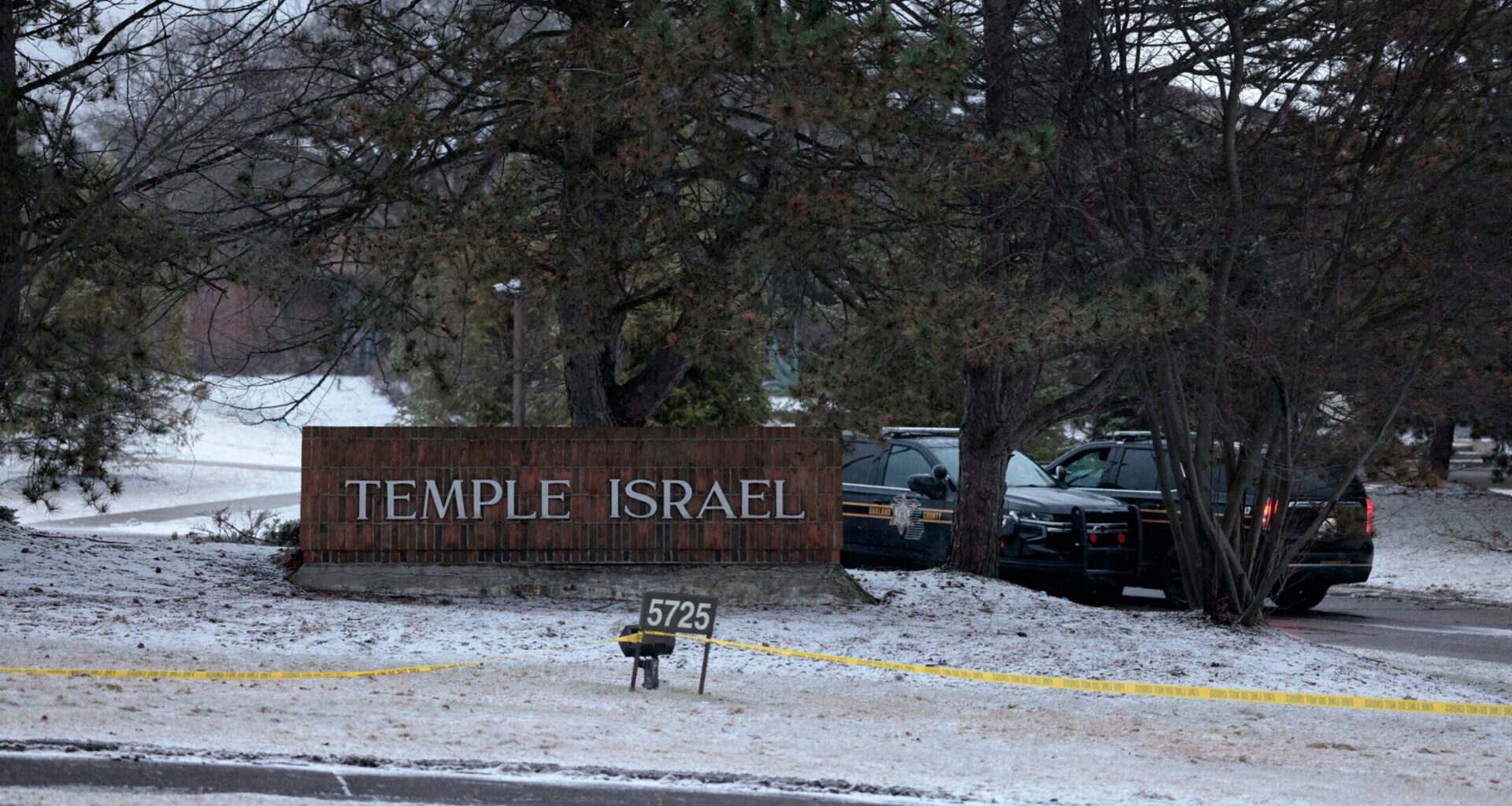
I was sitting in economics class at my Jewish day school on Long Island on Thursday afternoon when the breaking news alert hit my inbox. The email, which read “Police responding to ‘active shooter alert’ at major suburban Detroit synagogue,” set off alarms in my mind.
When I clicked on the link, my screen filled with images of smoke rising from the familiar facade of Temple Israel in West Bloomfield, a synagogue where my grandma worked, my mom grew up, and my older sister had her baby naming. A synagogue that I visited just a few months ago, and where I have family and friends today.
It was an agonizing 90 minutes as members of both my family and the greater Jewish community held their breath for any news. After we received word that the attacker, later revealed to be a 41-year-old immigrant from Lebanon, had been shot by temple security after ramming a car filled with explosives into the synagogue, which hosts a preschool of around 200 children aged 2 to 5, I called my mom.
“I keep imagining the terrified faces of the babies,” she said to me, her tears audible.
My family and I live more than 600 miles away from Temple Israel. Yet the Jewish heart transcends those boundaries, crying out for our brothers and sisters in fear.
For my mom, Temple Israel was never just a synagogue. It was where my uncles learned the aleph-bet in tiny plastic chairs in the preschool wing. It was where my mom sang Shabbat songs in the sanctuary and ran through the hallways during youth group events. The place where my uncle had his bar mitzvah. The place where my grandmother spent years working, greeting families and organizing programs. Temple Israel wasn’t just a building in suburban Detroit. It is part of the architecture of my family’s memory.
And in that moment, sitting in my economics class, watching smoke rise from a place I recognized, the distance between Long Island and Michigan suddenly felt meaningless.
It’s not just people like me with a personal connection: When something like this happens to one synagogue, every synagogue feels it.
Alarm travels quickly through Jewish communities, moving along the invisible threads that connect synagogues, schools, summer camps, and family group chats. What happens in Michigan echoes in New York when my Savta warns me to “be very careful, look around when you park and walk into the building” with fear in her voice. What happens in Pittsburgh, Toronto or Paris becomes part of the quiet calculations Jews everywhere make about staying safe.
And we’re prepared for danger: In Jewish day schools like mine, security is as much a part of the daily routine as math homework or morning announcements. The doors are locked. The cars are screened. The visitors are questioned. We practice security drills with kindergarteners. Armed guards stand outside during arrival and dismissal. For most of my life, this has simply been normal — a reality that so many politicians and leaders seem to accept, or even inflame.
The images on my phone were haunting because they were so familiar. The entrance where families gather before services. The hallways that lead to the preschool classrooms. The hall where I celebrated my family friend’s bat mitzvah last April. The sanctuary where generations have prayed. All of it now framed by flashing police lights and smoke.
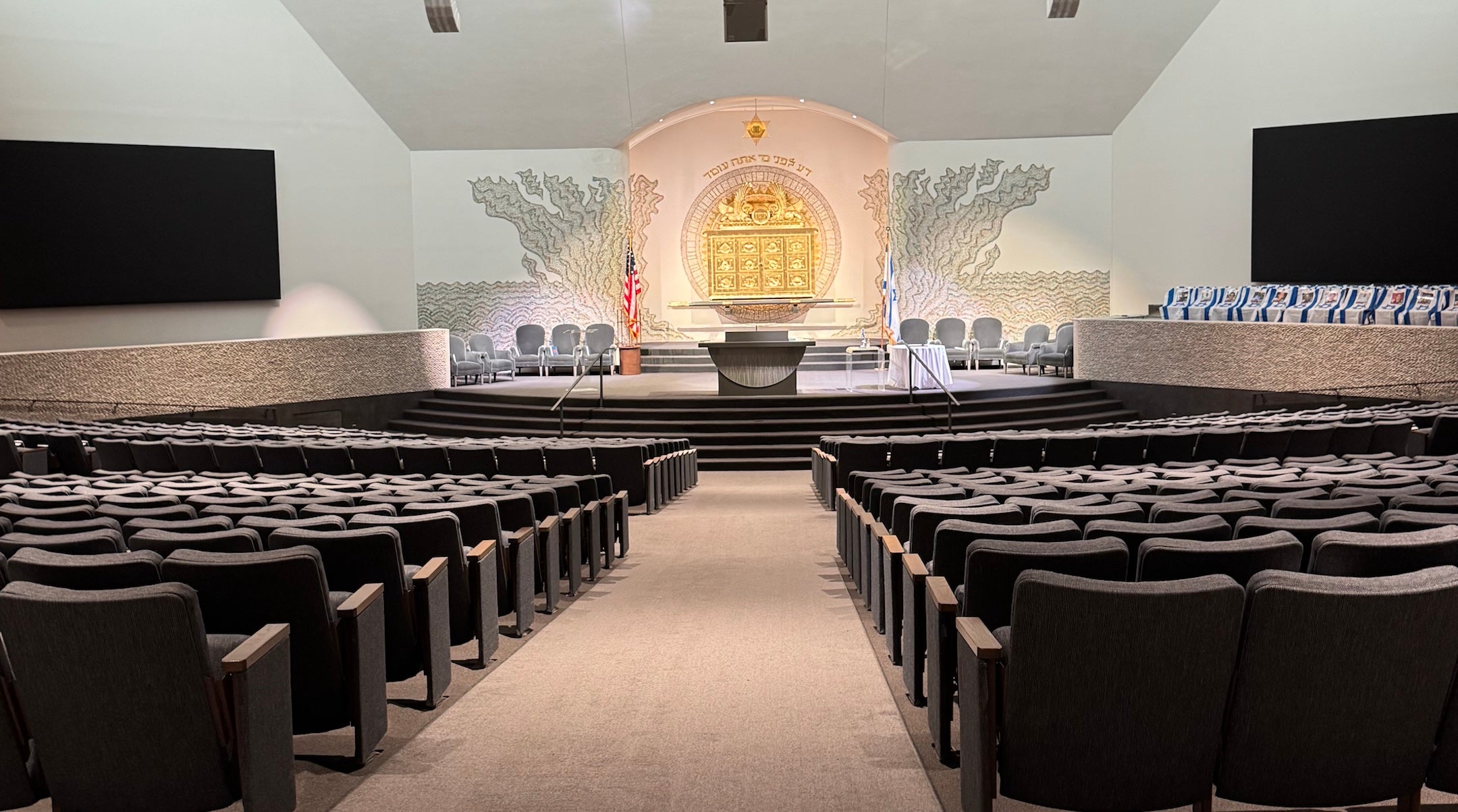
A sanctuary inside Temple Israel in West Bloomfield, Michigan. (Micah Bidner)
When the news finally broke that security had stopped the attacker before anyone inside was hurt, the relief was overwhelming. But relief is a complicated emotion in moments like these.
Because relief does not erase reality.
The smoke still rose above a holy place. A car still rammed into a Jewish building. Someone still made the decision that Jewish life was worthy of destruction. And police officers were still newly deployed outside my school, anticipating a threat echoing from far away.
As the day went on, what I kept returning to was not the attacker. It was the image of a hero, the security guard, who stopped the terrorist. The teachers who protected their students. The parents who rushed to pick up their children. The community that immediately surrounded the synagogue with support.
Antisemitism may set off alarms. But Jewish life answers those alarms with something stronger: resilience.
Temple Israel will reopen its doors. The preschool classrooms will fill again with the noise of toddlers learning songs and stories. Families will return to the sanctuary for Shabbat services.
And somewhere, my mom will probably look at a photo of the building she grew up in and feel the same complicated mix of fear, pride, and determination that Jews have felt for generations.
Because the truth is that the Jewish heart does transcend distance. Six hundred miles away, sitting in a classroom on Long Island, I felt it beating loudly Thursday afternoon.
And when the alarms go off, it beats even louder.
Reporting the stories that define our era. When history unfolds in real-time, the Jewish world turns to JTA. Your support ensures we can document the complexities of war and the resilience of Jewish communities with integrity.
The views and opinions expressed in this article are those of the author and do not necessarily reflect the views of JTA or its parent company, 70 Faces Media.