
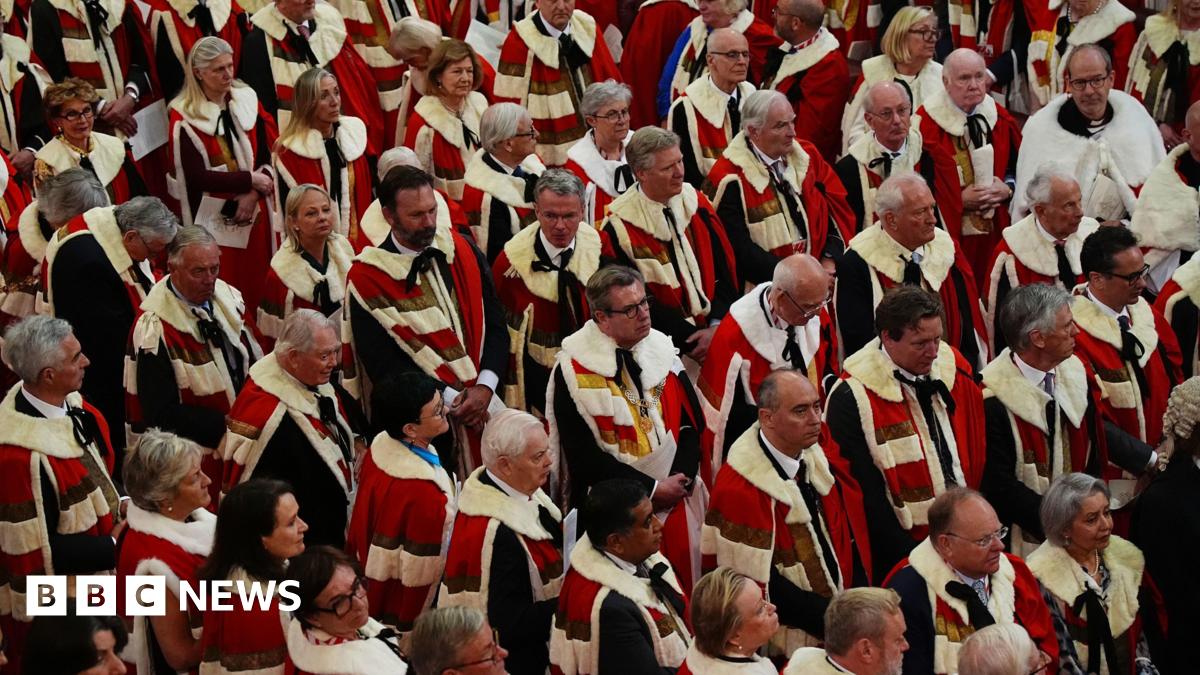
Charles Courtenay, the Earl of Devon, will certainly not be among them.
“I don’t think we should be using the hereditary privilege we have in the Lords to haggle or negotiate for life peerages,” the earl said.
“I don’t think it’s appropriate.”
The Earl of Devon entered the upper chamber in 2018 after inheriting his late father’s title, which was first given to a distant ancestor in 1142, almost 900 years ago.
Though he had – as he put it – “defended the indefensible” by arguing against the removal of hereditary peers, the earl has accepted his fate and was not “unduly distressed by it”.
“I’m quite conscious that if people think the hereditary principle is wrong and that’s the decision of the country, then we shouldn’t be using that to retain seats in the Lords for ourselves,” the earl said.
He’s prepared to embrace the chop, as several of his forebears – who were beheaded for treason – did in centuries past.
While he won’t be able to sit and vote in the Lords anymore, he and other outgoing hereditaries will still get to keep their titles.
“The one thing you look at from the family history is we’ve been through a lot,” Lord Courtenay said.
“There’s nothing to be gained by fighting progress. We just have to crack on and move along.”
Lord Bethell, a Conservative health minister during the Covid-19 pandemic, has also announced his intention to leave the upper house.
“I will not seek a place in the ‘Hereditary Lifeboat’, and instead am looking forward, with enthusiasm and energy, to leaving the life of a parliamentarian in a couple of weeks to pursue new adventures,” Lord Bethell wrote in a LinkedIn post, external.
But in his absence, The Tories will not struggle to fill the survival raft.