
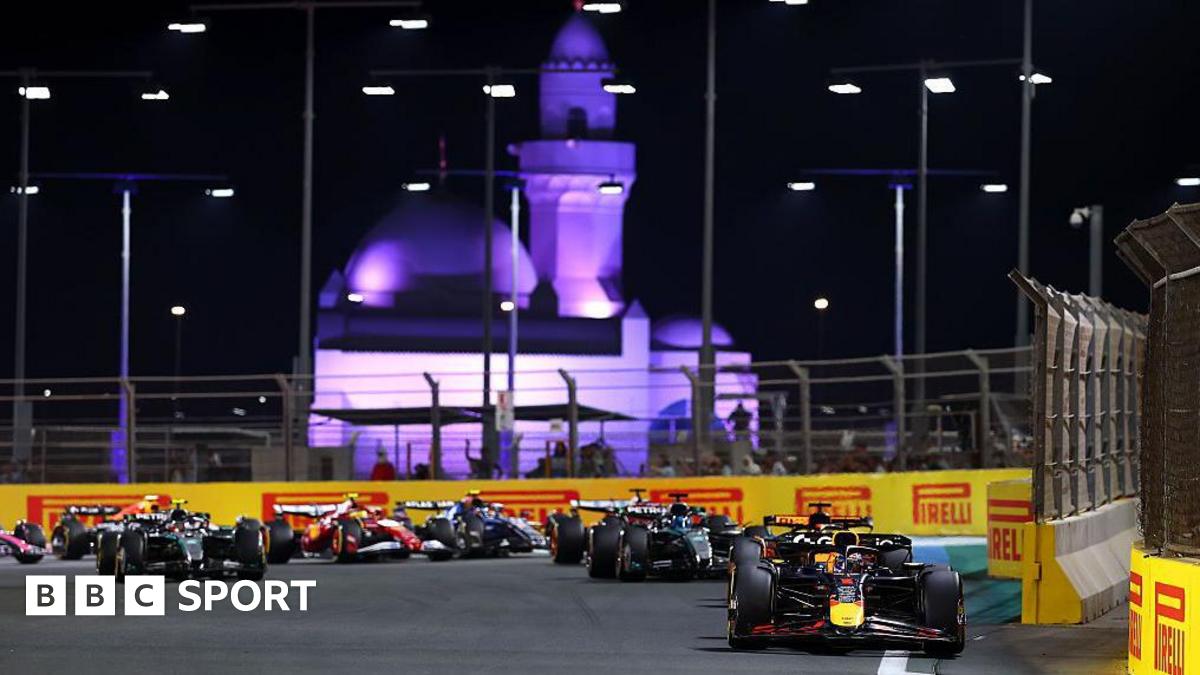
The decision to cancel the Bahrain and Saudi races was inevitable as soon as it became clear there would be no quick end to the war the US and Israel launched against Iran at the end of February.
The conflict had already disrupted F1 this season, with a large number of personnel having their journeys to the season-opening Australian Grand Prix last weekend disrupted when airspace in the Middle East was closed.
It left teams, F1 and media scrambling to find alternative routes to Melbourne to replace those many had planned via popular transit hubs in the Gulf such as Dubai and Doha.
In Australia, it was already clear that the Bahrain and Saudi Arabian events were under serious threat unless the conflict could be quickly resolved.
That was because of the known demands of F1 international freight and logistics.
With both sites at risk of attack from Iran or its allies, the cancellation announcement felt inevitable for some time.
The Bahraini capital Manama hosts a US naval base in the residential district of Juffair, where many F1 personnel stay during the race weekend.
Jeddah is further away on the western side of the Arabian peninsula, but the Saudi event was hit in 2022 when a missile strike was launched against a nearby oil facility by Yemeni Houthi rebels, allies of Iran.
F1 did explore the possibility of holding alternative races.
Portimao in Portugal, Imola in Italy and Istanbul in Turkey were all considered, as was the possibility of a second race in Japan.
In the end, all were abandoned because of a confluence of factors – the difficulty of organising a race at such short notice, including selling tickets, the minimal chance of securing a significant hosting fee, and the impact on already tired F1 personnel.
Last year’s championship ended in early December and this winter’s off-season was the shortest in the sport’s history as a consequence of the biggest regulation change that has ever been experienced.
The unplanned gap in the schedule now gives F1 a chance to regroup, and provides extra room to consider tweaks to the new rules in the wake of criticism of their effect on the purity of the sport.
The new engines feature a 50-50 split between internal combustion and electrical power and there are concerns within the sport that they have reduced the relevance of driver skill in some regards. A series of potential changes are under discussion.
The gap between Japan and Miami will also give teams extra time to digest the lessons of the first three races and work on improving their cars.
It will also have an impact on the rules that govern permitted engine development this season.
These demarcate dates at which relative power-unit performance will be assessed, with those trailing by more than specific amounts of performance given the chance to undertake extra development.
Honda, which has had a troubled start to the season, is guaranteed to be allowed to improve its engine, while this weekend’s evidence in China has suggested that the opportunity might have to be afforded to the new Red Bull Powertrains engine as well.