
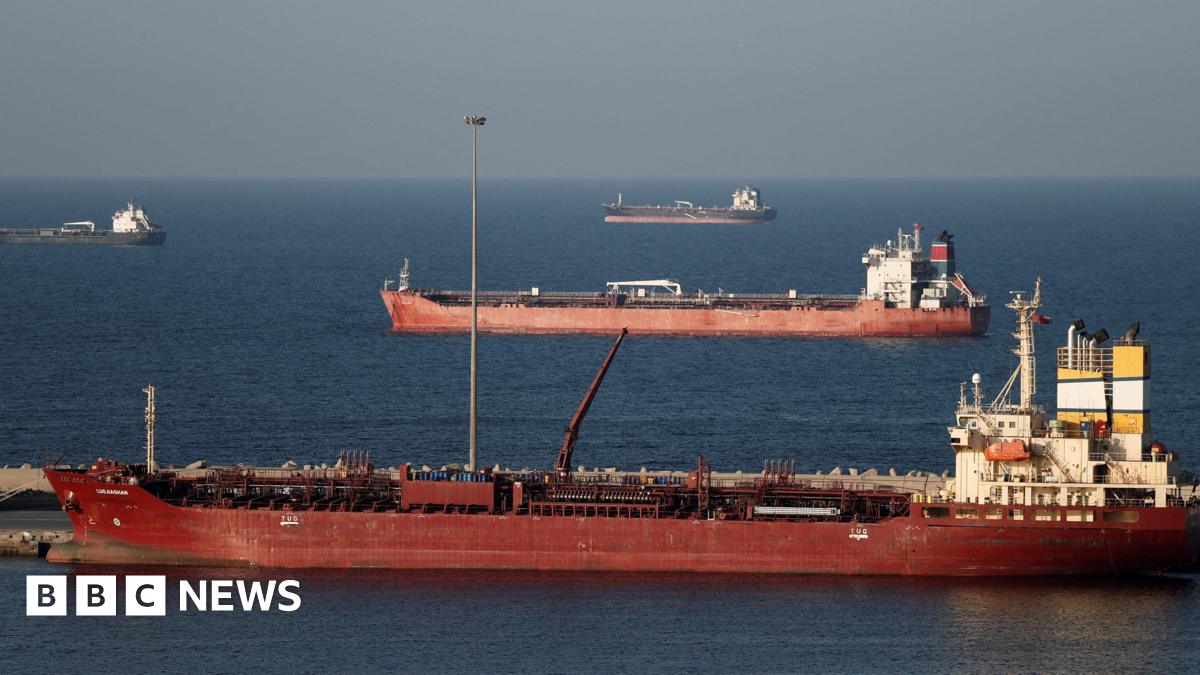
In 2025, about 20 million barrels of oil passed through the Strait of Hormuz per day, according to estimates from the US Energy Information Administration – nearly $600bn (£447bn) worth of energy trade per year.
It is also a key trading route for other commodities such as helium, the chemical sulphate, and urea, which is used to produce fertiliser.
Iran’s Foreign Minister Abbas Araghchi has said the strait remains open to vessels that do not belong to the country’s “enemies” and that Iran is “open to countries who want to talk” about safe passage through it.
He claimed on Sunday to have been approached by a number of nations, but did not name them.
Tehran – which has adopted attacks on energy targets as a key element of its response to US and Israeli strikes – has warned that any tanker bound for the either nation or its partners is a legitimate target.
At least 16 vessels, including a number of tankers, are reported to have been attacked near the shipping lane during the conflict so far, the UK Maritime Trade Operations said in its latest update.
Oil prices have soared since the war began on 28 February, jumping from some $71 a barrel before the conflict to a high of nearly $120 on Monday. Prices have since fallen back but remain elevated.