
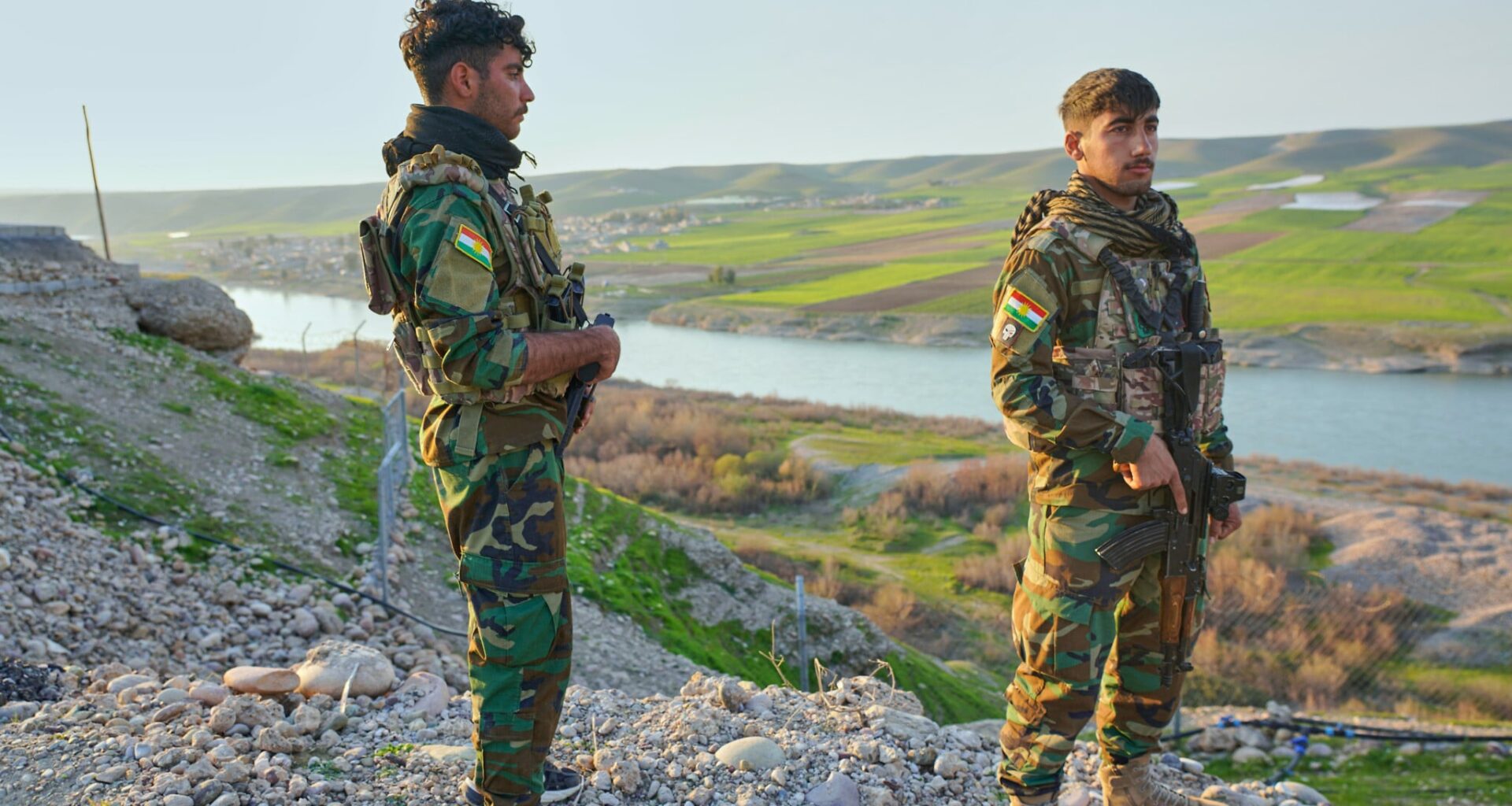
When questions began to arise early in the Iran war about how — and whether — the ayatollahs’ regime might be toppled without US or Israeli boots on the ground, the country’s Kurdish minority was thrust uncomfortably into the spotlight as a potential solution.
US President Donald Trump himself floated the idea 10 days ago, saying: “I think it’s wonderful that they want to do that, I’d be all for it.”
He reportedly spoke directly with Kurdish leaders in Iraq. The Associated Press had reported on March 4 that Kurdish Iranian dissident groups based in northern Iraq were preparing for a potential cross-border military operation, and that the US had asked Iraqi Kurds to support them.
Then the anticipation dissipated. On Saturday, Trump pivoted. “We’re not looking to the Kurds going in,” he said. “We don’t want to make the war any more complex than it already is.”
And, indeed, no Kurdish offensive has materialized.
Get The Times of Israel’s Daily Edition
by email and never miss our top stories
By signing up, you agree to the terms
There may still be ongoing conversations with Kurdish elements in Iraq and Iran, but anyone pinning the war’s hopes on Iran’s Kurds is likely to be disappointed.
Though armed, Kurdish separatist groups are incapable of carrying out a major military offensive against the regime, and have ample reason to be cautious of promises of US military backing should they launch an offensive.
The Iranian regime has long used the specter of an armed Kurdish insurgency as a pretext for political repression, especially against the country’s Kurdish minority. Were such a foray actually in the works, any serious contact and coordination with between Kurds and outside elements would be kept covert to avoid playing into hardliner narratives.
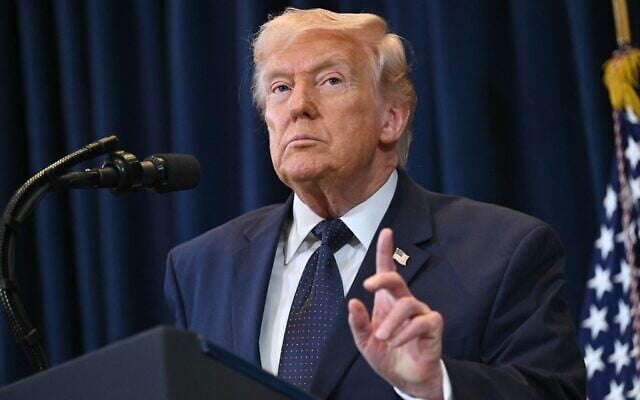
US President Donald Trump speaks during a press conference at Trump National Doral in Miami, Florida, on March 9, 2026. (SAUL LOEB / AFP)
“If this time it were out in the open, it would be completely exceptional,” said Kurdish expert Ofra Bengio of Tel Aviv University. “Not because we don’t really want it, but because they themselves don’t want it — it actually causes a rallying of Iranian nationalist elements against them.”
“If there is any connection, it should always be behind the scenes and quiet, as both sides prefer.”
Divided Kurds
The Kurds, numbering 30-40 million, are considered the world’s largest stateless ethnic group. Culturally and linguistically close to Persians, they are mostly Sunni Muslims, living in distinct but linked communities primarily in Iran, Iraq, Syria, and Turkey.
Iraq’s 6 million Kurds have achieved the greatest measure of independence; they run the autonomous Kurdistan Regional Government, or KRG, within the federal Iraqi system since 2005.
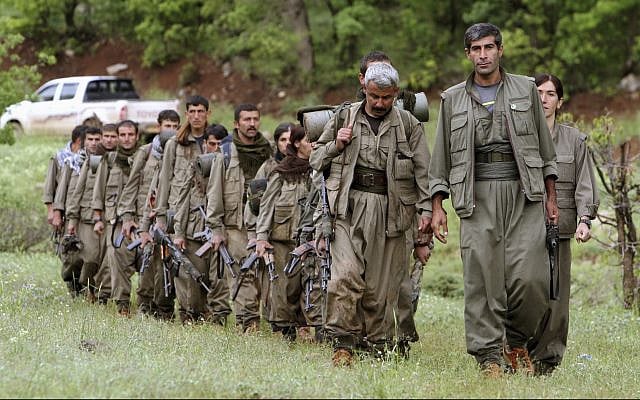
In this photo from May 14, 2013, a group of armed Kurdish fighters from the Kurdistan Workers Party (PKK) enter northern Iraq in the Heror area, northeast of Dahuk. (AP Photo/Ceerwan Aziz, File)
Syria’s Kurds, the largest ethnic minority in the country, make up some 9 percent of the country’s 23 million people, according to US government figures. Syrian Kurdish fighters aligned with the US more than a decade ago to fight the Islamic State jihadist group, setting up their own semi-autonomous zone in the territory they had seized from ISIS.
The largest Kurdish population is in Turkey, sometimes estimated as making up around a quarter of its total population of 80 million. Turkish security forces have battled a bloody insurgency by the Kurdistan Workers Party (PKK) in the country’s southeast for three decades, though the PKK announced it would dissolve last year.
There is no official census of Iran’s Kurdish population, but it is generally believed that it makes up around 10% of Iran’s 90-100 million citizens, concentrated in the country’s northwest.
Though Iranian Kurds don’t have the autonomy enjoyed by their Iraqi and Syrian brethren, or the numbers of Turkey’s Kurds, they are the only Kurds to have had their own state — albeit briefly — in 1946.
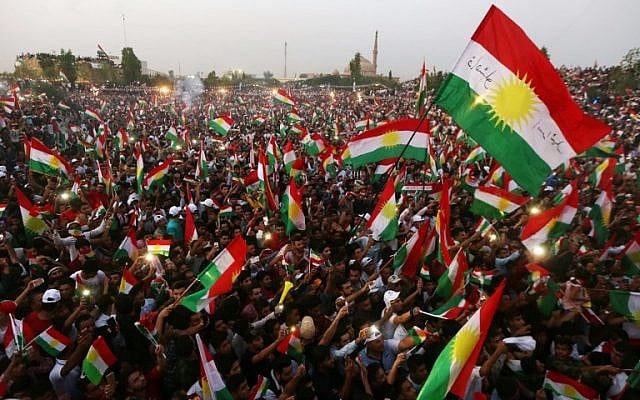
Iraqi Kurds fly Kurdish flags during an event to urge people to vote in the upcoming independence referendum in Arbil, the capital of the autonomous Kurdish region of northern Iraq, on September 16, 2017. (AFP/Safin Hamed)
“It’s a fairly poor region of Iran, like a lot of the peripheral areas of the country,” said Roham Alvandi, professor of international history at the London School of Economics. “That, of course, breeds resentment towards the central government.”
Out of that resentment have sprung a range of small armed Kurdish groups with diverse ideologies, which have fought against Iran and occasionally against each other, alongside more moderate Kurdish groups that eschew armed struggle.
The Democratic Party of Iranian Kurdistan (PDKI), the oldest of the armed parties, calls for regime change and autonomy for Kurds within a democratic Iran.
The Kurdistan Free Life Party (PJAK) is a branch of the Marxist PKK, and is designated as a terrorist group by the US. It too is advocating for autonomy in a decentralized Iran.
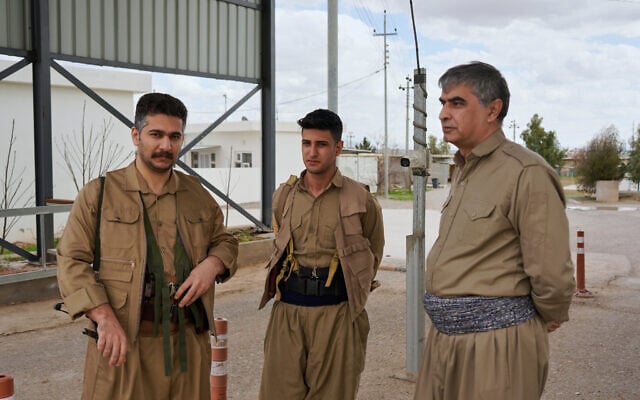
Members of the Democratic Party of Iranian Kurdistan PDKI stand at a checkpoint leading to their base in the Koya district of Irbil, Iraq, Friday, Feb. 27, 2026. (AP Photo/Rashid Yahya)
Some armed groups, like the Kurdistan Freedom Party (PAK), are fighting for an independent Kurdish state.
Iran has designated Kurdish rebel groups, who are largely based in Iraq, as terrorist organizations, and many have previously fought its security forces in Kurdish-majority areas along the border.
In February, five of the leading rebel groups — including the three aforementioned parties — gathered in Iraqi Kurdistan to create an alliance whose goals are “the struggle to bring down the Islamic Republic of Iran, the realization of the Kurdish people’s right to self-determination, and the establishment of a national and democratic institution based on the political will of the Kurdish nation in Eastern Kurdistan.”
But these groups have largely refrained from armed activity in recent years, under political pressure mostly from their Iraqi hosts — raising questions about their current capacity to lead an armed offensive against Iran.
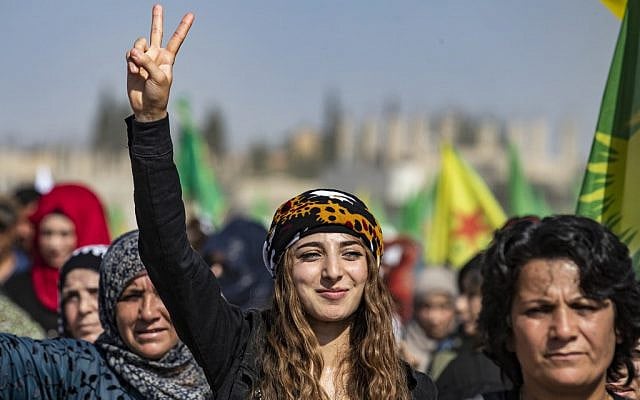
A Syrian Kurdish woman flashes the v-sign during a demonstration against Turkish threats in Ras al-Ain town in Syria’s Hasakeh province near the Turkish border on October 9, 2019. Turkish warplanes were reported to be attacking the town hours later. (Photo by Delil SOULEIMAN / AFP)
Given their diverse ideologies, Kurdish rebels have a range of approaches toward Israel. The groups affiliated with Iraqi Kurdish parties are more disposed to see Israel as an ally against Arab and Persian nationalism, and against Islamist extremist groups.
However, Turkey’s PKK, considered the strongest Kurdish rebel group, was ideologically anti-Zionist, and even clashed with Israeli forces in Lebanon in the 1980s. It didn’t help that Israel was a close security ally of Turkey during the bloody PKK insurgencies of the 1990s. Its branches in Iran shared a similar outlook.
Those positions have changed in recent years, however.
“Historically, the Kurdish underground was Marxist, and it was very sympathetic to the PLO, generally hostile to Israel,” said Gallia Lindenstrauss, a senior research fellow at the Institute for National Security Studies in Tel Aviv. “In recent years, due to developments in Syria’s civil war, there was a shift, and there were contacts between Israel and the Syrian branch of the Kurdish movement, even publicly.”
Betrayal
Iranian Kurdish groups may dream of bringing down the Iranian regime, but they have reason to be wary of US and Israeli promises of military backing if they launch an insurgency.
Israel, along with the US and the Reza Pahlavi regime that ruled Iran until 1979, backed Iraqi Kurdish rebellions against Iraq’s central government in the 1960s and 70s. The shah reached a settlement with Iraq in 1975, forcing Israel to pull its active support for the Kurdish rebels.
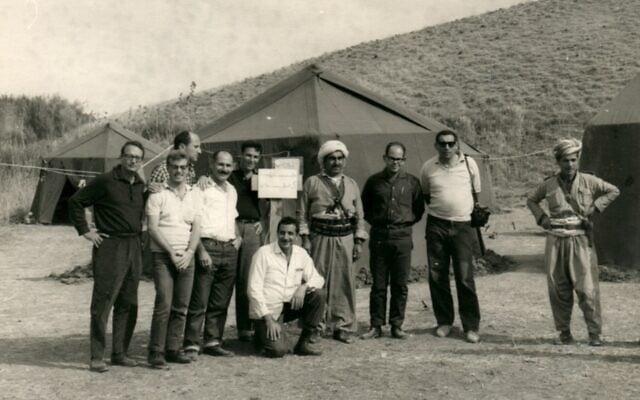
Kurds and Israelis against the backdrop of an Israeli-military field hospital established by Israel in Kurdistan. In the photo are Israeli doctors and medics, Maj. Gen. Rehavam Ze’evi (Gandhi), Mullah Mustafa Barzani in the center, General Yoav Har-Even (IDF Spokesperson’s Unit, CC BY-SA 3.0, https://commons.wikimedia.org/w/index.php?curid=97182328)
The Kurdish sense of betrayal by the US is more biting and recent. During the 1991 Gulf War, US president George H.W. Bush called on Iraqis to “take matters into their own hands.” Shiites in the south and Kurds in the north both rose up, only to be slaughtered by Saddam Hussein’s forces while the US stood by. Over a million Kurdish refugees fled the violence.
That pattern continued in Syria. A decade ago, Kurdish forces there partnered with the US to defeat ISIS. But when Syria’s new army under President Ahmed al-Sharaa captured most of the Kurdish-held areas in a sweeping offensive last year, Syria’s Kurds called on the US to intervene on their behalf, and felt betrayed when Washington instead urged them to merge with Sharaa’s forces.
Syrian Kurds are warning Iranian rebel groups against trusting the US, according to Reuters.
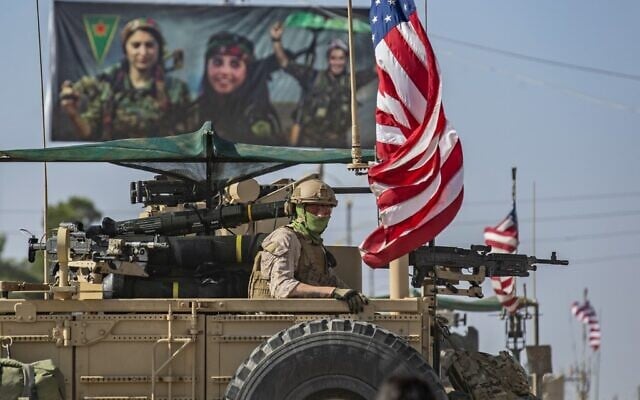
A US armoured vehicle drives past a billboard for the Syrian Kurdish Women’s Protection Units (YPJ), during a patrol of the Syrian northeastern town of Qahtaniyah at the border with Turkey, on October 31, 2019. (Delil SOULEIMAN / AFP)
Ahmed Barakat, head of the Kurdish Progressive Democratic Party in Syria, said that Iranian Kurdish forces should exercise “extreme caution.”
“I hope that the Kurds of Iran will not ally themselves with America, because they will abandon them,” said Saad Ali, a 45-year-old resident of the northeastern Syrian Kurdish town of Qamishli.
I’m sure that the Kurds are very, very wary of being made into, essentially, the foot soldiers of this American and Israeli campaign against Iran.
“I’m sure that the Kurds are very, very wary of being made into, essentially, the foot soldiers of this American and Israeli campaign against Iran,” said Alvandi.
“They’re caught in a very precarious position because their promises of support from the Americans and the Israelis could evaporate very quickly and leave them in a position where they neither have very strong support from the KRG, and they may also be facing a Iranian regime that is going to go after them with a vengeance.”
Climbing the mountain
Even if they got over historical grievances, there are other major obstacles standing in the way of a Kurdish campaign against Iran’s government.
The rebel groups are small, with only a few thousand fighters between them.
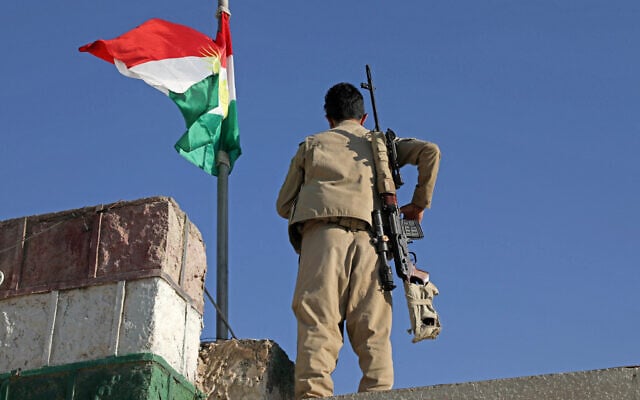
A Kurdish peshmerga fighter affiliated with the Iranian Kurdistan Democratic Party (KDP-Iran) stands guard on a building following an Iranian cross-border attack in the town of Koye (Koysinjaq), 100Km east of Arbil, the capital of the autonomous Kurdish region of northern Iraq on October 1, 2022. (Safin Hamid/AFP)
They haven’t enjoyed widespread backing either, with most Iranians, including Kurds, seemingly unnerved by the prospect of a sustained Kurdish insurgency that could thrust the country into a bloody civil war.
“They don’t by any means represent the mainstream of Iranian Kurds, but they are a reality,” said Alvandi. “The weaker the central government becomes and the more desperate the situation becomes in Iran, these political groups will come to fill the vacuum.”
At the same time, they do have the regime in Tehran spooked. Since the US-Israeli strikes on Iran began in late February, Tehran has repeatedly struck Kurdish militants’ positions in Iraq, accusing them of serving Western or Israeli interests.
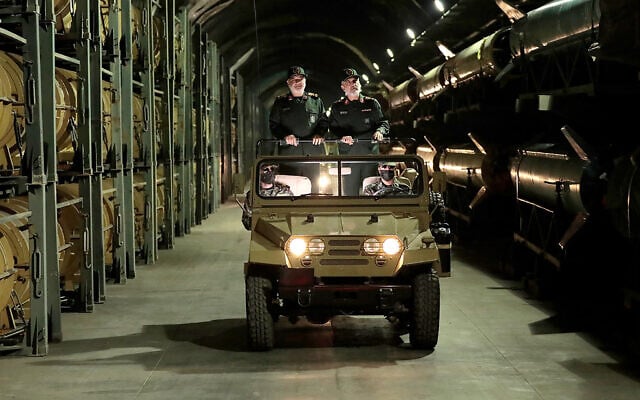
A handout picture made available by the Iranian IRGC office on January 11, 2025, shows Hossein Salami, left, head of Iran’s Revolutionary Guards and Amir Ali Hajizadeh, head of the Guard’s air force, touring an underground missile base in an undisclosed location in Iran. (IRAN’S REVOLUTIONARY GUARDS WEBSITE / AFP)
Iran has also sent a message to the Kurdish government in Iraq, warning them against allowing rebel groups to cross into Iran. That message has been driven home by strikes on civilian sites inside of Iraqi Kurdistan, including international airports.
Turkish pressure on the US also likely dampened Trump’s enthusiasm for a Kurdish offensive.
“These two factors — pressure on the United States and pressure on the Kurdish autonomy in northern Iraq — led to this reversal, or at least to the end of public talk about activating the Kurds in Iran,” said Lindenstrauss.
That doesn’t mean quiet work isn’t taking place. There has also been more overt attempts to pave the way for Kurds to rise up.
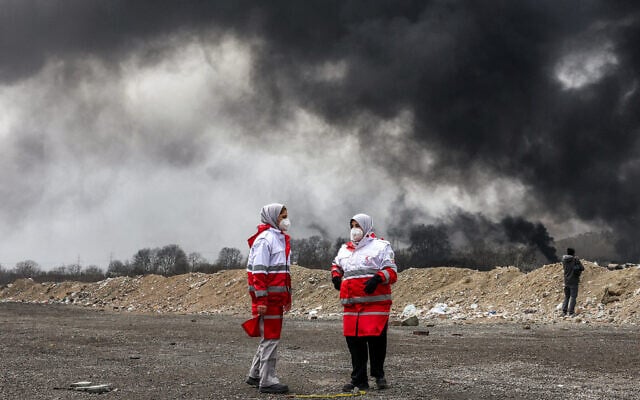
Women members of Iran’s Red Crescent society stand near smoke plumes from an ongoing fire following an overnight airstrike on the Shahran oil refinery in northwestern Tehran on March 8, 2026. (AFP)
Earlier this month, Reuters reported that Israel had been bombing sites in western Iran to support the Kurdish militias that hope to seize towns near the frontier, citing three sources familiar with Israel’s talks with the factions.
Even a limited Kurdish offensive could have some strategic value, forcing Iran to rush troops to the border area, leaving fewer soldiers in major population centers to deal with a potential uprising by the Persian population.
Still, Iran’s general population isn’t likely to support a Kurdish uprising, which would be aimed at securing Kurdish autonomy and possibly bringing down the regime.
“It’s seen as a mechanism to weaken Iran; it could contribute to Iran’s fragmentation,” said Lindenstrauss of a Kurdish offensive. “And many people, despite hating the regime, still have national pride and don’t want to see Iran split geographically or, heaven forbid, spiral into something like Syria.”
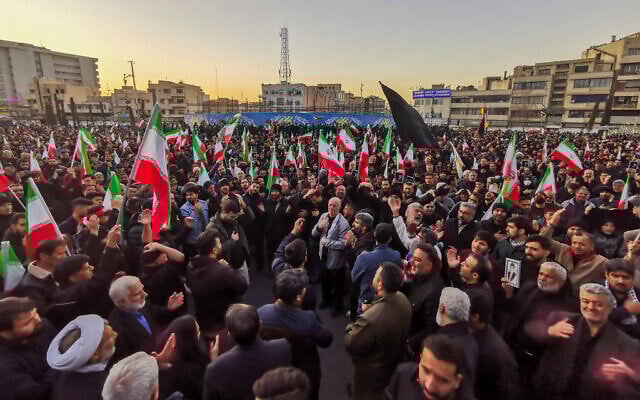
People mourn the death of Iran’s Supreme Leader ayatollah Ali Khamenei, who was killed in joint US and Israeli strikes, in Tehran on March 1, 2026. (Atta KENARE / AFP)
Some, however, believe that there is a formula that could see Kurdish rebel groups take significant territory from the central government in Tehran, though they’ll need help.
“The Kurds in Syria were a non-entity in 2010–2011,” said Bengio. “But the moment they received backing from the United States — airstrikes and so on — they managed both to defeat ISIS in Syria and to establish for themselves a sort of autonomous entity. So it all depends on whether the United States indeed wants to step into this arena and assist the Kurds in a war against Iran.”
If that doesn’t happen, the Kurds have still notched up some wins in the past two weeks.
“The theoretical map of Kurdistan, while not a declared state entity, appeared on TV screens and leading news channels,” said Lindenstrauss. “That’s increased awareness of the Kurdish issue. There’s also a feeling that despite setbacks, they’re climbing the mountain.”
Meanwhile, it’s not clear what the fall of the Islamic regime in Iran would mean for the country’s leadership or future.
A senior Israeli official, said to be familiar with the planning and strategy for the Iran war, told The Washington Post on Monday that Jerusalem has not identified any viable replacement for the current Iranian leadership.
The official expressed doubt “that arming the Kurds or other minorities would be a good strategy because it would alienate the Iranian majority.”
“We don’t see anyone who can replace the regime,” the Israeli official said in a phone interview, adding, “I’m not sure it’s in our interest to fight until the regime is toppled… Nobody wants a never-ending story.”
The Associated Press and Reuters contributed to this report.