
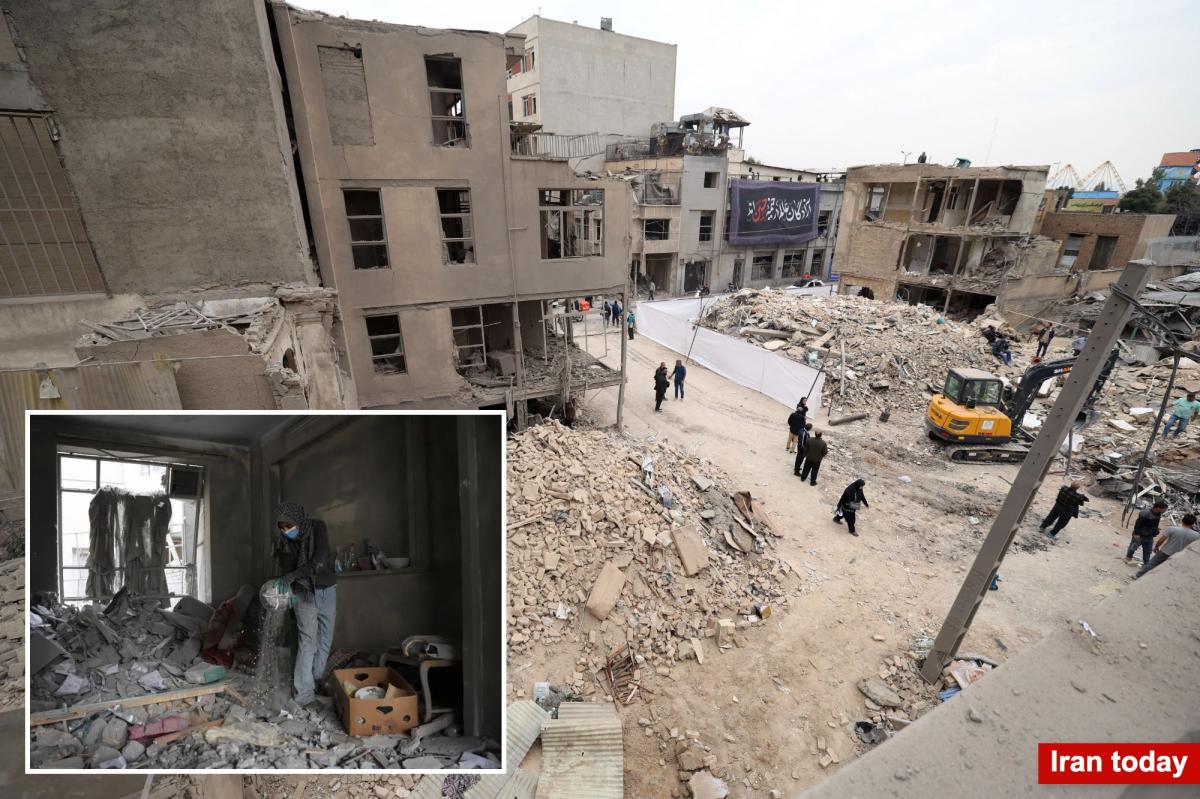
Israel is expanding the scope of its attacks against Iran’s terror infrastructure, with strikes hitting western and central Iran Sunday, the IDF said.
The Israeli air force launched a wave of strikes targeting Iran’s “terror regime in the Meidan area in western Iran,” the IDF said on X.
“As part of this, several central command centers of the Revolutionary Guards and the Basij unit were struck,” the Israeli military said.
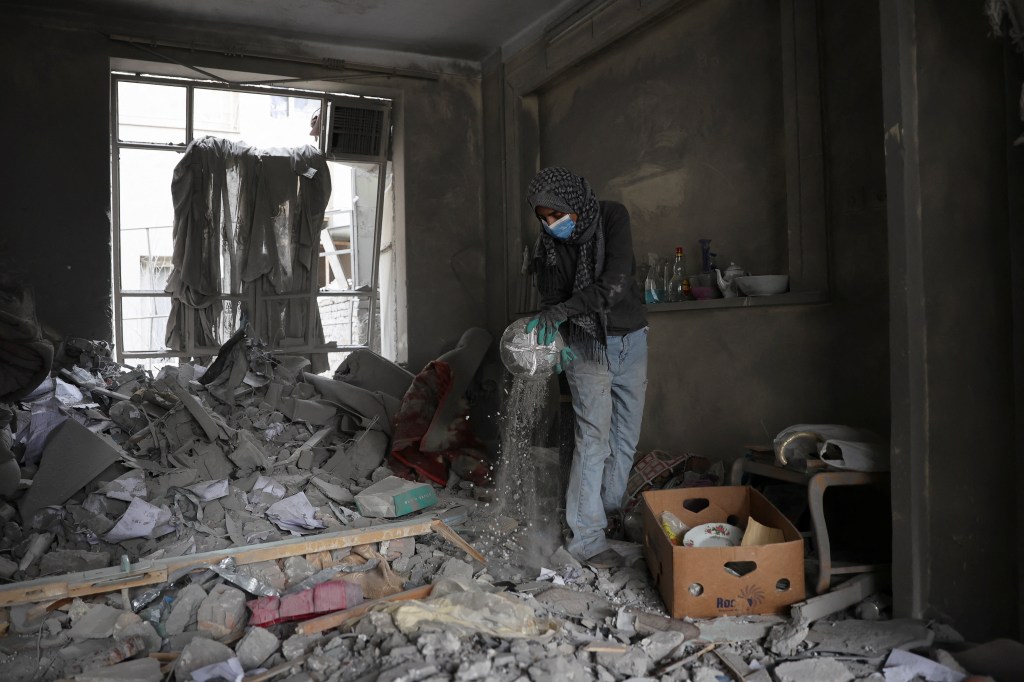 A person works inside a house that was damaged by a strike in Tehran, Iran. via REUTERS
צה”ל השלים גל תקיפות לעבר מפקדות של משטר הטרור האיראני במרחב המדאן שבמערב איראן
חיל האוויר בהכוונה מודיעינית של אמ”ן, השלים מוקדם יותר היום גל תקיפות לעבר תשתיות של משטר הטרור האיראני במרחב המדאן שבמערב איראן.
במסגרת כך, הותקפו מספר מפקדות מרכזיות של משמרות המהפכה ושל יחידת… pic.twitter.com/B64ldVUS1o
— צבא ההגנה לישראל (@idfonline) March 15, 2026
“These command centers served the regime’s elements for managing ongoing activities, as well as for planning and advancing terror operations against the State of Israel and other countries in the Middle East.”
The attacks will carry on until Iran’s command and control centers are systematically impaired, the Israeli military warned.
The US and Israel have continued their air campaign across Iran, with more than 15,000 targets hit before the weekend, Defense Secretary Pete Hegseth said.
Israel said it expects the war to last several more weeks, as the Jewish state and the US demand Iran give up its stockpile of highly enriched uranium, which could be used to make nuclear weapons.
But Iranian Foreign Minister Abbas Araghchi claimed the demand was impossible to fulfill, alleging that the country’s more than 900 pounds of highly enriched uranium is “under rubble” after last year’s 12-Day War, which saw the US and Israel bomb Tehran’s nuclear facilities.
“Our nuclear facilities were attacked, and everything is under the rubble,” Araghchi said, noting that it would only be retrieved under the supervision of the United Nations’ nuclear watchdog group.
“For the time being, we have no program. We have no plan to recover them from under the rubble,” he told CBS’s “Face the Nation.”
“Everything depends on the future. If [at] any time in the future we decide to enter into negotiation with US or other interlocutors, you know, we may decide what to put on the table. For the time being, nothing is on the table.”
The US has maintained that Iran would only need a few weeks to transform its stockpile of nuclear material, enriched at 60%, into weapons-grade uranium.
Iran has long-denied the claim.
Araghchi also rejected President Trump’s assertion that Tehran was looking to make a cease-fire deal.
“No, we never asked for a cease-fire, and we have never asked even for negotiation,” Araghchi said, vowing to keep the fighting going “as long as it takes.”
Iran’s Islamic Revolutionary Guard Corps also issued a direct threat to “pursue and kill” Israeli Prime Minister Benjamin Netanyahu, who had recently poked fun at rumors that he had been killed over the weekend.
“If this child-killing criminal is alive, we will continue to pursue and kill him with full force,” Iran’s Islamic Revolutionary Guard Corps wrote online about Netanyahu, according to The Associated Press, citing the Iranian state-run IRNA news agency.
Tehran’s latest retaliatory attacks has also sowed chaos in Iraq, with five people killed after five missiles were fired at the Baghdad International Airport on Sunday to create more upheaval.
“Five rockets targeted Baghdad International Airport and its surrounding area, injuring four airport employees and security personnel, and an engineer,” Iraq’s security media cell said in a statement.
Along with the airport, the missiles struck a water desalination plant, as well near a prison holding suspected Islamic State terrorists, officials added.
The repeated attacks on Baghdad during Iran’s region-wide retaliation campaign triggered the US Embassy to urge all Americans to leave Iraq “immediately” Saturday.
As the war continues into its third week, concern has grown.
In addition to the most important price paid by the US so far — military fatalities — there are practical concerns such as elevating gas prices.
Kevin Hassett, director of the National Economic Council, acknowledged that the total price of the war has hit $12 billion so far, as he tried to downplay any imminent need for supplemental funding from Congress.
Energy Secretary Chris Wright also tried to downplay fears after the average cost of gas went up to $3.70 per gallon Sunday, a 24% rise since the war began.
“This conflict will come to an end in the next few weeks, and we’ll see a rebound in supplies and a pushing down of prices after that,” Wright told ABC News’ “This Week” on Sunday.
To combat the rising cost of crude oil, President Trump and his administration have called on other countries to protect their oil tankers from Iran along the Strait of Hormuz, which oversees the transportation of 25% of the world’s oil supply.