
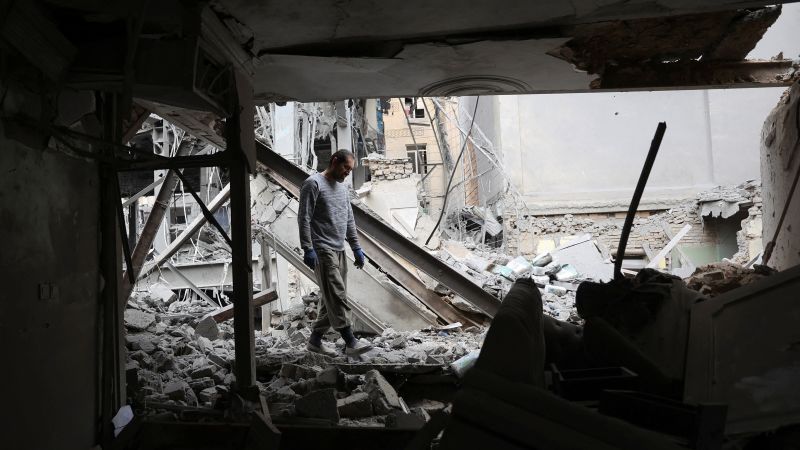
A week ago, President Donald Trump told Britain not to bother sending ships to the Middle East because he’d already won the Iran war.
Now, he’s calling on America’s “special relationship” ally; fellow NATO states; and even China to dispatch vessels to open the Strait of Hormuz. He implied that if help didn’t arrive, Europe’s US defense umbrella and his planned summit this month with Chinese leader Xi Jinping could be at risk.
Trump’s salvo, in an interview with the Financial Times, was a fresh sign that despite his multiple Iran victory laps, the war is far from over.
It would not be the first US military venture this century to drag on longer than Washington expected. This may explain new attempts by administration officials to convince the public and global markets that the conflict could end soon.
US Ambassador to the United Nations Mike Waltz declined to say on CNN’s “State of the Union” on Sunday when American forces would come home despite lauding them for a “dominant victory, the likes of which we haven’t seen in modern American military history.”
Energy Secretary Chris Wright was more optimistic. “I think that this conflict will certainly come to the end in the next few weeks, could be sooner than that,” he said on ABC News’ “This Week.”
Israel, meanwhile, told CNN that fearsome bombing raids against Iranian military and intelligence targets could last at least three more weeks. The Jewish state is more accustomed to perpetual military action than US voters and leaders are.
It remains too early to judge the overall impact of the war. It looks possible, even likely, that combined US and Israeli raids have caused massive damage to Iran’s military machine and ability to threaten the outside world. If confirmed, such a scenario would offer Trump a credible argument to have made the world safer.
Plus, the war is only two weeks old. By any standard, that’s not a long time. Any frustration for top brass about short attention spans in the media and among analysts about the war may be understandable.
But modern history shows that a war is often not defined in the first few weeks, when America’s massive military edge is at its most decisive.
So the White House is facing multiple reasons for skepticism that it can extricate the US soon.
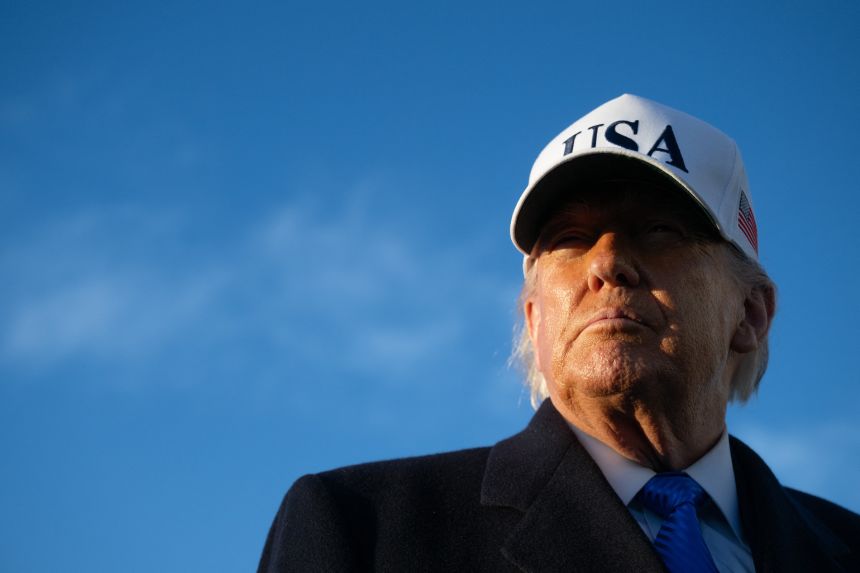
Trump has barely prepared the country for the war, and he keeps adding to the confusion with conflicting statements. He vehemently insists that the war is already won. But he says it will end only when he feels it in his “bones.” If victory is already achieved, it’s fair to ask why American troops are still in harm’s way after 13 US deaths on active service so far.
The administration is also operating under a dark historical cloud. This war is not yet directly comparable to the “forever wars” in Iraq and Afghanistan. But in both those cases, early US triumphs were undermined by the political impact of the initial assault and poor understanding of foreign nations. There are enough signs in Iran to validate public concerns about a possible quagmire.
At the same time, Trump has dilemmas that would undercut a characteristic declaration of victory if they remain unsolved but that could take more than “weeks” to mitigate.
► Iran has effectively closed the Strait of Hormuz — causing a global energy crisis and steep oil price hikes that threaten to weaken him at home. Wiping out Iranian missile batteries, seaborne drones and mining operations could be a prolonged affair. And it might need the deployment of ground troops in a risky widening of US operations.
Trump is now demanding foreign navies help open the narrow strategic passage. There’s been a noncommittal response to his request so far.
Trump told the Financial Times that Europe and China were more dependent on oil from the Gulf than the US — although American consumers have been hit by a general spike in oil prices. His remarks are likely to be seen abroad as a demand for help in fixing a mess he created by waging war on Iran.
But the president took aim at the weak spot of European allies that rely on the US for their defense. “If there’s no response or if it’s a negative response, I think it will be very bad for the future of NATO,” he said.
► The Islamic Republic still has stocks of highly enriched uranium it could use to defy Trump’s vow it will never have a nuclear weapon — despite the president’s claim to have “obliterated” its nuclear program last year. The US has special forces units trained to extract radioactive material. But such a mission at Iran’s nuclear plants could require hundreds of troops and might provoke dangerous land battles with Iranian forces deep into hostile territory.
► One way to shatter Iranian government leverage would be for US forces to seize Kharg Island, the epicenter of Tehran’s oil exports that bankroll the regime. The island was targeted in weekend US air raids. The removal of the country’s primary economic engine might alter calculations within the regime. Waltz told CNN’s Jake Tapper that “I would certainly think (Trump) would maintain that optionality if he wants to take down their energy infrastructure.” But an amphibious assault on Kharg Island would also risk significant US casualties. It could cause environmental damage and a market meltdown if Iran chose to sabotage its own oil facilities rather than lose them to American control.
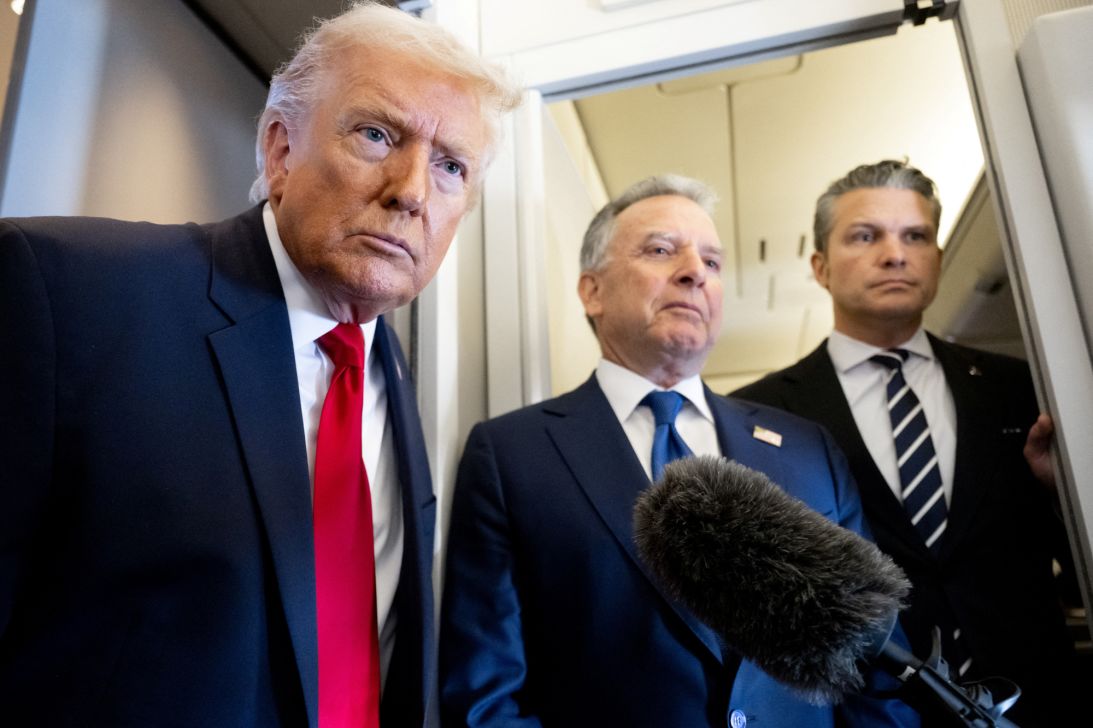
Political factors inside Iran also make it hard to pin down a timeline for ending the war.
The pace of Iranian drone attacks on Gulf states allied with the US has slowed — proof perhaps that US and Israeli raids are degrading Tehran’s offensive capabilities. But projectiles still rained down on Baghdad airport and Israel on Sunday.
There’s also no sign of a diplomatic off-ramp. There’s no “deal” in sight, and Trump’s demands for an unconditional surrender have fallen on deaf ears. The anointing of new Supreme Leader Mojtaba Khamenei signaled the regime intends to renew its decades of resistance to Washington.
There’s also no public sign of the regime’s grip loosening. Trump opened the war by telling Iranians he was giving them a once-in-a-lifetime chance to throw off repression. But no uprising has yet occurred in a nation where thousands of protesters were recently gunned down by the authorities.
The overthrow of the government would represent a huge win for the Iranian people and would provide Trump with a genuine legacy achievement. Many Iran analysts, however, worry that a collapse of central authority could lead to sectarian or civil strife and an implosion of the Iranian state. Such an outcome might bog down US forces in the region for years to come — or leave allies facing massive security problems. The war between the US, Israeli and the Iranian governments might ostensibly end. But the international crisis it precipitated might get a lot worse.
Domestically, there is likely to be skepticism outside Trump’s fiercely loyal base over predictions that the war will end within weeks. Trust in the president’s war leadership was already thin according to multiple polls when the war broke out.
Republicans have held firm against Democratic efforts in Congress to thwart Trump’s war powers. But assurances that the fighting will last only “weeks” reflect an understanding in the GOP that a long war in Iran could further harm the party’s chances in November’s midterm elections.
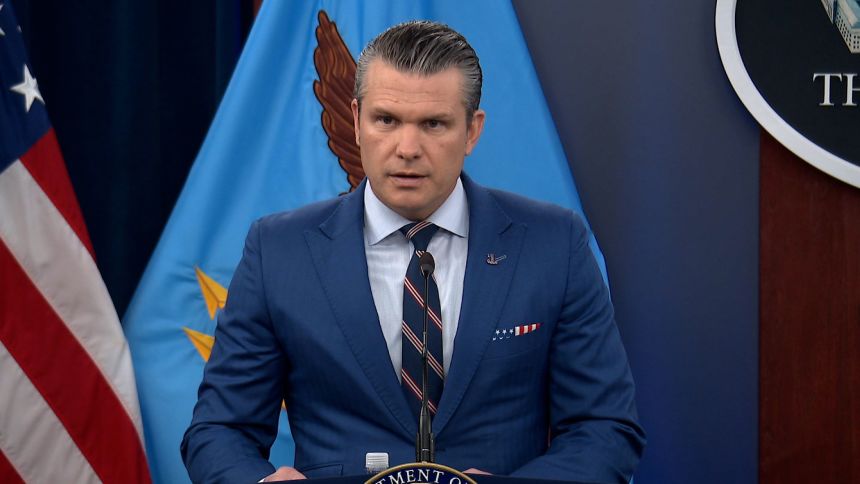
Defense Secretary Pete Hegseth last week tried to stamp out any analogies to the wars in Iraq and Afghanistan that haunted the presidencies of George W. Bush and Barack Obama. “This is not endless nation-building under those types of quagmires. … It’s not even close,” said Hegseth, an Army veteran who served in both Iraq and Afghanistan.
But the administration’s refusal to consult Congress on the war, its opaque endgame and its apparent lack of an exit strategy have already given an opening to Democrats.
“What I’m worried about is not the soldiers and the people who are serving. What I’m worried about is their political leadership, like Pete Hegseth and Donald Trump,” past and possibly future Democratic presidential candidate Pete Buttigieg said on “State of the Union.”
“We lived through a war that was sold to us on false pretenses when I was younger,” said Buttigieg, a US Navy Reserve veteran who was deployed to Afghanistan in 2014. “This war has not been sold on any pretense. The president just went ahead and did it.”
Over the weekend, Trump used his social media network to slam media organizations seeking greater clarity about his plans for the war and when he might end it.
Such questions are merited in the context of a conflict in which Iran’s actions — including its attacks on Gulf states and virtual closure of the Strait of Hormuz — have seemed to frequently surprise the administration.
But they are especially acute because of the loss still felt by countless American families whose loved ones died in 21st-century foreign misadventures that Trump vowed not to replicate.
That painful modern history sets a high bar for justifying new wars that have uncertain endgames.