
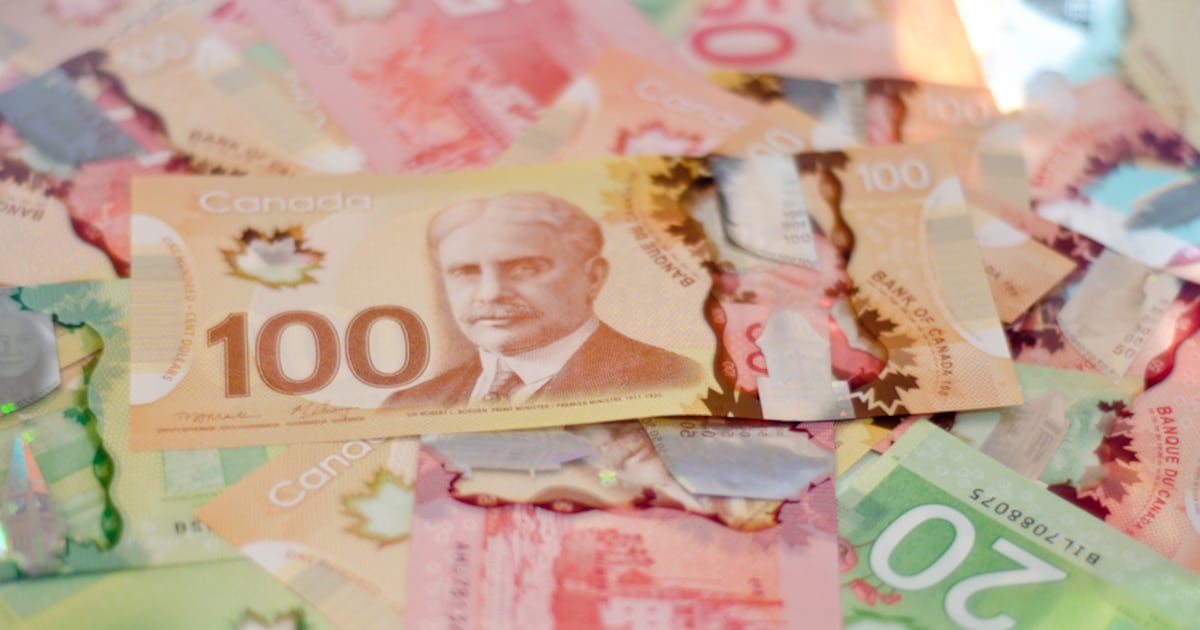
Randall Bartlett, deputy chief economist at Desjardins, joins BNN Bloomberg to discuss the latest StantCan CPI data for the month of February.
Statistics Canada has released its February 2026 Consumer Price Index (CPI) with a 1.8 per cent rise in February, following a 2.3 per cent increase in January.
The slowdown was largely driven by change in prices this time last year, when costs rose in line with the end of the federal tax holiday.
 Shoppers in Toronto’s Eaton Centre Shoppers pass through Eaton Centre on Boxing Day in Toronto, on Friday, Dec. 26, 2025. THE CANADIAN PRESS/Sammy Kogan
Canadians were most impacted by the rise in food from restaurants, with smaller impacts to purchases of alcoholic beverages and toys.
On a year-over-year basis, prices for food purchased from stores rose 4.1 per cent in February following a 4.8 per cent increase in January.
The deceleration was led by prices for fresh or frozen beef, which rose 13.9 per cent in February following an 18.8 per cent increase in January.
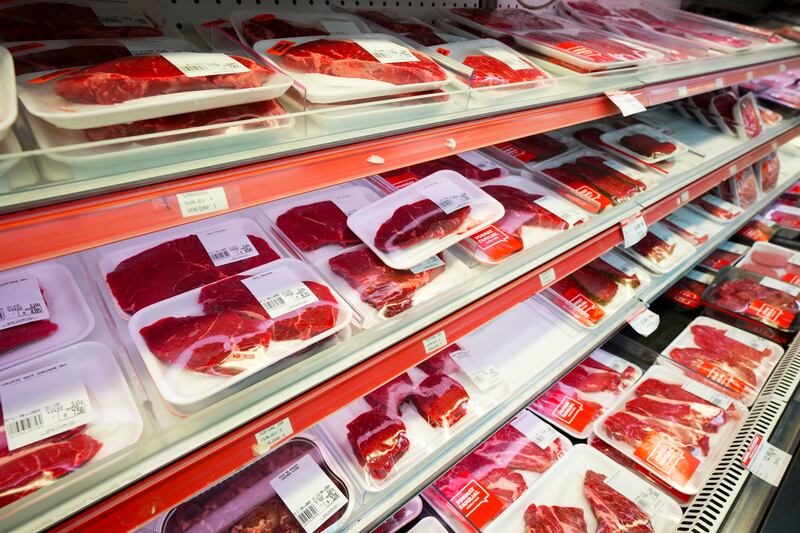 Beef and Meat products Statistics Canada says food prices drove inflation lower in April, with the cost of groceries rising 1.4 per cent compared with a year ago. Beef and meat products are displayed for sale at a grocery store in Aylmer, Que., on Thursday, May 26, 2022. THE CANADIAN PRESS/Sean Kilpatrick
Prices were driven down last month in a number of sectors including gasoline (-14.2 per cent) –before gas prices spiked due to the ongoing war in Iran – natural gas (-17.1 per cent), homeowners’ replacement costs and travel tours.
In February, gasoline prices contributed largely to the slowdown in the CPI, declining 14.2 per cent after a 16.7 per cent decline in January.
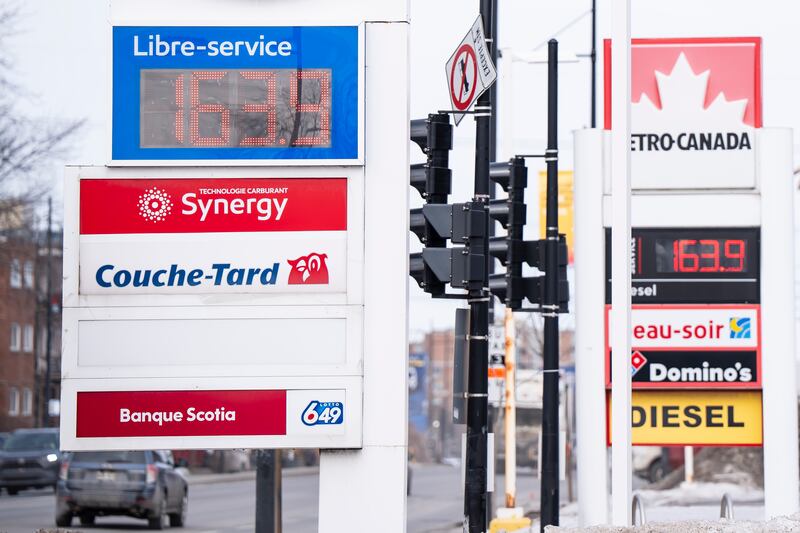 Gas Prices in Montreal Gas prices are displayed at a gas station in Montreal on Thursday, March 5, 2026. THE CANADIAN PRESS/Christopher Katsarov
On a month-over-month basis, consumers in British Columbia paid 9.6 per cent more for gasoline in February, the largest increase among the provinces.
This is primarily due to lower supply amid refinery maintenance and closures in the Pacific Northwest.
Lower priced cellular plans from multiple wireless service providers, led to a 1.5 per cent increase in February compared to a 4.9 percent increase in January.
On an annual basis for February, prices rose at a slower pace in all provinces compared to January.