
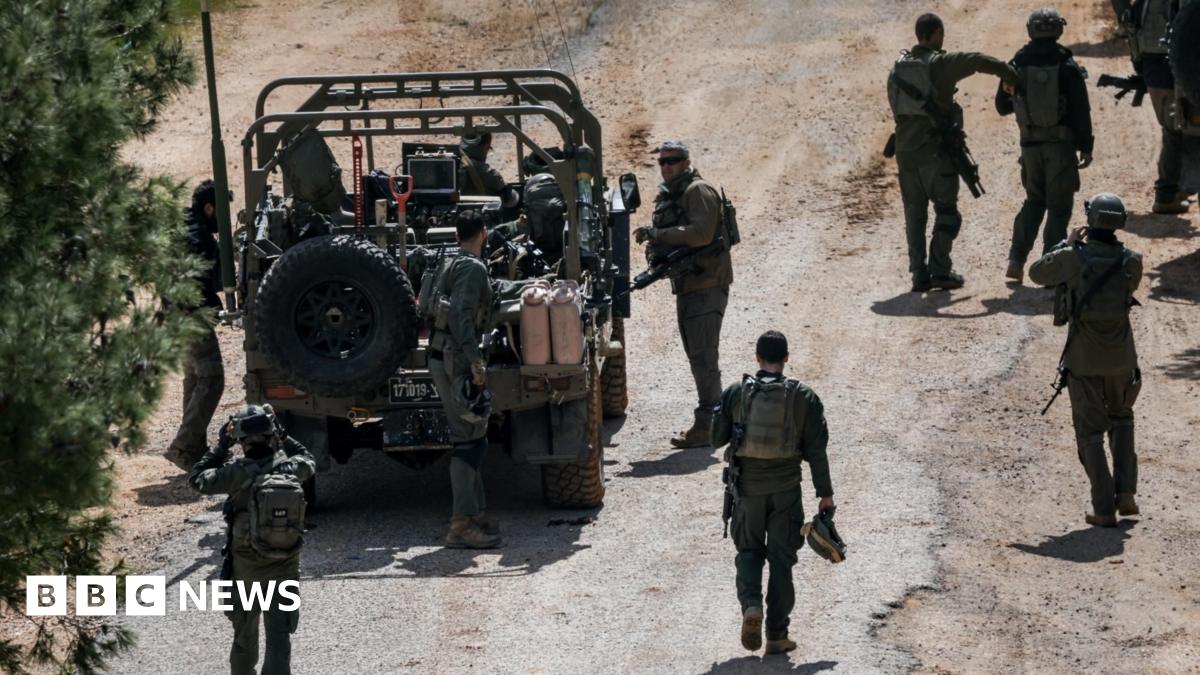
On Monday morning, the Israel Defense Forces (IDF) put out a statement saying that troops from its 91st Division had begun operating in Lebanon.
“This activity is part of broader defensive efforts to establish and strengthen a forward defensive posture, which includes the dismantling of terrorist infrastructure and the elimination of terrorists operating in the area, in order to remove threats and create an additional layer of security for residents of northern Israel,” it added.
IDF spokesman Lt Col Nadav Shoshani said Hezbollah – a Shia Islamist political and military group which is designated as a terrorist organisation by countries including the UK and US – was “intending to expand their operations” in southern Lebanon. It was sending hundreds of fighters from its elite Radwan Force and firing hundreds of rockets a day, he added.
Israeli media reported that three Israeli divisions – amounting to thousands of troops – were now operating in southern Lebanon, with two more due to join them in the next few days.
The ground operations are a new blow to Lebanese sovereignty and will stoke fears of a prolonged Israeli occupation.
On Saturday, US news site Axios reported that Israel was “aiming to seize the entire area south of the Litani river”, which is about 30km (20 miles) from the Israeli border.
On the third day of the conflict, the IDF issued a blanket evacuation order for the area south of the Litani, telling all residents to leave immediately as it targeted what it said were Hezbollah positions and fighters. It almost doubled the size of the evacuation zone last Thursday, moving the limit north to the Zahrani river, 40km from the border.
Israeli Defence Minister Israel Katz warned at a meeting with military commanders on Monday that displaced Lebanese Shia residents would “not return to their homes south of the Litani area until the safety of residents in the north [of Israel] is guaranteed”.