
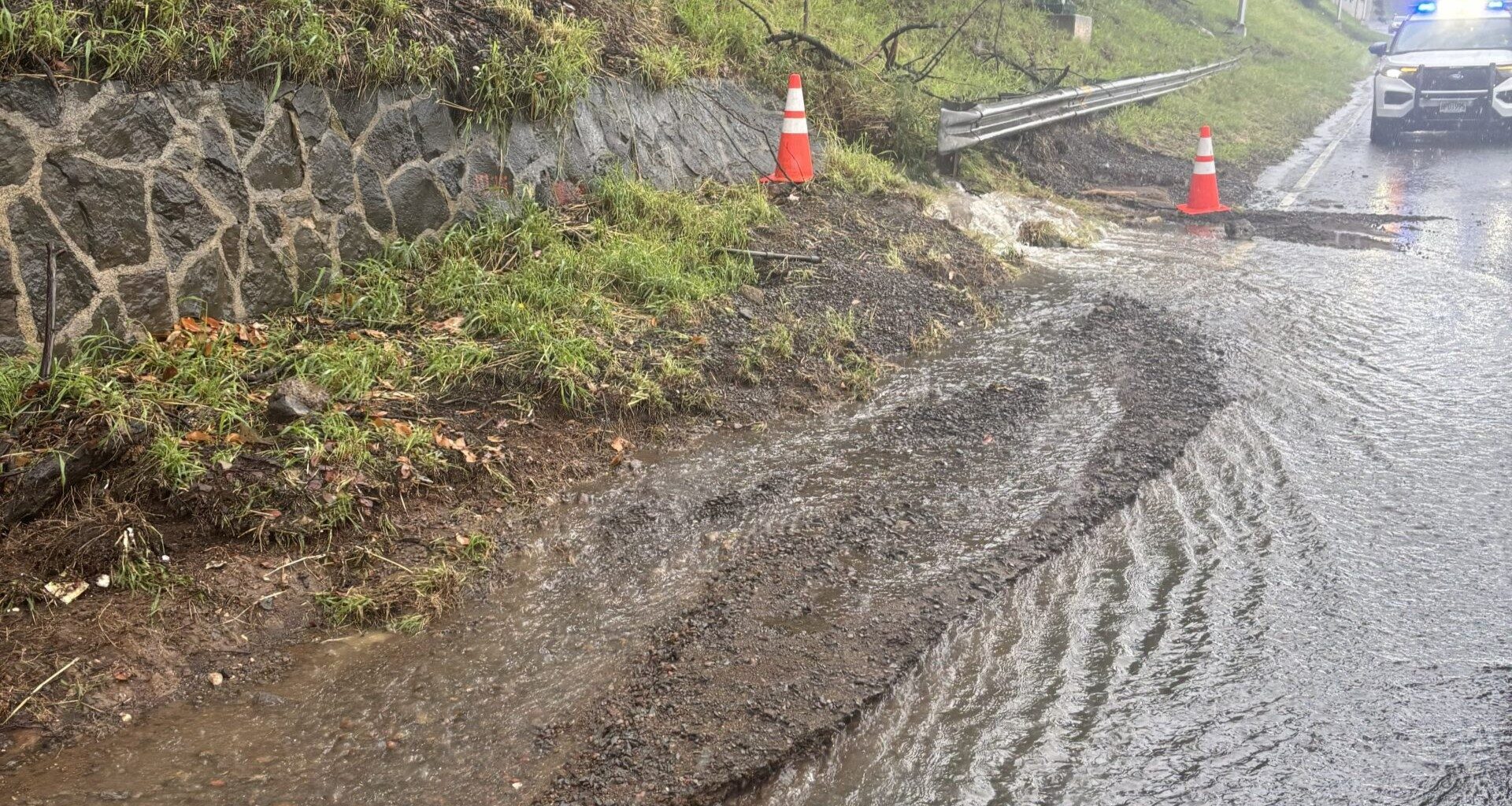
A powerful storm that flooded roads, isolated communities and knocked out power to more than 130,000 homes and businesses across Hawaii shattered some of the oldest rainfall records in the state’s history this week.
And the rain isn’t done yet.
The storm, a slow-moving Kona low that stalled north of the island chain for nearly five days, produced rainfall totals that rewrote the record books from Kauai to the Big Island. In the West Maui Mountains, gauges recorded 27.5 inches in three days. Near the summit of Haleakala, totals approached 40 inches. Even at Kahului Airport on Maui’s flat, typically dry north shore, 13.6 inches fell from Wednesday through Saturday, more than the city recorded in all of 2025 and more than any full year since 2021.
Up to an additional 6 inches of rain is forecast for the Big Island through Monday.
On Friday alone, the storm produced daily rainfall totals that erased records stretching back generations. Honolulu recorded 5.51 inches, breaking a record that had stood since 1951. Lihue on Kauai recorded 5.47 inches, more than doubling its previous single-day record set in 2006.
Wind gusts reached 78 mph near Schofield Barracks on Oahu, 70 mph near Kailua and more than 70 mph in Kaunakakai on Molokai. On the Big Island’s Kona coast, gusts topped 75 mph. On the summits of Mauna Kea and Mauna Loa, the weather service warned of gusts exceeding 100 mph alongside 12 to 20 inches of snow and blizzard conditions. Cameras at NASA telescope facilities on Mauna Kea were coated in ice by Friday morning.
The Kona low was expected to begin lifting northeastward Sunday, with the heavy rain and strong winds easing across most islands by early Monday. But a stationary frontal boundary could linger across Maui and the Big Island through the middle of the week, keeping the risk of additional rain and flooding in place.
The Kona low has been pumping warm, moist air into the Pacific Northwest, feeding a massive ridge of high pressure that is now driving temperatures 20 to 30 degrees above normal across California, Nevada and Arizona. That heat wave is on track to shatter all-time March temperature records from the Bay Area to Las Vegas.