

Some of the cases in the deadly meningitis outbreak in Kent have been confirmed as meningitis B.
The UK Health Security Agency said some of the cases had been confirmed as MenB, which teenagers and young people are not routinely vaccinated against. The agency said it would confirm the other cases in due course.
Health officials were criticised for waiting 24 hours to issue public warnings about the outbreak, which has killed two young people and left 11 others seriously ill with meningitis or septicaemia in Kent.
The health agency confirmed on Sunday night that an outbreak was affecting university students and schoolchildren in Canterbury.
Tributes were paid to a Year 13 pupil, named only as Juliette, who died. Friends called her a “bright character” who was “always happy and kind”.
The cases are believed to be linked to Club Chemistry, a nightclub popular with students, which several of those infected had visited this month. Another infected student had hosted a party, students said.
 Club Chemistry in Canterbury is suspected of being one source of the outbreakGareth Fuller/PA
The health agency said anyone who had visited the club on March 5, 6 or 7 should “come forward for preventative antibiotic treatment as a precautionary measure”.
Meningitis B accounted for 82.6 per cent of all cases of invasive meningococcal disease (IMD) in 2024-25. There were 378 confirmed cases in England of the disease over the period, compared with 340 the year before.
Children are offered three doses of the meningitis B vaccine as part of the NHS vaccination schedule: at eight weeks, twelve weeks and one year old. It provides protection for about five years.
The meningitis B vaccine is not offered to teenagers and young people because the Joint Committee on Vaccination and Immunisation determined that it was not cost-effective for this age group. Adults can pay to get two doses of the vaccine at a cost of about £110 per dose.
Hundreds of students queued to receive precautionary antibiotics at the University of Kent after the health agency contacted more than 30,000 students, staff and their families as it attempted to trace potential contacts.
Students queue for antibiotics, which can be given as a preventive measure to those at high risk
It is understood that health officials had been alerted to cases a day earlier, raising questions about why public alerts were not issued sooner. Meningitis typically has an incubation period of three to five days.
The university confirmed on Sunday night that one of its students was among the two dead. The second was confirmed on Monday as a pupil at Queen Elizabeth’s Grammar School in Faversham. It is understood the victims were aged between 17 and 21.
Amelia McIlroy, head teacher of the grammar school, confirmed that the pupil, Juliette, had died. “She loved our school and was very happy,” McIlroy said. “She embraced everything the school had to offer and was genuinely caring. Our love and thoughts are with her family and friends.”
A friend, Sammy Wright, 18, said: “She was a bright character, always very happy and kind. She was in our PE class … right at the beginning of the week. It’s just a shock to hear what happened. Prayers to her family and closer friends.”
Emma Marlow, 38, a custody detention officer from Ashford, said her daughter Casey, 19, had gone to Club Chemistry in Canterbury with friends to celebrate her birthday, before falling ill days later. At first the family assumed she had picked up a minor illness after she complained of a sore throat and fatigue.
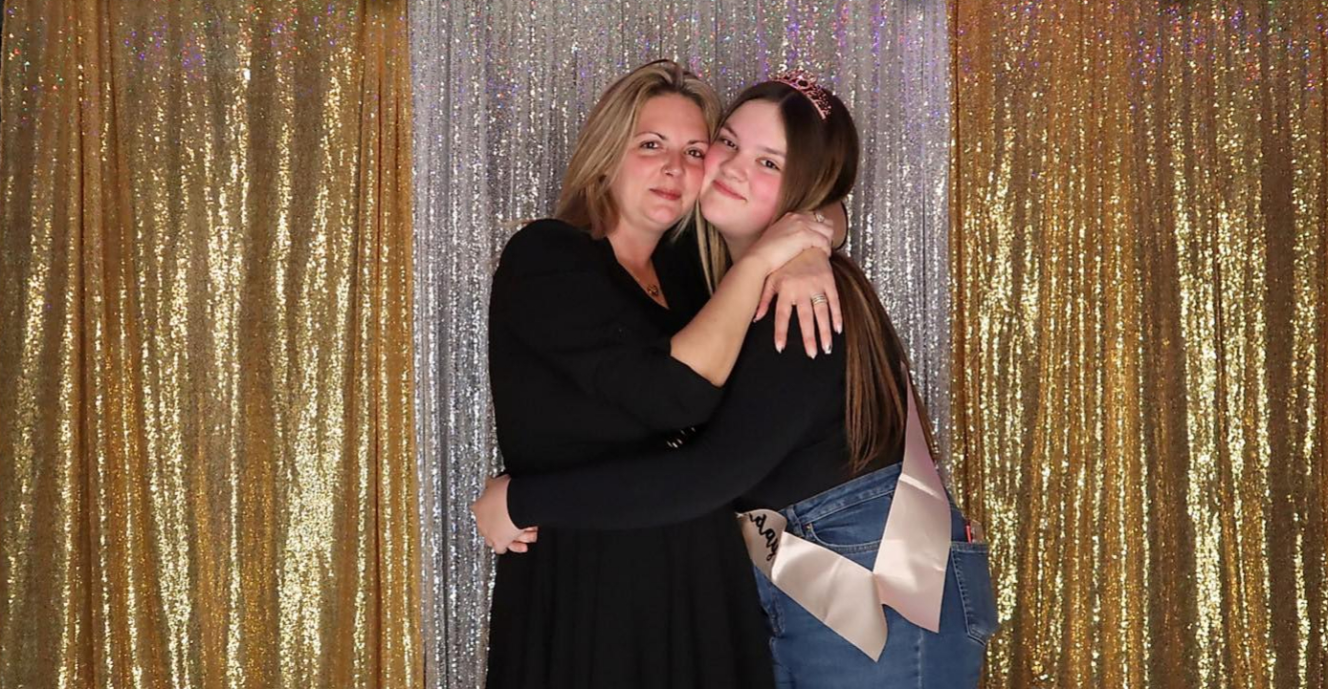 Emma Marlow with her daughter CaseyFacebook
Marlow said: “Then on Saturday she called me and said she felt awful — she had a raging temperature, a stiff neck and a terrible headache.”
The family took her to hospital, where she was diagnosed with meningitis and placed in isolation. “She’s been there ever since,” Marlow told The Mail, adding that her daughter was expected to make a recovery.
Students and staff working or living in two accommodation blocks have been asked to identify themselves to receive antibiotics as soon as possible.
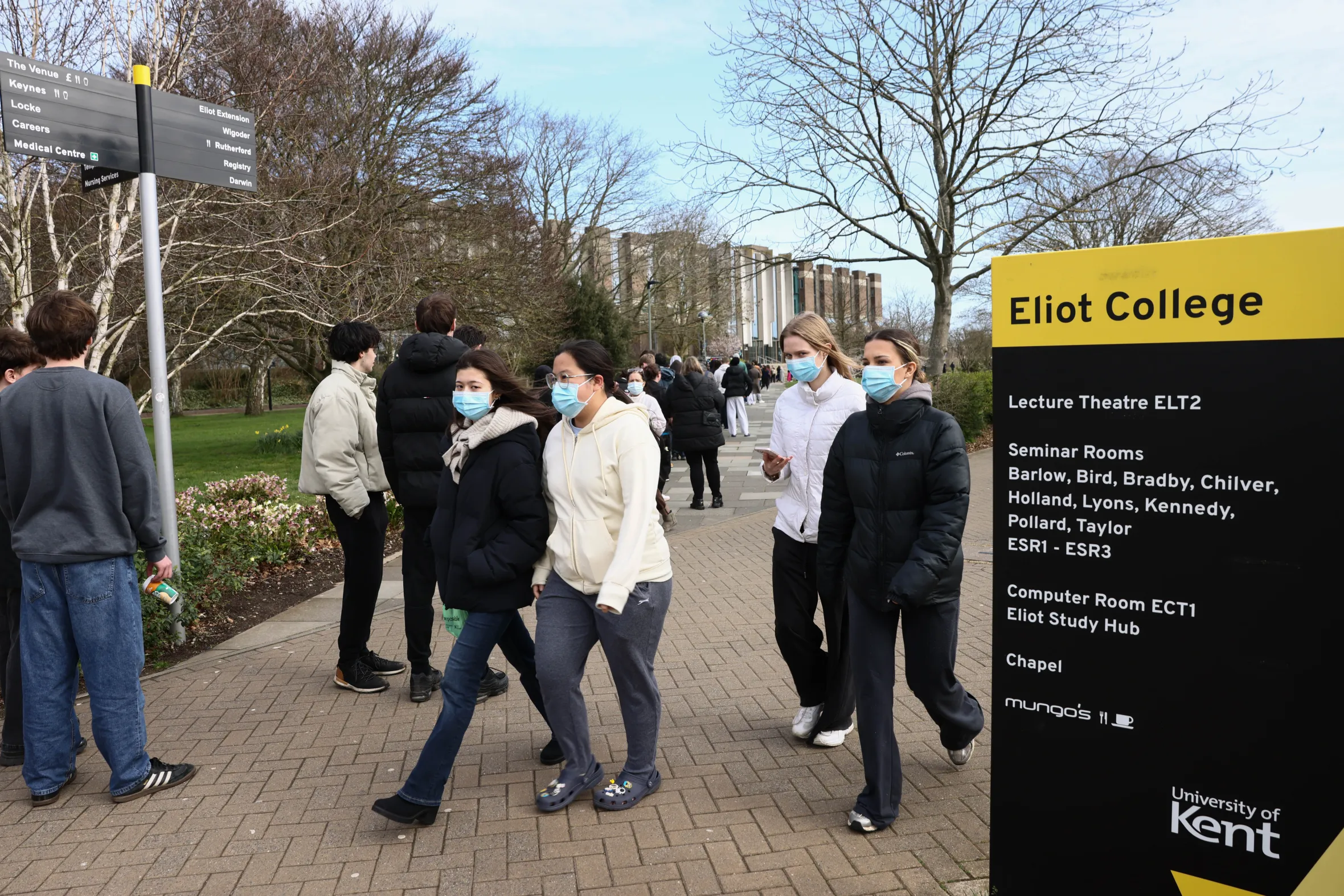 Students were wearing masks around the University of Kent campus on Mondayjack taylor for the Times
On Monday, parents arrived on campus to take their children home early for Easter. Rose, who lives in Keynes block Q, said: “Everyone I’ve spoken to is going home as a precaution because this block has been one of the worst affected.”
Simon Langton Grammar School for Boys in Canterbury is closed to all Year 13 pupils after a suspected case.
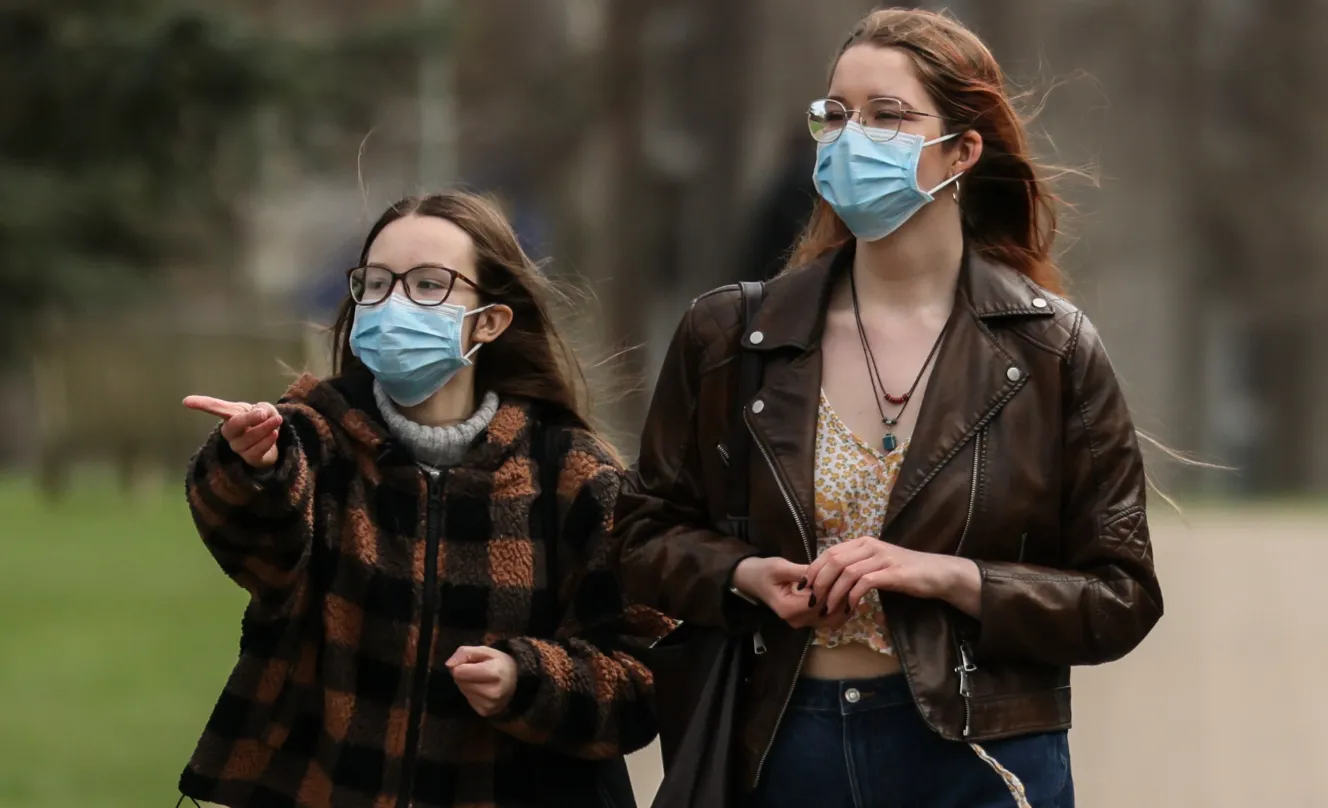 Jack Taylor for the Times
A parent told The Times: “My son saw his friend from Year 13 in a wheelchair outside the waiting room at Margate hospital. When he came back, about 35 minutes later, the boy was on the floor, and by Sunday we heard he had been put into an induced coma with meningitis.
The Faversham & Mid Kent MP Helen Whately has questioned whether the UKHSA could have communicated with the public sooner about the outbreak. Asked whether she had concerns about a “potential delay” in communications, the former health minister told Times Radio: “I do, I would like to have UKHSA come forward and explain the timeline there.”
On Monday another school, Norton Knatchbull School in Ashford, was affected. It told parents that a Year 13 student had been admitted to hospital with a suspected case.
The university has moved exams online, and Club Chemistry has closed for the rest of the week.
UKHSA said its specialists were “interviewing affected individuals and their families to help identify all close contacts and arrange antibiotics to limit spread”.
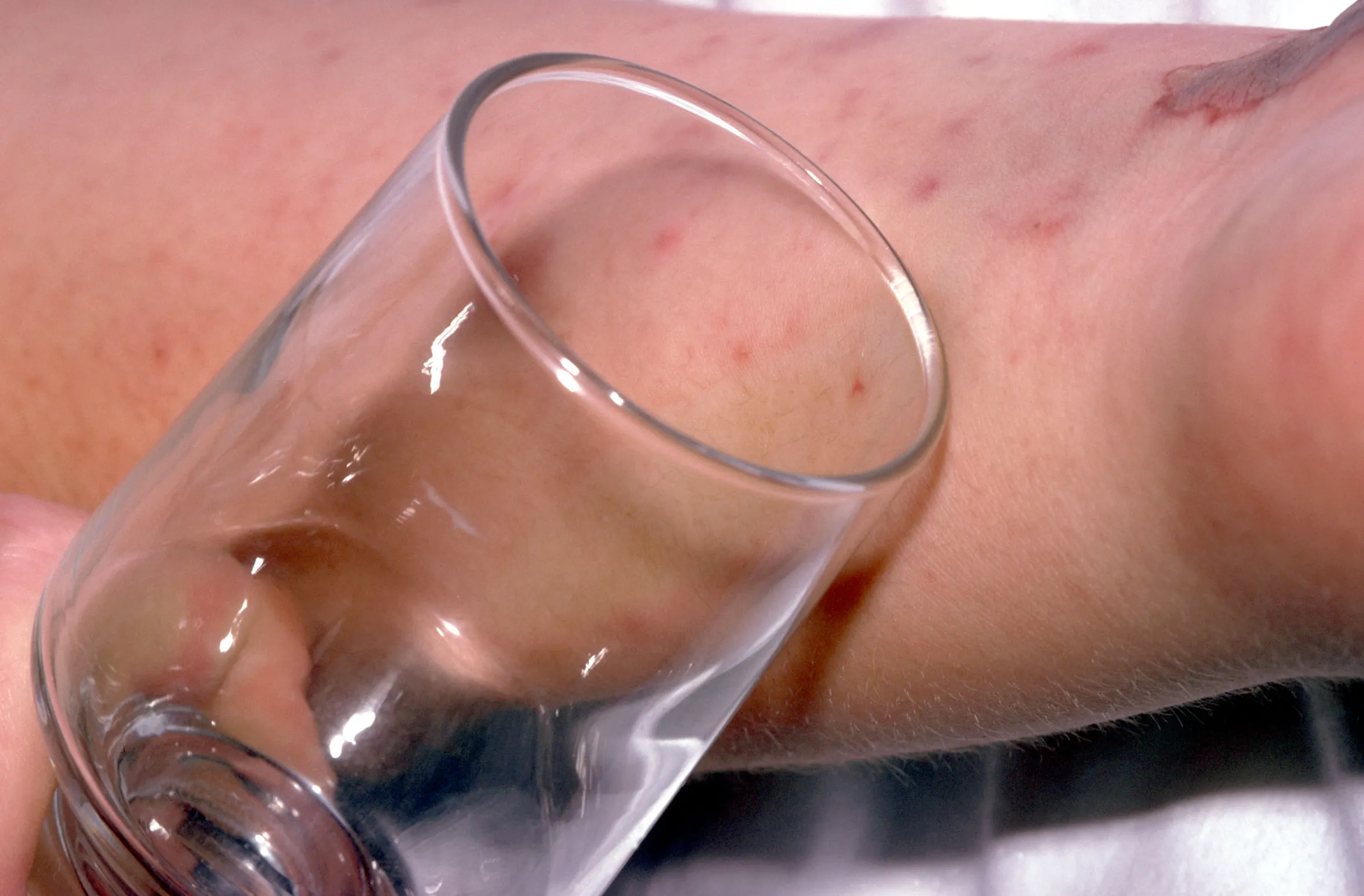 Rash testing for meningitisMedical On-Line/ALAMY
One in ten people infected with bacterial meningitis will die, according to the Meningitis Research Foundation. One in every two or three survivors is left with permanent complications.
The MenACWY vaccine protects against four common strains of meningitis and is usually offered in school to teenagers in Year 9. But Dr Tom Nutt, chief executive of Meningitis Now, a charity and patient group, said teenagers and young adults “are unlikely to have been vaccinated against one of the most common causes of meningitis in this age group, which is MenB”.
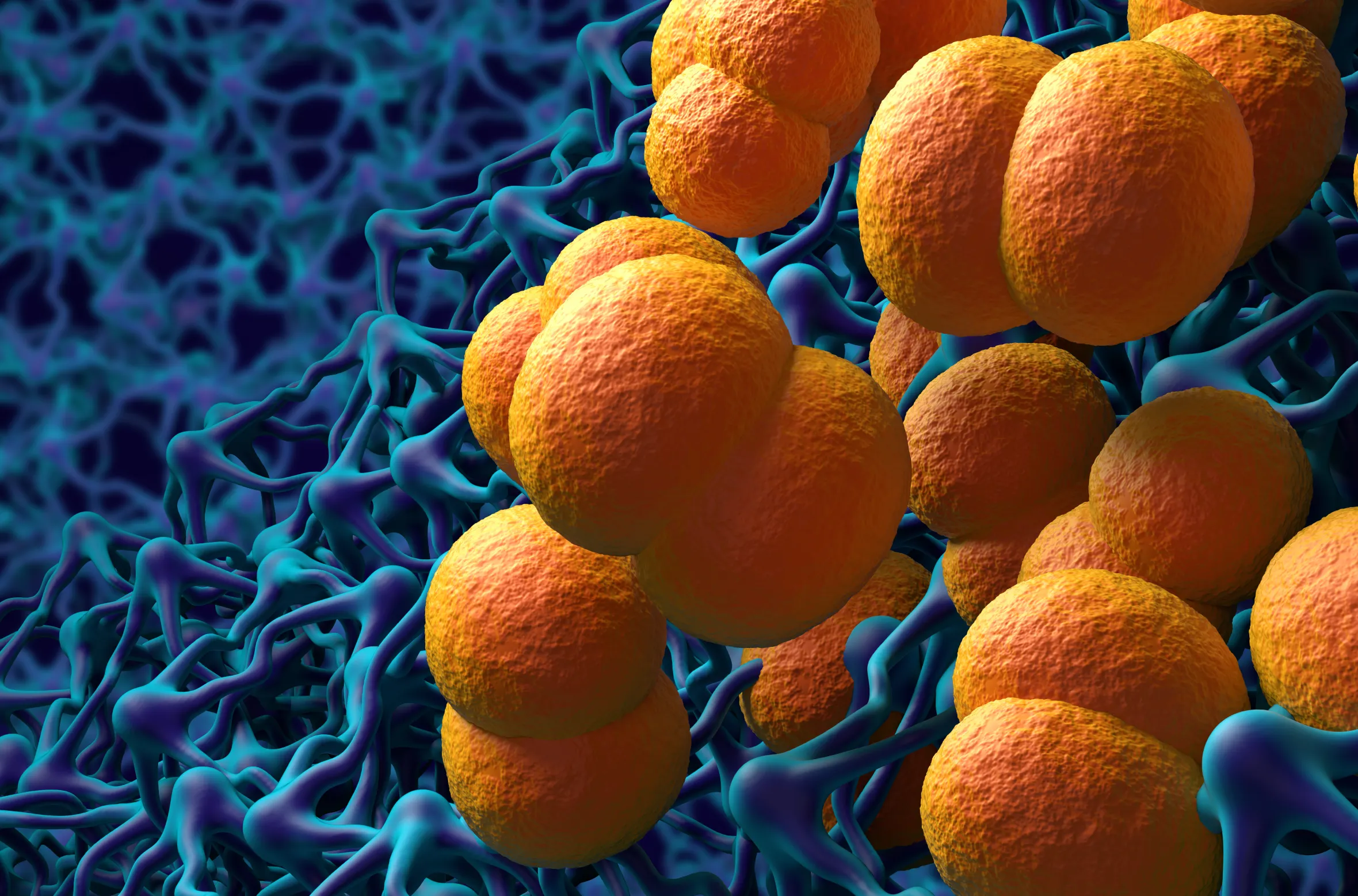 A false-colour scanning electron microscope image of the meningitis bacteria (in orange)Getty IMAGES
UKHSA said it was notified of a cluster of cases late on Saturday and “acted immediately and communication to those at risk took place on Saturday evening and Sunday”.