
The AIA’s annual report is based on a survey of local authorities, carried out between December and February.
The survey was completed by 79% of councils whose answers suggested extra investment to tackle potholes has failed to deliver “noticeable improvements”.
The report said that nearly two million potholes were filled in over the past year, but local authorities would have needed more than £8m extra each last year just to maintain their networks at target levels and prevent further decline.
It found bringing local roads up to ideal conditions would cost £18.6bn. And even if that money could be found, the job would take approximately 12 years to complete.
And that money would still not cover the cost of potholes that appear in motorways and other major highways, as these are maintained by National Highways in England and two public sector organisations called Trunk Road Agents in Wales.
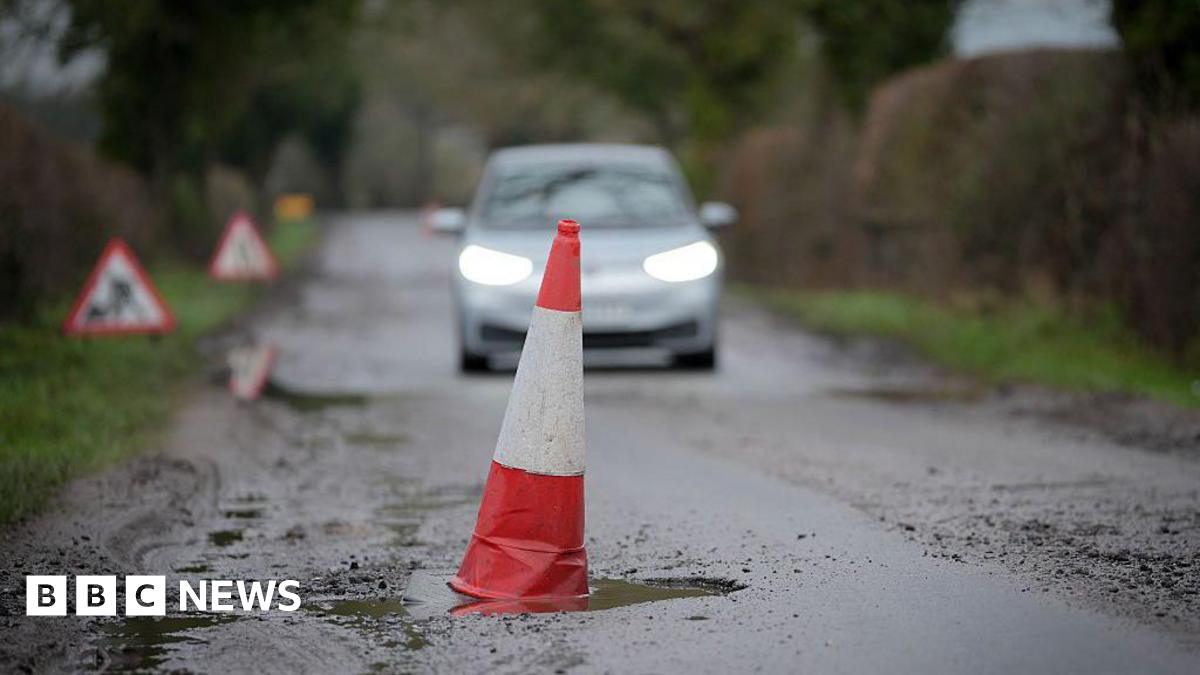
Potholes are formed when tiny cracks in the road surface – usually caused by traffic – allow water to seep in.
When that freezes, it expands and makes the cracks bigger. Further traffic can turn that into a hole.
Last month, the AA said pothole-related call outs in January were up by 18% across the UK, with 6,235 in the east of England alone.
“I think all road users would agree that the condition of our local roads has become a national disgrace,” said AIA chairman David Giles.
A total of £7.3bn funding for local road maintenance has been announced for the next four years, which works out at about £1.8bn a year.
While Giles said extra money “is not the silver bullet that will clear the backlog of repairs any time soon”. he added “the dial could be moved quicker” if the additional funding came quicker rather than “ramping up in the years to 2030”.
A Department for Transport spokesman said the report “rightly highlights the need to improve our roads” and pointed out that the government has raised the funding level to help councils “fix the pothole plague”.
“We’re already seeing progress, with 15% more pothole-prevention works carried out in 2025 compared to 2024,” he added.