
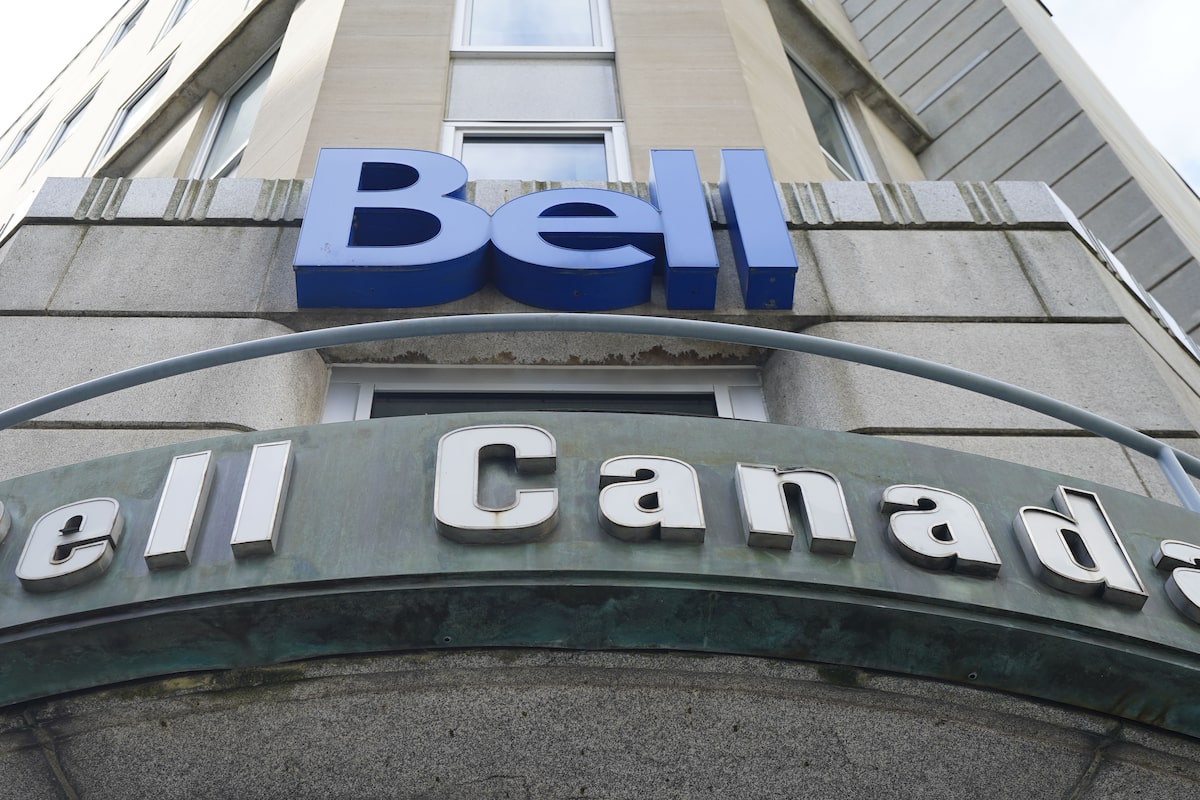
AI infrastructure represents a reboot for an industry that spent far too long searching fruitlessly for healthy growth, writes Andrew Willis.Sean Kilpatrick/The Canadian Press
In the Regina suburbs, Bell Canada parent BCE Inc. BCE-T has found a way to make serious money on the next big tech revolution, rolling out artificial intelligence for the masses.
On Monday, BCE and the Saskatchewan government announced plans to build the country’s largest AI data centre, a 300-megawatt facility with a $1.7-billion price tag.
Had BCE chief executive officer Mirko Bibic not spent the past two years explaining the telecom’s AI gameplan, in short, simple sentences, the commitment could have spooked investors.
Spending billions on AI projects has a flavour-of-the-month feel to it. The technology’s potential is clear. However, investments in the space now typically come with sky-high valuations. And many ventures lack a path to profitability.
BCE plans to build Saskatchewan AI data centre
AI is a potential minefield for any investor. And telecoms have a track record of stepping on every mine in the field when venturing into new sectors.
The flip side of AI is the unmatched opportunity it represents for those who get it right.
Last month, consultants at McKinsey & Company published a report showing telecom companies like BCE played a critical role in the last tech revolution, the move to a digital economy. Yet they failed to make money on the spoils, which went to newcomers such as Google-parent Alphabet Inc. and Facebook-owner Meta Platforms Inc. McKinsey said: “The best the industry could do over the past decade has been to tread water.”
As businesses embrace AI, sometimes reluctantly, McKinsey said, “Telcos may finally be poised to embark on a new era of healthy growth.”
In Regina, Mr. Bibic is rolling out what looks to be a case study in healthy growth.
BCE Inc. to modernize three federal call centres
BCE is taking a capital-light approach to data centres by having two AI companies, Cerebras and CoreWeave, provide the tech gear, including Nvidia chips. In a report, analyst Maher Yaghi at Bank of Nova Scotia said: “Their involvement as anchor tenants is critical, as they bring the cutting-edge hardware and cloud infrastructure required.”
Cerebras and CoreWeave signed 10-year, non-cancelable contracts on the project, twice the five-year commitments typically made to data-centre operators, Mr. Yaghi said.
One major issue facing data-centre developers is lining up the electricity to run the energy-hungry facilities. BCE announced the Regina project with power contracts in place with two suppliers, government-owned SaskPower and TransGas.
With the 300-megawatt Regina data centre and smaller facilities in B.C. and Ontario now underway, BCE still has roughly 425 megawatts of power lined up for additional projects.
The telecom is already looking at ways to make use of this power, without stretching its balance sheet. In a report on Monday, analyst Tim Casey at BMO Capital Markets said: “Our sense is that if another opportunity of this scale and return profile was available, BCE would pursue it with third-party partnership capital.”
There are clearly AI partnerships available. Last month, deep-pocketed institutional investors Canada Pension Plan Investment Board and Brookfield Asset Management announced plans to build a data centre in Alberta, run on 230 megawatts of power from TransAlta Corp.
On the Regina plan, BCE is also partnering with the province’s dominant telecom provider, SaskTel, to offer AI-powered products to customers in the region. For clients that care about data sovereignty, including government agencies and financial institutions, doing business with a domestic data centre over fibre owned by a domestic telecom is essential to winning contracts.
Once it opens in 2027, the Regina data centre will contribute $500-million annually to BCE’s revenues and more than $250-million to free cash flow. If the project comes in on budget, it will provide what Mr. Yaghi called a “very attractive” 20-per-cent return on invested capital.
To put that 20-per-cent return in perspective, McKinsey said many telecom investments over the past decade returned less than the company’s cost of capital. AI infrastructure represents a reboot for an industry that spent far too long searching fruitlessly for healthy growth.