
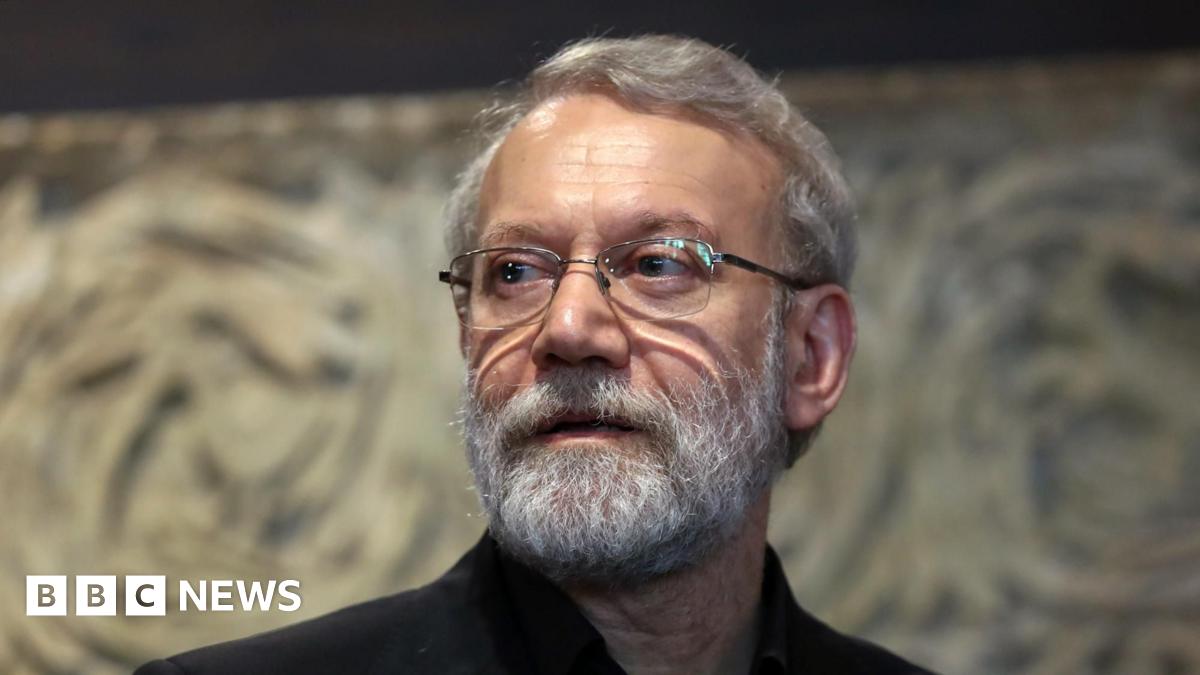
Larijani was appointed secretary of Iran’s Supreme National Security Council (SNSC) by President Massoud Pezeshkian last August.
He was also Khamenei’s representative on the council, and was described by Iranian news outlets as an adviser to the late supreme leader.
Before the war, Khamenei reportedly tasked Larijani with devising a plan to ensure that the Islamic Republic would survive a major attack by Israel and the US, including the assassination of its leadership.
After the death of the supreme leader, Larijani became an even more powerful figure.
Although Khamenei’s son Mojtaba was chosen as his successor, he has not been seen in public or appeared in any recent photographs or videos since the start of the war, having reportedly been injured in the Israeli strike that killed his father.
By contrast, Larijani regularly responded to statements by US President Donald Trump on social media and was filmed walking with supporters of the Islamic Republic at the Quds Day demonstration in Tehran last Friday.
Larijani was a former Islamic Revolution Guard Corps (IRGC) commander who rose to prominence as head of Iran’s state broadcaster, IRIB. He held the position for 10 years before becoming a security adviser to Khamenei in 2004.
After an unsuccessful run in the 2005 presidential election, he became Iran’s chief nuclear negotiator with the West and held the post for two years.
He then served as Speaker of Iran’s parliament for 12 years, from 2008 to 2020. Although he headed the hardline “principlist” faction – committed to the ideological principles of the Islamic revolution – during his first term, Larijani was described in later years as a “moderate conservative”.
More than 1,300 people have been killed in Israeli and US strikes in Iran since the start of the war, including 226 women and 204 children, according to the Iranian government.
In Israel, 12 people have been killed in Iranian missile attacks, authorities say.
Sirens sounded across the country after Iranian forces launched several missile barrages on Tuesday. There were reports of fires from impacts, but emergency services said no people were wounded.
In the United Arab Emirates, authorities said debris from an intercepted Iranian missile killed a Pakistani national in Abu Dhabi’s Bani Yas area. Oil loading at the port of Fujairah was also partly halted after a third drone attack in four days.