

Listen to this article
Estimated 5 minutes
The audio version of this article is generated by AI-based technology. Mispronunciations can occur. We are working with our partners to continually review and improve the results.
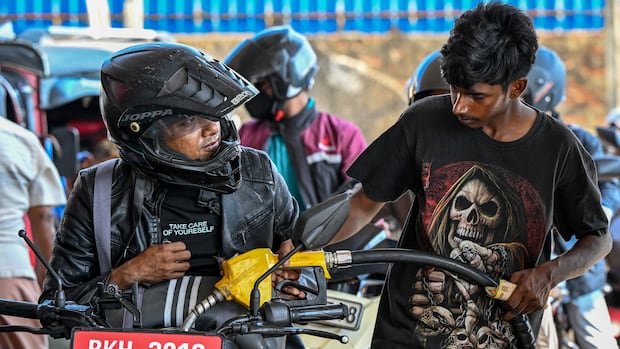
An extra day off work every week sounds great, doesn’t it? But Sri Lanka’s declaration of a holiday for state employees every Wednesday for the foreseeable future has nothing to do with work-life balance — instead, it’s about oil.
The Indian Ocean island nation is facing fuel shortages due to the U.S. and Israel-led conflict with Iran, which has retaliated by blocking most tanker traffic through the Strait of Hormuz, a vital artery for transporting oil and other fuel out of the Middle East.
Attacks on production facilities around the region, and on vessels carrying fuel, have further contributed to rising prices and dwindling supplies in some countries.
Much of what’s produced in the Middle East is exported to countries in Asia, so Sri Lanka is not alone in navigating shortages of fuel required to power daily life.
Here’s how some Asian countries are adjusting to the fuel crunch and what they’re asking citizens to do to conserve resources.
WATCH | Cost of oil keeps going up amid U.S. and Israel-led war with Iran: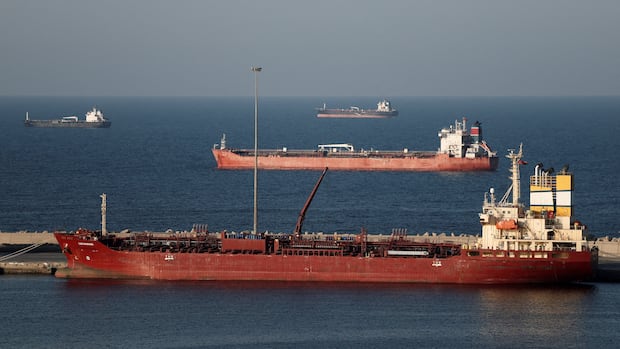
Global oil prices continue to soar, impacting costs for Canadians
The price of crude oil continues to rise amid the U.S.-Israel war with Iran and the closure of the Strait of Hormuz, increasing costs at home for Canadians.
4-day weeks and working from home
In Sri Lanka, President Anura Kumara Dissanayake declared the special government holiday each Wednesday at an emergency meeting on Monday, in which he told senior officials, “We must prepare for the worst, but hope for the best,” according to the BBC.
The holiday will apply to state-run institutions, from government offices to schools and universities, but excludes essential services.
The government is also encouraging public servants to work from home when possible, and is urging the private sector to adopt the weekly holiday, too.
Office operations are being cut back in other Asian countries.
Government officials in the Philippines have also switched to a four-day work week to cut back on fuel consumption, as it aims to reduce the government’s energy use by a fifth. Office workers there have been told to switch off computers during lunch breaks.
The government in Vietnam has urged people to work from home.
Thai workers urged to wear short sleeves
Similarly, Thailand’s government has implemented rules allowing public servants to work from home, while asking those still working at offices to take the stairs instead of using elevators.
What doesn’t help is that Bangkok is currently under a heat warning, with the temperature forecast to hit 33 C on Wednesday but feeling like 40 C with the humidity.
The Bangkok Metropolitan Area has set up some 300 air-conditioned cooling centres to help residents and tourists cope with the extreme heat, along with more than 2,800 free water refill stations.
LISTEN | Gas prices spike as Iran threatens global supply of crude:
Cost of Living11:08Oil comes roaring back
But with the country’s energy reserves dwindling, the government also wants its workers to rely less on air conditioning — even suggesting office workers lose the suits and wear short-sleeved shirts to keep cool.
It also issued guidelines that office air conditioning should be set to no less than 26 C.
“This is another way to help the nation,” Thailand’s public broadcaster reported Culture Minister Sabida Thaiseth saying.
Kitchen cutbacks
India is prioritizing household needs for its limited supply of liquefied petroleum gas (LPG), which is widely used in the country for cooking and to power cars.
Under a federal scheme to keep costs down for poorer households, the government has absorbed more than half of the price increase driven by global market disruption, Petroleum and Natural Gas Minister Hardeep Singh Puri said.
Shortages are already becoming apparent in restaurants and hotels in India — the world’s second-largest LPG importer — as kitchens reduce hours, close temporarily or trim long-simmering curries and deep-fried snacks from their menus.
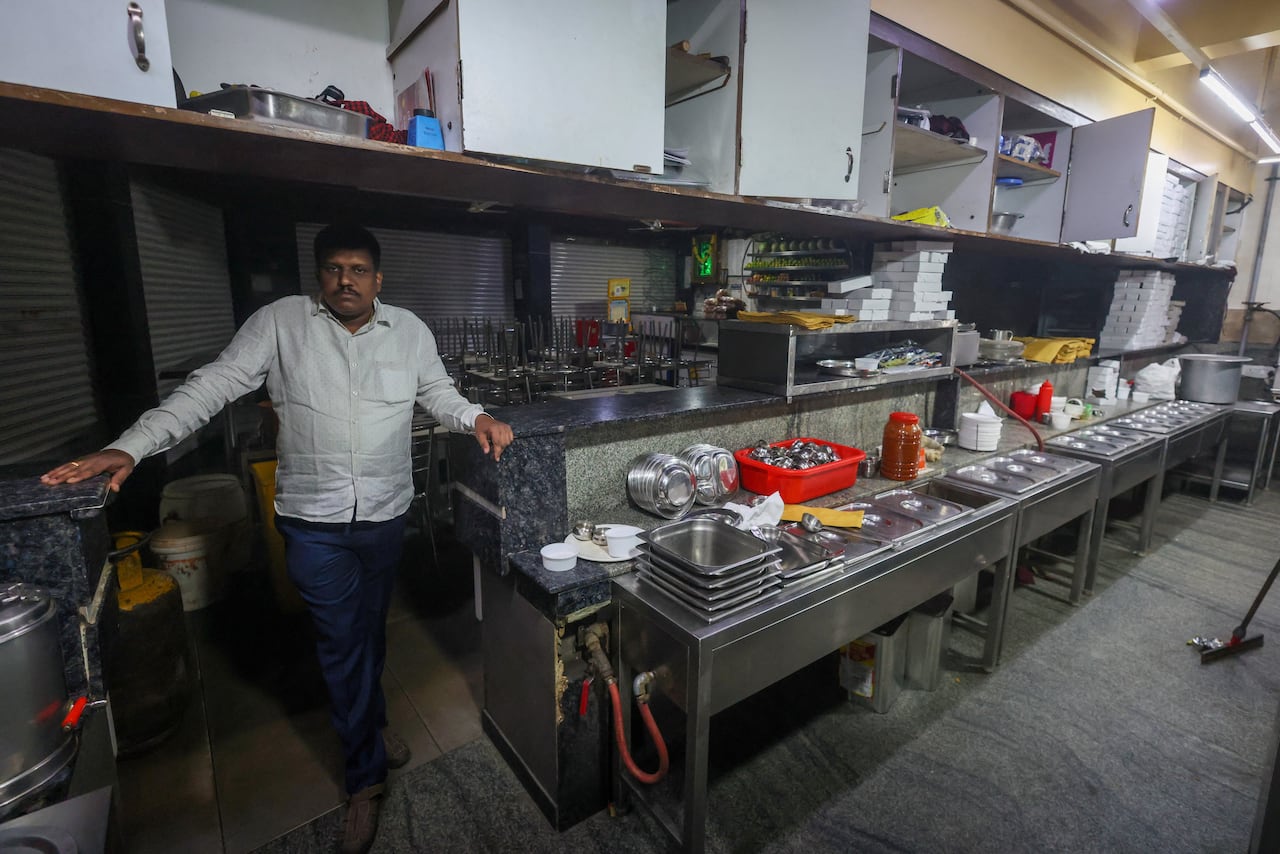 The Brahmishree Nandi Grand restaurant in Bengaluru, India, was closed for three days last week after it was unable to secure gas supplies amid disruptions to the commercial LPG supply, its owner said. (Priyanshu Singh/Reuters)Rationing and reserves
Beyond asking their residents to help, countries are also controlling how their fuel supply is used.
Sri Lanka began rationing fuel on Sunday, requiring drivers to register for a National Fuel Pass and limiting gas and diesel purchases to 15 litres a week per person.
Vietnam has asked refineries and fuel distributors to keep fuel supplies high, while Thailand is stretching its roughly two-month oil reserve and seeking other domestic energy sources.
Both countries, like India, are using price supports to shield households from rising costs.
South Korea plans to release 22.46 million barrels from its reserves as part of the International Energy Agency’s largest-ever coordinated stock draw of 400 million barrels, announced last week.
Meanwhile, Japan began releasing about 45 days’ worth of oil reserves this week to prevent fuel prices from surging as crude oil imports slow. It last released reserves after Russia’s invasion of Ukraine in 2022.
WATCH | How Iran blocking the Strait of Hormuz affects oil prices in Canada:
Why does a Middle East oil blockage affect Canadian gas prices? | About That
Andrew Chang explains how Iran’s blockage of the Strait of Hormuz — a critical oil-shipping route in the Middle East — affects the cost of energy here in Canada.
Images provided by The Canadian Press, Reuters and Getty Images