
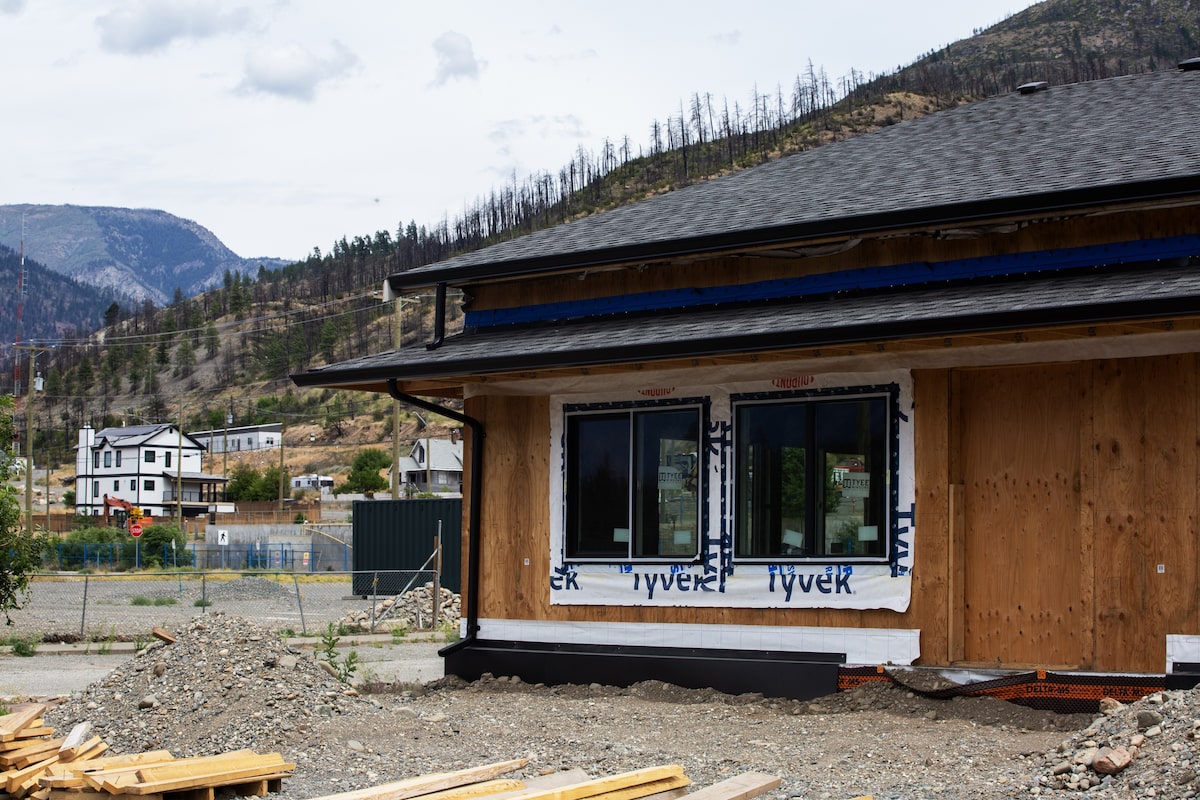
Rebuilding continues in Lytton, B.C., in July, 2025 after the townsite burned down in 2021.Marissa Tiel/The Globe and Mail
The village of Lytton, B.C., lacked adequate support from the province to rebuild after a 2021 wildfire that wiped out the community, and it was expected to lead its own recovery, a report from British Columbia Auditor-General Bridget Parrish has found.
The report, published on Tuesday, concluded the province’s legislation and policies at the time were “not sufficient” to help Lytton manage its unprecedented needs.
The province also struggled to facilitate collaboration between the village and key Indigenous governing bodies, and it lacked necessary oversight of how Lytton was spending provincial funds earmarked for recovery, the report said.
“The situation in the village of Lytton was complex and unprecedented in B.C.,” Ms. Parrish said on Tuesday at a press conference. “Nearly the entire community was destroyed,” and the government was unprepared for destruction on that scale, she said.
On June 30, 2021, just one day after Lytton hit a Canadian temperature record of 49.6 C, a wildfire tore through the village, killing two people and levelling most of the community.
The municipality’s offices were lost, along with all its records, bylaws and tools for conducting business, the report found. Lytton’s losses were compounded by the destruction of most of its businesses and property-tax base, further eroding its ability to function as a local government, much less steer its recovery on its own. Efforts to rebuild after the fire were slow, prompting protests from local residents.
Temporary homes on the Lytton First Nation in July, 2025.Marissa Tiel/The Globe and Mail
After the fire, the village’s lack of financial reserves meant it was unable to leverage the province’s two existing emergency funding mechanisms under the Emergency Program Act, according to the Auditor-General’s report.
Making matters worse, 60 per cent of property owners in Lytton did not have fire insurance, and others were underinsured. Even for those who had insurance, it did not cover the environmental remediation and archeological monitoring necessary for rebuilding efforts to take place, the report found.
Overall, the B.C. government provided more than $60-million, eventually modifying its delivery to remove administrative hurdles and make it easier for the village to comply with financial reporting requirements, the report found.
More than four years after the disaster, some rebuilding has started. A handful of buildings have gone up, and as of March, 2025, most building permits for homes and other structures had been issued, the report said.
Lytton Mayor Denise O’Connor said she wasn’t surprised by the report’s findings. Ms. O’Connor, who was elected in 2022, experienced many frustrations herself not as a politician but as a community member.
“As a resident who lost their home … we didn’t understand lack of communication,” she said.
Canada’s wildland fire agencies want better masks to stop smoke. If only it were that easy
Wildfire ash is accelerating glacier melt in the Canadian Rockies
She said she hopes the report’s findings help future governments prepare better to face disasters. “I don’t know if anybody could be prepared for it, but more prepared for it,” she said.
The Lytton area has historically been the site of an Indigenous Nlaka’pamux village and burial grounds, which are protected under B.C.’s Heritage Conservation Act.
When workers began digging up the area to prepare for the rebuild, thousands of Indigenous artifacts were uncovered, contributing to delays.
Those holdups became a significant source of tension in the community, the Auditor-General’s report found.
Today the reconstruction is finally going well, Ms. O’Connor said. Some homes have been rebuilt, along with the Legion hall. The village is hoping to have shovels in the ground to rebuild the grocery store sometime next month, she said.
“It’s been almost five years, and as community members, there’s still many in various states of trauma,” she said. “We are moving forward, and I think not without a lot of work ahead of us, because there still is.”
Tony Luck, the Conservative MLA for Fraser-Nicola, where Lytton is located, called the report “damning.” He said it pointed to the NDP government’s failure to collaborate, something he described as a pattern.
In Lytton, 60 per cent of property owners did not have fire insurance, and others were underinsured.Marissa Tiel/The Globe and Mail
“These guys threw money at the [Village] of Lytton, expected them to run with it,” Mr. Luck said. “This is a village of 280 people. There’s no capacity to do this kind of thing.”
Mr. Luck was also critical of the government’s response to rural residents outside the Village of Lytton itself, something the Auditor-General’s report did not look at specifically.
“A lot of those people felt abandoned and left out of the process,” Mr. Luck said.
In the years since the fire, public officials have not identified a cause. In 2024, the RCMP closed their criminal investigation into the fire, saying they may never be able to determine a specific cause. Mounties said only that there was no indication the fire was intentionally set.
The results of a federal Transportation Safety Board investigation released in October, 2021, found that, while a train had rolled through Lytton within 18 minutes of the fire starting, and that the fire’s origin was next to the railway tracks, there was no evidence to prove the train was responsible for the fire.
Ms. Parrish’s report found that new legislation called the Emergency and Disaster Management Act, introduced in 2023 to replace the outdated Emergency Program Act, included stipulations that will address some of the shortcomings raised in her report. The new act includes expanded recovery powers for both local and provincial governments. It also requires local governments to work with Indigenous communities on disaster and emergency plans.
In a statement, Kelly Greene, B.C.’s Minister of Emergency Management and Climate Readiness, said the province welcomes the report and will consider all its findings to help improve disaster recovery in the future.
“The report highlights how important the new Emergency and Disaster Management Act … was to better support preparedness, recovery and co-ordination between local governments and First Nations, and how it will help prevent what happened in Lytton’s recovery from happening again,” she said.