
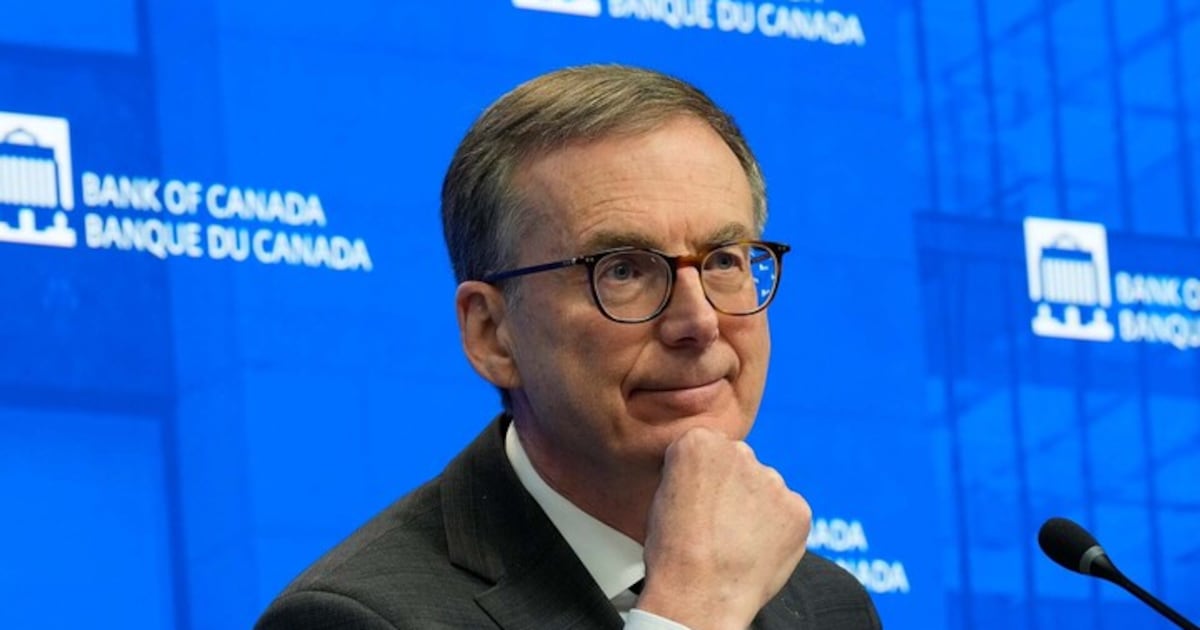
OTTAWA — The Bank of Canada held its principal interest rate at 2.25 per cent Wednesday, but warned rising oil and natural prices caused by the war in Iran will push up inflation in the short term.
In its latest monetary policy decision, Canada’s top bankers painted a picture of a weaker-than-expected economy that is facing new levels of uncertainty because of the war.
“Canada’s economy is dealing with a lot. And now, we face more volatility,” Bank of Canada Governor Tiff Macklem said in his opening remarks at Wednesday’s rate announcement.
Data released by Statistics Canada this week shows inflation dropped to 1.8 per cent in February from 2.3 per cent in January. Both reports represent data largely collected before the U.S.-Israeli strikes.
How big the war’s impact will be, the bank says, depends on how high oil prices go and how long the conflict lasts.
“Inflation in Canada has been close to the two per cent target for more than a year,” Macklem said. “But, as we’ve seen, the war in Iran is causing oil prices to move sharply higher and this will push up inflation in the short term.”
Despite that warning, central bankers are holding the policy interest rate for the third consecutive time. It was lowered in October from 2.5 per cent.
At the same time as the war risks pushing up inflation, the bank says that growth is slower than expected, with many unknowns remaining around the Canada-US Mexico Trade Agreement. For now, however, the central bank believes the risk higher energy prices will spread quickly to the prices of other goods and services appears contained.
The bank says it stands ready to respond if energy prices stay high and start to have a wider impact on the Canadian economy.
“Economic weakness combined with rising inflation is a dilemma for central banks,” Macklem said. “Raising interest rates to slow inflation could further weaken the economy. Easing interest rates to support growth risks pushing inflation well above target.”
The Bank of Canada will make its next interest rate decision on April 29. It will release the latest Monetary Policy Report, which provides a more detailed economic outlook for Canada, at the same time.
How does the economy look?
After growing 2.4 per cent in the third quarter of last year, GDP shrank by 0.6 per cent in the fourth quarter. Early data from 2026 suggests the economy is expanding again, but at a slower pace than the bank forecast in its January Monetary Policy report.
Recent data from Statistics Canada also shows the labour market is soft, with job gains late last year largely reversed in the first two months of 2026. Unemployment in February rose to 6.7 per cent.
What this means for consumers
The bank says inflation due to higher oil prices will squeeze consumers, leaving them with less income for other spending. However, higher prices will also boost income from energy exports.
Beyond that, the central bank warns transportation bottlenecks due to the closure of the Strait of Hormuz could also impact supplies of other commodities, including fertilizer, which could further pinch consumers.
Looking more broadly, the bank says stock markets are lower, credit spreads are wider and global bond yields are higher.