
Latest figures show the number of meningitis cases linked to an outbreak in Kent has fallen from 34 to 29 after some previously confirmed cases were reclassified.
Of these, the UK Health Security Agency (UKHSA) says 20 cases have been confirmed, with nine still under investigation – all cases have been hospitalised and 19 of the 20 confirmed cases are meningococcal group B (MenB).
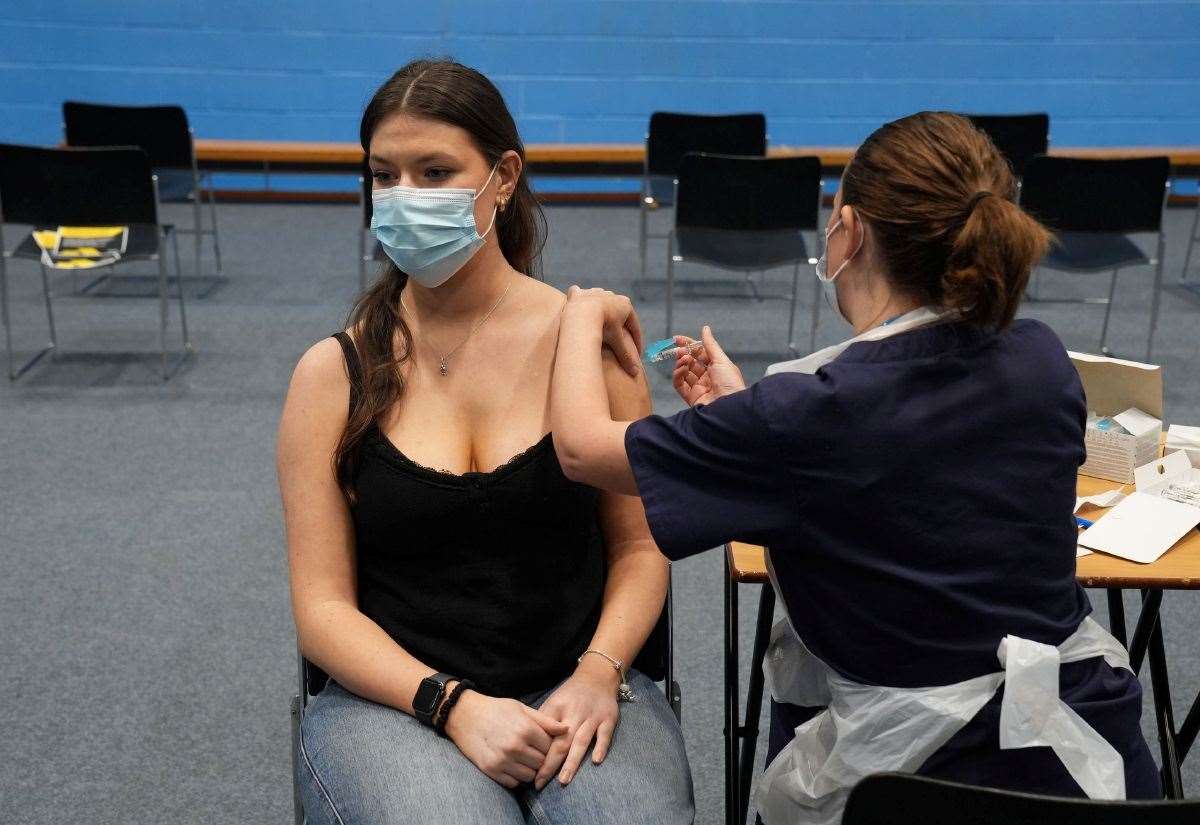
 Students receive a vaccine in the sports hall at University of Kent campus. Picture: PA
Health officials have now administered over 8,000 vaccines and given more than 12,100 precautionary antibiotics in response to the situation.
The cluster, traced to a Canterbury nightclub and linked to two deaths, has prompted one of the largest public health responses in Kent in recent years.
The vaccination programme began on Wednesday afternoon, with only those living on the University of Kent’s Canterbury campus eligible.
It has since been expanded to anyone who attended Club Chemistry between March 5 and March 15, Year 12 and 13 pupils at four affected schools, and students and staff at the University of Kent and Canterbury Christ Church University.
The nightclub has been the focus of contact tracing, with many of those who have contracted the disease having been there over three nights from March 5.
Club Chemistry, Canterbury
KentOnline is aware of cases being confirmed at Queen Elizabeth’s Grammar School in Faversham, Simon Langton Grammar School for Boys in Canterbury and Norton Knatchbull School in Ashford.
The Canterbury Academy said a pupil was being treated for Meningococcal disease in hospital.
On Friday, EKC Canterbury College confirmed one of its students is also being treated for suspected Meningococcal Disease.
It has also been confirmed that a member of staff at a Morrisons distribution centre in Sittingbourne also contracted meningitis after visiting Club Chemistry.
Dr Sherine Thomas, infectious diseases consultant at UKHSA, said: “We continue to remain vigilant for new cases and work closely with NHS England and local authorities across the country, to ensure that any new cases identified are responded to as quickly as possible.
Queues for the meningitis vaccine and antibiotic
“It’s reassuring to have seen so many eligible young people come forward for antibiotics and vaccination and we’d like to thank everyone involved in this effort so far.
“Although the risk to the wider population remains low, it is still really important that people know the symptoms of invasive meningococcal disease and seek immediate medical attention if they or anyone they know develops them.
“UKHSA continues to work with partners to identify contacts and offer necessary treatment.”
Symptoms can appear suddenly and worsen quickly.
They include: high temperature, severe headache, stiff neck, vomiting, confusion, sensitivity to light, rash and extreme drowsiness.
Queues for the meningitis vaccine and anitbiotic
Doctors have been told to maintain a “high index of suspicion” in young people with these symptoms.
Anyone concerned should seek urgent medical help immediately.
The UKHSA confirmed that eligible students who have travelled home can now request the vaccine and antibiotics immediately from their local GP, anywhere in England.
The first vaccination and antibiotic clinic opened at the University of Kent’s sports centre, with further hubs now in operation at Faversham Health Centre, Vicarage Lane Clinic in Ashford, The Flete Clinic at Queen Elizabeth the Queen Mother Hospital in Margate and at the Gate Clinic at Kent and Canterbury Hospital.
Queues for the meningitis vaccine and antibiotic
Dr Ash Peshen, the deputy chief medical officer at NHS Kent and Medway, insisted that despite huge demand, the vaccine supply is holding up, with more doses available if required.
Meanwhile, the family of 18-year-old Juliette Kenny, who died during the Kent outbreak, have joined calls for the vaccine rollout to be expanded.
The Year 13 pupil at Queen Elizabeth’s Grammar School died on Saturday, March 14 – less than 24 hours after first falling ill at her home in Faversham.
In an emotional statement released through the Meningitis Research Foundation, her father Michael Kenny said his daughter had been “fit, healthy and strong” just days before her death.
He described how the illness progressed rapidly, with Juliette first vomiting in the early hours of Friday, March 13.
The Kenny Family (left to right): Juliette, Michael, Rebecca and Florence. Picture: Meningitis Research Foundation
“There were no other symptoms at this time,” he said.
“In the morning on Friday, she was taken, by us, to our local emergency drop-in as a discolouration appeared on her cheeks.
“She was given antibiotics and sent by ambulance to A&E.
“Juliette fought bravely for hours, but despite the fantastic NHS hospital staff fighting alongside her, meningitis took her from us less than 12 hours later.
“We were with her at the end, and the last sounds that she heard were the voices of those who loved her telling her how very much loved and cherished she is.”
Juliette Kenny, a Year 13 pupil at Queen Elizabeth’s Grammar School in Faversham, died during the meningitis outbreak
Juliette died from meningitis B, a serious bacterial infection which can lead to meningitis and sepsis and can become life-threatening within hours.
The Meningitis Research Foundation (MRF) says teenagers and young adults remain one of the key at-risk groups but face a “clear protection gap” unless they pay privately.
The MenB jab was introduced on the NHS for babies in 2015, meaning the majority of young people born before then are not protected.
Juliette is one of two young people who have tragically died during the outbreak, alongside a University of Kent student.
A student receives an injection in the sports hall. Picture: Gareth Fuller/PA
On Wednesday, it was confirmed that a student at Canterbury Christ Church University has also tested positive, with the case linked to the initial cluster at Club Chemistry.
On Thursday morning, the UKHSA said cases have been confirmed in students at four schools in Kent, as well as one student at a higher education institution in London – who is confirmed to be directly linked to the outbreak.
The Health Secretary also urged sixth-formers at schools impacted by confirmed or probable meningitis cases to get vaccinated.
Wes Streeting, who visited a jab clinic at the University of Kent on Thursday, delivered a message directly to KentOnline readers amid concern from worried parents.
“If you’re a sixth form student in any college or school in Kent where confirmed or probable cases are identified, come forward to get your antibiotics and vaccination,” he said.
Students wait in line outside the sports hall at University of Kent campus in Canterbury. Picture: Gareth Fuller/PA
“I understand just how concerning this outbreak is for KentOnline readers in the community and my thoughts are with those who have tragically lost loved ones.
“To parents, students and carers in Canterbury, I want to reassure you that the risk of transmission in your community is low.
“Please attend school, university and continue life as normal – you can and should do that.”