
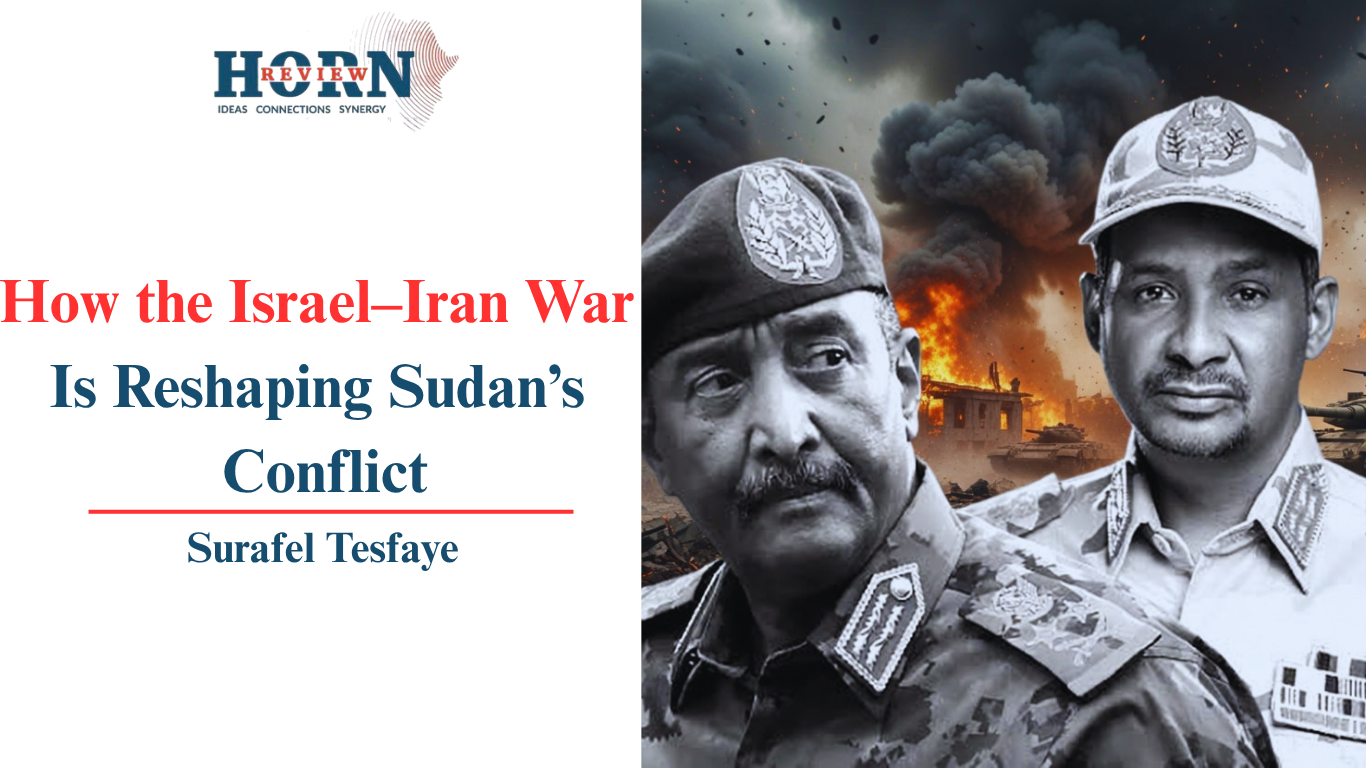
The launch of Operation Epic Fury on February 28, 2026, marked a decisive break from the assumption that Sudan’s war could remain a contained civil conflict. As U.S.–Israeli strikes on Iranian infrastructure rattled global energy markets and disrupted access through the Strait of Hormuz, Sudan’s conflict was pulled into a wider strategic environment. It is now tied not only to the struggle between the Sudanese Armed Forces (SAF) and the Rapid Support Forces (RSF), but also to the security of Red Sea routes and the search for alternative maritime corridors. In that context, Port Sudan has become more than a domestic asset: it is now a node in a broader regional contest.
That wider setting has also changed the calculations of external backers, especially Egypt, Saudi Arabia, and the United Arab Emirates. Actors that once treated Sudan as a manageable arena of influence now face a conflict whose stakes have risen because of regional instability and shipping disruption. This creates a paradox: even as attention shifts toward the larger Middle Eastern crisis, Sudan becomes more strategically important, and Port Sudan gains value as a point of leverage rather than just a port.
The U.S. State Department’s March 2026 designation of the Sudanese Muslim Brotherhood and the al-Baraa Bin Malik Brigade as Specially Designated Global Terrorists further complicates Burhan’s position. Since the October 2021 coup, Burhan has increasingly depended on Islamist networks for mobilization and political cover, especially as he moved to block the civilian transition’s effort to dismantle the Bashir-era Islamist order. The al-Baraa Bin Malik Brigade gave the SAF disciplined manpower at a moment when it was under severe strain, but that support now ties Burhan to actors that are increasingly toxic in international politics.
That designation matters because it gives Hemedti a clear political frame. He can now argue that the SAF’s survival depends on Islamist formations that Washington has officially treated as terrorist actors. This allows him to cast Burhan not simply as a military rival, but as the head of a coalition whose battlefield utility is inseparable from its diplomatic liability. In a region increasingly focused on Iranian influence, proxy warfare, and Islamist militancy, that framing becomes more powerful.
The Israel–Iran war strengthens that line of attack. It allows Hemedti to present the RSF as a pragmatic alternative to an Islamist-leaning military order along the Red Sea, even though the RSF itself remains responsible for extensive violence and coercion. The point is not that Hemedti is made more legitimate, but that the regional climate gives him a more effective way to undermine Burhan’s standing abroad. Reports of Islamist networks fighting alongside the army, along with U.S. sanctions documents linking the designated faction to the armed wing of the Sudanese Islamic Movement and to alleged Iranian IRGC support, make that accusation harder for Burhan to dismiss.
Egypt’s support for the SAF adds another layer, but it is not unlimited. Cairo sees the army as the more reliable actor in Sudan, especially given Nile politics and border security. Yet Egypt’s own economic strain sharply constrains what it can do. Pressure on the Egyptian pound, the cost of absorbing refugees, and the government’s sensitivity to internal unrest all limit its willingness to move beyond diplomatic backing. Egypt is therefore likely to prevent a total SAF collapse, but not to supply the decisive pressure needed for victory. Its support is real, but structurally constrained.
The UAE’s position is different. Its influence in Sudan rests on maritime leverage, agricultural investments, and a deep security relationship with the RSF. That partnership has served Abu Dhabi as both a proxy tool. But the confrontation with Iran has forced the UAE to reassess the costs of sustaining that posture. Missile and drone threats, disruption in the Strait of Hormuz, and the need to reroute trade all reduce Abu Dhabi’s room for high-cost external commitments. The slowdown in arms flows through the UAE’s air bridge should be read in that light: not as proof that support has ended, but as evidence that it is vulnerable to broader regional shocks.
That vulnerability matters because it links the fate of the RSF to developments far beyond Sudan. If Abu Dhabi faces greater security pressure from Iran, its ability to keep sustaining the RSF may weaken. That would directly affect the battlefield balance, especially as SAF advances in early 2026 begin to squeeze RSF supply lines. Again, the point is not that the UAE has abandoned its proxy, but that its support is less insulated than before.
At the same time, the Strait of Hormuz crisis has made Port Sudan far more important. As Gulf producers look for alternative export routes and shipping patterns are disrupted, Port Sudan’s role as Sudan’s main import-export gateway, and as the outlet for South Sudanese oil via Bashayer, becomes more valuable. This increases the strategic weight of the territory held by the SAF, which controls the port and the eastern Red Sea coast. The RSF, by contrast, remains dominant in the west and Darfur but lacks maritime access. That asymmetry gives Burhan a practical advantage: customs revenue, control over oil transit, and greater diplomatic leverage all flow from that position.
This is why the wider regional war is more likely to prolong Sudan’s conflict than to accelerate a settlement. External patrons are now juggling their own security emergencies, which makes their Sudan policies more fragmented rather than less committed. Local allies, meanwhile, continue fighting with their own incentives intact. The result is not disengagement, but greater volatility, with Sudan increasingly entangled in broader geopolitical competition.
That environment favors a war of endurance. In a context of disrupted shipping, weaker aid flows, and higher energy costs, military survival depends on logistics and revenue extraction. Port Sudan sits at the center of that system. It links territorial control to economic resources and diplomatic relevance, and that makes it harder for the RSF to claim equal standing at the negotiating table.
Burhan will likely use that fact to argue that SAF control of the port is essential to trade and energy security, and therefore to regional stability. But that argument is undercut by the SAF’s growing association with Islamist networks, especially after the U.S. designation of the Sudanese Muslim Brotherhood. Hemedti can exploit that contradiction to frame Burhan as the leader of a coalition that is both militarily necessary and politically discredited.
In the end, the Israel–Iran war does not resolve Sudan’s conflict; it reshapes it. Burhan could try to convert coastal control into indispensability, while Hemedti will try to turn Islamist associations into diplomatic liability. Neither strategy creates incentives for compromise. Instead, the regional crisis deepens the war’s external entanglements, strengthens survival logic on both sides, and makes a negotiated end even less likely.
By Surafel Tesfaye, Researcher, Horn Review