
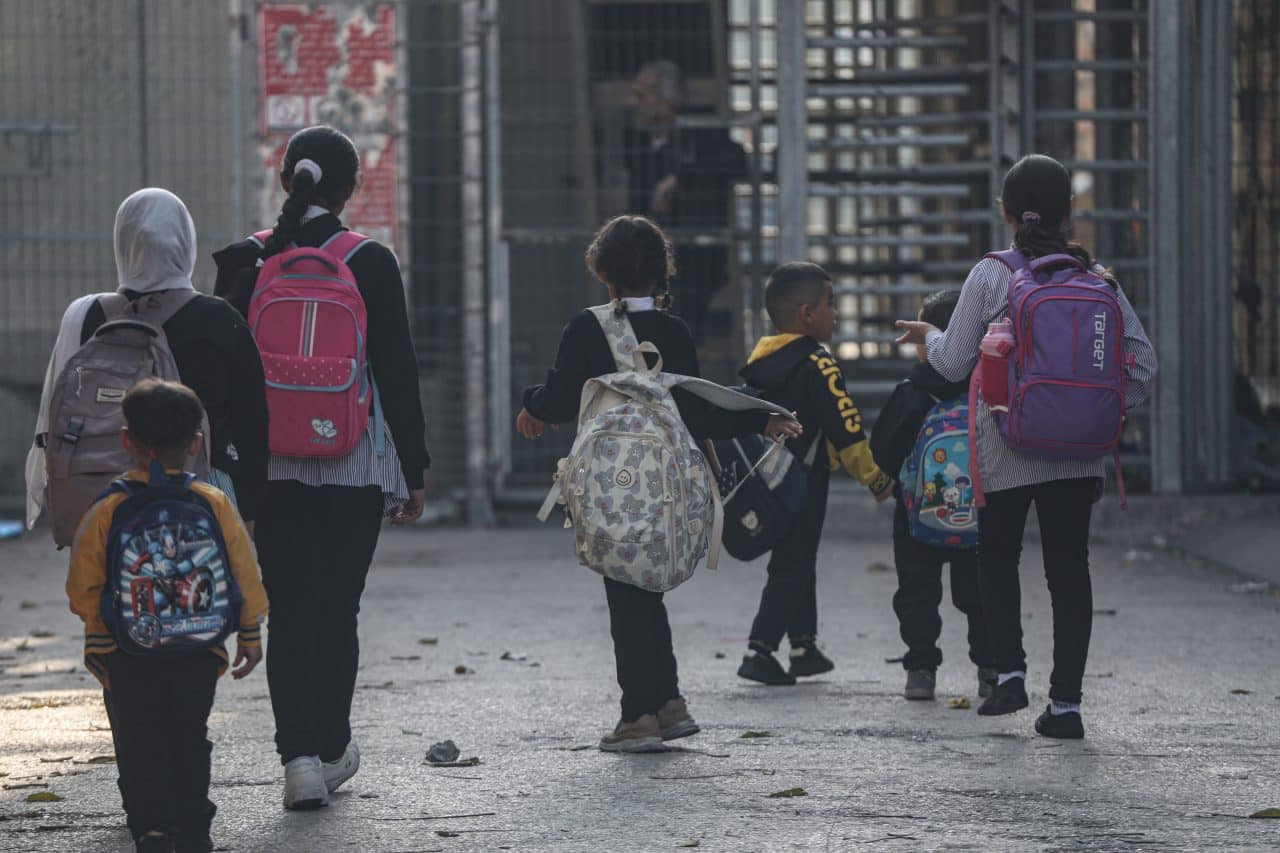
Over the last three weeks, the majority of Israeli students have been unable to attend classes amid the U.S.-Israeli war on Iran. Yet for Palestinian students in the occupied West Bank, this has been the case for the last two years.
Under financial strain, the Palestinian Authority (PA), the West Bank’s governing body, has been paying only 60% of public school teachers’ salaries since October 2023 — resulting in schools operating just three days a week.
“Some of the students left the school because they got bored only going three days a week, so they just dropped out,” Aisha al-Khatib, a school principal in Nablus, said. “Some of them are working, selling things on the streets.”
While grades 1-10 are mandatory under PA law, secondary education is not. Coupling this regulation with a minimum working age of 15, child labor can often become a desirable alternative when significant barriers to education are in place.
Yet the PA has limited control over its enforcement of child labor laws in the West Bank, since it only has administrative authority over less than 40% of the West Bank, known as Areas A and B per the 1993 Oslo Accords. The remaining 60% is classified as Area C, falling under direct Israeli military control.
Since 2019, Israel has withheld nearly NIS 8 billion (about $2.3 billion) in tax revenue owed to the PA for compensating families of Palestinian prisoners and Palestinians killed by Israeli forces. Under the Oslo Accords — the interim peace agreement signed in the 1990s between Israel and the Palestine Liberation Organization, the political representative of the Palestinian people — Israel’s Finance Ministry collects tax revenue on the PA’s behalf and transfers the funds monthly.
Without these so-called “clearing funds,” the PA has been forced to cut public-sector budgets, including education. Israel’s actions against Palestine’s financial system don’t just cripple the economy; it bleeds through every aspect of Palestinian life.
“Because the government is in a financial crisis, and the Palestinian people and the students are all under occupation, and they are all under an apartheid system, everything is targeted,” Sayel Jabareen, a Palestinian parent from Ramallah, told Mondoweiss. “The Israeli Finance Minister [Bezalel Smotrich] knows that not paying the clearance tax will lead to obstructing the work of the engineer, of the police, of the teachers — freezing the whole life.”
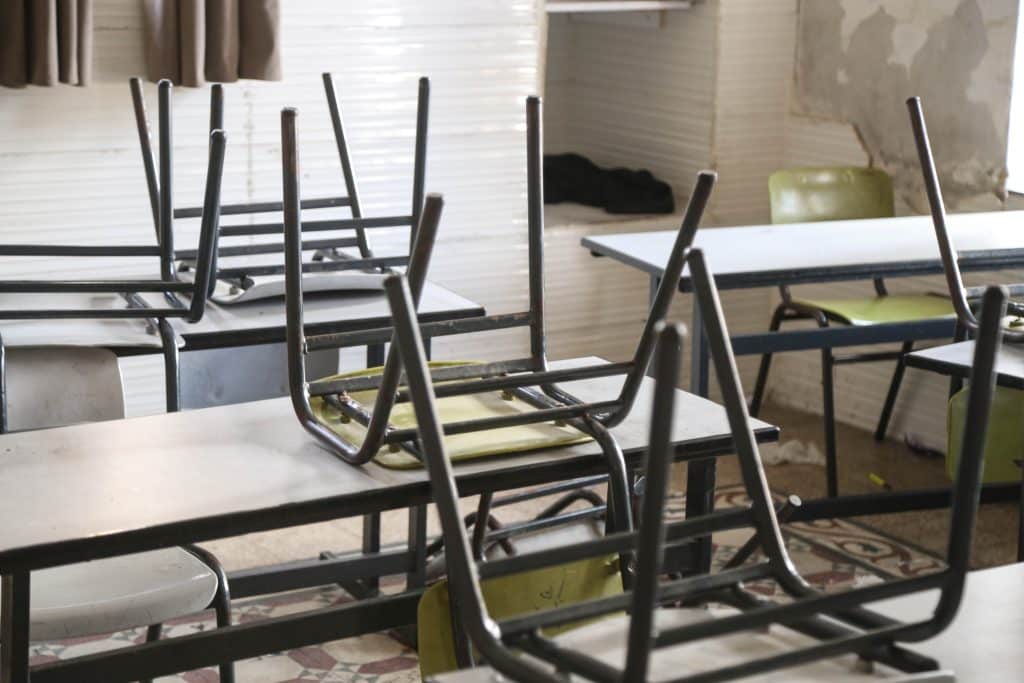 Israel’s withholding of Palestinian Authority tax funds has forced public schools to run at three days a week, affecting an entire generation of Palestinian students. (Photo: Ghassan Bannoura)
According to humanitarian relief agency World Vision, 9% of students have dropped out in the last two years. Data from the Palestinian Central Bureau of Statistics indicates the majority of students in the West Bank attend public school, at 78%, while nearly 16% are enrolled in private school and nearly 6% enrolled in schools run by the United Nations Relief and Works Agency (UNRWA). Those who continue their studies, though, spend half their school week either sleeping at home or scrolling on their phones. When they are in school, reduced class time means they’re only taught half of the required curriculum.
“The three-day solution is a bad solution because it doesn’t cover even the minimum of the education that the students need to get,” Tamara Shtayeh, a Nablus school teacher, told Mondoweiss.
Teachers now focus mainly on the core subjects of math, Arabic, and English, while spending little time on sciences and history.
“It creates a big gap between the students who already took the six days a week of education and those students who have only done three days a week,” Shtayeh said. “This created a big gap between those two generations.”
Slashed salaries aren’t the only factor disrupting West Bank education. Intensifying Israeli settler violence and increased military checkpoints across the occupied territory have made it more difficult for students and teachers to even reach their schools.
“Some of the teachers are passing through checkpoints daily,” al-Khatib, the Nablus school principal, said.
She adds that on some days, a checkpoint will be closed, leading to teacher absences. “They go back home without going to work.”
According to the UN, nearly 900 military checkpoints have been established in the West Bank after the Hamas attack on October 7, 2023.
Checkpoints are one obstacle on the commute to school; another is settler violence.
“All the villages around Nablus are under constant attacks by settlers,” said Ghassan Daghlas, the governor of Nablus.
Israeli settlers often attack schoolchildren on their way to school. In one incident in January 2026, settlers set fire to a classroom in the village of Jalud near Nablus and vandalized school property.
Frequent Israeli military raids have also affected the abilities of students to learn.
“Most of the [army] invasions that target homes in the Nablus district are targeting schoolchildren. They will take the kid along with one of the parents. They subject them to interrogation for a few hours,” Daghlas said. “What kind of mentality will the students have after this field interrogation?”
 Talal Adabiq, 15, dropped out of school to sell sweets in the Old City of Nablus to support his family. (Photo: Ghassan Bannoura)
‘A collapse of the whole educational process’
Palestinians are considered among the most highly educated refugee populations in the world, with a literacy rate of 98%. However, constant interruptions to their education are threatening that statistic.
“We are facing the problem that students have finished secondary school and are ready to go to university, but they are illiterate. They don’t even know how to write. That’s because they don’t have enough time to receive enough education,” al-Khatib said.
“It affected their academic attainment, their ambitions, and even their dreams. When we used to ask students, ‘What do you want to be in the future?’ They say, ‘I want to be a doctor or engineer.’ But now when we ask them, they say nothing, or sometimes they say, ‘I want to be a merchant,’” al-Khatib said. “There is no future on the horizon.
Without a strong academic foundation, an entire generation of Palestinians is growing up increasingly disenfranchised and with fewer opportunities.
“The whole situation is really a collapse of the whole educational process,” al-Khatib said. “We are also destroying a whole generation of students and the way they are thinking about what they want to do. They became lost.”
Without the normal routine of school and work, the fabric of Palestinian families is unraveling. Zaid Hasseneh, 10, says he tries to study on his days off, but reviewing materials at home has been challenging. Zaid’s mom, Eman Hasseneh, tries to help him with his studies, but she’s now supporting the family after her husband lost his job as a mechanic in Israel when Israel paused all work permits for Palestinians at the start of Israel’s genocidal war on Gaza in October 2023. Between work and domestic duties, she barely has time for her son.
“It affects the whole family,” Eman said. “I try to manage as much as I can with the house, but sometimes I don’t have the chance to follow up every day with him.”
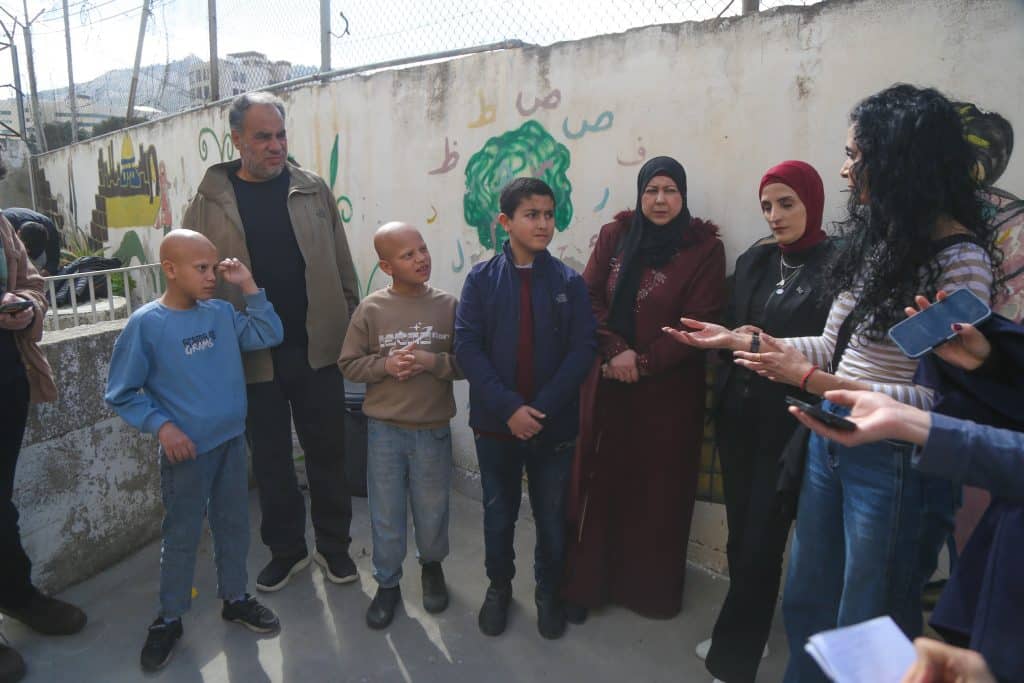 Zaid (center) stands next to his mother, Eman (right) while speaking to the press at his school in Nablus. (Photo: Ghassan Bannoura)
While public schools are only partially open, private schools remain fully operational. Yet for most Palestinian families, this alternative isn’t a viable option. Shtayeh says that some parents did transfer their children to private schools, but only a handful. “They don’t have the budget to afford moving their children to a private school,” she explained.
For Eman, it’s impossible to send Zaid to a private school on her monthly income of NIS 2,000 ($645).
The Israeli ban on work permits and the continued withholding of tax revenues have plunged the West Bank into economic collapse. Unemployment in the West Bank has soared to over 28% as of 2025, a stark increase from just under 13% before Israel’s war on Gaza.
The deepening poverty forms part of the reason why students aren’t going to school.
“There is not enough work for their parents, and there is not enough money,” Al-Khatib said. “So children feel that they do not want to go to school because they can instead go to the streets to work, to bring money and help their families in paying for the costs [of living].”
This is why Talal Adabiq, 15, dropped out. He makes about NIS 40-50 ($13-16) per day selling sweets in the Old City of Nablus to support his family.
“I don’t really like school, and I prefer working,” Adabiq said.
This disillusionment with education, al-Khatib says, is a reflection of the West Bank’s wider economic problems.
“This has really affected their motivation to go to school,” al-Khatib said. “The economic situation of the Palestinian families has affected them. Many of the kids dropped out to go into the labor market.”
Yet educators like al-Khatib warn that kids dropping out of school will have lasting consequences — for them, and for society as a whole.
“They have this free time they do not know what to do with,” Al-Khatib said. “Not only staying in the house, maybe going to the streets…maybe thinking about becoming violent because they want to do something. They’re not living under a normal kind of life, so it means destroying the nation.”
Jessica Buxbaum
Jessica Buxbaum is a freelance journalist based in Jerusalem covering Palestine and the Israeli occupation. @jess_buxbaum.