
In the early 1970s, with a population of just over 400,000 people, Calgary outgrew its only water treatment plant, despite recent expansions.
So, the city built a second one. The new, larger Bearspaw Water Treatment Plant alleviated the burden on the existing Glenmore Water Treatment Plant, while increasing Calgary’s overall water processing capacity.
Fifty-five years later, Calgary’s population is four times what it was before, and Calgarians are once again relying almost entirely on a water treatment plant it outgrew decades ago.
“It’s our smaller plant. It provides roughly 40 per cent of Calgary’s drinking water in normal times, but right now it’s more like 80 per cent,” said Kevin Colbran, the City of Calgary’s manager of water treatment.
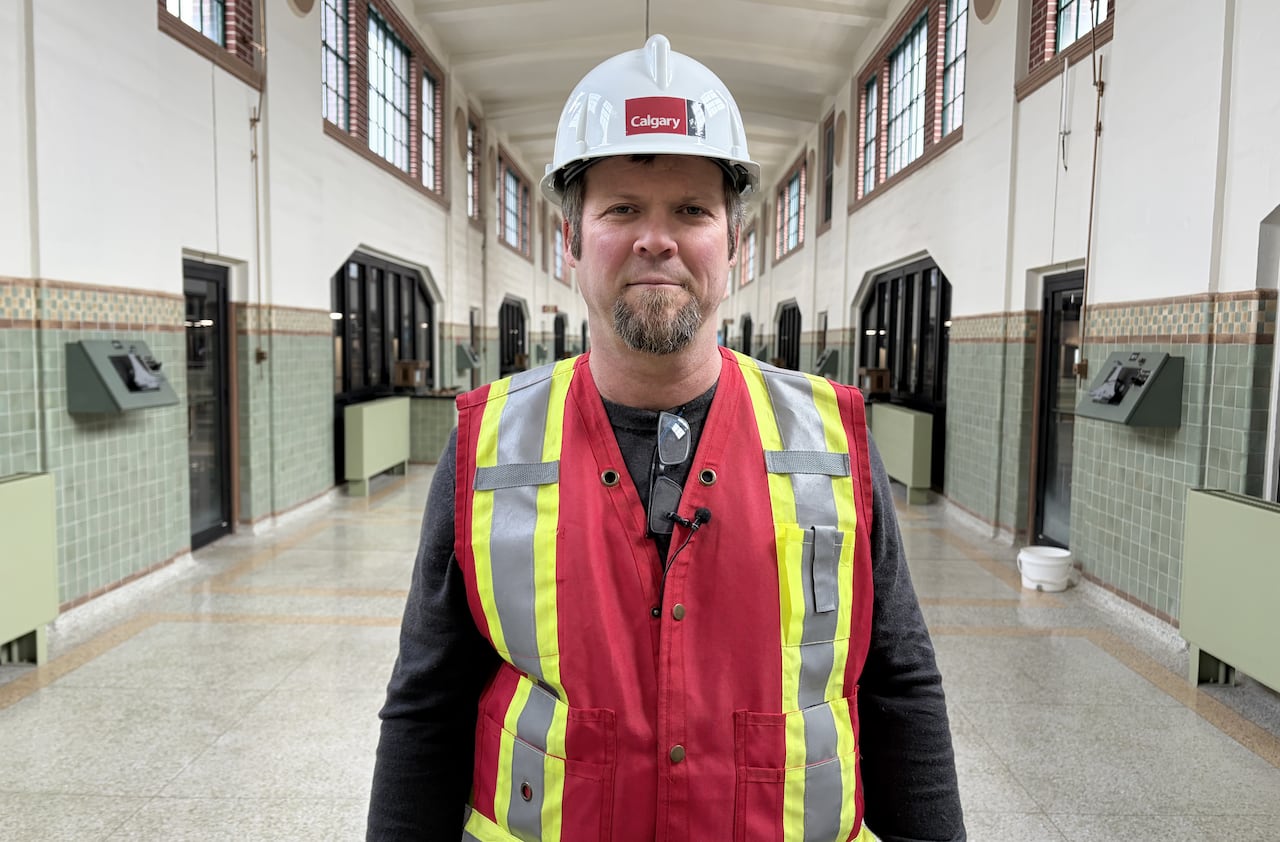 Kevin Colbran, the City of Calgary’s manager of water treatment, inside the ‘filter gallery’ at the Glenmore Water Treatment Plant. (Karina Zapata/CBC)
That’s because the Bearspaw feeder main — the giant pipe that transports water from the Bearspaw plant to people’s homes — is currently out of service for reinforcement work after it ruptured twice in less than two years.
As Colbran explains, there’s nothing wrong with the Bearspaw Water Treatment Plant. But with the feeder main down, only smaller pipes are able to transport water out of it, so it’s only supplying 20 per cent of the city’s potable water for now.
That means the Glenmore Water Treatment Plant is running at maximum capacity, pumping out up to 400 million litres of clean water each day to people’s taps.
It also means nothing there can be shut down for maintenance.
So what happens if something goes wrong?
“We have critical spares, backup systems available should something occur, because the plant is maxed out right now,” said Colbran. “Having everything in tip top condition and having plans for backup is something we’ve been working on continuously.”
From the Glenmore Reservoir to your home
Colbran met up with CBC News at the Glenmore plant on what should’ve been one of his days off, but he said those are hard to come by while the Bearspaw feeder main is shut down.
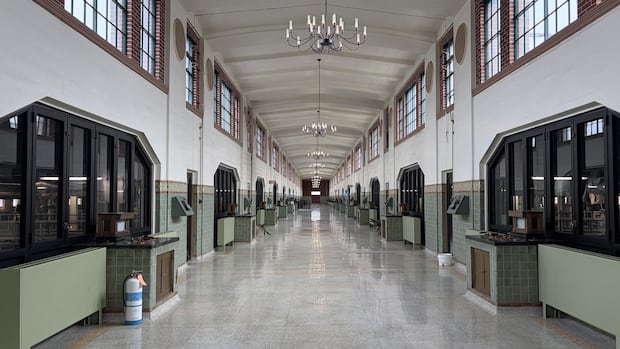
He couldn’t give us a full tour of the plant for security reasons, but he did show us the filtration building. It was the first building created at the water treatment plant, constructed in 1933.
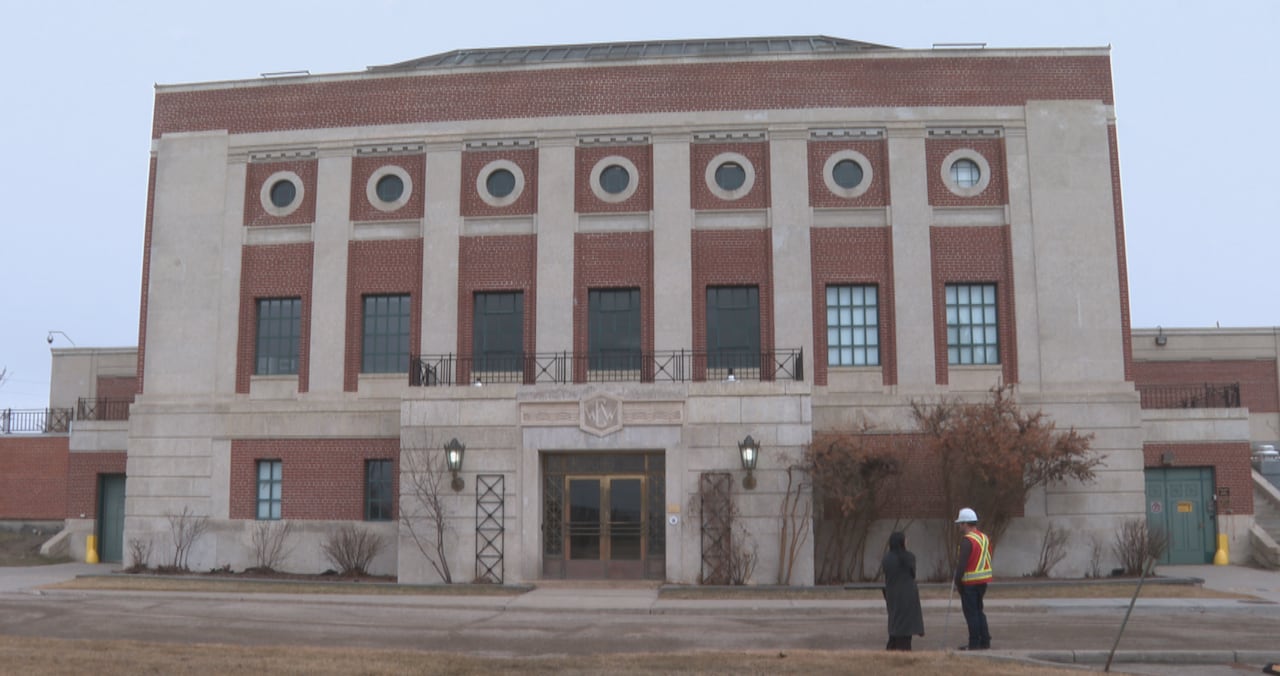 The filtration building at the Glenmore Water Treatment Plant is now protected as a Municipal Historic Resource, meaning it can’t be demolished. (Chelsey Mutter/CBC)
It’s a three-storey brick and stone Art Deco building. It was protected as a Municipal Historical Resource in 1992.
Inside, the walls are marble-clad. Upstairs is the “filter gallery.” Polygonal windows look onto pools filled with water. The water flows through crushed coal and sand in filtration beds, removing leftover particles like silt, debris and micro-organisms.
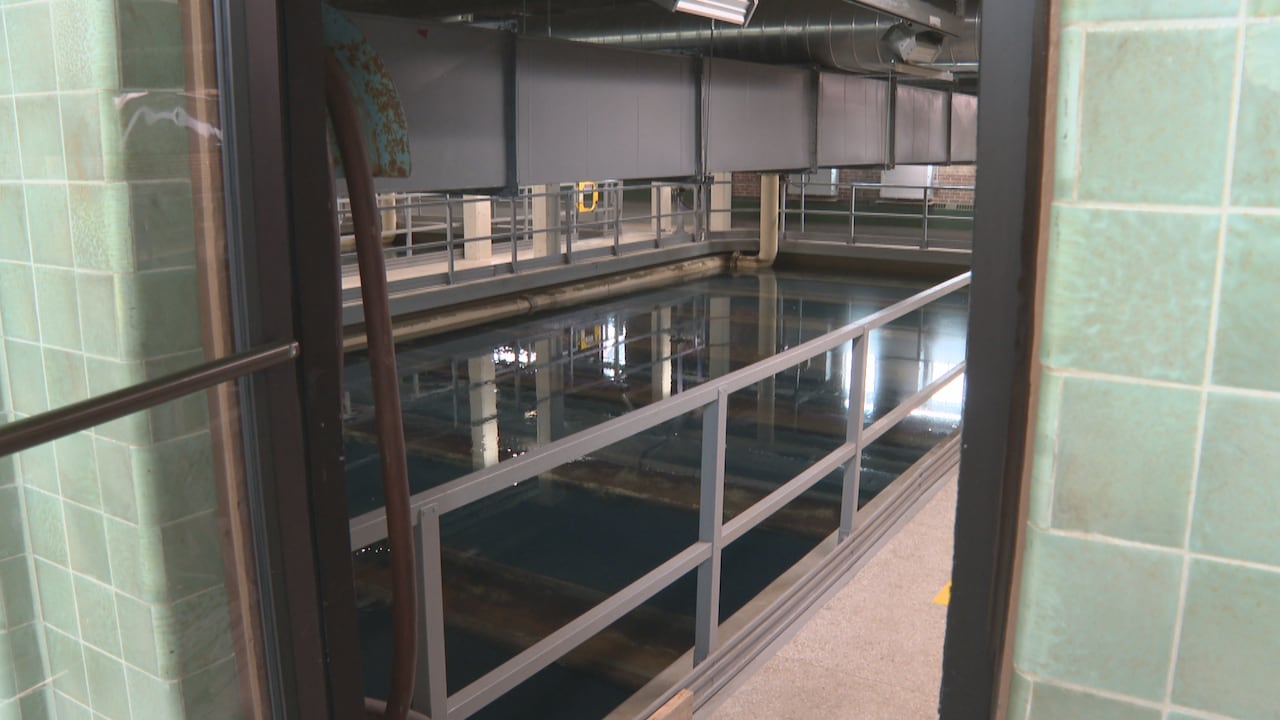 In these pools, water flows through crushed coal and sand in filtration beds. (Chelsey Mutter/CBC)
This is the middle part of the roughly 15-hour treatment process.
All water treated at this plant comes from the Elbow River. It pools at the Glenmore Reservoir in the southwest and is pumped through the Glenmore Dam into the plant.
It goes through a “pre-treatment process,” where particles are removed. It’s then disinfected with chlorine.
After filtration, the water is fluoridated, moved into an onsite storage reservoir, quality tested and finally sent to homes and businesses across the city and beyond.
The plant runs 24 hours a day, seven days a week.
There isn’t a second it isn’t being monitored, said Colbran.
Lessons learned
At a recent update of the Bearspaw feeder main shutdown, the city’s general manager of infrastructure said the Glenmore plant is in “good shape” and thanked crews working around the clock to keep it running.
In this latest round of water restrictions, city officials are repeatedly asking people to help keep overall usage under 500 million litres of water daily.
That target is up from 485 million litres daily during previous rounds of water restrictions.
“This was a planned repair. We had time to prepare the plant so that it was ready to take on the load,” said Michael Thompson last Thursday.
WATCH | Are AI data centres hurting Calgary’s water supply?:
Are AI data centres hurting Calgary’s water supply?
Calgary’s renewed water restrictions had social media users speculating if AI is to blame. CBC’s Helen Pike breaks down the facts.
What exactly does that mean?
Colbran said after the last feeder main break at the end of December, they found ways to move water around the city more efficiently.
“We made some modifications to the transmission system — what we call a bypass. It does require infrastructure work, construction work to be able to move that water differently through the system,” said Colbran.
Engineering professor Kerry Black said by using that bypass, they’re essentially rerouting the water.
“The water that is servicing from the Glenmore Reservoir and the water treatment plant is able to get to us a little bit faster and more efficiently,” said Black, an associate professor and Canada Research Chair at the University of Calgary’s Schulich School of Engineering.
Fear of a repeat
Black, who has been keeping a close eye on Calgary’s water situation, said Calgarians shouldn’t be concerned about the Glenmore plant — even while it’s working this hard.
“There’s a normal element of risk built into everyday life, but I’m not worried about the quality of our treatment plant right now,” she said.
Colbran laughs when asked what his worst fear is, as the one in charge of this whole operation.
“When the feeder main is back in service, getting the call sometime in the evening — much like we did on the last break — that the feeder main has again let go and we need to ramp Glenmore up immediately to maximum production.”
The Bearspaw feeder main should be back in service in the next couple of weeks, taking some pressure off this treatment plant for several months. But there’s another shutdown scheduled in the fall.
Like many others across the city, Colbran said he’s hanging onto hope that the feeder main will be replaced by the end of the year as scheduled.
“Then we can take the pedal off this maximum output at Glenmore here.”