
The UK’s is set to lead a coalition of countries including the France to help sweep the Strait of Hormuz for mines and reopen it to oil tanker traffic, according to a report.
London is working to organize a summit of 30-some nations that had agreed to provide “appropriate efforts” to reopen the strait, according to Politico.
Additionally, the UK said it is looking to send a either a Royal Navy mine sweeper ship or hire a civilian ship that can launch mine sweeping drones into the area, The Times reported.
Iran still has at least a dozen mines in the narrow shipping lane that are imperiling commercial shipping traffic, according to a report.
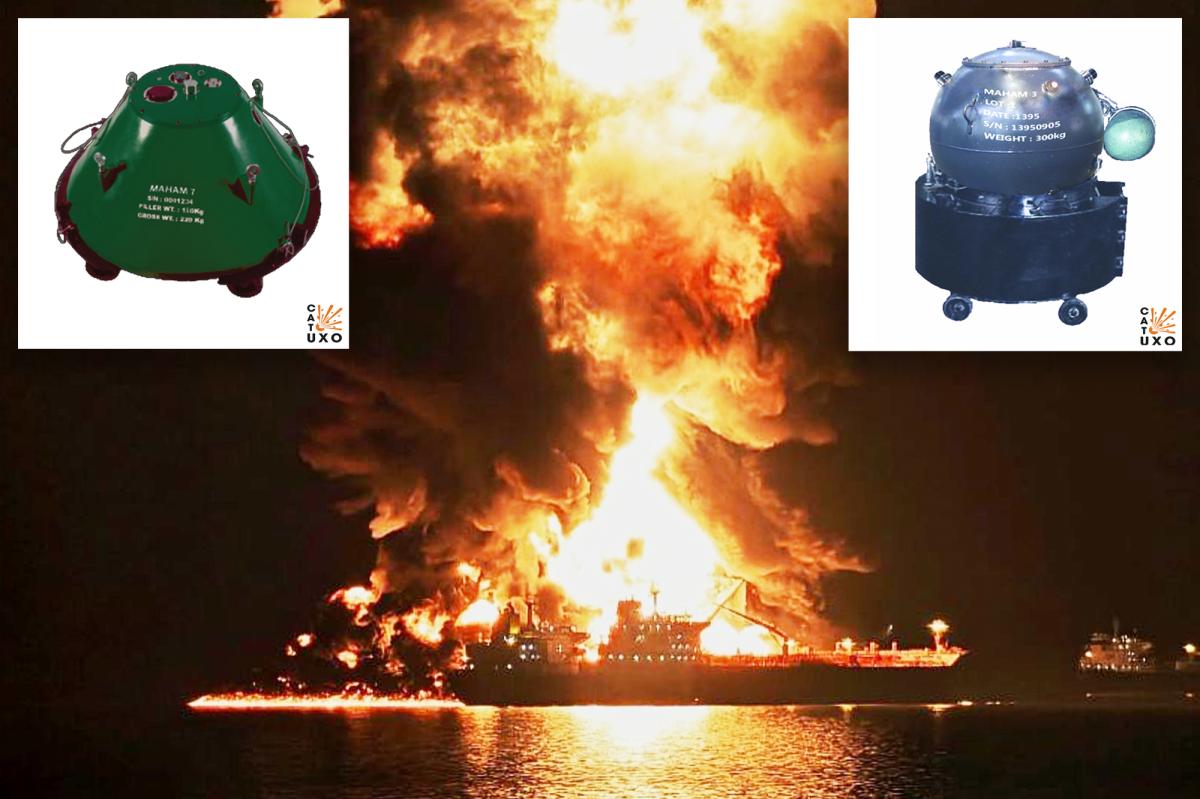
The underwater explosives were identified as Iranian-manufactured Maham 3 and Maham 7 limpet mines, US officials told CBS News.
The explosives threaten any ship that dares cross the Strait of Hormuz, effectively shutting down a key trade route for the transport of 20% of the world’s oil supplies.
Tankers sail in the Persian Gulf near the Strait of Hormuz. REUTERS
However, the British government believes there is a safe path through the strait, according to a new report, as a few tankers made it safely through the chokepoint.
The Maham 3 mines, which weigh more than 660 pounds, use magnetic and acoustic sensors, with the bomb capable of attaching itself to ships that come within 10 feet, according to the Collective Awareness to Unexploded Ordnance website.
The Maham 7, also known as a “sticking mine,” is a compact limpet mine that rests along the seabed before employing acoustic and magnetic sensors to attack medium-size vessels and landing craft.
The 485-pound mine, first shown to the public in a 2015 arms exhibition, is known to be a hard-to-detect naval weapon capable of scattering incoming sonar to thwart minesweeping systems.
An Iranian Maham 3 sea mine. cat-uxo
The US military said last week at least 44 Iranian mine layers have been destroyed since the war began.
While an official count is unavailable, Iran is believed to have between 2,000 and 6,000 naval mines in its stockpiles.
Despite the dangers, Indian, Pakistani and Chinese ships have been able to cross the Strait of Hormuz without triggering any mines or being attacked by Iranian drones.
An Iranian Maham 7 limpet mine. cat-uxo
Huax, a German-Italian maritime intelligence firm, reports that ships that have made the journey were broadcasting a secret signal that identifies the vessels as clear for passage, the Times reported.
Follow The Post’s coverage of the United States’ airstrikes on Iran:
“Whether they are signals to Tehran or internal fleet identifiers, we cannot confirm, but the signals are coordinated across multiple vessels,” Arsenio Longo, a maritime intelligence expert at Huax, told the outlet.
An oil tanker burns after being hit by an Iranian strike in the ship-to-ship transfer zone at Khor al-Zubair port near Basra, Iraq, on March 11, 2026. AP
“Indian and China-linked vessels appear to be transiting or staging for transit while virtually all other commercial traffic remains blocked,” he added.
Tehran has said any countries except for the US, Israel, and their allies are allowed to pass through the strait, triggering a standoff with President Trump over the weekend.
The president has demanded Iran open the Strait of Hormuz following spikes in oil costs, with Tehran and Washington allegedly holding indirect talks to end the war.
Cargo vessel Ali 25 in the Gulf near the Strait of Hormuz on March 22, 2026, in northern Ras al Khaimah, United Arab Emirates. Getty Images
In addition to the mine sweepers, the UK would deploy Type 45 destroyers to help protect tankers in the strait, the Times reported.
The reports out of the UK are the latest indication that US allies are beginning to work with Trump on restarting oil trade through Hormuz — despite many vocally opposing the war.
Thirty nations have signed a statement pledging that they would help to safeguard the strait.
Among those countries are France, the UAE, Germany, Italy and the Netherlands.
Iran has warned that the Strait of Hormuz will remain closed until the US and Israel agree to end the war and provide reparations to Tehran.