
Iran has “rejected” Trump’s 15-point ceasefire proposal, Iranian state television has claimed
Earlier on Wednesday an Iranian military spokesperson mocked talks of a deal and vowed fighting would continue
The US is preparing to deploy two Marine units with around 5,000 Marines to the region
Israel began new attacks on Iran targeting government infrastructure on Wednesday morning, as Tehran launched strikes across the Gulf region
A Thai oil tanker passed through Strait of Hormuz with assistance from Iran and Oman authorities
Oil prices dropped by around 6% during the early hours of Wednesday, bringing it back under $100 (£74.74) a barrel
Iran has dismissed an American plan to pause the war in the Middle East, and launched more attacks on Israel and Gulf Arab countries.
The Trump administration’s 15-point ceasefire plan was not well received by Iran, an anonymous official has told state TV.
“Iran will end the war when it decides to do so and when its own conditions are met,” Press TV quoted the official as saying. The official added Tehran will continue its “heavy blows” across the Mideast.
The US issued the proposed agreement on Tuesday, calling for Iran to roll back its nuclear programme, limit its missiles capabilities and restore access through the Strait of Hormuz, in return for sanctions relief and civilian nuclear cooperation from the US, Pakistani officials said.
Iran would also need to agree to be monitored by the International Atomic Energy Agency, an intergovernmental forum that promotes the peaceful use of nuclear energy worldwide.
The plan was submitted to Iran by intermediaries from Pakistan, who have offered to host renewed negotiations between Washington and Tehran.
An anonymous official told Iranian state television’s English-language broadcaster the regime rejected the proposal on Wednesday.
US President Donald Trump has already claimed that Iran had agreed to “never have a nuclear weapon” while speaking to reporters in the White house on Tuesday, stating that the countries are “in negotiations right now”.
Subscribe for free to our weekly newsletter for exclusive and original coverage from ITV News. Direct to your inbox every Friday morning.
But the speaker of Iran’s parliament, Mohammad Bagher Qalibaf, has denied any direct talks are taking place, while an Iranian military spokesman mocked the attempt at a deal.
“Have your internal conflicts reached the point where you are negotiating with yourselves?” said Lt. Col. Ebrahim Zolfaghari, a spokesman for the headquarters, said in a prerecorded video aired on state television on Wednesday.
“The one claiming to be a global superpower would have already gotten out of this mess if it could. Don’t dress up your defeat as an agreement. Your era of empty promises has come to an end.”
Zolfaghari went on to say the fighting would continue, stating that stability in the region was only guaranteed by “the strong hand of our armed forces”.
“Our first and last word has been the same from day one, and it will stay that way: Someone like us will never come to terms with someone like you. Not now, not ever,” Zolfaghari said of the US.
First responders inspect a destroyed car in Tabriz, northwestern Iran on March 24 Credit: AP
US sending more troops to Middle East
It comes as the Pentagon is preparing to deploy two Marine units that will add around 5,000 Marines and thousands of sailors to the region in the coming days, a person with knowledge of the move who spoke on condition of anonymity told AP.
Trump is making the manoeuvre – which will supplement some 50,000 troops already in the region – to give himself “max flexibility” on what to do next, they said.
The source also said Israeli officials, who have been advocating for Trump to continue the war against Iran, were surprised by the US ceasefire plan.
Trump had previously given Iran a 48-hour deadline to open the Strait of Hormuz – a vital oil shipping waterway – before he targeted the nation’s power plants, which he extended by five days on Monday.
Iran fired drones at Kuwait, and strike sirens were heard in Israel and Bahrain Credit: AP
Thai oil tanker passes through Strait of Hormuz
A Thai oil tanker has transited through the Strait of Hormuz safely after Iran told the UN Security Council “non-hostile” ships would be allowed to pass.
Posting on X on Tuesday evening, Iran’s foreign ministry said “non-hostile vessels, including those belonging to or associated with other states” could use the waterway, “provided that they neither participate in nor support acts of aggression against Iran and fully comply with the declared safety and security regulations”.
Energy company Bangchak Corporation confirmed a crude oil tanker – which had been anchored in the Persian Gulf since March 11 – had made it through the passageway and was now on its way to Thailand.
In a statement published Tuesday, it thanked the Thai government for coordinating with authorities in Iran and Oman.
“The tanker is currently on its way across the Indian Ocean and is expected to deliver crude oil to Thailand in early April,” the company said.
“Bangchak continues to monitor the situation closely and hopes the remainder of the journey will proceed smoothly, while prioritising safe transportation and steady energy supply for the country.”
Israel launches attack on Iran, as Gulf nations struck overnight
Early on Wednesday, the Israeli military announced it had begun new wide-scale attacks on Iran, targeting government infrastructure, with witnesses reporting airstrikes in the northwestern city of Qazvin.
Missile alert sirens also began early in the morning in Israel and Bahrain as Iran launched its own attacks, while Saudi Arabia said it had destroyed at least eight drones in its Eastern Province.
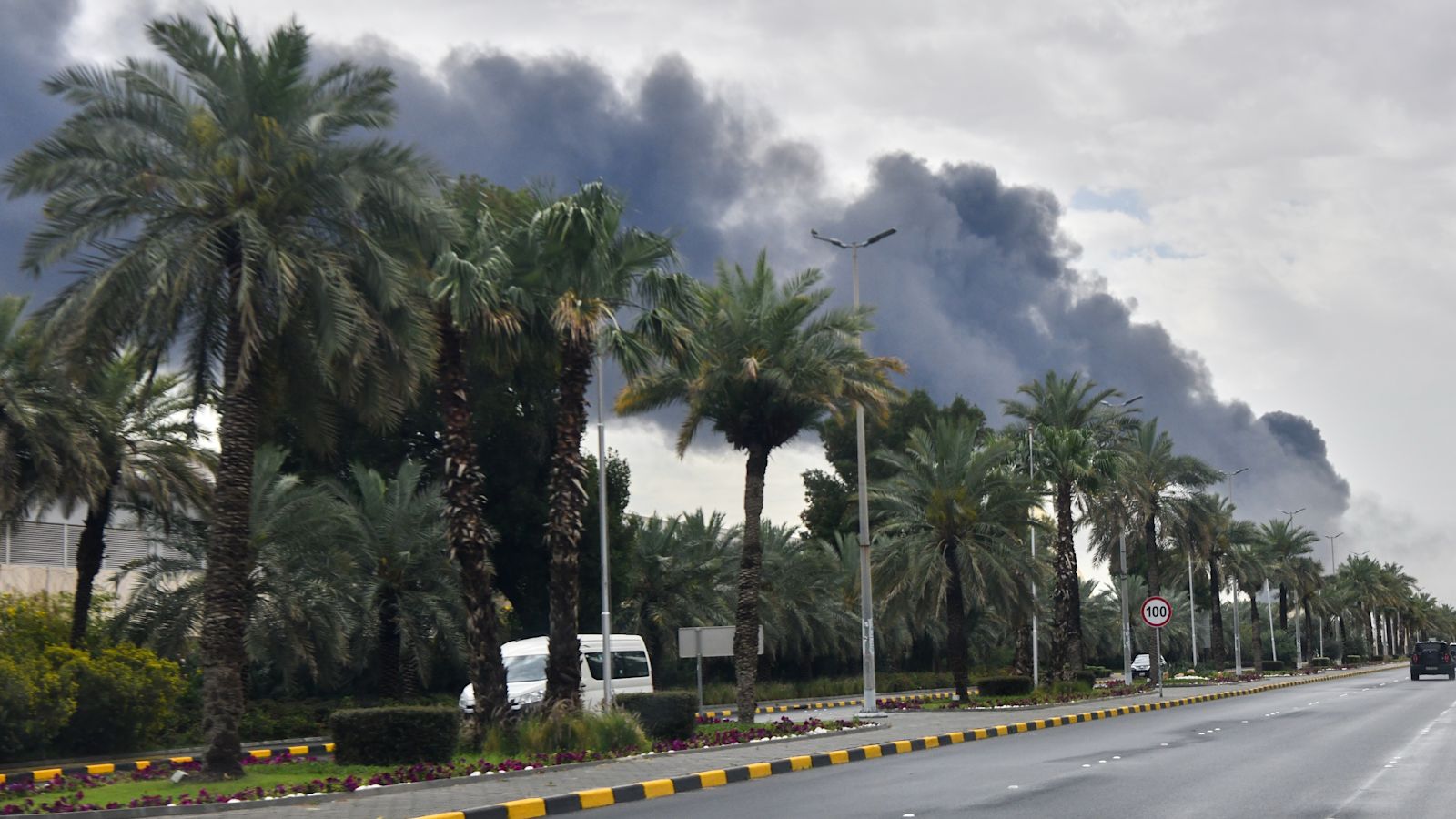
Kuwait said it shot down multiple drones overnight, but one hit a fuel tank at Kuwait International Airport, sparking a fire.
Israeli military warned people in seven southern suburbs of Beirut, Lebanon, to evacuate on Tuesday night, as it continued to strike what it describes as “Hezbollah infrastructure” in the area.
Oil prices fluctuate as US and Iran disagree on ceasefire claims
Brent crude oil – the benchmark for oil prices – dropped nearly 6% during the early hours of Wednesday morning as Trump spoke of plans for a ceasefire with Iran, bringing it under $100 (£74.74) a barrel.
Prices then began fluctuating again after Iran’s military spokesperson dismissed Trump’s claims of negotiation.
Before the US-Israeli war with Iran, oil prices had not been above $100 a barrel for four years.
Reporting History sees journalists join News At Ten anchor Tom Bradby to revisit their remarkable on-the-day reports of the defining events of the modern age. Listen to the episodes below…