
It suggests that the emergence of Iran Parliament Speaker Mohammad Bagher Ghalibaf’s name is less about his standing among Iranians and more about how Washington is reading power inside the Islamic Republic.
US President Donald Trump on Monday indicated he was in contact with a senior Iranian figure without naming a formal office. “We’re talking to a top person in Iran,” he said, describing the contacts as “very good and productive,” remarks that coincided with his decision to delay strikes on Iran’s energy infrastructure.
Ghalibaf rejected the suggestion outright. “There has been no negotiation with the United States,” he wrote on X, adding that such reports were being circulated “to manipulate financial and oil markets.”
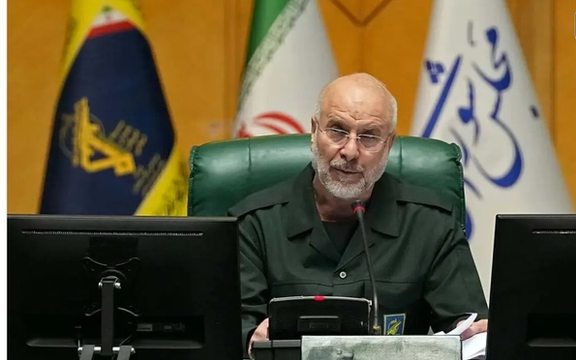 Mohammad Bagher Ghalibaf appears in IRGC uniform while presiding over a parliamentary session, in a symbolic show of support following the Guard’s designation by the EU as a terrorist organization.
A test channel, not a political endorsement
What places Ghalibaf in this discussion is not legitimacy or popularity, but how he fits a specific operational need.
Washington appears to be searching for a test channel – a figure embedded enough within Iran’s power structure to determine whether pressure has shifted internal calculations, yet visible enough to engage without committing to a formal negotiation track.
Ghalibaf fits that role. As parliament speaker with a background spanning the Islamic Revolutionary Guards Corps, the police, and executive administration, he sits at the intersection of political authority and coercive power. Over time, he has also sought to project a more technocratic and managerial image, particularly during election campaigns.
That combination makes him more legible to Washington than figures whose authority is either opaque or purely symbolic.
 Weaponizing ambiguity: how US shadow diplomacy may be fracturing Iran regime
Who can deliver in Iran’s system?
The central question for US policymakers is not who represents Iran – but who can act. President Masoud Pezeshkian, despite holding elected office, is widely seen as constrained by unelected centers of power. At the same time, killing of former Supreme Leader Ali Khamenei and uncertainty around leadership structures has made it difficult to identify a single decisive authority.
In that environment, Ghalibaf emerges as a practical option. He connects political, military, and administrative networks and is positioned to transmit signals across factions.
 Mohammad Bagher Ghalibaf sits in a pilot’s cockpit during a night-time flight, reflecting his background as a former IRGC air force commander.
This also aligns with a broader pattern in Trump’s foreign policy. His approach has consistently favored leaders perceived as decisive and capable of enforcing outcomes.
Engagements with figures such as Abdel Fattah el-Sisi, Vladimir Putin, and Kim Jong Un reflect a preference for authority and deliverability over institutional legitimacy.
Ghalibaf fits that pattern as well – not because of what Trump put as being “respectable,” but because of perceived functionality.
 Reports of Ghalibaf-Trump channel sparks political storm in Tehran
 Lipstick on the IRGC: why Ghalibaf must not be rebranded as a pragmatist
Limits of power and the legitimacy gap
Yet the same factors that make Ghalibaf useful to Washington also define his limits. Iran’s strategic decisions are not delegated to individual officials. Authority remains concentrated within tightly controlled security and leadership circles, with networks aligned with the IRGC shaping core policy direction.
Recent statements from these circles have reinforced resistance to negotiations under pressure, with some going further by demanding concessions rather than offering them.
 From ultimatum to pause: confusion and fear rise over Trump’s Iran signals
Mohsen Rezaei, a military adviser to the country’s new Supreme Leader Mojtaba Khamenei, warned that escalation would be met with force. “If they make this mistake [hitting Iran power plants], we will paralyze them and sink them in the Persian Gulf,” he said in a televised interview Monday night.
Rezaei added that “the war will not end until sanctions are lifted, compensation is paid, and legal guarantees are provided that aggression against Iran will not be repeated,” ruling out any ceasefire under current conditions.
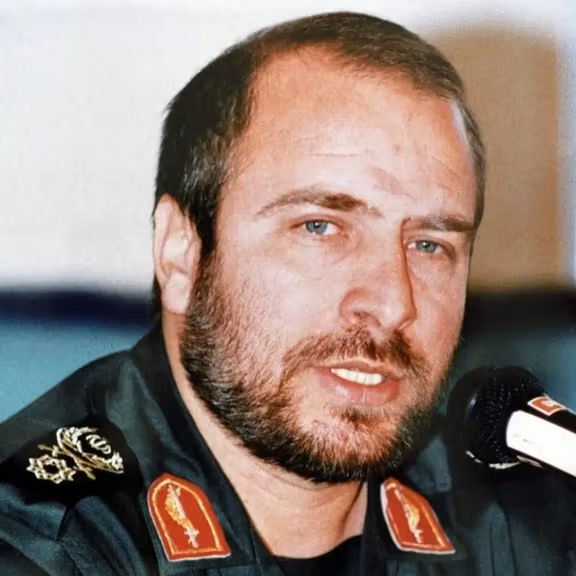 Mohammad Bagher Ghalibaf in IRGC uniform during his tenure as commander of the IRGC Air Force in the 1990s.
His remarks feature the broader reality facing any potential channel: even if figures like Ghalibaf are engaged, key security actors continue to set maximalist terms that leave little room for negotiation under pressure.
In that context, even a well-positioned figure like Ghalibaf does not have the authority to shift policy. At most, he can serve as a conduit – not a decision-maker.
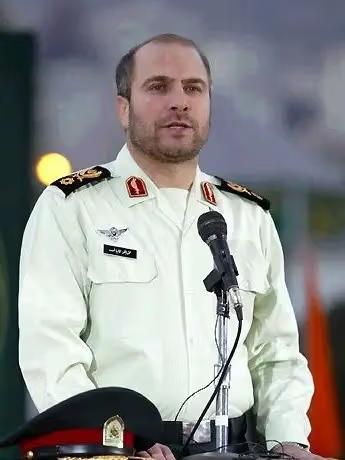 Mohammad Bagher Ghalibaf served as Iran’s chief of police from 2000 to 2005.
Public perception
Ghalibaf’s record includes involvement in past crackdowns, including student protests, as well as longstanding corruption allegations. These factors have shaped his image within Iranian society and limit his credibility beyond state structures.
This creates a structural contradiction. A figure who may be functional within the system is not necessarily acceptable outside it.
This gap becomes more pronounced when viewed against recent unrest. Large-scale protests in January, met with a heavy security response in which Ghalibaf was part of the broader system response, showed the depth of public anger toward figures associated with the state.
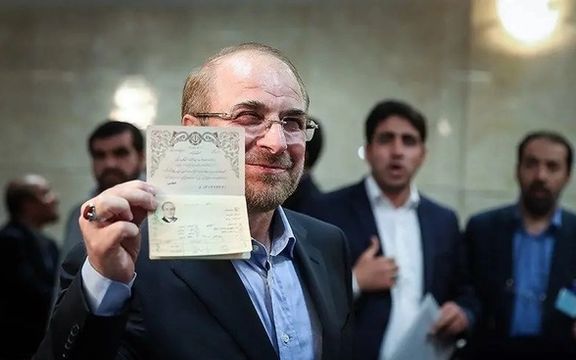 Mohammad Bagher Ghalibaf made three bids for the presidency of Iran.
Slogans widely heard during those demonstrations – including “This is the final battle, Pahlavi will return” and “Reza Pahlavi is the national slogan” – showed that the opposition is widely rallying around the exiled son of Iran’s last Shah, rejecting any one associated with the Islamic Republic.
In that context, any attempt to elevate a figure such as Ghalibaf – even as a de facto interlocutor or transitional figure – would likely face immediate resistance from a public that has already signaled its rejection of the existing power structure.
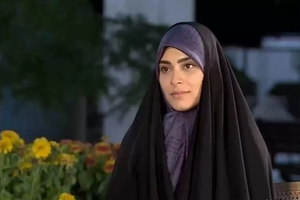 Iranian Presidential Candidate Scandal Takes Center Stage Again
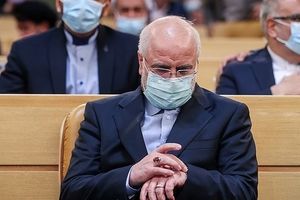 Foreign Shopping Trip Scandal Prompts Calls For Iran Speaker To Resign
What Ghalibaf’s selection really reveals
Therefore, the focus on Ghalibaf is not that much about elevating him – it appears it is about testing the system around him.
For Washington, he represents a point of access into Iran’s power structure at a moment of uncertainty, a figure through whom pressure can be measured rather than resolved.
On the other hand, for Tehran, the episode highlights how tightly controlled that structure remains, with authority dispersed across networks that limit any individual’s room to act.
This makes the channel inherently narrow. It may reveal whether pressure has altered internal thinking, but it does not resolve the deeper constraints that define decision-making in Iran.
In that sense, the question is not whether Ghalibaf can deliver – but whether anyone within the current structure can.